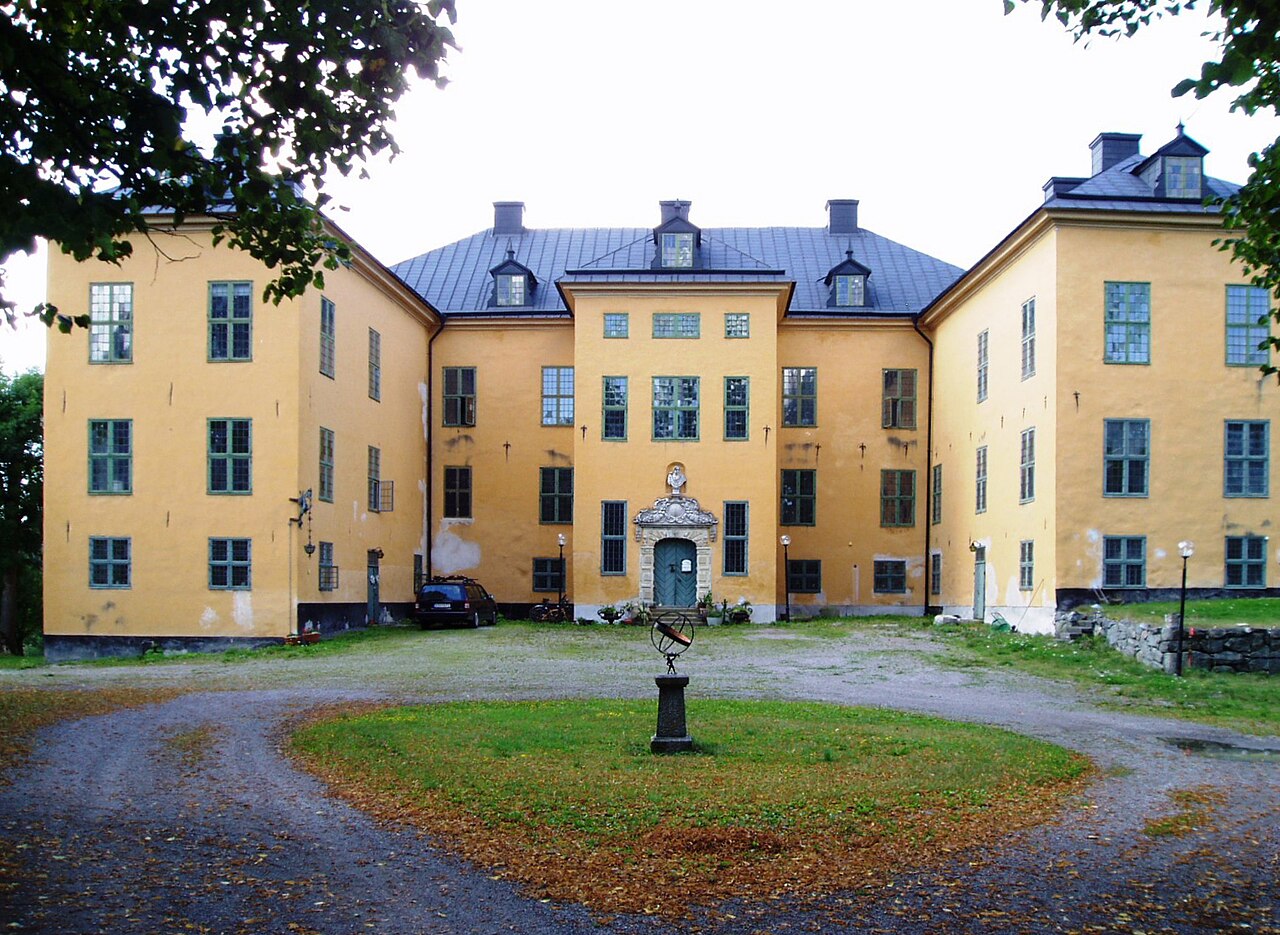
Broborg Castle

Broborg Castle: ancient Viking stronghold in Uppland, Sweden
Knivsta, Sweden
High Medieval (11th–13th c.)
Well Preserved

Broborg Castle is one of the most remarkable ancient strongholds in the Uppland region of Sweden. Strategically positioned on a prominent ridge along what was once a vital seaway, this fortress served as a key defensive and control point during the Viking Age. The seaway functioned as a "highway" of its time, connecting Viking settlements to Old Uppsala and the Baltic Sea, making Broborg an important site for trade and military operations.

Constructed between the 6th and 11th centuries, Broborg is a classic example of a hill castle built to exploit natural topography for defense. The castle sits approximately 40 meters above sea level, providing commanding views of the surrounding landscape. Its location on a high ridge allowed defenders to monitor approaching enemies from afar and control access to the seaway below.

Architectural features and fortifications

The fortress is distinguished by its impressive dual-wall construction, consisting of an outer wall and an inner wall. The outer wall was primarily designed to protect the longest sides of the stronghold, specifically to the south and east. This wall served as the first line of defense against invaders approaching from those directions.

The inner wall nearly encloses the entire fortress, forming a roughly circular perimeter with a circumference of about 200 meters. This inner enclosure likely housed the main living quarters, storage facilities, and other essential structures needed to sustain inhabitants during sieges or prolonged periods of isolation. Entrances to the fortress were located in the southeast and west, carefully positioned to control access and facilitate defense.

The walls are constructed from large stones, assembled without mortar, characteristic of early medieval Scandinavian fortifications. The thickness and height of these walls would have made direct assault difficult, while the elevated position added a significant tactical advantage.

Historical context and use

Broborg Castle was actively used during the High Medieval period, but its origins date back to the Early Medieval era, with archaeological evidence suggesting initial construction around 500-1000 AD. This timeframe corresponds to the late Migration Period and the Viking Age, a time of significant social and political change in Scandinavia.

The stronghold's strategic location along the seaway made it an important military and trade hub. Control over Broborg meant control over the maritime routes leading to Old Uppsala, a major religious and political center in Viking Sweden. The fortress likely functioned both as a defensive bastion against rival clans and as a checkpoint for regulating trade and travel.

Connection to Viking sagas and local legends

The visible remains of Broborg Castle have inspired numerous local legends and sagas that enrich its historical significance. One notable saga tells the story of Grimsa, the daughter of a powerful Viking chieftain associated with the stronghold. According to tradition, Grimsa is buried in a nearby mound, linking the fortress to the personal histories of Viking nobility and their families.

These stories underscore the cultural importance of Broborg beyond its military function, highlighting its role as a center of power and social life during the Viking Age.

Archaeological significance and preservation

Today, Broborg Castle is classified as a well-preserved archaeological site, with substantial portions of its stone walls still visible. The site offers valuable insights into early medieval Scandinavian fortification techniques and settlement patterns. Excavations have revealed artifacts and structural details that contribute to understanding the daily life and defense strategies of Viking communities.

Its preservation allows historians and visitors alike to explore an authentic example of a hill castle from the Viking period, providing a tangible connection to Sweden's early medieval past.

Visiting Broborg Castle

Visitors to Broborg can explore the extensive remains of the fortress and enjoy panoramic views from the ridge. The site is accessible year-round, offering a unique opportunity to experience a significant Viking Age stronghold in its natural setting. Interpretive signage and guided tours are sometimes available to enhance understanding of the site's history and architecture.

Nearby attractions include ancient burial mounds and other archaeological sites that together paint a comprehensive picture of the region's early medieval landscape.

Frequently asked questions (FAQ)

What is the historical significance of Broborg Castle?
Broborg Castle is a medieval structure that dates back to the 14th century, representing a crucial part of Sweden's feudal history. It served as a defensive fortress and residence for local nobility, illustrating the architectural styles and social dynamics of its time.
When was Broborg Castle built?
Broborg Castle was constructed in the late 1300s, with its origins linked to the tumultuous political landscape of medieval Sweden. The castle's architecture reflects the military strategies and lifestyle of the period, making it an important historical landmark.
Can I visit Broborg Castle?
Yes, Broborg Castle is open to visitors, allowing you to explore its rich history and beautiful surroundings. Guided tours are available, providing insights into the castle's architecture and historical significance.
What are the opening hours for Broborg Castle?
Broborg Castle is typically open to the public from May to September, with specific hours varying by day. It is advisable to check the official website for the most current opening times before your visit.
Is it possible to access Broborg Castle with mobility aids?
While Broborg Castle is a historical site, accessibility can be limited due to its age and terrain. Visitors with mobility aids should contact the management in advance to inquire about specific accommodations and access routes.
What is the best time to visit Broborg Castle?
The best time to visit Broborg Castle is during the late spring and summer months when the weather is warm and the gardens are in full bloom. This period also features various events and activities that enhance the visitor experience.
Are there any nearby attractions to Broborg Castle?
Yes, there are several attractions near Broborg Castle, including beautiful hiking trails and the scenic landscapes of Knivsta. Visitors can also explore local museums and cultural sites that provide further context to the area’s history.
How much do tickets cost for entry to Broborg Castle?
Ticket prices for Broborg Castle vary, with discounts available for children, students, and seniors. It's best to check the official website for current pricing and any special offers that may be available during your visit.

Information

Hill Castle

Loading map...

Visitor reviews

No reviews yet. Been here? Write the first review and help other travelers!

Write the first review

Visited this castle? Share your experience

Your review helps other travelers and adds first-hand knowledge to our encyclopedia.

Write a review

(5/5)

0/2000 characters

Your review will be visible after admin approval

Nearby castles

13.5 km

Johannesberg Castle

Rimbo, Sweden

Johannesberg Castle in Rimbo, Sweden, stands on a hill surrounded by water, a location that has offered natural defense since the 11th century. The site has witnessed a long history of occupation and transformation, beginning with early strongholds and evolving into the estate known today. Its strategic position made it an important local center during medieval times. Early medieval origins and medieval history The earliest known fortification on the site dates back to the 11th century, when the hill was a natural stronghold. In the 12th century, a local chief named Gutti controlled the area, which later became known as Gottröra. Gutti divided the land into two parts: the southern part called Djursby (now Johannesberg) and the northern part. This division laid the foundation for the estate's later development. During the late 17th century, the estate was owned by Johan Leijonhufvud, who passed it to his relative Adam Lewenhaupt. Lewenhaupt renamed the estate Johannesberg in honor of Johan Leijonhufvud. Unfortunately, Lewenhaupt died in Russian captivity, never returning to the estate. Over the following centuries, Johannesberg was held by several noble families, including the Banér, Gyllenstierna, Horn af Åminne, and Lagergren families, reflecting its status as an important noble estate in Sweden. Architectural changes and ownership in the modern era At the end of the 19th century, the estate was acquired by Mr. Grönwall, a wholesale dealer. During his ownership, the original main building was destroyed by fire. The subsequent owner, Mr. Conti, rebuilt the main building around the turn of the 20th century, resulting in the present structure that defines the castle today. This building reflects the architectural styles and construction techniques of the modern period, dating from approximately 1900. In the 1930s, the estate was purchased by Bergengren, a prominent landowner with estates across Sweden, England, and France. Bergengren retained ownership of the agricultural lands of Johannesberg and played a significant role during World War II. World war ii and the norwegian resistance training During World War II, the main building and several cottages on the estate were rented to the Swedish government. Under the management of Harry Söderman, the manager of the Criminal Technical Institution, the castle served as a training center for Norwegian refugees. These refugees were officially educated as policemen but were in fact trained to join the Norwegian resistance movement against Nazi occupation. At its peak, about 1,500 Norwegian trainees were present at Johannesberg. After the war, many of these individuals maintained connections through comrade clubs. Their efforts and camaraderie were commemorated with a monument erected in the castle park in June 1990. Late 20th century restoration and recreational development In 1987, Johannesberg was acquired by a private company that undertook significant restoration work. The two wings of the estate were rebuilt, and the property was prepared for renewed use by 1989. A 27-hole golf course was established and opened in 1991, alongside a clubhouse featuring a swimming pool, marking a shift towards recreational and hospitality functions. Since 1995, the castle has been owned and operated by the family of Manfred and Mariette Kuhl, who continue to maintain its role as a venue for leisure and events while preserving its historical legacy. Architectural features and landscape The castle's location on a hill surrounded by water has historically provided natural defense advantages. The current main building, constructed around 1900, reflects modern architectural styles of that period, though specific stylistic details are less documented. The estate includes restored wings and extensive grounds adapted for leisure activities, including the golf course and parkland. Cultural and historical significance Johannesberg Castle embodies layers of Swedish history from the medieval era through modern times. Its association with noble families, its role during World War II as a training site for the Norwegian resistance, and its transformation into a recreational estate illustrate its diverse functions over centuries. The monument commemorating the Norwegian trainees underscores the castle's unique place in Scandinavian wartime history.

Modern (19th–20th c.)
Details
16.3 km

Mörby Castle Ruins

Norrtälje, Sweden

Mörby Castle ruins stand as a significant historical site in Norrtälje, Sweden, with origins tracing back to the late medieval period. The castle was first documented in 1387, when it was constructed by the knight Henrik Damerow. This early mention highlights Mörby's medieval heritage and its role as a fortified residence during a turbulent era in Swedish history. Early history and ownership The castle initially served as a stronghold for the Damerow family before passing into the hands of the influential Oxenstierna family in 1452. The Oxenstiernas maintained ownership for over two and a half centuries, a period during which Mörby Castle underwent significant changes and played a role in regional power dynamics. The family's stewardship reflects the castle's importance as a noble residence and defensive structure in medieval Sweden. Architectural evolution and reconstruction In 1550, after suffering damage from a fire, Mörby Castle was rebuilt. This reconstruction likely involved updating the castle's fortifications and living quarters to suit the needs of the time, blending medieval defensive features with emerging Renaissance influences. Despite these changes, the castle retained much of its medieval character, including its prominent tower, which remains a visible ruin today. Structural features The surviving ruins include the substantial tower body, which provides insight into the castle's original defensive design. The tower would have served both as a lookout point and a last refuge during attacks. Other remnants suggest the presence of thick stone walls and possibly a courtyard, typical of late medieval hill castles in Sweden designed to withstand sieges and control surrounding lands. Decline and destruction By the early 18th century, Mörby Castle's strategic importance had diminished. In 1733, the castle was deliberately abandoned and allowed to fall into decay. The roof was removed and transported to Ekeby Castle, marking a significant step in the castle's decline. This practice of reusing building materials was common in the period, reflecting changes in property ownership and the shifting needs of the nobility. Ultimately, Mörby Castle was destroyed by fire in 1740. The blaze left the structure in ruins, which have since become an important archaeological and cultural site. The ruins today provide valuable evidence of medieval castle construction and the historical narrative of Swedish nobility. Current condition and cultural significance Today, the Mörby Castle ruins are classified as ruins and remain a notable landmark in Norrtälje. The site attracts visitors interested in medieval architecture and Swedish history, offering a tangible connection to the past through its preserved stonework and the enduring tower remains. The castle's story reflects broader themes in Swedish medieval and early modern history, including noble family dynamics, military architecture, and the evolution of fortifications. Visiting and exploring mörby castle ruins Visitors to the site can explore the ruins and appreciate the scale and craftsmanship of the original castle. While no complete buildings remain, the ruins' layout and surviving elements provide a clear sense of the castle's former grandeur. The location in Norrtälje makes it accessible for those interested in historical tourism and cultural heritage in Sweden.

Late Medieval (14th–15th c.)
Details
17.6 km
Venngarn Castle — Sweden castle

Venngarn Castle

Sigtuna, Sweden

Venngarn Castle stands as a significant historical manor located just north of the town of Sigtuna in the province of Uppland, Sweden. Its origins date back to the 12th century, marking it as a site with deep medieval roots. Over the centuries, the estate changed hands multiple times before becoming crown property in 1555. This transition marked the beginning of a new chapter in Venngarn's history, intertwining it with the Swedish monarchy and nobility. Early history and ownership transitions The manor's early history is characterized by its strategic and economic importance in the region. After acquisition by the crown in the mid-16th century, Venngarn was granted by Gustav II Adolf to Franz von Thurn Berendt. Subsequently, in 1653, it was sold to Magnus Gabriel De la Gardie, one of Sweden's most influential statesmen during the Age of Greatness. De la Gardie's ownership marked a period of significant development and embellishment of the estate. The golden age under Magnus Gabriel De la Gardie During the late 17th century, Venngarn experienced its golden age, largely due to the efforts of Magnus Gabriel De la Gardie. As a chancellor and leader of the regency during King Charles XI's minority, De la Gardie was a central figure in Swedish politics and culture. Around 1670, the current castle structure was primarily constructed under the guidance of the renowned architect Jean de la Vallée. This period saw the manor transformed into a refined residence reflecting the Renaissance architectural style prevalent in Sweden at the time. Architectural features and design Jean de la Vallée is credited with designing the castle, incorporating elegant Renaissance elements that emphasized symmetry, proportion, and classical motifs. The manor is categorized as a hill castle, situated on elevated terrain that provided both aesthetic prominence and practical advantages. The castle's layout includes a main building with balanced facades, large windows, and decorative details typical of the era. The design also integrates functional spaces suitable for noble living and administrative duties. The chapel: a rare preserved gem from the Age of Greatness One of Venngarn's most remarkable features is its chapel, which remains exceptionally well-preserved. When the crown reclaimed Venngarn in 1686 following King Charles XI's reduction policies, the chapel was left untouched. Unlike many contemporaneous religious structures that underwent significant alterations, this chapel has retained its original character with minimal loss of detail. It stands as one of Sweden's best-preserved churches from the Age of Greatness. The chapel's interior reflects the artistic and religious sensibilities of the late 17th century, likely commissioned by De la Gardie himself with architectural input from Jean de la Vallée. Its preservation offers valuable insight into the period's ecclesiastical architecture and noble patronage. Later history and modern usage After the crown repossessed the estate, Venngarn was leased out to various families and used for multiple purposes over the centuries. In the 20th century, the castle took on a new role when, in 1916, it became home to a central government institution dedicated to alcoholism treatment. This marked a significant shift from noble residence to public service facility. In 1997, the property was sold to its current owners, Wenngarn AB, who have maintained the estate. Today, Venngarn Castle is recognized for its historical and architectural importance, attracting visitors interested in Sweden's noble heritage and Renaissance architecture. Location and significance Situated in Uppland, near the historic town of Sigtuna, Venngarn Castle occupies a landscape rich in Swedish history. Sigtuna itself is one of Sweden's oldest towns, adding cultural depth to the castle's setting. The castle's position on a hill enhances its visibility and prominence in the region, reflecting its historical status as a noble estate. Preservation and current condition Venngarn Castle is classified as a well-preserved Renaissance manor. Its architectural integrity, especially the chapel, has been carefully maintained, allowing it to serve as a tangible connection to Sweden's 17th-century aristocratic and political history.

Renaissance (15th–17th c.)
Details