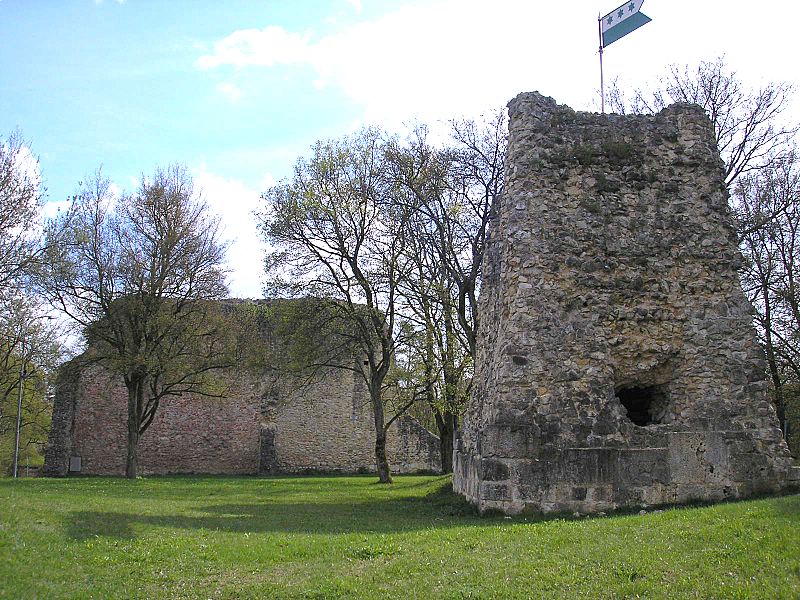
Brenz Castle
Brenz Castle stands as a remarkable example of Renaissance architecture in Sontheim, Germany. Rebuilt in 1672 on the foundations of an earlier medieval fortress destroyed during the Thirty Years' War, the castle embodies centuries of regional history and cultural evolution. Its strategic location and architectural transformation reflect the changing tides of power and art from the High Middle Ages through the Early Modern period.
The medieval origins and noble ownership
Originally, Brenz Castle was established by a minor noble family named after the location, known as the von Brenz family, whose presence is documented in records dating back to the 12th century. A notable historical artifact from this era is the gravestone of Sebolt von Brenz, a crusader who died in 1190, preserved in the nearby Galluskirche. This early castle served as a feudal seat and witnessed the turbulent dynamics of medieval nobility.
After 1250, the castle came under the control of a branch of the noble von Güssenberg family. Unfortunately, financial difficulties led to their involvement in highway robbery, prompting Emperor Louis IV to order the castle's destruction in 1340. Despite this, the castle was partially repaired and remained a symbol of noble residence, though the Güssen family eventually sold it to the Duchy of Württemberg in 1613 due to sustained economic hardship.
Reconstruction and Renaissance transformation
Following its destruction during the Battle of Nördlingen in 1634, a pivotal conflict of the Thirty Years' War, the castle lay in ruins until Duke Friedrich Ferdinand commissioned its reconstruction in 1672. The new design embraced the Renaissance style, marking a significant architectural shift from the medieval fortress to a residence reflecting contemporary tastes and the status of its owners.
The rebuilt castle incorporated the surviving foundations and some original walls, blending old and new elements. Its layout featured typical Renaissance characteristics such as symmetrical façades, ornate portals, and refined interior spaces designed for comfort and representation rather than purely military defense.
The Württemberg era and later uses
In the early 18th century, Duke Eberhard Ludwig gifted Brenz Castle to his mistress, Wilhelmine von Grävenitz, in 1721. However, after her fall from favor, she was compelled to leave Württemberg, and the castle was largely left unoccupied. Subsequently, a branch of the von Racknitz family briefly resided there.
By 1847, the castle passed into community ownership and was repurposed for civic functions, including use as a school. This transition marked a new chapter in the castle’s life, shifting from noble residence to a center for local administration and education.
Community heritage museum and cultural significance
In 1906, Brenz Castle became home to the oldest community heritage museum in Württemberg, founded through the initiative of local residents. The museum uniquely combines geological, paleontological, and cultural collections, making it a repository of both natural history and regional traditions.
The museum's core attraction is an extensive collection of fossils from the Swabian Jura, amassed by Professor Hans Wagner. These fossils provide valuable insights into the prehistoric environment of the region. Additionally, the community heritage exhibits include traditional earthenware and stoneware, pewter tableware, cast iron stove tops, costumes from the lower Brenztal, and various rural tools, illustrating the everyday life and craftsmanship of local inhabitants.
The castle itself features architectural highlights such as the Baroque portal in the Knights' hall, which was repainted in 1931 by artist Heinrich Eberhard. Renovations in 1972 enhanced the building's function as a cultural venue, adding a regional register and a community room for the local Protestant congregation.
Architectural features and preservation
Brenz Castle is classified as a Renaissance castle built on the remains of a medieval fortress, with a layout that reflects both its defensive origins and later residential adaptations. The surviving foundations and portions of the original walls provide a tangible link to its medieval past, while the majority of the structure showcases the elegance and symmetry characteristic of the Renaissance period.
The castle's well-preserved state allows visitors to explore its historical layers, from the medieval gravestones and remnants to the Renaissance architectural elements. The integration of museum spaces within the castle enhances its role as a living monument to the region's rich heritage.
Frequently asked questions (FAQ)
- How do I get to Brenz Castle?
- Brenz Castle is located in Sontheim, Germany, and can be reached by car or public transportation. If you're driving, there is parking available near the castle. For public transport, check local bus schedules for routes that service the area.
- What is the historical significance of Brenz Castle?
- Brenz Castle dates back to the 13th century and has played an important role in the region's history. It served as a stronghold for various noble families over the centuries and has witnessed numerous historical events. Today, it stands as a testament to medieval architecture and local heritage.
- When was Brenz Castle built?
- Brenz Castle was constructed in the early 1200s, making it one of the oldest structures in the region. Its architecture reflects the defensive needs of the time, with thick walls and strategic positioning. The castle has undergone several renovations, preserving its historical essence.
- Can I visit Brenz Castle year-round?
- Yes, Brenz Castle is open year-round to visitors, although specific opening hours may vary by season. It’s advisable to check the official website or local tourist information for the most current visiting hours. Special events and guided tours are often available, enhancing the experience.
- Why is Brenz Castle a popular tourist destination?
- Brenz Castle attracts visitors due to its rich history, stunning architecture, and picturesque surroundings. The castle offers panoramic views of the Sontheim area, making it a perfect spot for photography and exploration. Additionally, its proximity to other attractions adds to its appeal.
- Is it possible to take guided tours of Brenz Castle?
- Yes, guided tours of Brenz Castle are available and provide an informative experience about its history and architecture. These tours are often led by knowledgeable guides who share fascinating stories and insights. It’s recommended to book in advance during peak tourist seasons.
- What are the ticket prices for visiting Brenz Castle?
- Ticket prices for Brenz Castle are generally affordable, with discounts available for children, students, and seniors. Check the castle’s official website for the most up-to-date pricing and any special promotions. Group rates may also be offered for larger parties.
- What is the best time to visit Brenz Castle?
- The best time to visit Brenz Castle is during the spring and early autumn when the weather is mild and pleasant. This allows for comfortable exploration of the castle grounds and surrounding area. Additionally, visiting during these seasons often means fewer crowds, enhancing your experience.
- Are there any nearby attractions to visit while at Brenz Castle?
- Yes, there are several nearby attractions, including local museums and parks that showcase the region's history and natural beauty. Additionally, the charming town of Sontheim offers quaint shops and cafes for visitors to enjoy. Exploring these nearby sites can enrich your visit to Brenz Castle.
Information
Website
Visit websiteSources & official resources
Verify the information above using these authoritative references.
Loading map...
Visitor reviews
No reviews yet. Been here? Write the first review and help other travelers!
Write the first reviewVisited this castle? Share your experience
Your review helps other travelers and adds first-hand knowledge to our encyclopedia.