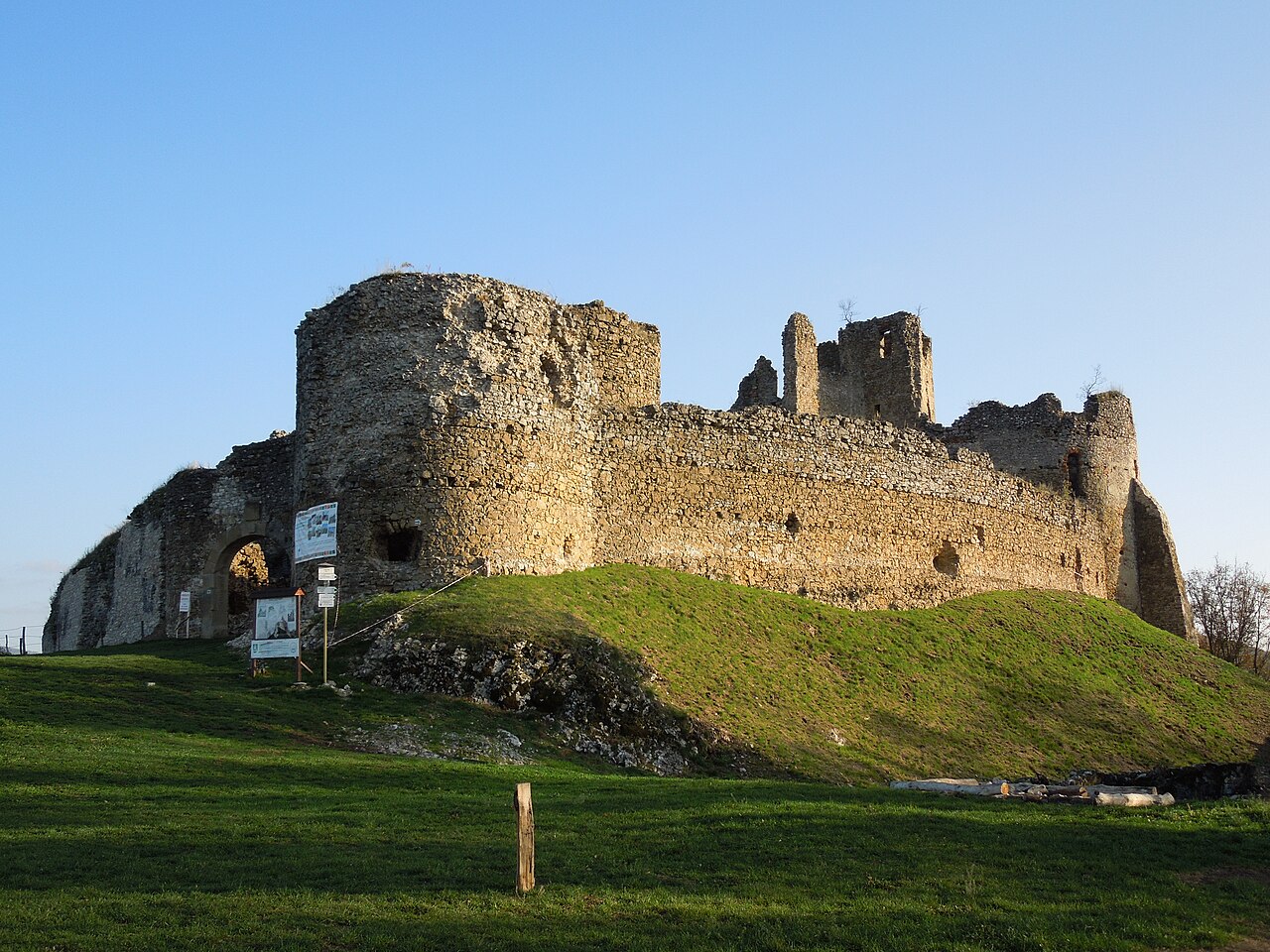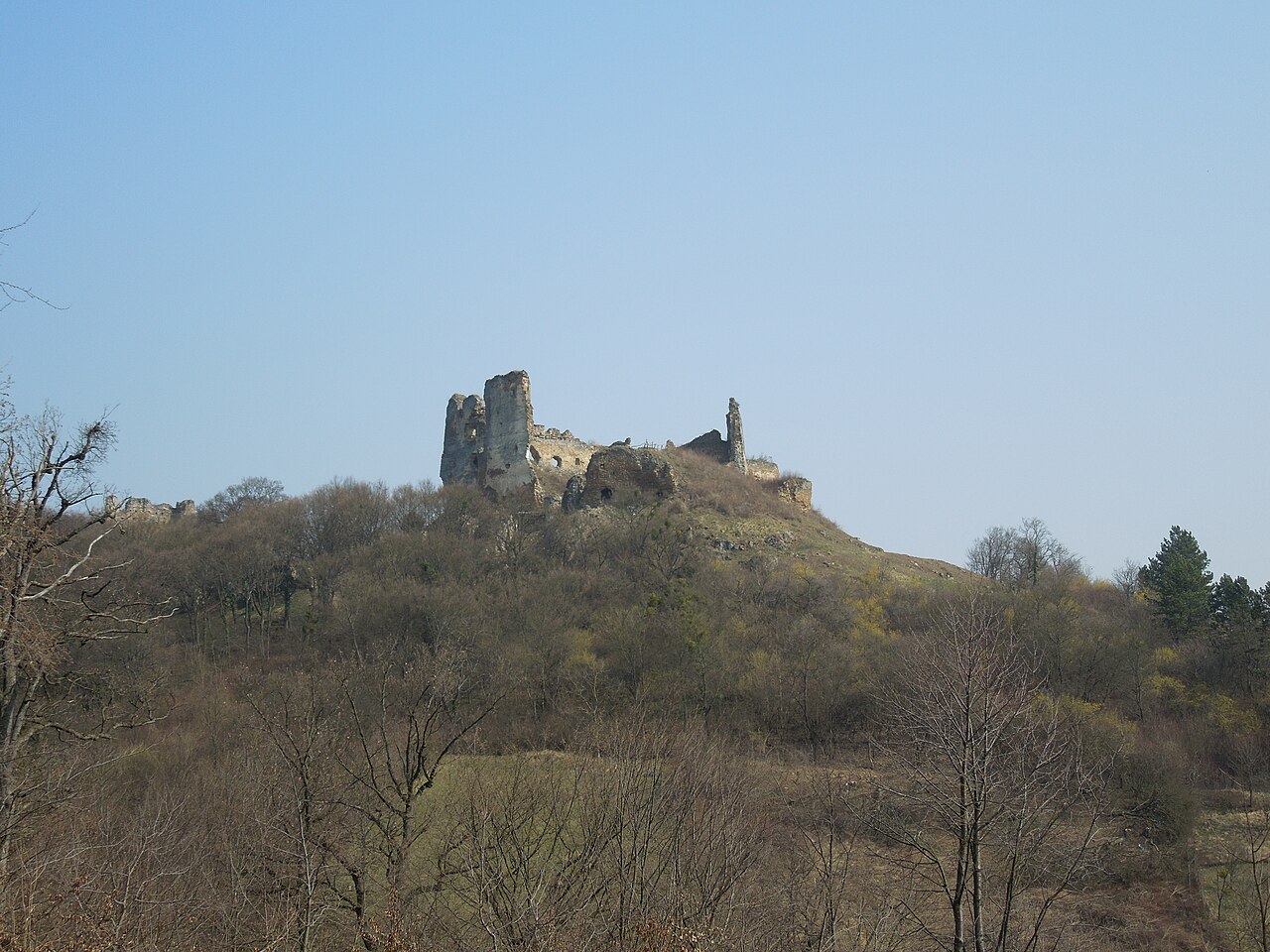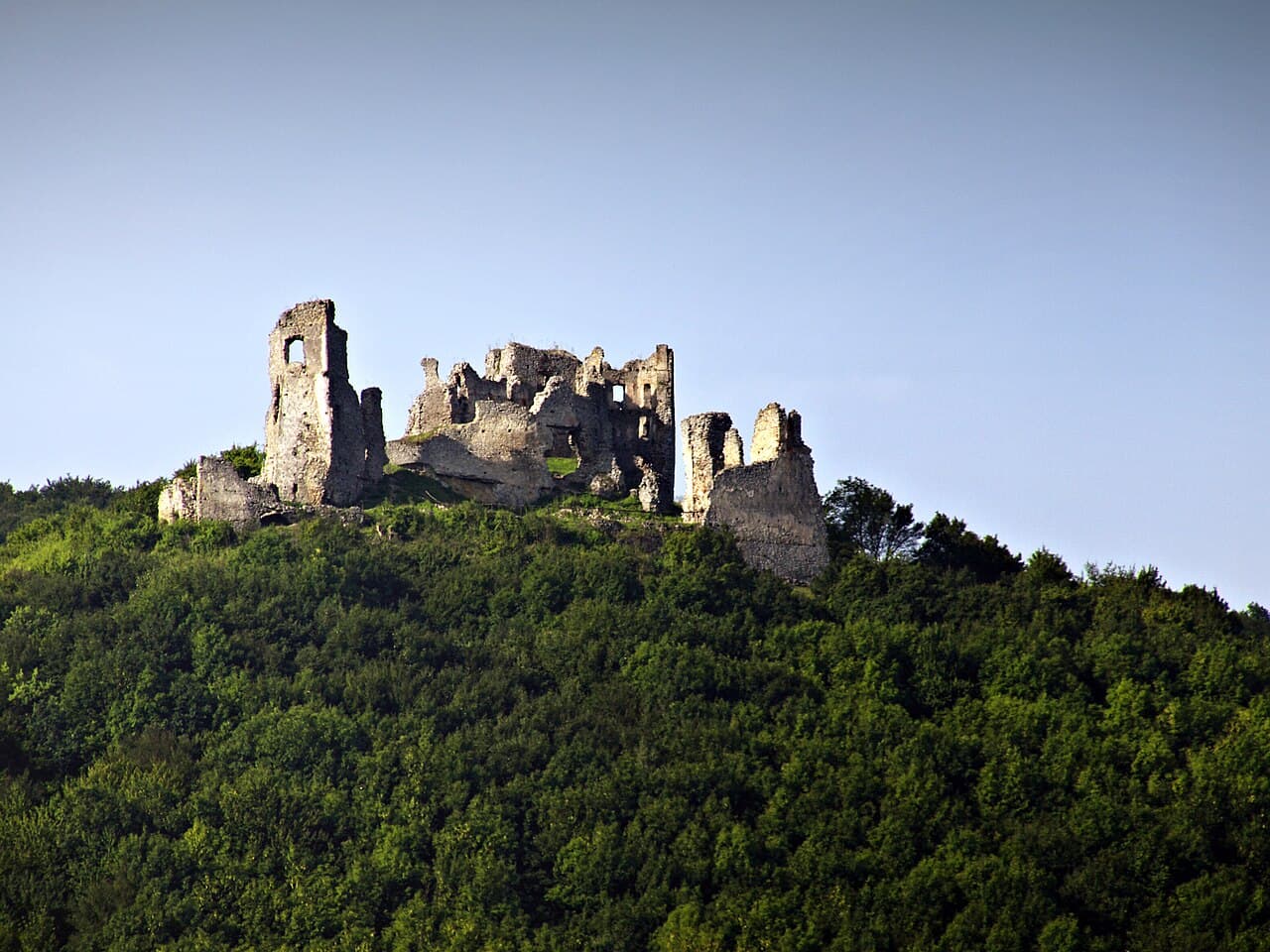
Brekov Castle stands as a remarkable example of a 13th-century hill castle located in the village of Brekov, Slovakia. Built upon the remains of an earlier fortification from the Great Moravian period, this castle played a significant role in the medieval defense network along the border between the Kingdom of Hungary and the Kingdom of Poland. Its strategic location atop a limestone hill, approximately 280 meters above sea level, allowed it to oversee the surrounding landscape and control important frontier routes.
The castle's origins trace back to the High Medieval period, when it was constructed by Hungarian settlers as part of a series of fortresses designed to protect the kingdom's northern boundaries. Over the centuries, Brekov Castle witnessed numerous historical events, battles, and ownership transfers that reflect the turbulent history of the region. Despite suffering damage during various uprisings and conflicts, the castle remains a cultural monument and a testament to medieval military architecture in Slovakia.
Historical background and ownership
Brekov Castle was initially established in the 13th century on the site of an older Slavic fortification. Its earliest function was primarily military, serving as a watchtower and protective outpost guarding the borderlands. The castle was part of a defensive chain that included nearby fortresses such as Jasenov, Vinné, and Čičva.
From 1317, the castle came under the control of the influential Drugeth family, who were prominent nobles in the Kingdom of Hungary. The Drugeths maintained ownership until the late 15th century, during which time they expanded and fortified the castle to enhance its defensive capabilities and residential comfort. In the late 15th century, ownership passed to the Zapolya family, who further strengthened the castle’s fortifications between 1484 and 1488, reflecting the heightened military tensions of the era.
A notable historical event occurred in 1466 when the castle's vicinity became a battleground between the forces of King Matthias Corvinus of Hungary and King Casimir IV of Poland. This battle underscored the strategic importance of Brekov Castle in regional power struggles and border conflicts. In the 16th century, the castle was involved in further conflicts during the reign of King Ferdinand I, particularly when its owner, František Kendy, sided with opposition forces. After sustaining damage, the castle was rebuilt in 1575 under the guidance of Mikuláš Druget.
The castle suffered additional damage during the 1644 uprising led by Juraj Rákoci. Although partially restored afterward, the castle was ultimately abandoned following the anti-Habsburg uprisings of the late 17th century. Since then, it gradually fell into ruin, with only portions of its walls and structural elements surviving.
Architectural development and features
Original structure and layout
Brekov Castle’s earliest construction phase features an oval-shaped fortress with robust masonry walls built from local limestone. A prominent element from this period is a defensive tower on the southwest side, dating from the late 13th or early 14th century, which served as a lookout and stronghold.
Later expansions and fortifications
During the Drugeth family’s tenure, the castle was expanded with the addition of a two-winged palace and a small forecourt to the north, replacing earlier fortifications and enhancing the castle’s residential and administrative functions. The Zapolya family’s late 15th-century renovations included the demolition of older walls on the eastern edge of the rocky plateau and the construction of new, stronger masonry defenses. A late Gothic bastion was also built near the entrance gate to fortify the approach and provide a defensible position for the garrison.
The fourth construction phase introduced a polygonal structure on the western side of the original core, broadening the castle’s footprint and adapting it to evolving military needs. These successive building campaigns reflect the castle’s transformation from a simple watchtower into a complex fortified residence.
Notable surviving elements
Today, visitors can observe castle walls that reach up to three stories high, outlining the former defensive perimeter and internal buildings. The main gates and the passage leading to the upper castle remain visible, with archaeological evidence suggesting the former presence of a drawbridge. Inside, the remains of vaulted cellars provide insight into the castle’s architectural complexity.
The western section preserves the remains of the castle kitchen, identifiable by features such as an open hearth, a drainage system, and a large chimney. Traces of wooden beams on the upper floors indicate the locations of fireplaces, highlighting the domestic aspects of castle life.
Archaeological findings and preservation efforts
Extensive archaeological excavations at Brekov Castle have uncovered a variety of artifacts that illuminate the site’s long history. Among these are late Renaissance stove tiles with decorative motifs, fragments of Slavic pottery indicating earlier settlement, and iron arrowheads linked to the pre-medieval Slavic hillfort that once occupied the site.
These artifacts are displayed in a museum located beneath the castle ruins, offering visitors a tangible connection to the castle’s past inhabitants and their cultural heritage. Since its designation as a cultural monument in 1963, Brekov Castle has been the focus of preservation and restoration initiatives, particularly since the late 2000s when local associations and regional authorities began systematic conservation work.
Cultural significance and visitor experience
Brekov Castle is an important cultural landmark in Slovakia, representing the region’s medieval military architecture and historical conflicts. Its ruins provide a captivating glimpse into the past, allowing visitors to explore the remains of defensive walls, towers, and residential buildings while enjoying panoramic views of the surrounding landscape.
The castle’s location on a limestone hill enhances its dramatic presence and offers excellent opportunities for hiking and historical tourism. Visitors can learn about the castle’s complex history through on-site information and museum exhibits, making Brekov Castle a valuable destination for those interested in medieval history, archaeology, and Slovak heritage.
Despite its ruined state, Brekov Castle continues to inspire interest and admiration for its architectural ingenuity and historical importance, standing as a symbol of the region’s rich medieval past.
Frequently asked questions (FAQ)
- What is the historical significance of Brekov Castle?
- Brekov Castle was a strategic medieval fortress built in the 13th century to guard the border between the Kingdom of Hungary and the Kingdom of Poland. It witnessed major battles and ownership changes, reflecting the region's turbulent history.
- Can visitors explore the ruins of Brekov Castle?
- Yes, visitors can explore the castle ruins, including remains of walls, towers, and the kitchen area. There is also a museum beneath the ruins displaying archaeological finds.
- When was Brekov Castle built and what style does it represent?
- Brekov Castle was built in the 13th century during the High Medieval period. Its architecture reflects typical medieval fortress design with later Gothic additions.
- Why did Brekov Castle fall into ruin?
- The castle was repeatedly damaged during 17th-century uprisings and conflicts, particularly the Rebellion of Estates and anti-Habsburg uprisings, leading to its abandonment and gradual decay.
- Is there evidence of earlier settlements at the Brekov Castle site?
- Yes, archaeological excavations have uncovered Slavic pottery and iron arrowheads indicating a pre-medieval Slavic hillfort existed on the site before the castle was built.
Photo gallery

Information
Website
Visit websiteSources & official resources
Verify the information above using these authoritative references.
Loading map...
Visitor reviews
No reviews yet. Been here? Write the first review and help other travelers!
Write the first reviewVisited this castle? Share your experience
Your review helps other travelers and adds first-hand knowledge to our encyclopedia.