Bornemissza Castle
Bornemissza castle stands as a remarkable example of a 17th-century Renaissance hunting lodge that evolved into a complex noble residence with significant Baroque additions. Located in Gurghiu, Romania, this historic castle reflects the rich cultural and architectural heritage of the Transylvanian principality during a turbulent period marked by political change and aristocratic influence.
The castle was initially constructed in 1642 under the direction of Prince György I Rákóczi, serving as a hunting residence and administrative center for the Görgény treasury estate. The project was led by the master builder Imre Sárdi, who coordinated skilled masons from prominent Transylvanian cities such as Kolozsvár, Beszterce, and Brassó. Its original design embraced the Renaissance architectural style, characterized by balanced proportions and functional elegance tailored to noble leisure and governance.
Historical significance and ownership transitions
Throughout its history, Bornemissza castle witnessed several changes in ownership and function. In 1660, it came under the possession of Michael I Apafi, a notable Transylvanian prince. The castle's importance was underscored in 1662 when the Transylvanian Diet convened within its walls, marking it as a center for political activity.
Anna Bornemisza, the princess consort of the principality, was a frequent resident, enhancing the castle's status as a noble domicile. However, by the late 17th century, the castle's prominence declined, and it was primarily used by estate officials rather than nobility.
The aftermath of the Kuruc War left the castle in disrepair until 1717, when the Habsburg rulers pawned the estate to the Bornemisza family as a reward for János Bornemisza's services. This transfer included a baronial title and a 99-year lease, prompting extensive renovations that introduced Baroque architectural elements, including the addition of an elliptical chapel dedicated to Saint Anthony of Padua in 1730.
Architectural evolution and expansions
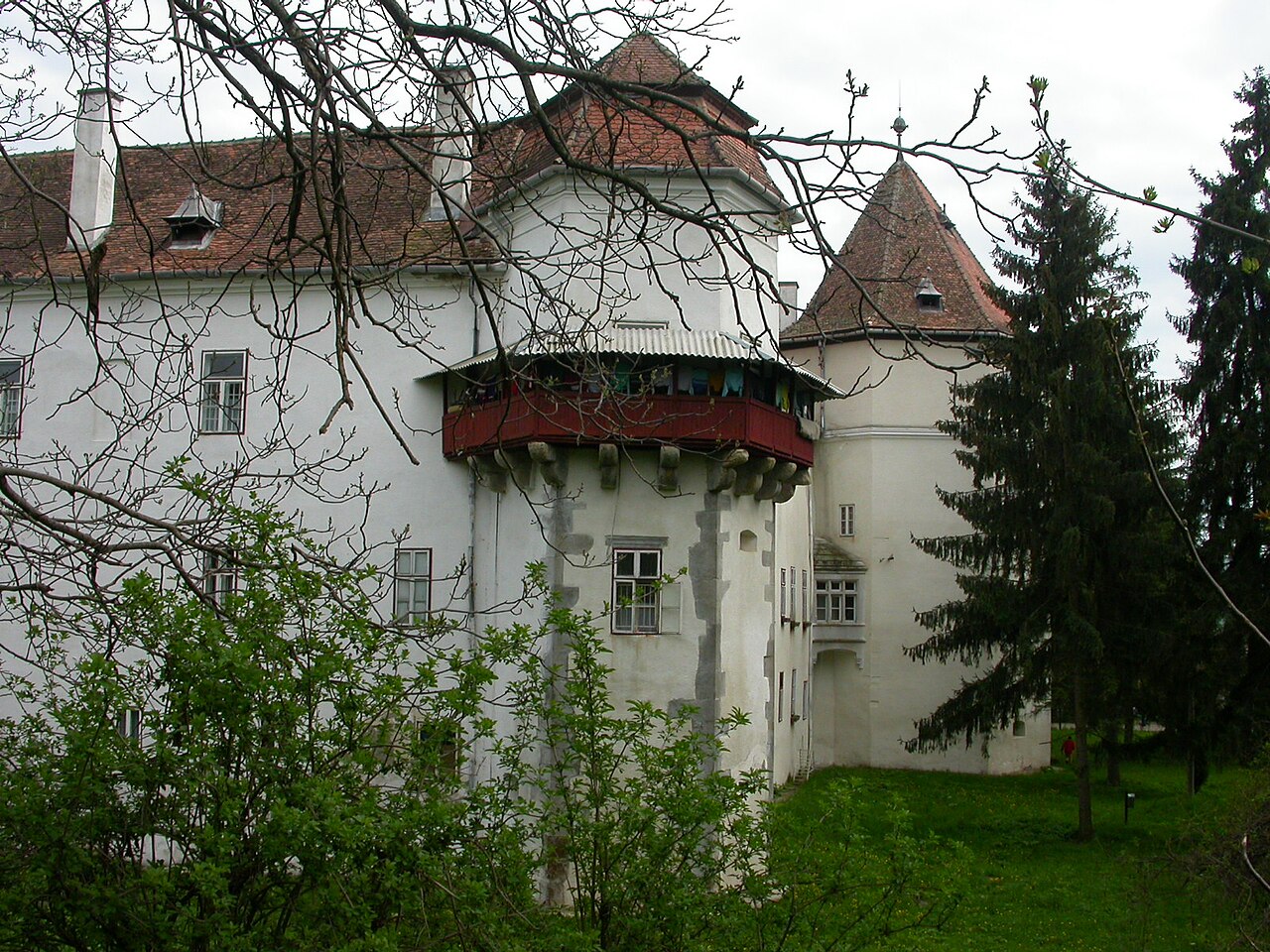
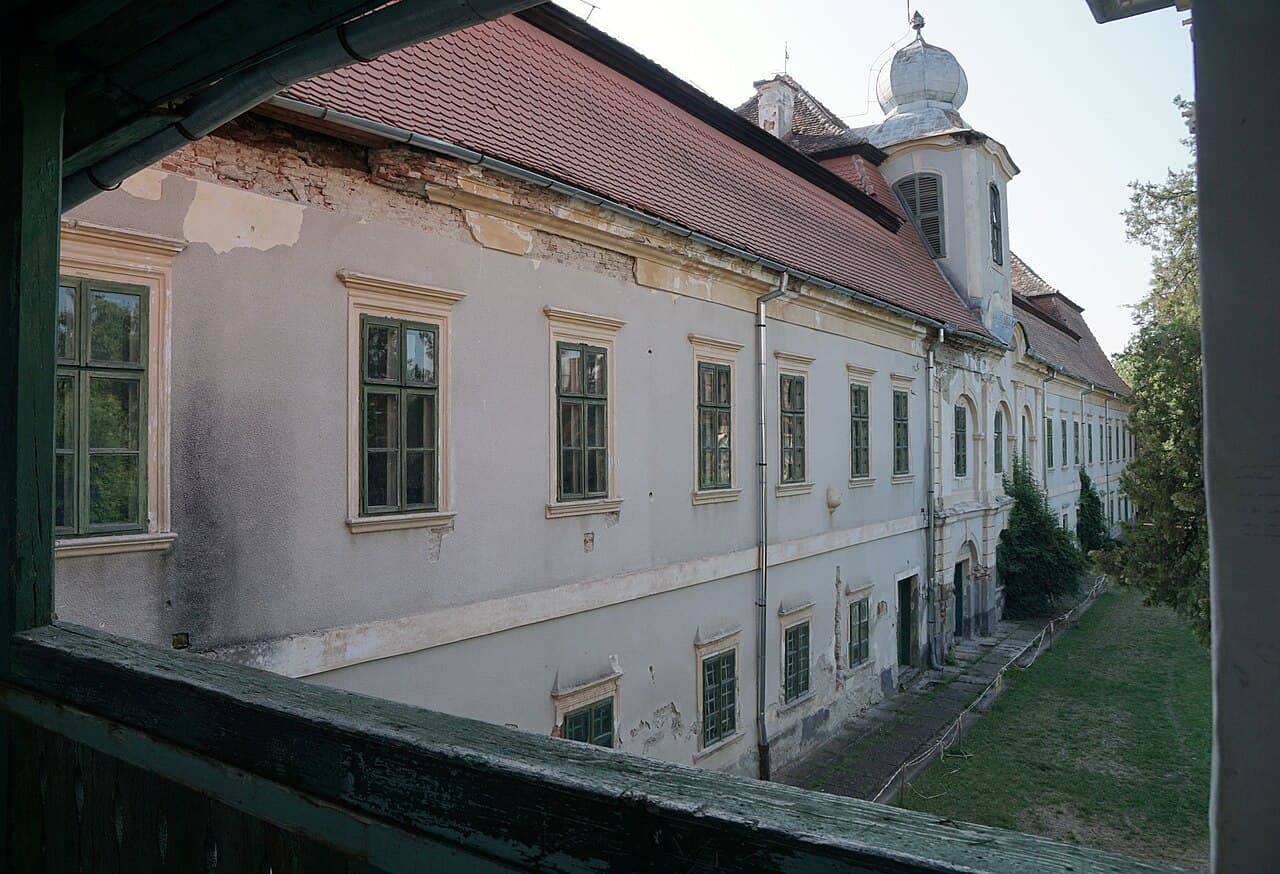
In the mid-18th century, under Ignác Bornemisza and his heirs, the estate flourished. Imperial confirmation of ownership in 1754 led to significant expansions such as the construction of a longer eastern wing in the 1760s, a gatehouse in 1780, and a granary completed in 1807. These additions shaped the castle's current L-shaped two-story layout, blending Renaissance foundations with Baroque sophistication.
The castle's ground floor was dedicated to economic and service functions, while the upper floor housed representative noble apartments designed for comfort and social gatherings. The northern wing features a notable staircase within a risalit, leading to the impressive great hall, a ceremonial room connected to the adjoining chapel of Saint Anthony of Padua.
The eastern wing extends approximately 85 meters and includes richly decorated apartments arranged around a central risalit facing the garden. The wing culminates in bastion-like corner structures enclosing private bedrooms, emphasizing both security and privacy for the inhabitants.
Supporting structures and functional spaces
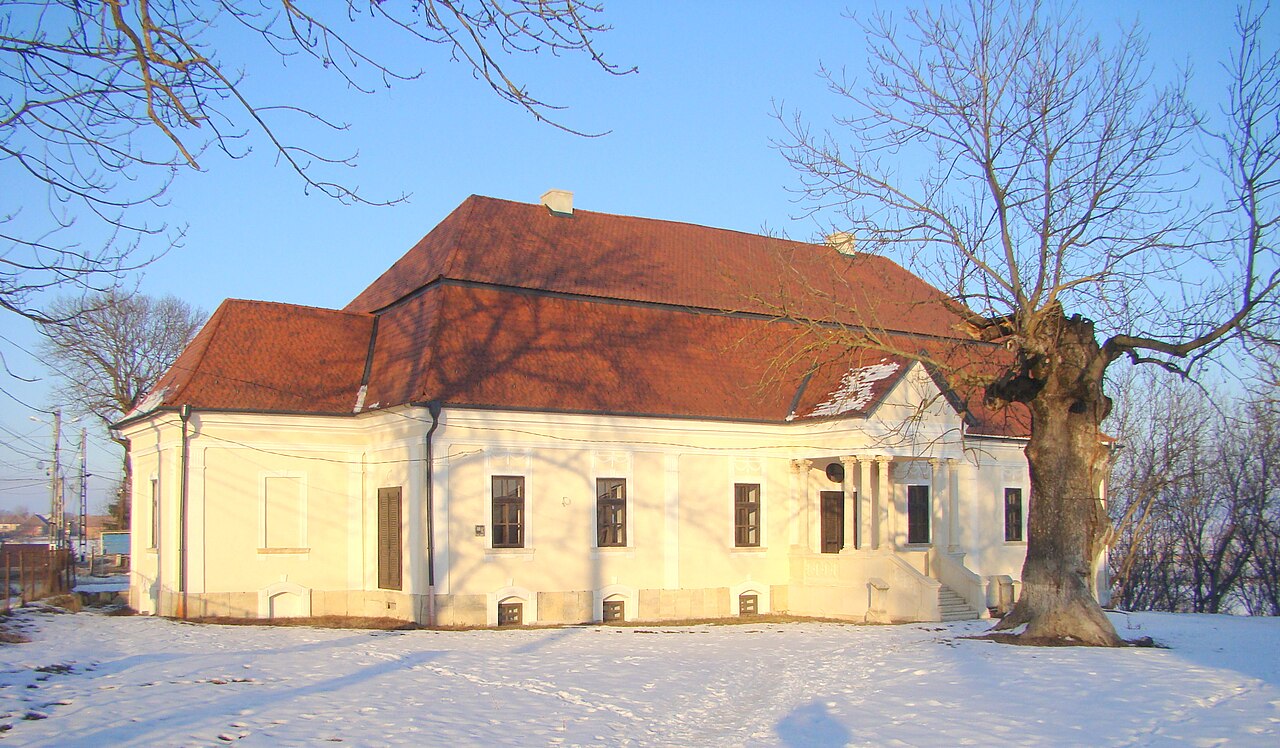
The southern side hosts an arched gatehouse that historically accommodated the priest and key estate officials, integrating administrative functions within the residential complex. On the northwest, a two-story rectangular annex originally served as a granary but was later converted into accommodations for hunters during the castle's use as a hunting lodge by Crown Prince Rudolf of Austria-Hungary in the late 19th century.
Landscape and park design
Surrounding the castle is an expansive English-style park covering between eleven and twenty hectares, making it Romania's second largest dendrological park. Designed in the 1830s by gardeners Anton Böhm and Ferenc Leerch, the park features rare tree species imported from Asia and North America.
The original landscape included naturalistic water features such as reflective ponds and fountains, artistic rock formations, cascades, kiosks, and hermitages, creating a harmonious blend of nature and art. A detailed 1871 account by local priest Ferenc Székely describes mythological statues like the sphinx, faun, silen, and naiads, which once adorned the park but have since been lost to overgrowth.
Despite the decline of the formal garden layout, surviving elements include the road network, water channels, a central pond with an island, a memorial to the 1848 revolution, and the Elisabeth Table, honoring Queen Elisabeth.
Later history and cultural role
The castle endured damage during the 1848 revolution when it was looted by Romanian insurgents but was restored by 1855. After a legal dispute, the Bornemisza family sold the estate back to the state in 1869. Subsequently, it served as a hunting lodge for Crown Prince Rudolf, hosting notable guests such as the future British King Edward and Bulgarian Tsar Ferdinand I.
From 1893, the castle housed a forestry school, the second largest in the Austro-Hungarian Empire, continuing its educational role through Romanian administration and the communist era until 2008. In the 1960s, part of the castle was dedicated to a natural history and hunting museum, displaying trophies, taxidermy, and hunting equipment.
Currently, the castle remains closed to the public, undergoing gradual restoration efforts focusing on the roof and gatehouse. The chapel, initially used by the Romanian Orthodox Church, was transferred to the Greek Catholic Church in 1999. Plans are underway to convert the property into a museum and conference venue, preserving its historical and cultural legacy.
Architectural and cultural significance
Bornemissza castle exemplifies the transition from Renaissance to Baroque architecture in Transylvania, reflecting the tastes and needs of noble families over centuries. Its well-preserved structure, extensive park, and rich history make it a valuable heritage site illustrating aristocratic life, political history, and landscape design in Eastern Europe.
The castle's combination of functional design, ceremonial spaces, and integration with natural surroundings offers insights into the social and cultural dynamics of the region from the 17th to the 19th centuries. Its ongoing restoration and adaptive reuse promise to enhance public appreciation of this architectural gem.
Frequently asked questions (FAQ)
- What is the historical significance of Bornemissza Castle?
- Bornemissza Castle, located in Gurghiu, Romania, is a stunning example of 19th-century architecture and reflects the rich history of the region. Originally built as a noble residence, the castle showcases a blend of Gothic and Renaissance styles, making it an important cultural landmark. It stands as a testament to the architectural trends of its time and the influence of noble families in Transylvania.
- When was Bornemissza Castle constructed?
- Construction of Bornemissza Castle began in the early 1800s and it was completed by the mid-19th century. The castle was built by the Bornemissza family, who were influential in the area, and it has since become a symbol of their legacy. Its historical context adds depth to its architectural beauty, attracting visitors interested in Romania's noble heritage.
- Can I visit Bornemissza Castle?
- Yes, visitors are welcome to explore Bornemissza Castle, but it is advisable to check in advance for any special events or maintenance that may affect access. Guided tours are often available, allowing guests to learn about the castle's history and architecture. Make sure to enjoy the surrounding gardens and picturesque landscape during your visit.
- What are the opening hours for Bornemissza Castle?
- Bornemissza Castle typically opens to visitors from 10 AM to 6 PM, with varying hours during weekends and holidays. It is recommended to verify the current opening times on the official website or by contacting local tourist information ahead of your visit. This ensures you have the latest information and can plan your trip accordingly.
- Is it possible to take photographs inside Bornemissza Castle?
- Yes, photography is usually permitted inside Bornemissza Castle, but visitors should be mindful of any specific restrictions in certain areas. Capturing the intricate details of the architecture and the beautiful interiors can enhance your experience. Always respect the rules set by the castle staff to ensure a pleasant visit for everyone.
- What is the best time to visit Bornemissza Castle?
- The best time to visit Bornemissza Castle is during the spring and early autumn months, when the weather is mild and the gardens are in full bloom. These seasons provide a picturesque backdrop for your visit, making it ideal for photography and leisurely strolls. Additionally, visiting during weekdays may help you avoid larger crowds.
- Are there any nearby attractions to visit while at Bornemissza Castle?
- Yes, there are several nearby attractions that complement a visit to Bornemissza Castle, including the picturesque landscapes of Gurghiu and historical sites throughout Transylvania. The charming village atmosphere and local museums offer insights into the region's culture. Exploring these nearby sites can enhance your overall experience in this beautiful part of Romania.
- What are the ticket prices for visiting Bornemissza Castle?
- Ticket prices for Bornemissza Castle are generally affordable, with discounts available for students and seniors. Admission fees contribute to the maintenance and preservation of the castle, ensuring its historical significance is upheld. It's best to check the official website for current pricing and any special offers that may be available during your visit.
- How do I get to Bornemissza Castle?
- Bornemissza Castle is accessible by car and public transportation from major cities in Romania, including Târgu Mureș and Cluj-Napoca. If you're traveling by car, there are parking facilities available nearby. For those using public transport, local buses and trains can get you close, followed by a short walk to the castle.
Photo gallery

Information
Website
Visit websiteSources & official resources
Verify the information above using these authoritative references.
Loading map...
Visitor reviews
No reviews yet. Been here? Write the first review and help other travelers!
Write the first reviewVisited this castle? Share your experience
Your review helps other travelers and adds first-hand knowledge to our encyclopedia.