Borgeby Castle
Borgeby Castle stands as a remarkable testament to over a millennium of Scandinavian history, located in the municipality of Lomma, Sweden. Its origins trace back to the Viking Age, around 980 AD, when it was established as one of the iconic trelleborg ring fortresses commissioned by King Harald Bluetooth. These circular fortresses were strategically designed for both military defense and administrative control, characterized by their precise geometry and robust earthworks. Borgeby Castle’s original fortress had a diameter of approximately 150 meters, with broad ramparts about 15 meters wide, encircling the core area near the Lödde River. This location was crucial, positioned near the river’s mouth at the Öresund strait, enabling control over regional waterways and trade routes.
The fortress was initially governed by Toke Gormsen, appointed by Harald Bluetooth as king of Skåne, who ruled from Borgeby until his death in 986. Unlike many other trelleborgs that were abandoned after the Viking Age, Borgeby continued to be inhabited, as evidenced by archaeological finds such as a late Viking coin scale and locally minted coins from the mid-11th century. This continuity highlights Borgeby’s sustained importance as a local center well into the early medieval period.
Early medieval development and architectural evolution
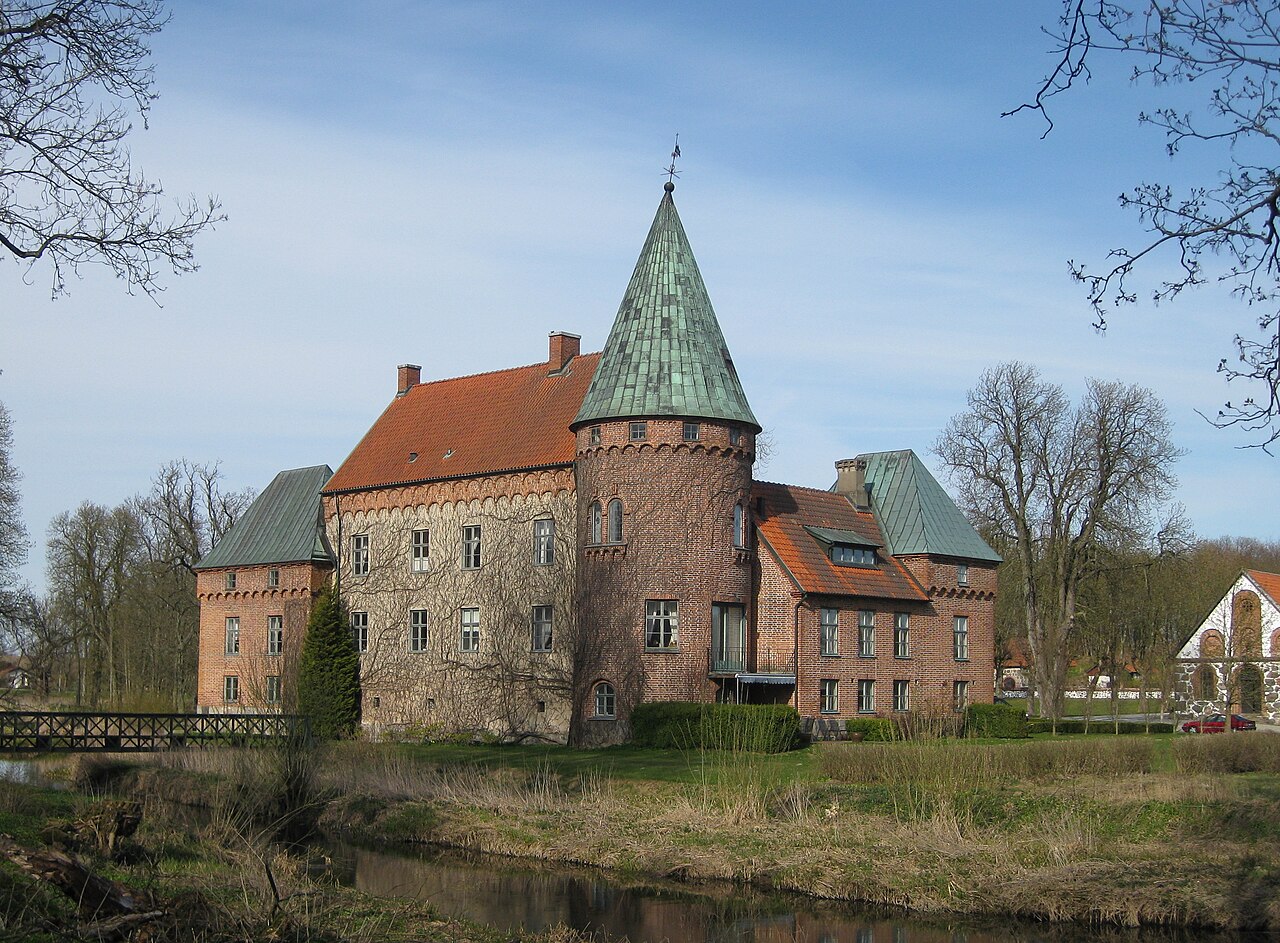
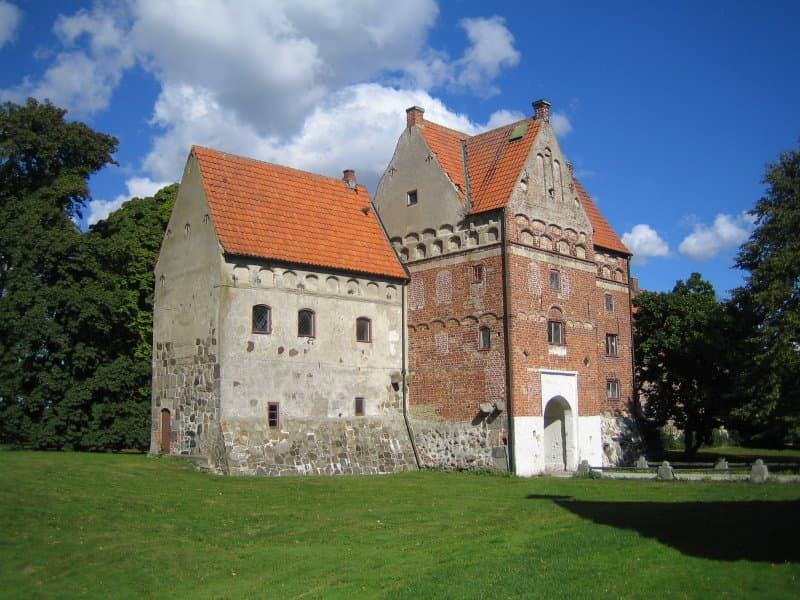
In the early 1100s, a significant architectural shift occurred with the construction of a stone defensive tower at the heart of the original Viking ring fortress. This transition from timber to stone construction marked Borgeby’s evolving role as a fortified administrative site during the early medieval period. By the 13th century, the site saw the erection of a large brick castle occupying roughly a quarter of the original fortress footprint. This medieval castle was encircled by a high brick wall measuring between 10 and 11 meters in height and protected by a substantial moat. The castle complex included several brick buildings, notably a gate tower that remains largely intact today, offering valuable insights into medieval fortification techniques.
The impact of conflict and reconstruction
Borgeby Castle’s history is marked by episodes of conflict and rebuilding. In 1452, the castle was burned down by the Swedish army under King Karl Knutsson (Bonde). Following this destruction, new constructions were undertaken, including an archbishop’s chapel and a large tower believed to have served as the archbishop’s residence. This tower, known as Börjes Tower, dates probably from the 15th century and was later extensively restored in 1870 by architect Helgo Zettervall, who removed much of the original medieval masonry. Today, Börjes Tower stands as a prominent feature of the castle grounds and is used for art exhibitions, blending historical preservation with contemporary cultural functions.
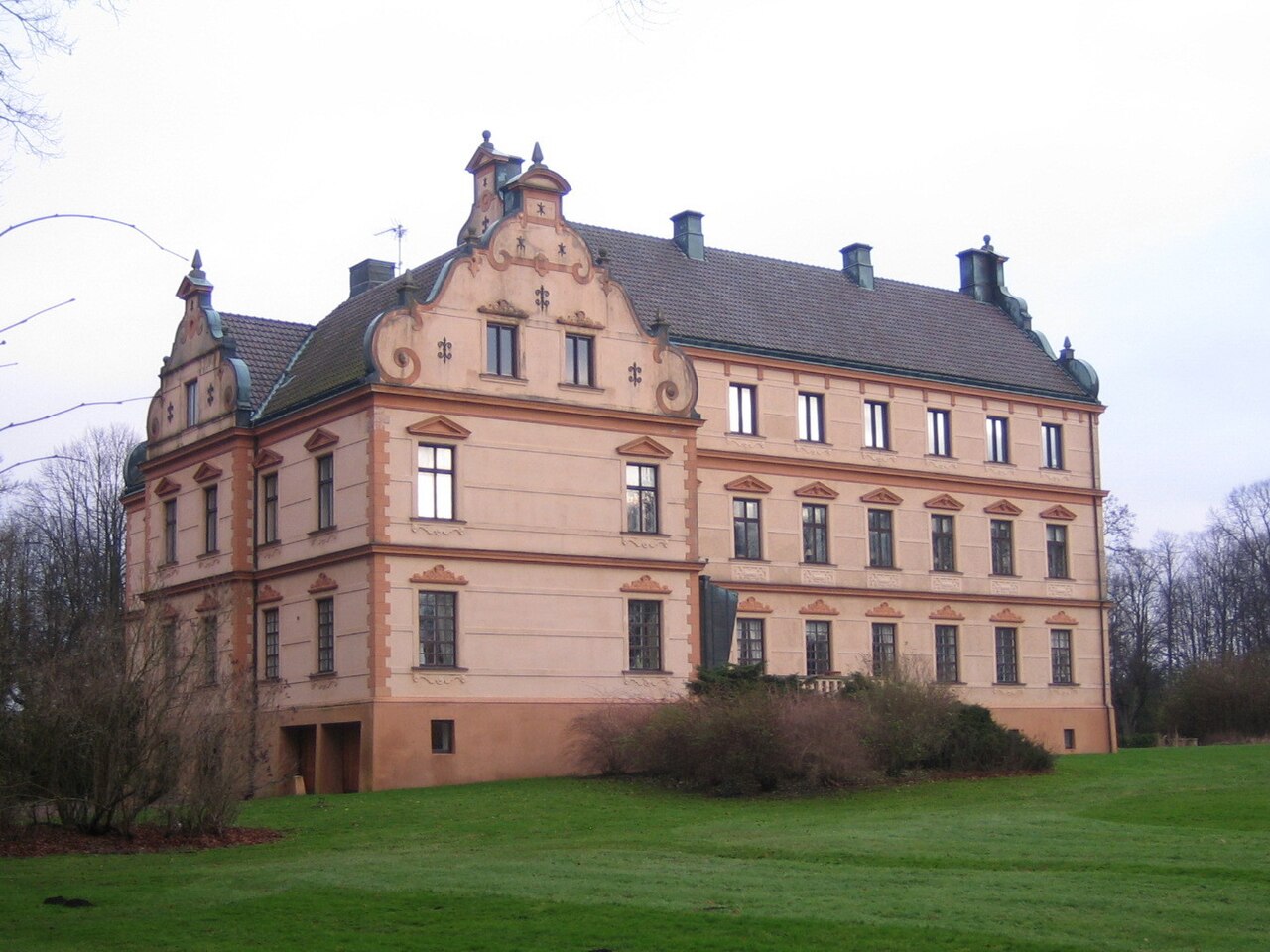
The castle suffered further damage during the Scanian War in 1678 when Danish forces burned it, leaving mainly the walls standing. Restoration efforts followed promptly, ensuring the castle’s survival into modern times. The main residential building seen today was constructed in the 1550s by Hans Spiegel, chamberlain to King Frederik II, reflecting Renaissance architectural influences during the period of private ownership following the Danish Reformation.
Later modifications and estate function
The estate continued to evolve through the 18th century with the addition of brick stables built in 1744, indicative of the castle’s role as an agricultural and noble estate. Throughout its history, Borgeby Castle transitioned from ecclesiastical to private ownership after the Reformation, when King Christian III mortgaged the property to Jörgen Kock, mayor of Malmö. Since then, the castle has been home to several Danish and Swedish aristocratic families.
In 1886, the castle was acquired at auction by farmer Lars Pehrsson, whose daughter Hanna Larsdotter married the artist and author Ernst Norlind. The castle now serves as a museum showcasing Norlind’s paintings, linking its rich historical legacy with cultural heritage.
Archaeological significance and preservation
Archaeological investigations have played a crucial role in uncovering Borgeby Castle’s layered history. Aerial photography in 1974 revealed traces of the ancient ring rampart, prompting extensive excavations in the 1980s and 1990s. These digs unearthed multiple cultural layers, including Viking coin scales and evidence of a local mint dating to the 11th century, confirming the site’s continuous occupation beyond the Viking Age.
Further excavations in 1998 identified a distinctive V-shaped moat characteristic of Harald Bluetooth’s trelleborgs, cementing Borgeby’s place among these rare Viking fortifications. The site’s layout, including the ring rampart and moat, illustrates the sophisticated military engineering of the period and provides a tangible connection to the Viking world.
Relationship with the surrounding landscape
Borgeby Castle’s strategic position near the Lödde River and its proximity to Borgeby Church and the medieval farming village highlight its integral role within the local community and landscape. The castle not only served as a military stronghold but also as an administrative and economic center, overseeing agricultural production and regional governance.
Cultural legacy and modern use
Today, Borgeby Castle stands as a well-preserved historical monument reflecting its evolution from a Viking fortress to a medieval stronghold and noble estate. The castle’s architecture showcases elements from the early medieval stone tower, the 13th-century brick fortifications, to Renaissance and later modifications. Its survival through wars, fires, and restorations embodies the resilience of Scandinavian heritage.
As a museum and cultural venue, Borgeby Castle continues to attract visitors interested in Viking history, medieval architecture, and Swedish cultural heritage. Its combination of archaeological significance, architectural diversity, and artistic exhibitions makes it a unique destination for scholars and tourists alike.
Frequently asked questions (FAQ)
- What is the historical significance of Borgeby Castle?
- Borgeby Castle, located in Lomma, Sweden, dates back to the late 15th century and has played a crucial role in the region's history. It served as a noble residence and has witnessed numerous historical events, contributing to Sweden's rich cultural heritage.
- When was Borgeby Castle built?
- Construction of Borgeby Castle began in the late 1400s and was completed in the early 1500s. The castle reflects the architectural styles of the late medieval period and showcases the evolution of Swedish castle design.
- What are the opening hours for Borgeby Castle?
- Borgeby Castle is typically open to visitors from May to September. During this period, the castle welcomes guests from 10 AM to 5 PM, allowing ample time to explore its grounds and learn about its history.
- Can I visit Borgeby Castle year-round?
- While Borgeby Castle is primarily open during the summer months, it may also host special events or tours during the off-season. It’s best to check their official website for specific dates and potential winter openings.
- Is Borgeby Castle accessible for visitors with mobility challenges?
- Borgeby Castle has made efforts to improve accessibility for all visitors, including those with mobility challenges. However, some areas of the castle may still pose difficulties due to historical architecture, so it's advisable to contact them ahead of your visit for specific accommodations.
- What is the best time to visit Borgeby Castle?
- The best time to visit Borgeby Castle is during the summer months, from June to August, when the weather is mild and the castle hosts various events. This is also when guided tours are available, providing a more enriching experience.
- Are there any nearby attractions to visit while at Borgeby Castle?
- Yes, visitors to Borgeby Castle can also explore the picturesque town of Lomma, with its beautiful beaches and charming cafes. Additionally, the Lund Cathedral and the historical town of Malmö are just a short drive away, making for a perfect day trip.
- What are the ticket prices for visiting Borgeby Castle?
- Ticket prices for Borgeby Castle are generally affordable, with discounts available for children, students, and seniors. It’s recommended to check the official website for the latest pricing and any special promotions that may be offered.
Photo gallery

Information
Website
Visit websiteSources & official resources
Verify the information above using these authoritative references.
Loading map...
Visitor reviews
No reviews yet. Been here? Write the first review and help other travelers!
Write the first reviewVisited this castle? Share your experience
Your review helps other travelers and adds first-hand knowledge to our encyclopedia.