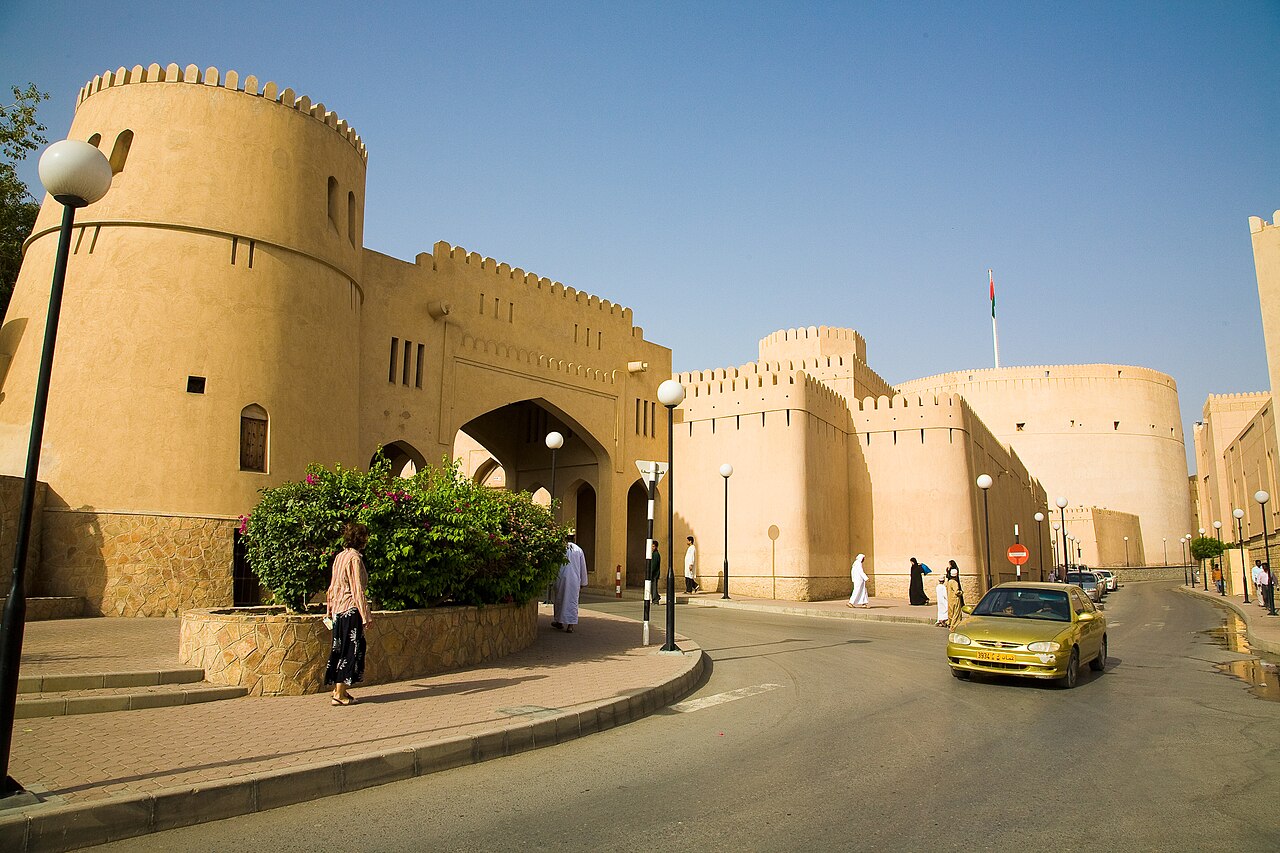
Birkat Al Mouz Towers

Birkat Al Mouz towers in Oman
Birkat Al Mouz, Ad Dakhiliyah, Oman
Renaissance (15th–17th c.)
Restored

The Birkat Al Mouz Towers are a group of historic watchtowers located in the town of Birkat Al Mouz, also known as Mawz, situated within the Ad Dakhiliyah Governorate of Oman. These towers are perched atop several hills surrounding the Birkat Al Mouz oasis, a fertile area that historically supported the local settlement. The towers played a strategic role in the defense system of the region, particularly in conjunction with the nearby Bayt Ar Ridaydah Castle, which dates back to the 17th century.

Historical context and defensive purpose

Constructed during the 17th century, the Birkat Al Mouz watchtowers were integral to the security of the oasis settlement. Their primary function was to provide early warning and surveillance against potential threats such as thieves and rebels. Guards were typically stationed in these towers, especially during the night, to monitor the surrounding landscape and communicate any signs of danger to the main castle and the inhabitants.

The towers' elevated positions on the hills allowed for a wide vantage point over the oasis and the surrounding terrain, making them effective lookout posts. This network of watchtowers worked in coordination with the Bayt Ar Ridaydah Castle, which served as the central defensive stronghold for the community.

Architectural features and layout

The Birkat Al Mouz Towers are relatively small, robust structures typical of watchtowers built during the period. Their construction mainly utilized local stone and traditional masonry techniques suited to the arid environment of Oman. The towers feature thick walls designed to withstand attacks and provide shelter for the guards.

One notable tower in the group is Tower B, locally known as Burj Ghiyadha. This tower exemplifies the typical design with limited openings for observation and defense, ensuring the safety of the occupants while maintaining visibility of the surroundings.

Restoration and current condition

The towers have undergone restoration efforts to preserve their structural integrity and historical value. Today, they are freely accessible to visitors interested in exploring the defensive heritage of the Birkat Al Mouz area. Although modest in scale and architectural complexity, the towers offer insight into the local defensive strategies of the 17th century.

Visitors can observe the towers' placement and imagine the role they played in protecting the oasis community. The site is also a pleasant stop for those touring the town and the surrounding region.

Visiting Birkat Al Mouz and its towers

Birkat Al Mouz is a traditional Omani settlement known for its historic buildings and natural beauty. The watchtowers form part of the cultural landscape, complementing other heritage sites such as the Bayt Ar Ridaydah Castle and the palm groves of the oasis.

Exploring the towers provides a tangible connection to the defensive practices of the past and offers panoramic views of the oasis and surrounding hills. Visitors interested in Omani history, architecture, and traditional settlement patterns will find the Birkat Al Mouz Towers a worthwhile destination.

Frequently asked questions (FAQ)

How do I get to Birkat Al Mouz Towers?
You can reach Birkat Al Mouz Towers by car or taxi from Muscat, which is approximately a 2-hour drive. Public transport options may also be available, but they are less frequent, so planning ahead is advised.
What is the historical significance of Birkat Al Mouz Towers?
Birkat Al Mouz Towers are significant for their representation of Omani architectural heritage and their role in the region's history. These towers were built for defense and storage, showcasing the ingenuity of the local people in adapting to their environment.
When was Birkat Al Mouz Towers constructed?
The towers were constructed during the late 17th century and early 18th century, reflecting the architectural style of that period. They served as important structures for the local community, particularly in times of conflict.
Can I enter the towers during my visit?
Visitors are typically allowed to explore the exterior of the towers, but access to the interiors may be restricted. It's advisable to check for any guided tours that may offer a more in-depth experience.
Why is Birkat Al Mouz Towers a popular tourist attraction?
Birkat Al Mouz Towers attract visitors due to their historical significance and stunning architectural design. The site offers breathtaking views of the surrounding date palm plantations and mountains, making it a picturesque setting for photography.
Is it possible to visit Birkat Al Mouz Towers year-round?
Yes, Birkat Al Mouz Towers are open for visitors year-round, but the best time to visit is between October and March when the weather is milder. This allows for a more comfortable exploration of the site.
What are the opening hours for Birkat Al Mouz Towers?
The opening hours for Birkat Al Mouz Towers can vary, so it is recommended to check local resources or contact tourism information for the most accurate details. Generally, they are open during daylight hours.
Are there any nearby attractions to visit?
Yes, nearby attractions include the ancient ruins of the nearby fort and the beautiful palm oasis that surrounds the area. You can also explore the local traditional markets for an authentic Omani experience.
What are the ticket prices for visiting Birkat Al Mouz Towers?
There is typically no entrance fee to visit Birkat Al Mouz Towers, making it an accessible option for travelers. However, guided tours may have associated costs, so it's best to inquire beforehand.

Information

Hill Castle

Loading map...

Visitor reviews

No reviews yet. Been here? Write the first review and help other travelers!

Write the first review

Visited this castle? Share your experience

Your review helps other travelers and adds first-hand knowledge to our encyclopedia.

Write a review

(5/5)

0/2000 characters

Your review will be visible after admin approval

Nearby castles

0.3 km

Bayt Ar Ridaydah Castle

Birkat Al Mouz, Oman

Bayt Ar Ridaydah Castle stands as a significant historical fortress located in the town of Birkat Al Mouz in the Ad Dakhiliyah Governorate of Oman. This castle dates back to the 17th century and was originally constructed by the Bani Riyam tribe, who controlled the mountainous heartland of the region. Strategically positioned at the exit of the Wadi Al Muaydin from the Hajar Mountains, the castle played a crucial role in protecting the fertile Birkat Al Mouz oasis, which was vital for sustaining local communities. Historical significance and tribal control The castle's establishment during the Renaissance period reflects the era's regional dynamics, where tribal groups sought to fortify their territories against rival factions and external threats. The Bani Riyam tribe utilized Bayt Ar Ridaydah Castle as a defensive stronghold to monitor and control access through the mountainous passes. Its location near the entrance to the wadi allowed the tribe to oversee movements along the natural routes that connected the interior highlands with the surrounding regions. Architectural features and defensive structures Bayt Ar Ridaydah Castle features several prominent watchtowers that extend over the nearby hills, which provided early warning and surveillance capabilities. These towers, sometimes referred to as the Birkat Al Mouz Towers, were integral to the castle's defense system, enabling the inhabitants to detect approaching enemies from a distance. The castle's walls and fortifications were designed to withstand attacks typical of the period, including raids and sieges. Water management system A distinctive feature of the castle grounds is the presence of the Falaj Al Khatmain, a traditional falaj system—an ancient man-made, partly underground water channel used to irrigate the oasis and supply water to the castle. This falaj not only supported agricultural activities but also ensured a reliable water source within the fortress, a critical factor in sustaining the castle's occupants during times of siege or drought. Restoration and current status Over the last century, Bayt Ar Ridaydah Castle had fallen into a state of ruin due to natural decay and lack of maintenance. However, in recent decades, efforts have been made to restore the castle, preserving its historical and architectural integrity. The restoration has allowed the castle to serve a new purpose as a heritage weapons museum, showcasing traditional arms and artifacts related to the region's martial history. Access and visitor information The castle is located adjacent to a road that follows the wadi and provides the only access route to the Jebel Akhdar, one of the highest peaks in the Al Hajar Mountains. Despite its cultural importance, Bayt Ar Ridaydah Castle has limited public access. It was reported closed during some visits, and there is no widely available information about regular opening hours or ticket prices. Visitors interested in exploring the castle and its museum should seek local guidance or check for updated visitor information before planning a trip. Surrounding landscape and strategic location The castle's placement at the edge of the Birkat Al Mouz oasis and near the mountainous terrain underscores its strategic importance. The surrounding Hajar Mountains form a natural barrier and a challenging environment, making the castle's defensive capabilities essential for controlling the area. The nearby watchtowers enhance the defensive network, allowing for communication and coordination across the hills. Cultural heritage and significance Bayt Ar Ridaydah Castle is an important cultural landmark reflecting the tribal history and architectural traditions of Oman during the 17th century. It provides insight into the military strategies, water management techniques, and settlement patterns of the period. The castle and its associated structures contribute to understanding the broader historical context of the Ad Dakhiliyah region and its role in Omani history.

Renaissance (15th–17th c.)
Details
9.9 km

Izki Fort

Izki, Oman

Izki Fort is a historic fortress located in the town of Izki, within Oman's Ad Dakhiliyah Governorate. This ancient town is situated at an oasis on a low ridge beside a wadi, providing a strategic location that has been significant for centuries. The fort stands between the remnants of two historic walled towns, Harat Al-Nizar and Harat Al-Yemen, which were named after the two prominent families that once inhabited and often clashed within these settlements. Historical context of izki and its twin towns The twin towns of Harat Al-Nizar and Harat Al-Yemen were located only about 200 meters apart. Harat Al-Nizar remains mostly inhabited today, whereas Harat Al-Yemen was destroyed and rebuilt during the 18th century but eventually abandoned before 1980. These settlements reflect the tribal and familial dynamics of the region, with their walls serving both defensive and social purposes. Origins and architectural evolution of izki fort The origins of Izki Fort are somewhat debated. Some sources attribute its foundation to the Yaruba dynasty, which ruled Oman from 1624 to 1742. This period was notable for fortification efforts across Oman as the Yarubids sought to consolidate power and defend against external threats. Other accounts suggest the fort was constructed or significantly rebuilt during the reign of Said bin Sultan, who ruled from 1804 to 1856, a time marked by political consolidation and expansion of Oman's influence. It is plausible that the current structure of Izki Fort was built in the 18th century atop the ruins of an earlier Yaruba fortress, combining architectural elements from both periods. This layering of construction reflects common practices in Omani fortification, where strategic sites were reused and adapted over time. Architectural features and strategic significance Izki Fort occupies a commanding position between the two historic towns, overseeing the oasis and the wadi below. The fort's walls and towers would have provided surveillance and defense capabilities, controlling access to the oasis and protecting the local population from rival factions and external invaders. The fort likely features typical Omani defensive architecture of the post-Renaissance period, including thick stone walls, battlements, and possibly watchtowers. While detailed architectural surveys are limited, the fort's ruins suggest a robust construction designed to endure the harsh desert environment and the conflicts of the era. Current condition and visitor experience Today, Izki Fort stands as a ruined but accessible historical site. Visitors can freely explore the remains of the fort and gain insight into the region's complex history. The nearby abandoned town of Harat Al-Yemen also offers a glimpse into the past, with its deserted streets and crumbling walls telling stories of former life and conflict. Exploring Izki Fort and its surroundings provides a unique opportunity to understand Oman's tribal history, architectural heritage, and the strategic importance of oasis settlements in the desert landscape. Cultural significance and heritage preservation Izki Fort, along with the twin towns, represents an important part of Oman's cultural heritage. The site reflects the historical patterns of settlement, defense, and family rivalries that shaped the region. Preserving such sites is crucial for maintaining the tangible links to Oman's past and for educating visitors about the country's rich history. Efforts to maintain and study Izki Fort can help promote heritage tourism in the Ad Dakhiliyah region, encouraging sustainable engagement with Oman's architectural and historical treasures.

Post-Renaissance (17th–18th c.)
Details
14.2 km
Nizwa Fort — Oman castle

Nizwa Fort

Nizwa, Oman

Nizwa Fort is a monumental hill castle located in the historic city of Nizwa, within the Ad Dakhiliyah Governorate of Oman. This imposing fortress stands as a testament to Oman's rich military and political history, particularly during the 17th century under the Yaruba dynasty. The fort is renowned for its massive circular tower, which is considered one of the largest of its kind in the Arabian Peninsula, and for its sophisticated defensive architecture designed to withstand prolonged sieges. The site of Nizwa Fort has been a strategic and cultural center since at least the 8th century, when the original fortress was established by Imam Mohammed bin Abdullah of the Yahmadi tribe. The castle’s early foundations were expanded in the 9th century by Imam Al-Salt bin Malik, reflecting Nizwa's importance as a political and religious hub. The current fort structure, however, primarily dates from the mid-17th century when it was extensively rebuilt and fortified by Imam Nasir bin Murshid and his successor, Imam Sultan bin Saif I, both key figures in Oman's history for expelling Portuguese colonial forces and consolidating local power. Historical significance and political role Nizwa Fort served as the administrative and military center for the imams who combined religious and political authority in Oman. It was the seat of regional governors (Wālī) and played a crucial role in the governance and defense of the interior regions. The fort's strategic location in Nizwa, an important oasis town, allowed control over trade routes and local tribes. The fort’s history is intertwined with the struggle against foreign powers, notably the Portuguese and Persians, who sought to exert influence over Oman. The Yaruba dynasty's efforts to rebuild and strengthen the fort symbolized the assertion of Omani sovereignty and the defense of Islamic rule. The fort also functioned as a judicial center, with prison cells for detaining criminals and political prisoners, illustrating its multifaceted role beyond military defense. Architectural features and defensive design The great round tower The defining feature of Nizwa Fort is its massive round tower, which rises to nearly 30 meters in height and has an inner diameter of approximately 39 meters. The tower’s lower half is a solid mass of stone and rubble, pierced only by a narrow, winding staircase designed to slow and trap attackers. This staircase includes multiple trap doors, murder holes, and pitfalls, all defensive mechanisms intended to hinder enemy progress. The upper part of the tower features a wide wall-walk capable of accommodating up to 120 guards, who were equipped with muskets and flintlocks. The battlements provide extensive views of the surrounding countryside, enabling early detection of approaching threats. The tower is reputed to be the largest round defensive tower in the Arabian Peninsula, underscoring its military significance. Walls, gates, and internal structures The fort's walls are thick and rounded, constructed from stone, rubble, and mortar to resist cannon fire and explosive mortar rounds. The heavy wooden doors are reinforced with iron spikes to prevent forced entry, while murder holes above the gates allowed defenders to pour boiling oil or water on attackers. Inside, the fort is a labyrinth of corridors, gates, courtyards, terraces, halls, and narrow stairways designed to confuse and delay invaders. Secret passages and fall doors could be used to block access or provide escape routes. The presence of underground storage rooms for food and weapons, as well as cisterns fed by an underground river, ensured the fort could withstand prolonged sieges without running out of essential supplies. Water supply and sustainability A remarkable feature of Nizwa Fort is its water supply system, which taps into an underground river flowing beneath the fortress. This ingenious design guaranteed fresh water access even during extended sieges, a critical factor in the fort's defensive resilience. The cisterns and water channels demonstrate advanced engineering and strategic planning by the fort's builders. Cultural and architectural legacy Nizwa Fort is not only a military stronghold but also a cultural landmark that reflects the architectural and engineering prowess of Omani builders during the early modern period. The fort’s design incorporates traditional Islamic military architecture with adaptations suited to the local environment and the specific threats faced by Oman in the 17th century. The fort is closely associated with the Yaruba dynasty, especially Imam Nasir bin Murshid and Imam Sultan bin Saif I, who are celebrated for their leadership in restoring Omani independence and expelling foreign occupiers. Their legacy is embodied in the fort’s robust construction and strategic features. Visitor experience and modern significance Today, Nizwa Fort is a popular tourist destination, attracting visitors interested in Omani history, architecture, and culture. The fort is well-preserved and accessible for exploration, with its complex interior offering a glimpse into the defensive strategies and daily life of the past. Visitors can explore the extensive battlements, climb the towering round tower, and wander through the maze of corridors and chambers. The adjacent traditional souk adds to the cultural experience, offering a vibrant market atmosphere that complements the historical setting. While the fort can become crowded during peak tourist seasons, it remains a must-visit site for those seeking to understand Oman’s heritage. The fort’s combination of historical significance, architectural grandeur, and cultural context makes it a key highlight of any visit to Nizwa. Practical information for visitors Opening hours: Typically open daily from morning until late afternoon, though specific times may vary seasonally. Admission fees: A modest ticket price is charged for entry, supporting the fort’s maintenance and preservation. Accessibility: The fort’s historic nature means some areas involve steep stairs and uneven surfaces; visitors should be prepared for moderate physical activity. Nearby attractions: The old town of Nizwa and its bustling souk offer additional cultural and historical exploration opportunities.

Early Medieval (5th–10th c.)
Details