Belogradchik Fortress
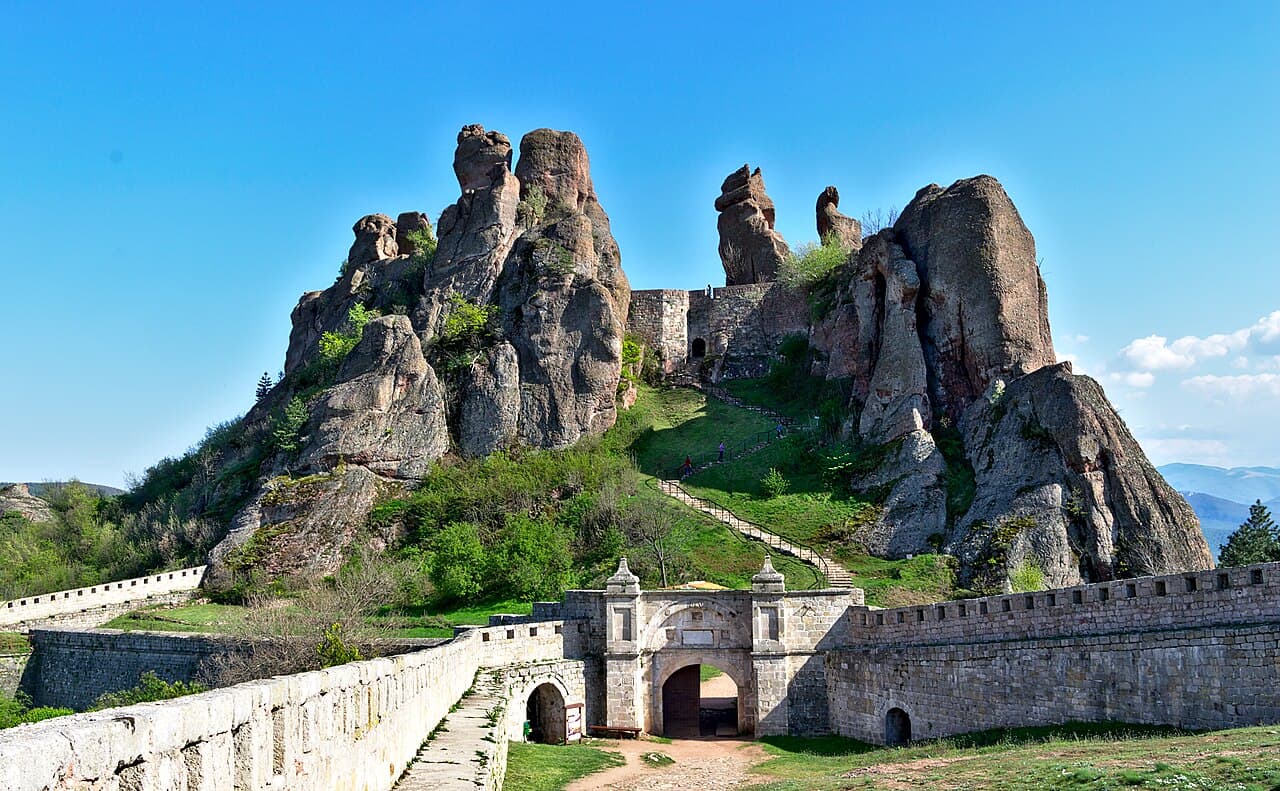
The Belogradchik fortress, also known locally as Kaleto, is a remarkable example of a late medieval fortress uniquely integrated into the natural landscape of the Balkan Mountains near the town of Belogradchik in northwestern Bulgaria. Positioned on the north slopes of the mountains, the fortress is famed for its strategic location amid the dramatic Belogradchik Rocks, a series of towering sandstone and conglomerate rock formations that rise up to 70 meters high. These natural features have played a critical role in the fortress's defense, as the rock walls formed an almost impregnable barrier on two sides, requiring only two constructed walls to enclose the stronghold.
The fortress's origins date back to the Roman Empire period, when the site was first used for surveillance rather than full military defense. The natural topography provided an excellent vantage point over the surrounding region, making it a valuable lookout post. However, it was during the reign of Tsar Ivan Stratsimir in the 14th century that the fortress was significantly expanded and fortified. Stratsimir, ruler of the Vidin Tsardom, recognized the strategic importance of the site and constructed fortified garrisons and walls on the northwestern and southeastern approaches, transforming it into one of the most important strongholds in the region, second only to the capital fortress of Baba Vida in Vidin.
Architectural features and layout
The Belogradchik fortress covers a total area of approximately 10,210 square meters. Its defensive walls are impressively robust, with foundations over 2 meters thick and heights reaching up to 12 meters. The fortress comprises three separate fortified yards, each connected by fortified gates, creating a layered defense system. The natural rock formations serve as formidable walls on two sides, while the man-made walls protect the more accessible approaches.
The fortress's design reflects a blend of natural and constructed defenses. The integration of the massive rock outcrops into the fortification system is a distinctive feature, making it a rock castle type, where natural terrain is a critical component of the defense. The walls include battlements and towers that provided vantage points for surveillance and defense against invaders.
Expansion under Ottoman rule
After the Ottoman conquest of Bulgaria in 1396, the fortress came under Ottoman control. Recognizing the strategic importance of the site, the Ottomans undertook significant expansions and renovations, especially in the early 19th century. These modifications were influenced by contemporary Ottoman military architecture and incorporated European elements introduced by French and Italian engineers. The fortress was reorganized and expanded to improve its defensive capabilities against frequent attacks from local hajduks and insurgents.
The Ottoman enhancements included strengthening the walls, adding new gates, and adapting the fortress to accommodate artillery, which was becoming increasingly important in warfare. This period of construction reflects a fusion of architectural styles and military technologies, making Belogradchik fortress a unique example of cultural and military interaction.
Historical significance and events
Throughout its history, the Belogradchik fortress has played a pivotal role in regional defense and control. It was a key military installation during the rule of Tsar Ivan Stratsimir and remained strategically important under Ottoman rule. The fortress was notably involved in the Belogradchik Uprising of 1850, where it was used by Ottoman forces to suppress the revolt. Following the crushing of the rebellion, several prominent local leaders were executed near the fortress, and a monument now stands at the site in their memory.
The fortress saw its last military use during the Serbo-Bulgarian War of 1885, after which it gradually lost its military importance. Its preservation and historical value have since been recognized, leading to restoration efforts and its development as an open-air museum and cultural monument of national importance.
Role in regional defense
Belogradchik fortress was part of a network of fortifications that protected the northwestern Bulgarian territories. Its position allowed control over important routes and served as a deterrent to invasions and local uprisings. The fortress's natural and constructed defenses made it a formidable obstacle for any attacking force.
Restoration and current status
Today, the Belogradchik fortress is one of the best-preserved fortresses in Bulgaria. Restoration efforts have focused on maintaining the structural integrity of the walls, gates, and courtyards, as well as preserving the unique interaction between the fortress and the natural rock formations. The site operates as an open-air museum, attracting tourists interested in medieval architecture, military history, and natural beauty.
Visitors can explore the fortress's three fortified yards, walk along the battlements, and enjoy panoramic views of the surrounding landscape and the striking Belogradchik Rocks. The fortress is a cultural monument of national importance and a symbol of the region's rich historical heritage.
Tourism and cultural importance
The fortress is a major tourist attraction in the Vidin region, drawing visitors for its historical significance and spectacular setting. It is often visited in conjunction with the nearby Belogradchik Rocks, making the area a unique destination combining natural wonders and historical architecture. The fortress hosts cultural events and exhibitions that highlight its history and the broader heritage of the region.
Frequently asked questions (FAQ)
- What is the historical significance of Belogradchik Fortress?
- Belogradchik Fortress dates back to the Roman era and has been a significant military stronghold throughout Bulgarian history. It served as a key defensive site against various invasions and is a remarkable example of medieval architecture influenced by the natural landscape.
- When was Belogradchik Fortress built?
- Construction of Belogradchik Fortress began in the 1st century AD, with significant modifications and expansions occurring during the Middle Ages. The fortress reflects various architectural styles that evolved over centuries, culminating in its present form in the 19th century.
- Can I visit Belogradchik Fortress year-round?
- Yes, Belogradchik Fortress is open to visitors throughout the year, although the best time to visit is during the spring and autumn when the weather is mild and the scenery is particularly beautiful. Be sure to check for any seasonal events or closures that may occur.
- What are the opening hours for Belogradchik Fortress?
- The fortress typically opens at 9 AM and closes at 5 PM during the weekdays, with extended hours on weekends in the high season. It's advisable to verify the current hours before your visit, especially during public holidays.
- Is it possible to access Belogradchik Fortress with a wheelchair?
- While parts of Belogradchik Fortress are accessible, the rugged terrain and steep paths may pose challenges for wheelchair users. It's recommended to contact the site in advance to inquire about accessibility options and alternative routes.
- What is the ticket price for entering Belogradchik Fortress?
- The entrance fee for Belogradchik Fortress is generally affordable, with discounts available for students and seniors. Prices may vary slightly depending on the season, so it's best to check their official website or local tourist information for the most current rates.
- What are some nearby attractions to Belogradchik Fortress?
- Nearby attractions include the stunning Belogradchik Rocks, a UNESCO World Heritage site, and the picturesque town of Belogradchik itself. Visitors can also explore the local caves and enjoy hiking trails that showcase the area's natural beauty.
- When is the best time to visit Belogradchik Fortress?
- The best time to visit Belogradchik Fortress is during the spring and early autumn months when the weather is pleasant, and the scenery is at its most vibrant. Summer can be quite warm, while winter may bring snow, which can affect accessibility.
Photo gallery

Information
Loading map...
Visitor reviews
No reviews yet. Been here? Write the first review and help other travelers!
Write the first reviewVisited this castle? Share your experience
Your review helps other travelers and adds first-hand knowledge to our encyclopedia.