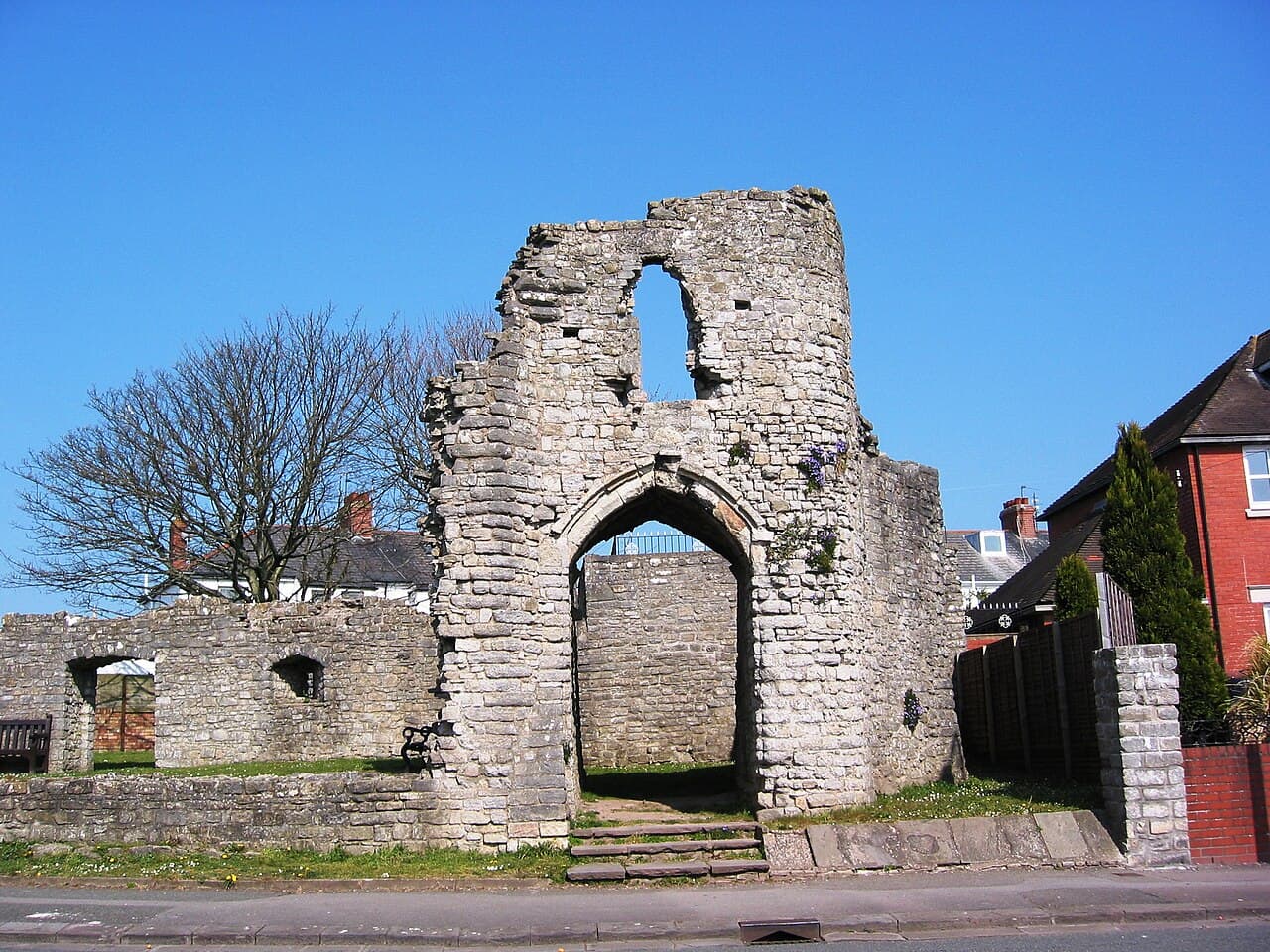
Barry Castle
Barry Castle in Barry, Wales, represents a significant example of a medieval fortified manor house with origins tracing back to Norman settlement in the region. The castle's history reflects the turbulent period of Norman expansion into South Wales and the complex interactions between Norman lords and the native Welsh population. Its surviving ruins, primarily dating from the 13th and 14th centuries, offer insight into the architectural evolution from early timber fortifications to more robust stone constructions.
Early history and foundation
The site of Barry Castle was initially occupied by a Roman structure, indicating its strategic importance long before the medieval period. Following the Norman conquest of parts of Wales, the de Barry family, a powerful Norman lineage, established the first fortifications here in the late 11th or early 12th century. This earliest castle was a wooden ringwork—a circular defensive enclosure made from earth and timber—measuring approximately 35 meters in diameter and surrounded by a protective ditch. This form of fortification was typical for early Norman castles, allowing rapid construction and effective defense.
William de Barry is credited with initiating these initial works, using the castle both as a military stronghold and a family residence. The de Barry family took their name from the nearby island associated with St. Barruca, underscoring the local cultural connections entwined with their Norman heritage.
Architectural development in the high medieval period
By the late 13th century, Barry Castle underwent significant transformation. The original timber defenses were replaced with stone buildings, reflecting advances in military architecture and the need for stronger fortifications. Two rectangular stone structures were constructed on the east and west sides of the castle's courtyard, marking a transition toward a more permanent and defensible residence. Unfortunately, no above-ground remains survive of these early stone buildings today.
In the early 14th century, the castle was further enhanced with the addition of a large great hall and a two-storey gatehouse on the southern side. The great hall served as the main domestic and social space, featuring a first-floor chamber with a fireplace and access from the courtyard below, likely via wooden stairs. Defensive features such as arrow slits in the hall's lower walls illustrate the dual residential and military function of the structure.
The gatehouse was a critical defensive element, incorporating a vaulted passage protected by a portcullis, double doors, and a drawbridge. Architectural details such as an ogival stone arch and Gothic-style windows highlight the stylistic influences of the period. Above the gate passage, a small chamber probably functioned as a chapel, emphasizing the integration of religious practice within the castle complex.
Additional defensive works included a narrow stair built into the southern curtain wall, which provided access to a wall-walk connecting the gatehouse and other fortifications. This layout allowed defenders to patrol and protect the castle perimeter effectively.
Historical events and decline
Barry Castle played a role in the regional conflicts of medieval Wales. In 1316, it suffered serious damage during the revolt led by Llywelyn Bren, a Welsh nobleman who challenged the authority of King Edward II. Following the uprising, repairs and enhancements were made to the castle's defenses, reflecting its ongoing strategic importance.
However, by the 16th century, Barry Castle's military and residential significance diminished, leading to its abandonment and gradual decay. Although some maintenance occurred during the English Civil War in the 17th century, the castle continued to deteriorate, eventually becoming a ruin.
Architectural remains and current condition
Today, Barry Castle survives as a Grade II* listed ruin, with the most substantial remains comprising the gatehouse and the south-facing walls of the great hall. Fragments of the north and east curtain walls remain visible, outlining the castle's former courtyard layout. The site stands on a small hill just north of Barry's town center, near Romilly Park, maintaining its historical prominence in the local landscape.
The castle's circular ringwork foundation, defensive ditch, and stone curtain walls illustrate the typical evolution of medieval fortifications in Wales. The surviving architectural features, such as the vaulted gatehouse passage, portcullis grooves, and arrow slits, provide valuable evidence of medieval military design and domestic arrangements within a fortified manor house.
Cultural significance and heritage status
Barry Castle is not only an important archaeological site but also a cultural landmark in the Vale of Glamorgan. Its connection to the Norman conquest and Welsh history makes it a point of interest for historians and visitors alike. The castle's ruins contribute to understanding the regional dynamics of power, architecture, and society during the high medieval period.
Managed as a protected historic site, Barry Castle offers educational opportunities and insight into medieval castle construction techniques. Its preserved remains attract visitors interested in Welsh history, Norman architecture, and medieval military structures.
Frequently asked questions (FAQ)
- What is the historical significance of Barry Castle?
- Barry Castle is a medieval castle dating back to the 13th century, built by the de Clare family. It holds a prominent place in the history of Wales, reflecting the turbulent times of Norman conquests and the development of local power structures.
- When was Barry Castle constructed?
- Barry Castle was constructed in the late 12th century, around 1090, making it one of the earliest fortifications in the region. Its architecture showcases the defensive strategies of the time, with features designed to withstand attacks.
- What are the opening hours for Barry Castle?
- Barry Castle is open to visitors year-round, typically from 10 AM to 5 PM. However, it's recommended to check the official website for any seasonal changes or special events that may affect opening hours.
- Can I visit Barry Castle year-round?
- Yes, Barry Castle is open to the public throughout the year. However, access may be limited during certain holidays or maintenance periods, so it's best to verify before planning your visit.
- Is Barry Castle accessible for individuals with mobility challenges?
- Barry Castle has some accessibility options, including paths leading to the main areas of interest. However, due to the historical nature of the site, some areas may be difficult to navigate for those with mobility impairments.
- What is the best time to visit Barry Castle?
- The best time to visit Barry Castle is during the spring and early autumn when the weather is mild and pleasant. This also allows you to enjoy the surrounding gardens and landscapes in full bloom.
- Are there any nearby attractions to visit while at Barry Castle?
- Yes, nearby attractions include the beautiful Barry Island with its beaches and amusement park, as well as the stunning coastline of the Vale of Glamorgan. These sites provide a perfect complement to your visit to Barry Castle.
- What are the ticket prices for Barry Castle?
- Admission to Barry Castle is generally free, as it is maintained by the local council. However, guided tours or special events may have associated fees, so it's advisable to check in advance for any costs.
Photo gallery

Information
Loading map...
Visitor reviews
No reviews yet. Been here? Write the first review and help other travelers!
Write the first reviewVisited this castle? Share your experience
Your review helps other travelers and adds first-hand knowledge to our encyclopedia.



