Bare Island Fort
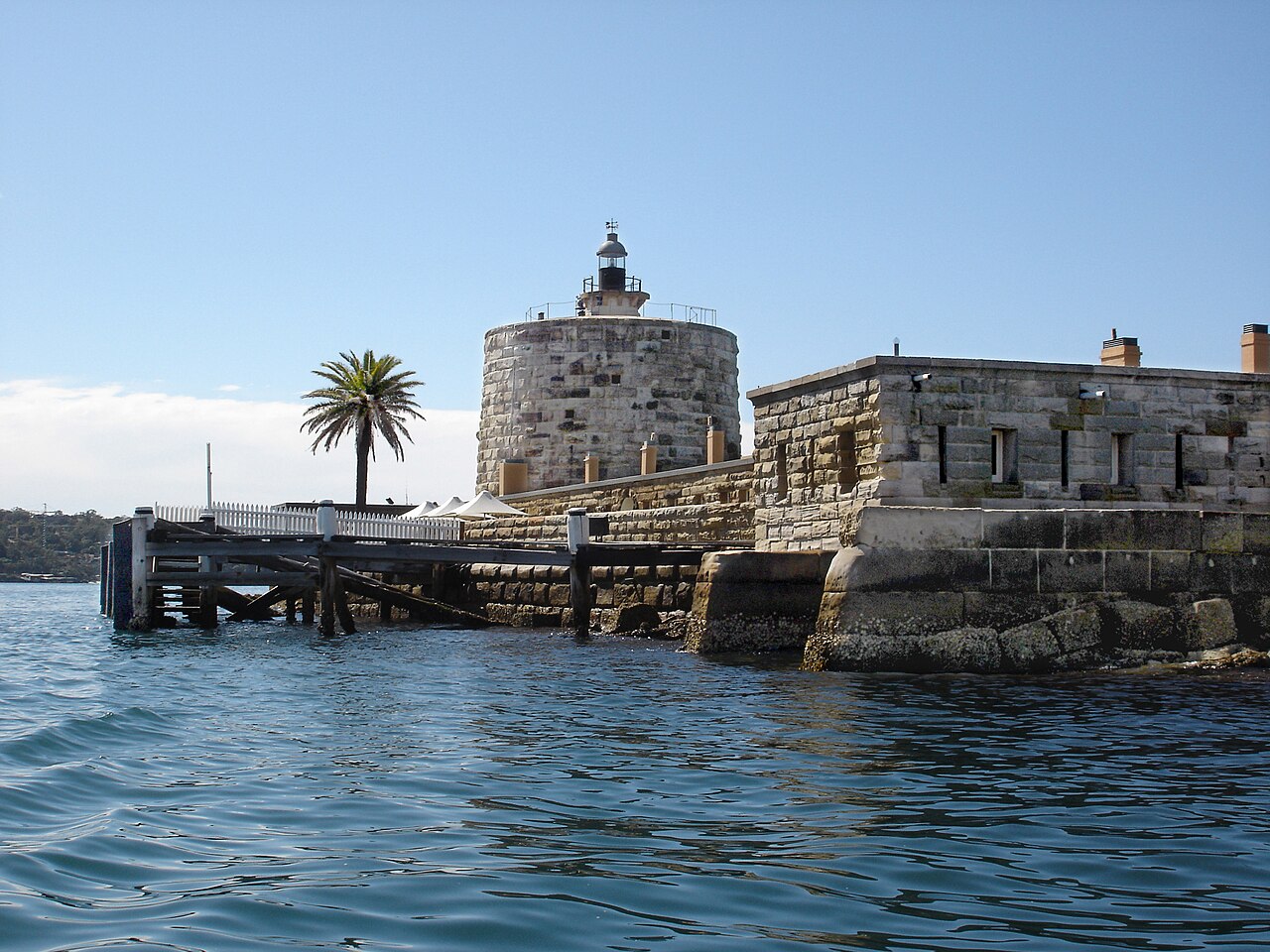
Bare Island Fort is a historically significant bastioned fortress located on a small islet at La Perouse, New South Wales, within the Eastern Suburbs of Sydney, Australia. Positioned approximately 16 kilometres southeast of Sydney's central business district, the fort stands on the northern headland of Botany Bay. This strategic location was chosen to protect the bay and the city from potential naval attacks during the late 19th century.
Historical context and construction
The construction of Bare Island Fort took place between 1881 and 1889, during a period when Australia was enhancing its coastal defences in response to growing concerns about naval threats. The fort was designed by prominent military engineers Sir Peter Scratchley and Gustave Morell, with architectural oversight by James Barnet, the New South Wales Colonial Architect. The construction was carried out by John McLeod under the direction of the New South Wales Department of Public Works.
The fort is an almost completely intact example of late nineteenth-century coastal defence technology. It was built to protect the approaches to Botany Bay, which was an important harbour and potential landing site for enemy forces. Bare Island's fortifications were part of a network of coastal defences designed to safeguard Sydney and its surroundings.
Architectural features and design
Bare Island Fort is classified as a bastioned fortress, a style characterized by angular bastions projecting outward from the main walls, allowing defenders to cover adjacent walls with gunfire and eliminate blind spots. The fort features thick stone walls constructed from local sandstone, which provided strong resistance against artillery fire.
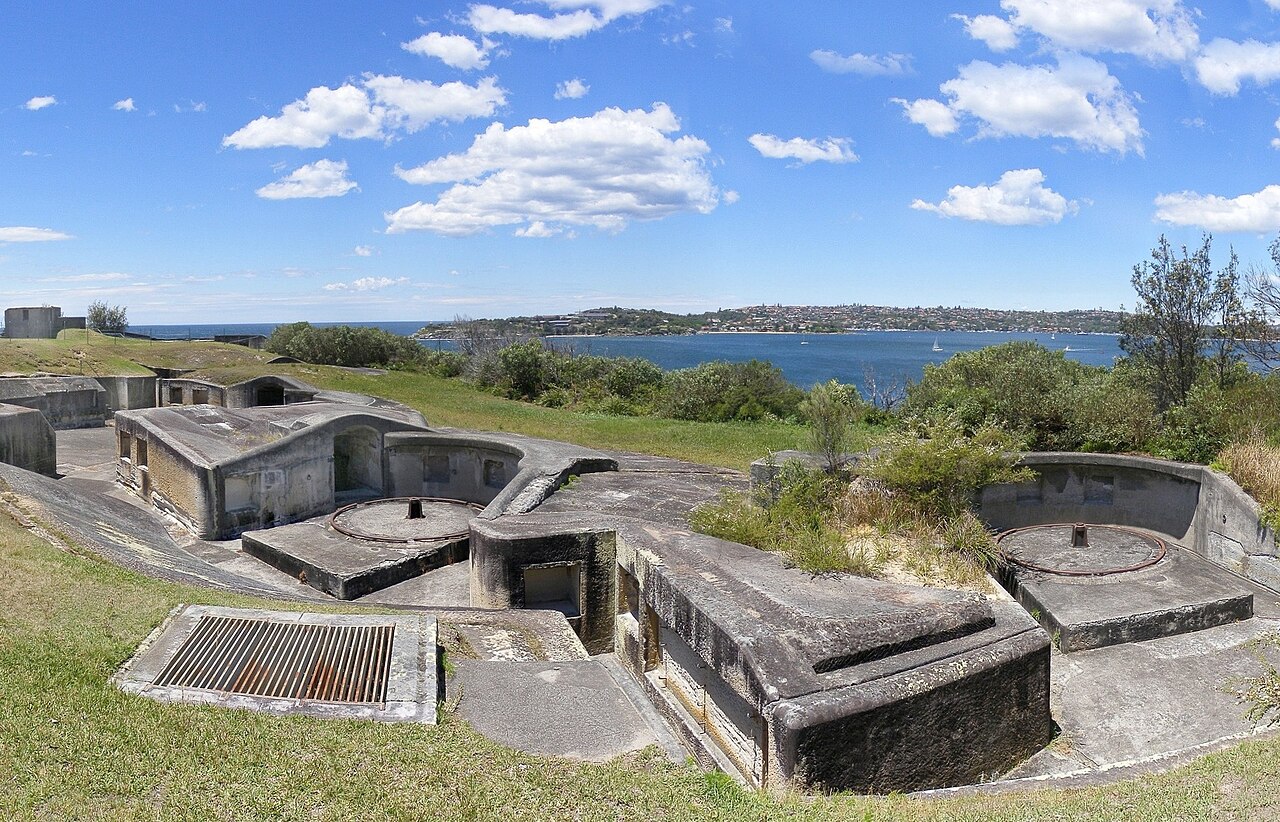
The fortress includes a series of interconnected tunnels and chambers beneath the surface, used for ammunition storage, troop movement, and shelter during attacks. The design incorporates gun emplacements positioned to cover the bay's entrance, with firing positions for cannons and later artillery pieces.
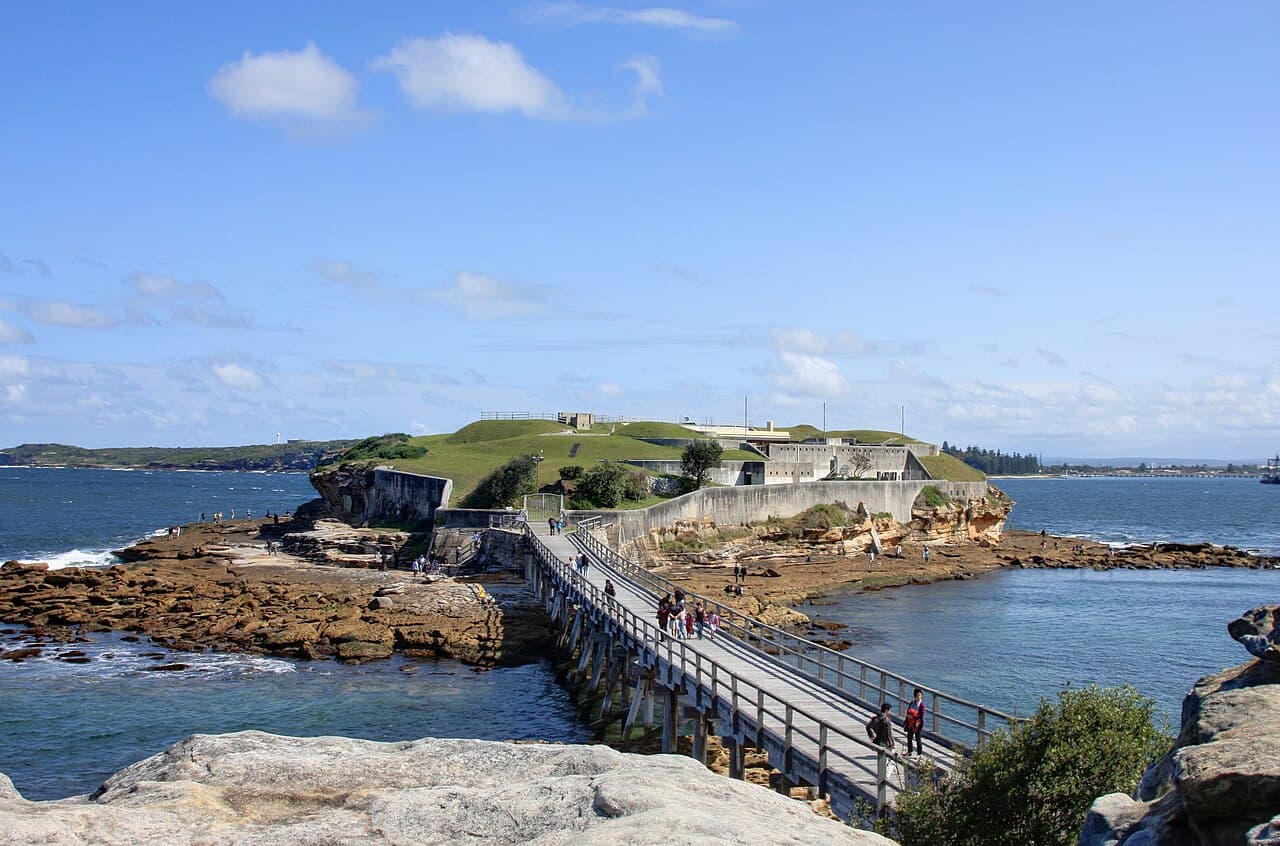
The fort is connected to the mainland by a footbridge, providing controlled access to the island. This connection facilitates guided tours, which are currently the only way visitors can explore the military fort and its tunnels.
Military use and later history
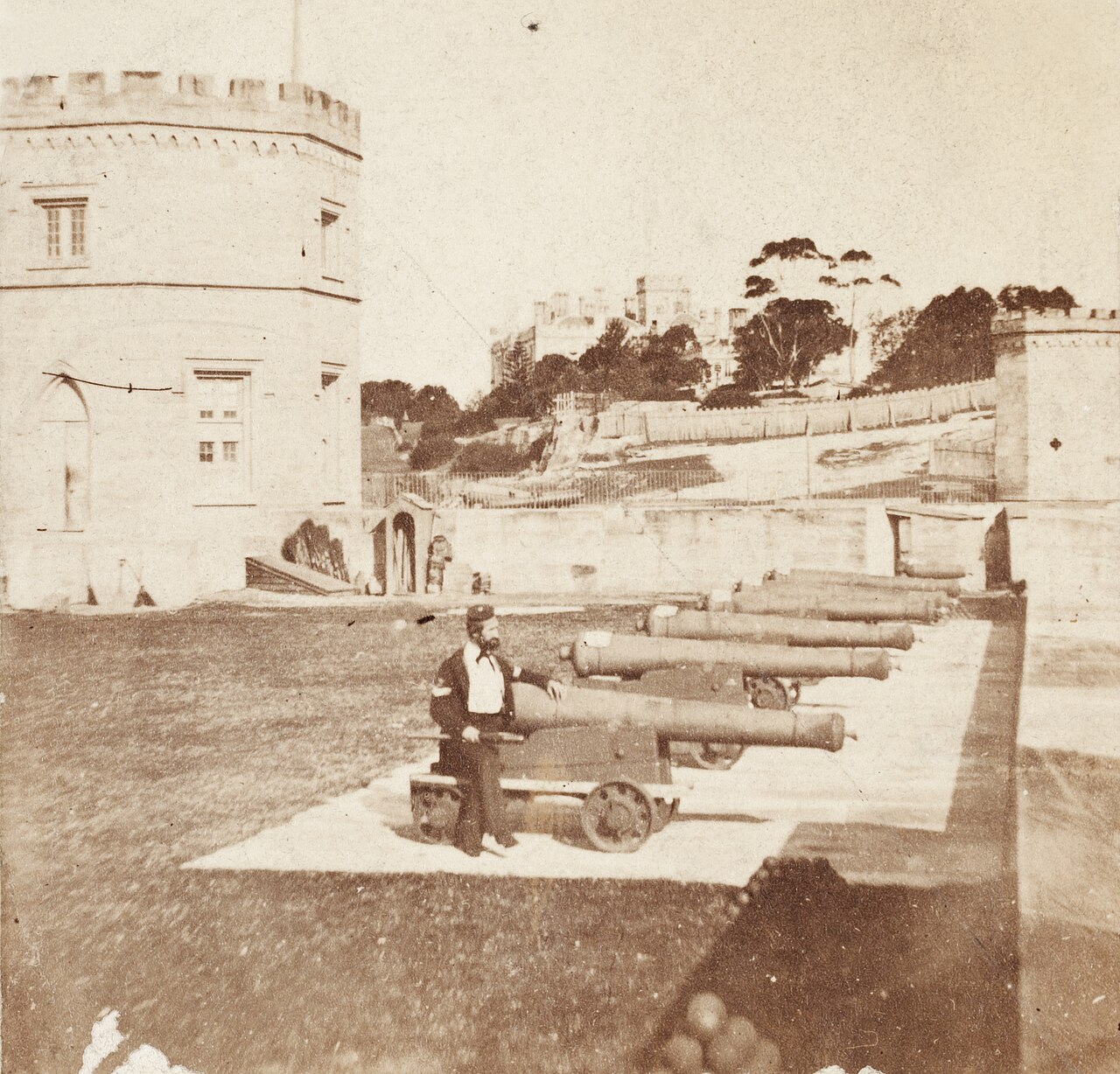
Although Bare Island Fort was built for military purposes, it never saw active combat. Its role was primarily deterrence, serving as a visible symbol of Sydney's coastal defence capabilities. During the 20th century, the fort was repurposed as a war veterans' home and later a museum, preserving its historical significance and making it accessible to the public.
Today, the fort is a protected heritage site listed on the New South Wales State Heritage Register since 2 April 1999. It remains a rare and well-preserved example of coastal defence architecture from the modern period of fortification development in Australia.
Current status and visitor information
Bare Island Fort is currently a historic site open to visitors by guided tour only, ensuring the preservation of its delicate structures. The surrounding waters are popular with scuba divers due to the rich marine life and underwater features near the island.
The fort's cultural impact extends beyond its military history; the Bare Island anglerfish, a species named after the island, highlights the ecological importance of the area. Visitors can experience both the historical and natural aspects of Bare Island during their visit.
Significance and heritage value
The fort is significant as an almost completely intact example of 19th-century bastioned fortress design adapted to coastal defence needs. Its preservation offers valuable insight into the military engineering practices of the time and the strategic considerations for protecting Sydney's harbour.
As a heritage-listed site, Bare Island Fort contributes to the understanding of Australia's colonial defence history and the evolution of fortification architecture during the modern period. It stands as a tangible link to the past and a resource for education and tourism in New South Wales.
Frequently asked questions (FAQ)
- How do I visit Bare Island Fort?
- Bare Island Fort can only be visited by guided tour, which provides access to the military fortifications and tunnels. Tours are scheduled periodically and should be booked in advance through local heritage or tourism websites.
- What is the historical significance of Bare Island Fort?
- Bare Island Fort is a rare example of late 19th-century coastal defence technology in Australia. Built between 1881 and 1889, it was designed to protect Botany Bay and Sydney from naval threats and remains almost completely intact.
- Can I explore the tunnels and chambers inside the fort?
- Yes, guided tours include access to the network of tunnels and chambers beneath the fort. These areas were used historically for ammunition storage and troop movement and are an important part of the fort's defensive design.
- Is Bare Island Fort accessible to scuba divers?
- The waters surrounding Bare Island are popular with scuba divers due to the rich marine environment. However, diving around the fort itself should follow local regulations and safety guidelines.
- Why is Bare Island Fort considered a bastioned fortress?
- The fort features angular bastions projecting from its walls, allowing defenders to cover all approaches with gunfire and eliminate blind spots, a key characteristic of bastioned fortress design.
Photo gallery

Information
Architect
Sir Peter Scratchley, Gustave Morell, James Barnet
Current owner
New South Wales State Heritage Register
Loading map...
Visitor reviews
No reviews yet. Been here? Write the first review and help other travelers!
Write the first reviewVisited this castle? Share your experience
Your review helps other travelers and adds first-hand knowledge to our encyclopedia.