Ballymore Castle — Ireland castle

Ballymore Castle

Ballymore Castle in Lawrencetown, County Galway
Lawrencetown, Ireland
Late Medieval (14th–15th c.)
Partially Preserved

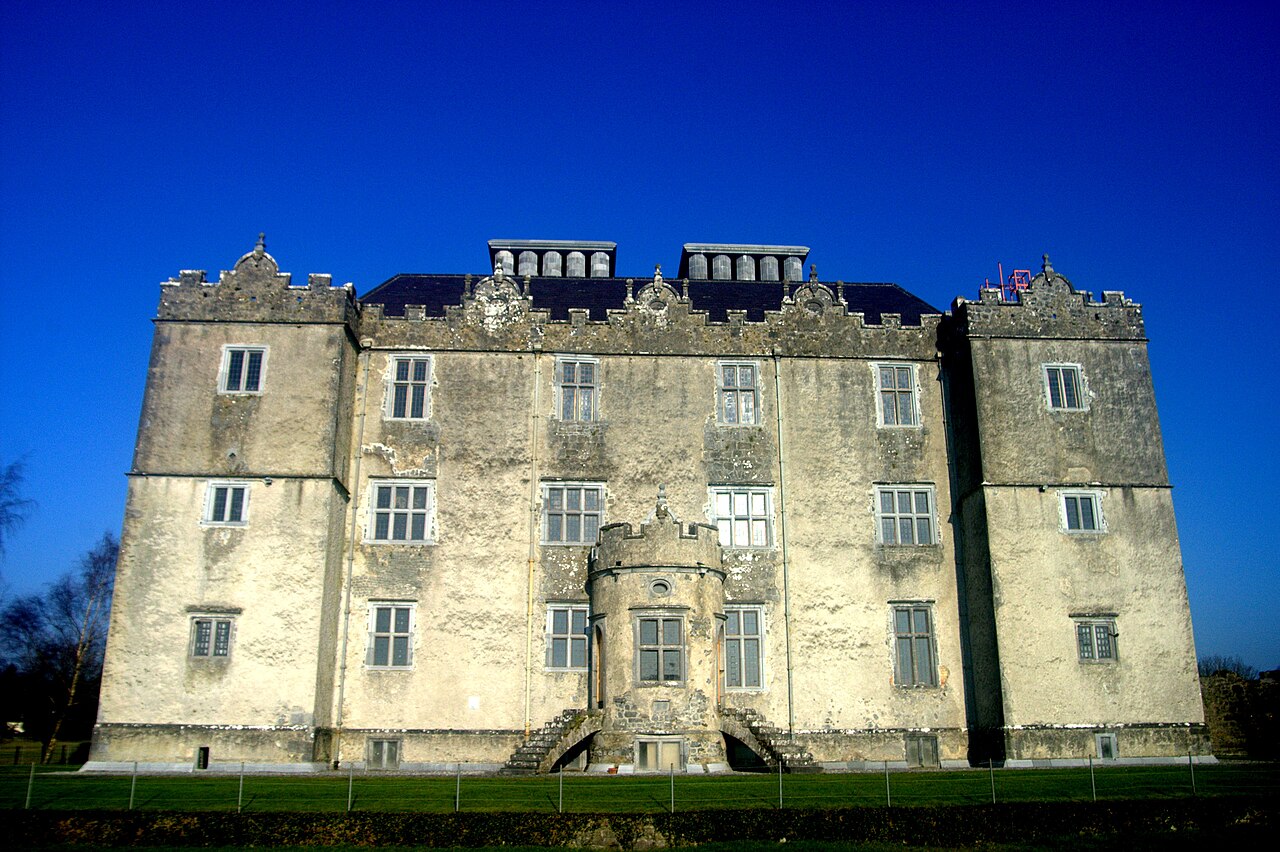
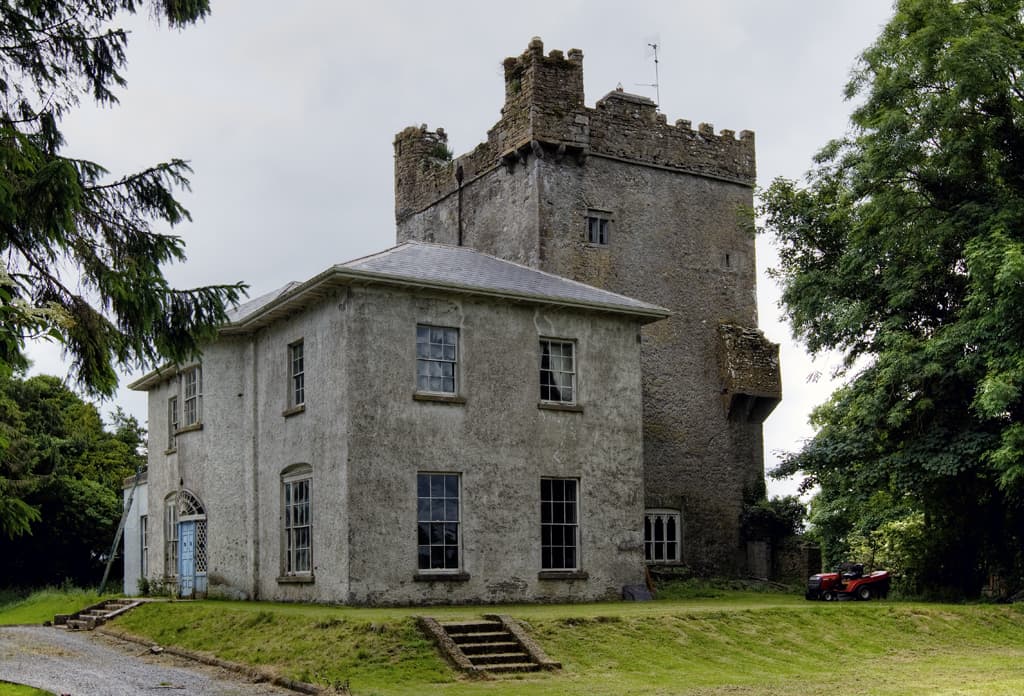
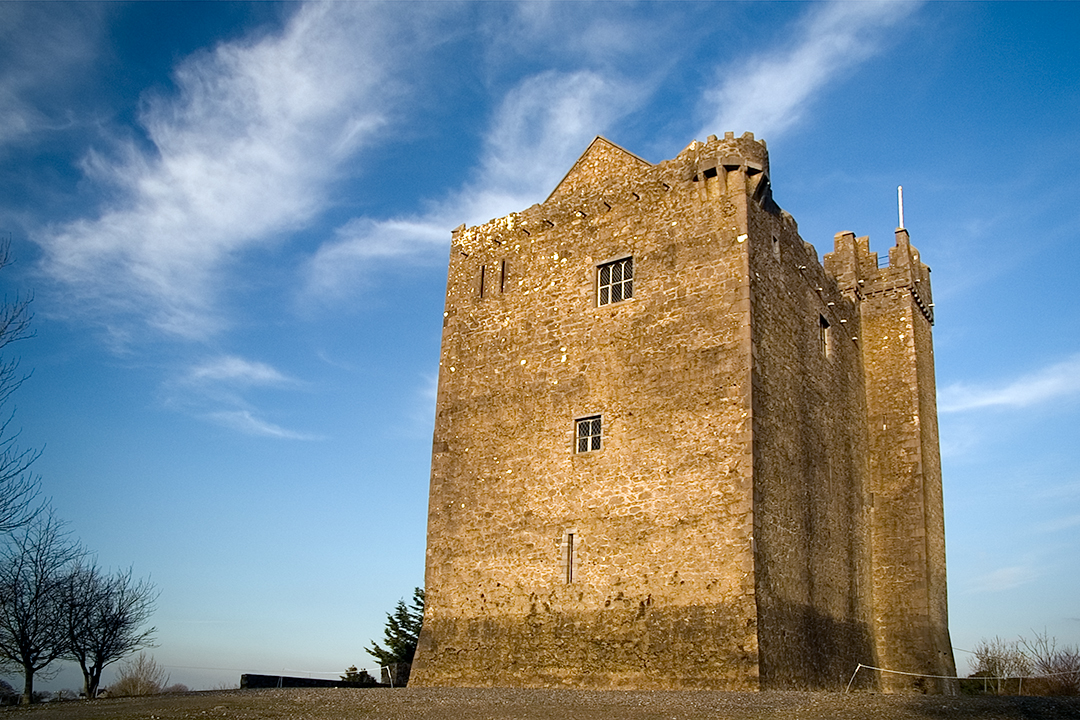
Ballymore Castle, located in Lawrencetown, County Galway, Ireland, is a notable example of a 15th-century hill castle originally constructed as a tower house for the O'Madden family. This castle exemplifies the typical fortified residences built by Gaelic lords during the late medieval period in Ireland. Tower houses were primarily defensive structures but also served as the homes of local chieftains, combining residential and military functions.

Architectural features and construction

The original structure of Ballymore Castle was a tower house, a vertical stone building designed for defense and habitation. These tower houses typically featured thick stone walls, narrow windows for archery and defense, and battlements at the roof level. Ballymore Castle's initial construction in the 15th century reflects these characteristics, with a vertical emphasis and strong fortification elements suited to the turbulent political climate of medieval Ireland.

In 1620, a house extension was added to the original tower, marking a shift from purely defensive architecture to more comfortable living spaces. This addition likely included larger windows and more domestic rooms, reflecting the changing needs of castle occupants as Ireland moved into the early modern period. The castle has undergone multiple alterations since its initial construction, which have modified its original medieval appearance.

Historical context and ownership

The castle was originally built and owned by the O'Madden family, a Gaelic Irish clan prominent in County Galway and surrounding areas. The O'Maddens were local lords who needed fortified residences to assert control over their lands and protect against rival clans and English incursions. Ballymore Castle served as a stronghold for the family during the late medieval period, a time marked by frequent clan warfare and shifting political alliances.

Throughout its history, Ballymore Castle's role evolved from a purely defensive fortress to a residence reflecting changing social and political conditions. The 17th-century additions coincide with a period in Irish history when many castles were adapted for more peaceful domestic use, as the nature of warfare and governance transformed.

Preservation and current condition

Today, Ballymore Castle is partially preserved, retaining significant elements of its original tower house structure alongside later modifications. While some parts of the castle have deteriorated, the site remains an important cultural and architectural landmark in County Galway. Its preservation offers insight into the construction techniques and living conditions of Gaelic lords in medieval and early modern Ireland.

Visitors to Ballymore Castle can observe the blend of medieval defensive architecture and later residential adaptations, providing a tangible connection to Ireland's complex history of clan power and castle building.

Significance in Irish castle heritage

Ballymore Castle is a representative example of the many tower houses that dotted the Irish landscape during the late medieval period. These castles are key to understanding the social structure and military strategies of Gaelic Ireland. The castle's association with the O'Madden family adds to its historical importance, linking it to a prominent local dynasty.

Its architectural evolution from a fortified tower to a more comfortable residence mirrors broader trends in Irish castle development during the 16th and 17th centuries, reflecting changes in political stability and domestic needs.

Frequently asked questions (FAQ)

How do I get to Ballymore Castle?
Ballymore Castle is located in Lawrencetown, Ireland, and can be accessed by car or public transport. If you are driving, you can use GPS coordinates or follow local signage from nearby towns. Public buses also connect Lawrencetown to larger cities, making it convenient for visitors.
What is the historical significance of Ballymore Castle?
Ballymore Castle dates back to the 16th century and is a remarkable example of the architecture of its time. It has played a significant role in regional history, serving as a stronghold and residence for notable families. Today, it stands as a testament to Ireland's rich heritage and medieval history.
When was Ballymore Castle built?
Ballymore Castle was constructed in the mid-1500s during a time of conflict and consolidation in Ireland. It reflects the defensive architectural style prevalent during the Tudor period. Over the centuries, the castle has undergone various restorations, preserving its historical charm.
Can I take a guided tour of Ballymore Castle?
Yes, guided tours are available for visitors who wish to learn more about the castle's history and architecture. These tours typically include access to various rooms and insights into the castle's past. It's advisable to check the official website for tour availability and to book in advance.
Why is Ballymore Castle a popular tourist attraction?
Ballymore Castle attracts visitors due to its stunning architecture, rich history, and beautiful surroundings. The castle's well-preserved structures provide a glimpse into Ireland's past, making it a favorite among history enthusiasts. Additionally, the scenic views from the castle grounds enhance the overall experience.
Is it possible to host events at Ballymore Castle?
Yes, Ballymore Castle offers a unique venue for hosting special events such as weddings, corporate gatherings, and private parties. The picturesque setting and historical ambiance make it an enchanting location for any celebration. For details on booking and services, it's best to contact the castle management directly.
What are the opening hours of Ballymore Castle?
Ballymore Castle is typically open to visitors from 10 AM to 5 PM, but hours may vary depending on the season. It is recommended to check the castle's official website for the most current information on opening times and any seasonal closures. Arriving early in the day can also help you avoid crowds.
What are the ticket prices for visiting Ballymore Castle?
Ticket prices for Ballymore Castle are quite reasonable, with discounts often available for children, students, and seniors. Family packages may also be offered, providing excellent value for larger groups. Check the official website for the latest pricing and any special promotions or events.
What nearby attractions can I visit while at Ballymore Castle?
While visiting Ballymore Castle, you can explore several nearby attractions, including beautiful parks and historical sites. The charming village of Lawrencetown offers local shops and cafés where you can relax. Additionally, scenic walking trails are available for those who enjoy outdoor activities.

Photo gallery

Ballymore Castle
Click to view

Photo by Mike Searle•CC BY-SA 2.0

1 photo • Click any image to view in full screen

Information

Hill Castle

Loading map...

Visitor reviews

No reviews yet. Been here? Write the first review and help other travelers!

Write the first review

Visited this castle? Share your experience

Your review helps other travelers and adds first-hand knowledge to our encyclopedia.
Write a review

(5/5)

0/2000 characters

Your review will be visible after admin approval

Nearby castles

11.7 km
Redwood Castle — Ireland castle

Redwood Castle

, Ireland

Redwood Castle, also known as Egan Castle or Caisleán Choillte Rua in Irish, is a significant Norman hill castle located near Lorrha in County Tipperary, Ireland. Built around the 13th century, this castle exemplifies the High Medieval fortifications introduced by the Normans during their expansion into Ireland. Its strategic position atop a hill provided commanding views of the surrounding landscape, an essential defensive advantage during the turbulent medieval period. Historical background and ownership The castle was originally constructed by the Normans circa 1200 AD, serving as a fortified residence and military stronghold. It remained under Norman control until approximately 1350, when the Mac Aodhagáin family, known in English as the MacEgan, Egan, or Keegan clan, took possession. The MacEgan clan were hereditary Brehons—traditional Irish lawyers and judges—who established a renowned school of learning within the castle grounds. This legal school was patronized by the family for several centuries, making Redwood Castle an important center for Irish legal scholarship and Gaelic culture during the late medieval period. Architectural features and renovations Throughout its history, Redwood Castle underwent several phases of enlargement and renovation, particularly after the MacEgan family assumed control around 1350. The castle's structure features thick stone walls typical of Norman military architecture, designed to withstand sieges and attacks. Among its defensive elements are a murder-hole—an opening in the ceiling of the gateway passage used to attack invaders—and arrow slits for archers. One of the castle's distinctive architectural highlights is the presence of a Sheela na gig, a carved stone figure depicting a female form, which is relatively uncommon in Irish castles. This figure is believed to have symbolic or protective significance. The castle also includes traditional features such as a courtyard, battlements, and a or tower house element, blending Norman military design with Gaelic cultural influences. Structural layout The castle's layout is typical of hill castles of the period, with a central keep surrounded by fortified walls and defensive towers. The keep served as the main residential and administrative area, while the outer walls and towers provided layered defense. The castle's elevated position enhanced its defensive capabilities and allowed control over the surrounding territory. Later history and decline Redwood Castle remained in continuous occupation by the MacEgan family until around 1650. During the Cromwellian conquest of Ireland, the castle was confiscated from the MacEgans and subsequently burned, leading to its decline and ruin. For over three centuries, the castle stood largely abandoned, with only its thick exterior walls remaining intact as a testament to its former strength. Restoration and modern use In 1972, the castle was purchased by Michael J. Egan, a lawyer from County Mayo, who undertook extensive restoration work to preserve and rehabilitate the structure. Today, Redwood Castle serves as a private residence but remains accessible to the public during certain times in the summer, in compliance with heritage protection agreements. The castle is officially recognized as a protected structure under the North Tipperary list of protected buildings (ref S329), reflecting its cultural and historical importance. It also continues to be a focal point for the MacEgan clan, which holds rallies and gatherings at the castle and other locations, celebrating their ancestral heritage and maintaining the castle's legacy. Significance in Irish heritage Redwood Castle stands as a rare example of a Norman-built hill castle that transitioned into a Gaelic legal and cultural center under the MacEgan family. Its combination of military architecture and scholarly tradition offers valuable insights into the complex social and political landscape of medieval Ireland. The castle's survival, restoration, and ongoing use underscore its importance as a heritage site and symbol of Irish history.

High Medieval (11th–13th c.)
Details
16.5 km
Portumna Castle — Ireland castle

Portumna Castle

Portumna, Ireland

Portumna Castle is a notable example of a semi-fortified house constructed in the early 17th century in Portumna, County Galway, Ireland. Built by Richard Burke, 4th Earl of Clanricarde, the castle represents a transitional architectural form between medieval fortifications and more modern Renaissance residences. Its design reflects the shifting needs of the period, combining defensive features with domestic comfort and aesthetic appeal. Historical context and construction The castle was erected during the Renaissance period, a time when Ireland was experiencing significant political and social changes. The early 1600s saw the decline of traditional medieval castles and the rise of more comfortable and stylish country houses. Richard Burke commissioned Portumna Castle around 1610, intending it to serve as both a family residence and a symbol of his status and power. Portumna Castle's construction reflects the influence of English and continental Renaissance architectural ideas, adapted to Irish conditions. The castle was built on a hill overlooking the surrounding lands, providing a strategic vantage point while also emphasizing its prominence in the landscape. Architectural features Layout and structure The castle is a large, rectangular, three-storey house with a symmetrical plan. Unlike traditional medieval castles, it lacks extensive curtain walls or a moat but retains some defensive elements such as thick stone walls and narrow windows designed for protection. The building's overall form is more aligned with a fortified manor house than a fully militarized fortress. Exterior details The exterior walls are constructed of local limestone, giving the castle a robust and imposing appearance. The corners are reinforced with projecting towers or turrets, which were typical of the period's semi-fortified houses. These towers provided vantage points and some defensive capability, though their primary function was symbolic. Interior design Inside, Portumna Castle features spacious chambers with large fireplaces, reflecting the Renaissance emphasis on comfort and domesticity. The interiors originally included richly decorated plasterwork ceilings and wood paneling, although much of this has been lost or altered over time. The castle's layout includes a great hall, private chambers, and service areas, arranged to accommodate both the family and their retainers. Later history and preservation Portumna Castle remained in the possession of the Clanricarde family for several generations. Over the centuries, it experienced periods of decline and restoration. The castle suffered damage during various conflicts, including the Cromwellian conquest of Ireland in the mid-17th century. In the modern era, Portumna Castle has been preserved as a historic monument. It is managed by the Office of Public Works and is open to visitors interested in Ireland's Renaissance architecture and aristocratic history. Restoration efforts have focused on stabilizing the structure and conserving remaining interior features. Significance and visitor experience Portumna Castle is significant as one of the finest examples of a semi-fortified Renaissance house in Ireland. It illustrates the architectural transition from medieval fortresses to early modern country houses. Visitors can explore the castle's imposing exterior, learn about the Burke family's history, and appreciate the blend of defensive and domestic architectural elements. The castle's location in County Galway places it within a rich cultural landscape, with nearby attractions including the Portumna Forest Park and the River Shannon, enhancing the visitor experience.

Renaissance (15th–17th c.)
Details
16.7 km

Clonmacnoise

Clonmacnoise, United Kingdom

Clonmacnoise stands as one of Ireland's most significant early Christian monastic sites, located in the heart of the country along the banks of the River Shannon. Founded in the 6th century by Saint Ciarán, this monastery rapidly grew into a major religious, educational, and cultural center during the Early Medieval period. It attracted students and scholars from across Europe, becoming a renowned university of its time. Historical significance and foundation The establishment of Clonmacnoise monastery around 544 AD marked a pivotal development in Irish monasticism. It was strategically situated at a crossroads of ancient trade routes and near the River Shannon, facilitating communication and travel. The site gained prominence not only as a religious center but also as the seat of the high kings of Connacht, underscoring its political and cultural importance in medieval Ireland. Architectural features and layout The extensive ruins at Clonmacnoise illustrate the complex monastic settlement that evolved over several centuries. The site contains the remains of a cathedral, multiple churches, two round towers, and a collection of high crosses renowned for their intricate carvings. These crosses served both as religious symbols and as markers for sacred ground, showcasing exceptional examples of early medieval Irish stonework. The cathedral and churches The cathedral ruins at Clonmacnoise date primarily from the 12th century and reflect the transition from Romanesque to early Gothic architectural styles. Alongside the cathedral, there are remains of nine churches, each with distinctive features that reveal the evolving ecclesiastical architecture of the period. These structures were built primarily of local sandstone and limestone, materials typical of Irish medieval construction. Round towers and high crosses The two surviving round towers are iconic elements of Irish monastic sites, serving defensive and bell-ringing purposes. These towers, built between the 10th and 12th centuries, stand tall as markers of the monastic complex's wealth and status. The three high crosses at Clonmacnoise are among the finest examples of early medieval sculpture in Ireland, featuring biblical scenes and intricate Celtic knotwork. These crosses are invaluable for understanding the religious art and iconography of the time. Manuscript production and cultural influence Clonmacnoise was famed for its scriptorium, where monks produced some of the finest illuminated manuscripts in Ireland. These manuscripts contributed significantly to the preservation and dissemination of Christian texts and Irish scholarship throughout Europe. The monastery's literary legacy inspired many later works and remains a testament to its role as a center of learning. Gravestones and burial grounds The site contains over 700 gravestones, providing a rich archaeological record of the people who lived and died in the monastic community and surrounding areas. These gravestones vary in style and inscription, offering insights into medieval Irish funerary customs and social history. Preservation and visitor experience Today, Clonmacnoise is a well-preserved archaeological site open to the public. Visitors can explore the extensive ruins, including the cathedral, churches, round towers, and high crosses, while learning about the site's historical and religious significance. The site remains a powerful symbol of Ireland's early Christian heritage and continues to attract scholars, historians, and tourists alike. Access and facilities Clonmacnoise is accessible year-round, with visitor facilities including an interpretive center that provides detailed information about the site's history and archaeology. Guided tours are available, enhancing the educational experience for those interested in medieval Irish culture and architecture.

Early Medieval (5th–10th c.)
Details