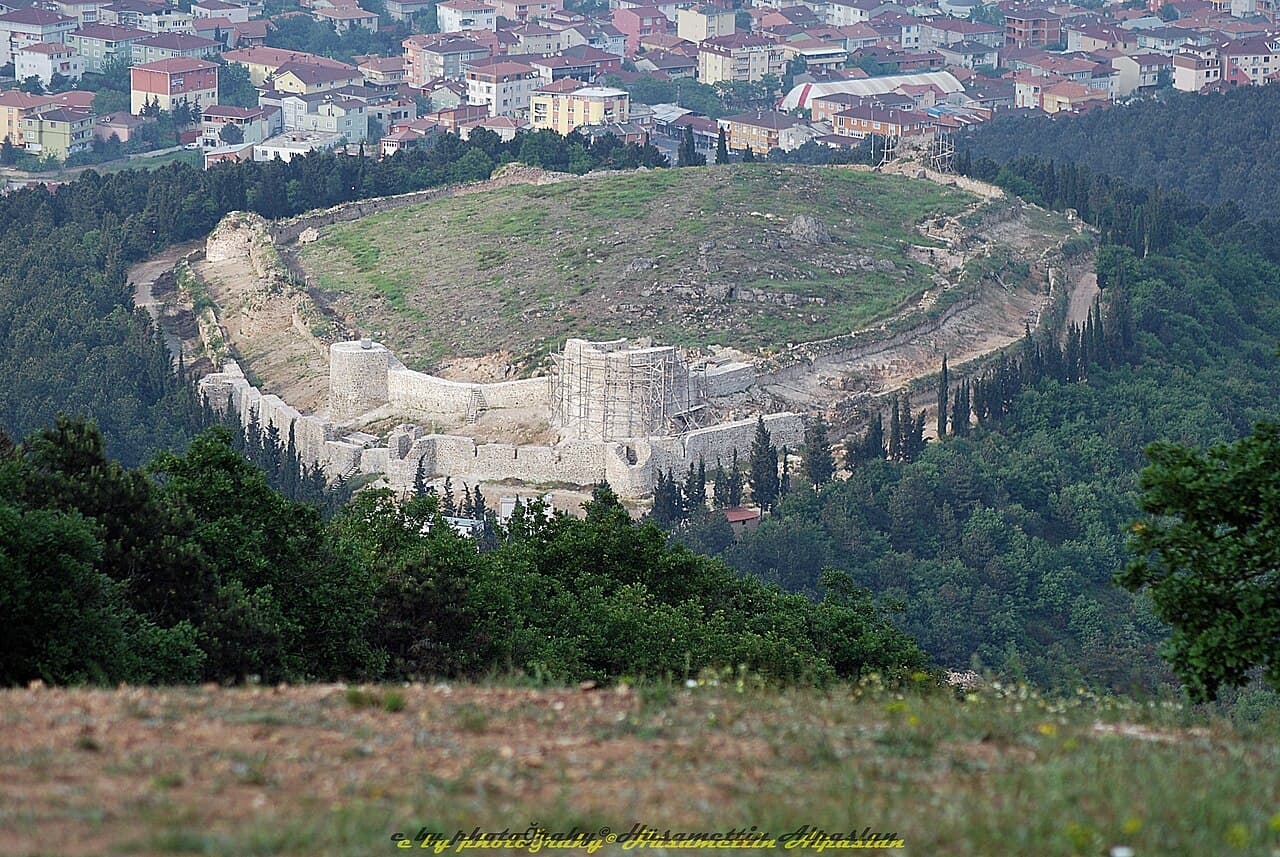
Aydos Castle
Aydos Castle, locally known as Aydos Kalesi, is a significant medieval fortress perched on a hill in the Sultanbeyli district of Istanbul, Turkey. This Byzantine stronghold was constructed likely during the late 11th or 12th century as part of a defensive network to protect the approaches to Constantinople from advancing Turkish forces following the pivotal Battle of Manzikert in 1071. Its strategic location on a hill below Mount Aydos provided commanding views of the surrounding landscape, making it a vital military asset during the turbulent centuries that followed.
Historical context and strategic importance
The castle's original name, "Aetos," meaning "eagle" in Greek, reflects its lofty position and the sharp vigilance it afforded over the region. During the High Medieval period, as the Byzantine Empire faced increasing pressure from Turkish incursions into Anatolia, Aydos Castle became a crucial bulwark in the empire's border defenses. The castle was part of a broader network of fortifications designed to delay and deter Turkish advances toward the Byzantine capital.
In the early 14th century, the castle's significance intensified as the Ottoman Empire began to expand into Byzantine territories on the Kocaeli Peninsula. By 1328, the castle had become a contested border fortress. It was captured by the Ottoman commander Abdurrahman Gazi under the orders of Sultan Orhan Gazi, marking a key moment in the Ottoman consolidation of power in the region.
The capture of Aydos Castle is enveloped in legend. Ottoman chronicles recount that the daughter of the Byzantine lord of the castle had a prophetic dream about a handsome man who would rescue her. When the Ottomans besieged the fortress, she recognized Abdurrahman Gazi as the man from her dream and secretly facilitated his entry by sending a letter instructing him to feign retreat and return under cover of darkness. This romanticized tale has been retold by various historians, underscoring the castle's place in local folklore as well as history.
Architectural features and layout
Aydos Castle is built on an oval plan, encompassing the summit of a partially flattened hill at approximately 325 meters above sea level. The fortress spans about 120 meters in length and up to 50 meters in width, covering an area of nearly 26,000 square meters when factoring in its defensive walls. The castle's design exemplifies Byzantine military architecture of the medieval period, with a focus on layered defense and strategic vantage points.
The fortress is surrounded by two concentric curtain walls, providing a formidable double line of defense. The inner wall is reinforced by six towers positioned to maximize surveillance and defensive coverage, while the outer wall features seven towers. These towers were constructed using rough rubble stone combined with limestone blocks, materials chosen for their durability and local availability.
Among the notable surviving structures is a large underground cistern, measuring approximately 12 meters long and 7.5 meters wide. This cistern was essential for storing water to sustain the garrison during prolonged sieges. Today, it remains a prominent feature within the ruins, occasionally housing fish and other aquatic life.
The castle also retains the entrances to two secret passages on its western side, which would have been critical for covert movement during times of conflict. The foundations of a former watchtower, originally towering about 100 meters high, are still visible, highlighting the fortress’s role in regional surveillance and early warning.
Post-conquest history and decline
Following its capture by the Ottomans, Aydos Castle served as a base for military raids into Byzantine-held territories, particularly toward Scutari (modern Üsküdar) across the Bosphorus. However, its strategic importance diminished after the Ottoman conquest of İzmit in 1337. Ottoman sources, including historian Hoca Sâdeddin Efendi, record that Sultan Orhan Gazi ordered the demolition of the castle and the relocation of its garrison and inhabitants to İzmit, signaling the beginning of its abandonment.
Over subsequent centuries, the fortress fell into ruin, suffering damage from fires and neglect. Despite this, the remaining structures offer valuable insights into medieval fortification techniques and the military history of the region.
Archaeological research and preservation efforts
Systematic archaeological excavations at Aydos Castle began in September 2010 under the leadership of Zeynep Kızıltan from the Istanbul Archaeology Museums. These investigations have continued intermittently through 2022, revealing extensive information about the castle’s construction phases, architectural details, and historical context.
Modern techniques such as remote sensing and laser scanning have been employed to document the site comprehensively. These efforts have facilitated the consolidation and preservation of the ruins, ensuring that the castle remains an important cultural and historical landmark.
Currently, the castle is not open to the public for visitation and is guarded to protect the site. Despite restricted access, it remains a notable example of Byzantine military architecture and a testament to the region's complex medieval history.
Cultural significance and legacy
Aydos Castle stands as a symbol of the Byzantine Empire's final struggles to defend its territories against the rising Ottoman power. Its capture marked a significant step in the Ottoman expansion into northwestern Anatolia and the eventual fall of Constantinople.
The castle’s legend involving the Byzantine lord’s daughter and Abdurrahman Gazi has permeated local folklore, reflecting the cultural blending and historical narratives that characterize the region's past. As an archaeological site, Aydos Castle offers valuable insights into medieval fortification strategies, the dynamics of Byzantine-Ottoman relations, and the military history of Istanbul's environs.
Frequently asked questions (FAQ)
- What is the historical significance of Aydos Castle?
- Aydos Castle, located in Sultanbeyli, Turkey, dates back to the Byzantine period and has served various purposes throughout history, including military defense. Its strategic position allowed it to control trade routes and protect the surrounding area, making it an important site during its operational years.
- When was Aydos Castle built?
- The exact date of Aydos Castle's construction is not clearly documented, but it is believed to have been built during the Byzantine Empire, around the 6th century. The castle has undergone various renovations and modifications over the centuries, reflecting the architectural styles of different periods.
- Is it possible to visit Aydos Castle?
- Yes, Aydos Castle is open to visitors who wish to explore its rich history and stunning views. However, it is recommended to check local guidelines and accessibility options before planning your visit, as some areas may have restrictions.
- What are the opening hours of Aydos Castle?
- Aydos Castle typically opens to the public from 9 AM to 6 PM, but hours may vary seasonally or during holidays. It is advisable to verify the current opening hours before your visit to ensure you have enough time to explore the castle.
- Can I access Aydos Castle by public transportation?
- Yes, Aydos Castle is accessible via public transportation, with several bus routes serving the Sultanbeyli area. Visitors can take local buses or taxis from nearby metro stations to reach the castle conveniently.
- What is the best time to visit Aydos Castle?
- The best time to visit Aydos Castle is during the spring and fall when the weather is mild and pleasant for outdoor exploration. Summer can be quite hot, while winter may bring rain, so planning your visit during the transitional seasons will enhance your experience.
- Are there any nearby attractions to Aydos Castle?
- Yes, there are several nearby attractions, including the lush forests of Aydos Park, which offer hiking trails and picnic areas. Additionally, visitors can explore historic sites and local markets in Sultanbeyli to enrich their cultural experience.
- What are the ticket prices for Aydos Castle?
- Admission to Aydos Castle is generally free, although special guided tours or events may have associated fees. It’s best to check for any updates on pricing or events before your visit to plan accordingly.
- How do I get the most out of my visit to Aydos Castle?
- To make the most of your visit, consider joining a guided tour to learn about the castle's history and architecture from an expert. Additionally, take time to enjoy the panoramic views from the castle walls, which offer stunning perspectives of the surrounding landscape.
Photo gallery

Information
Website
Visit websiteSources & official resources
Verify the information above using these authoritative references.
Loading map...
Visitor reviews
No reviews yet. Been here? Write the first review and help other travelers!
Write the first reviewVisited this castle? Share your experience
Your review helps other travelers and adds first-hand knowledge to our encyclopedia.