Rumelihisarı Castle
Rumelihisarı Castle, also known as the Rumelian Fortress, is a remarkable 15th-century Ottoman bastioned fortress located in the Sarıyer district of Istanbul, Turkey. Perched on a series of hills along the European shore of the Bosphorus Strait, it was strategically constructed to control naval traffic at the narrowest point of this vital waterway. The castle's commanding position and formidable architecture played a pivotal role in the Ottoman conquest of Constantinople in 1453, marking a turning point in world history.
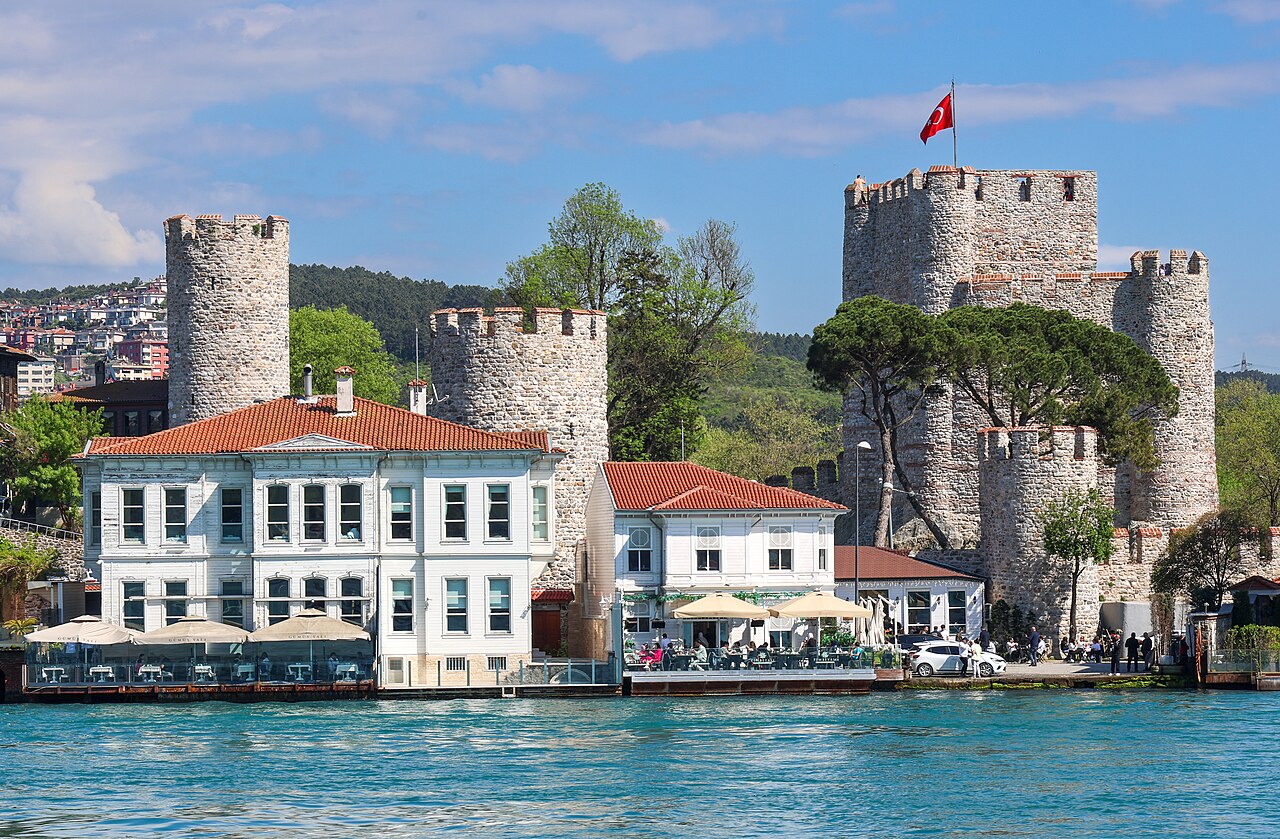
The fortress was commissioned by Sultan Mehmed II in 1452 and completed in an astonishingly short period of four and a half months. This rapid construction was driven by the urgent need to blockade the Bosphorus Strait and cut off maritime support to the Byzantine capital from the Black Sea and allied Genoese colonies. Rumelihisarı was built directly opposite the older Anadoluhisarı Castle on the Asian side, creating a strategic crossfire that effectively controlled all naval passage.
Historical background and strategic importance
The site of Rumelihisarı has a long history of military and strategic use dating back to Roman times, when a fortification once occupied the location. During the Byzantine era, this site was repurposed as a prison and later hosted a monastery, reflecting its ongoing significance in controlling access to the Bosphorus. Prior to Ottoman construction, the fortress was known locally as Boğazkesen, meaning "Strait-cutter," a name that underscored its function to sever maritime routes.
Following his accession to the throne in 1451, Sultan Mehmed II recognized the necessity of controlling the Bosphorus to ensure the success of his planned siege of Constantinople. The fortress was thus built to prevent any naval aid from reaching the city, especially from Genoese colonies such as Caffa, Sinop, and Amasra. The castle's completion in August 1452 allowed the Ottomans to impose a naval blockade that was crucial during the 53-day siege culminating in the fall of Constantinople in 1453.
Architectural features and design
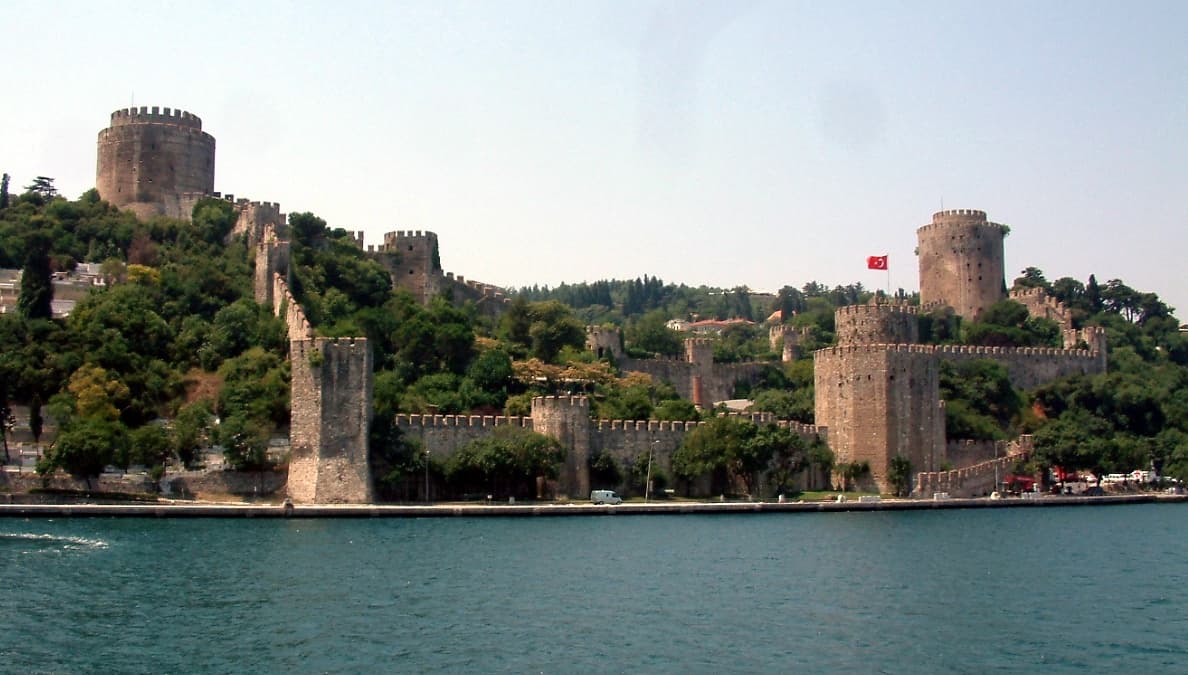
Rumelihisarı's architecture is notable for its irregular ground plan, dictated by the hilly terrain and the reuse of building materials from nearby Roman ruins. The fortress covers an area of approximately 31,250 square meters, with outer walls stretching about 250 meters north to south and varying between 50 and 125 meters east to west.
Main towers and watchtowers
The castle features three massive main towers, each named after the viziers who supervised their construction: Halil Pasha Tower (the central dodecagonal tower by the waterfront), Sarica Pasha Tower (the cylindrical northern tower, also called Fatih Tower), and Zağanos Pasha Tower (the cylindrical southern tower). These towers stand between 21 and 28 meters tall, with walls up to 7 meters thick, designed to withstand heavy artillery fire.
In addition to the main towers, Rumelihisarı is fortified with twelve secondary watchtowers of varying shapes, including rectangular prisms, multi-cornered prisms, and cylindrical forms. The curtain walls connecting these towers follow a meandering path, adapting to the hillside and enhancing the fortress's defensive capabilities.
Gates, internal structures, and facilities
The fortress originally had three main gates near the primary towers, supplemented by a side gate and two secret gates leading to the arsenal and food cellars near the southern tower. Inside the walls, wooden houses accommodated soldiers, and a small mosque endowed by Sultan Mehmed II was part of the original complex; today, only the minaret shaft remains. Water was supplied from a large cistern beneath the mosque, distributed via three wall fountains, with one still surviving.
The interior of the towers was divided into multiple floors with wooden beams, each floor equipped with ovens for heating. The towers were crowned with conical wooden roofs covered in lead, though these roofs have not survived to the present day.
Role during and after the conquest of Constantinople
Rumelihisarı was garrisoned by a battalion of 400 Janissaries and equipped with large cannons, particularly in the Halil Pasha Tower nearest the waterfront. Alongside Anadoluhisarı Castle across the Bosphorus, it effectively blocked all maritime traffic, preventing reinforcements and supplies from reaching Constantinople during the Ottoman siege.
After the successful conquest of Constantinople in 1453, Rumelihisarı transitioned from a military fortress to a customs checkpoint and occasional prison, notably for embassies and prisoners from states at war with the Ottoman Empire. This function underscored its continued strategic importance in controlling naval traffic along the Bosphorus.
Damage, restoration, and modern use
The fortress suffered extensive damage in the Great Earthquake of 1509 and was repaired subsequently. In 1746, a fire damaged wooden sections of the main towers, leading to further restoration efforts in the late 18th century under Sultan Selim III. However, by the late 19th century, Rumelihisarı lost much of its strategic significance due to the construction of newer fortifications at the Bosphorus entrance from the Black Sea.
During the 19th century, a small residential neighborhood developed within the castle walls. In 1953, the inhabitants were relocated by government order, and from 1955 to 1958, extensive restoration returned the fortress to a preserved state. Since 1960, Rumelihisarı has functioned as a museum and an open-air venue for concerts and cultural festivals during the summer months.
Today, visitors can explore the castle grounds and the three main towers at ground level, although access to the wall walks is restricted. Despite the absence of many internal structures, the fortress remains a formidable example of Ottoman military architecture and a testament to the historical significance of the Bosphorus Strait in the defense and expansion of the Ottoman Empire.
Legacy and cultural significance
Rumelihisarı continues to be an iconic symbol of Istanbul's rich history and the Ottoman Empire's military ingenuity. Its proximity to the Fatih Sultan Mehmet Bridge, named after its founder, links the fortress's historical legacy to the modern cityscape. The castle also appeared on Turkish banknotes during much of the 20th century, highlighting its national importance.
The fortress's design, combining massive bastioned towers with strategic placement along a critical maritime chokepoint, influenced later Ottoman fortifications such as the castles of Çimenlik and Kilitbahir on the Dardanelles Strait. Rumelihisarı remains a popular destination for tourists and history enthusiasts seeking to understand the military strategies that shaped the fall of Constantinople and the rise of the Ottoman Empire.
Frequently asked questions (FAQ)
- What is Rumelihisarı Castle?
- Rumelihisarı Castle is a historic fortress located on the European side of the Bosphorus Strait in Istanbul, Turkey. Built in 1452 by Sultan Mehmed II, it was part of the military strategy to control the Bosphorus and played a significant role during the conquest of Constantinople.
- When was Rumelihisarı Castle built?
- Rumelihisarı Castle was constructed between 1451 and 1452, just before the fall of Constantinople. Its strategic location and formidable architecture were designed to prevent naval access to the Golden Horn.
- Is it possible to visit Rumelihisarı Castle?
- Yes, visitors can explore Rumelihisarı Castle and its stunning views of the Bosphorus. The castle is open to the public, allowing guests to wander through its towers, walls, and gardens while soaking in the historical ambiance.
- What are the opening hours for Rumelihisarı Castle?
- Rumelihisarı Castle is typically open to visitors daily from 9:00 AM to 7:00 PM, with last entry an hour before closing. However, it is advisable to check for any seasonal changes or special holiday hours before planning your visit.
- Can I find nearby attractions to visit after Rumelihisarı Castle?
- Absolutely! After exploring Rumelihisarı Castle, visitors can enjoy nearby attractions such as the picturesque Ortaköy Mosque, the vibrant Bebek Park, and the stunning views from the Bosphorus Bridge. These locations enhance the overall experience of a day spent in this historic area.
- What is the ticket price for Rumelihisarı Castle?
- The entrance fee for Rumelihisarı Castle is quite reasonable and typically ranges around 25 Turkish Lira for adults. Discounts may be available for students and children, so it's worth checking at the entrance for current pricing.
- When is the best time to visit Rumelihisarı Castle?
- The best time to visit Rumelihisarı Castle is during the spring and fall months, when the weather is mild and pleasant for outdoor exploration. Additionally, visiting during weekdays can help avoid the larger weekend crowds and allow for a more enjoyable experience.
- How do I get to Rumelihisarı Castle?
- Rumelihisarı Castle is easily accessible by public transportation, including buses and ferries that operate along the Bosphorus. If driving, there are nearby parking options, but it can get busy during peak tourist season.

Information
Sources & official resources
Verify the information above using these authoritative references.
Loading map...
Visitor reviews
No reviews yet. Been here? Write the first review and help other travelers!
Write the first reviewVisited this castle? Share your experience
Your review helps other travelers and adds first-hand knowledge to our encyclopedia.