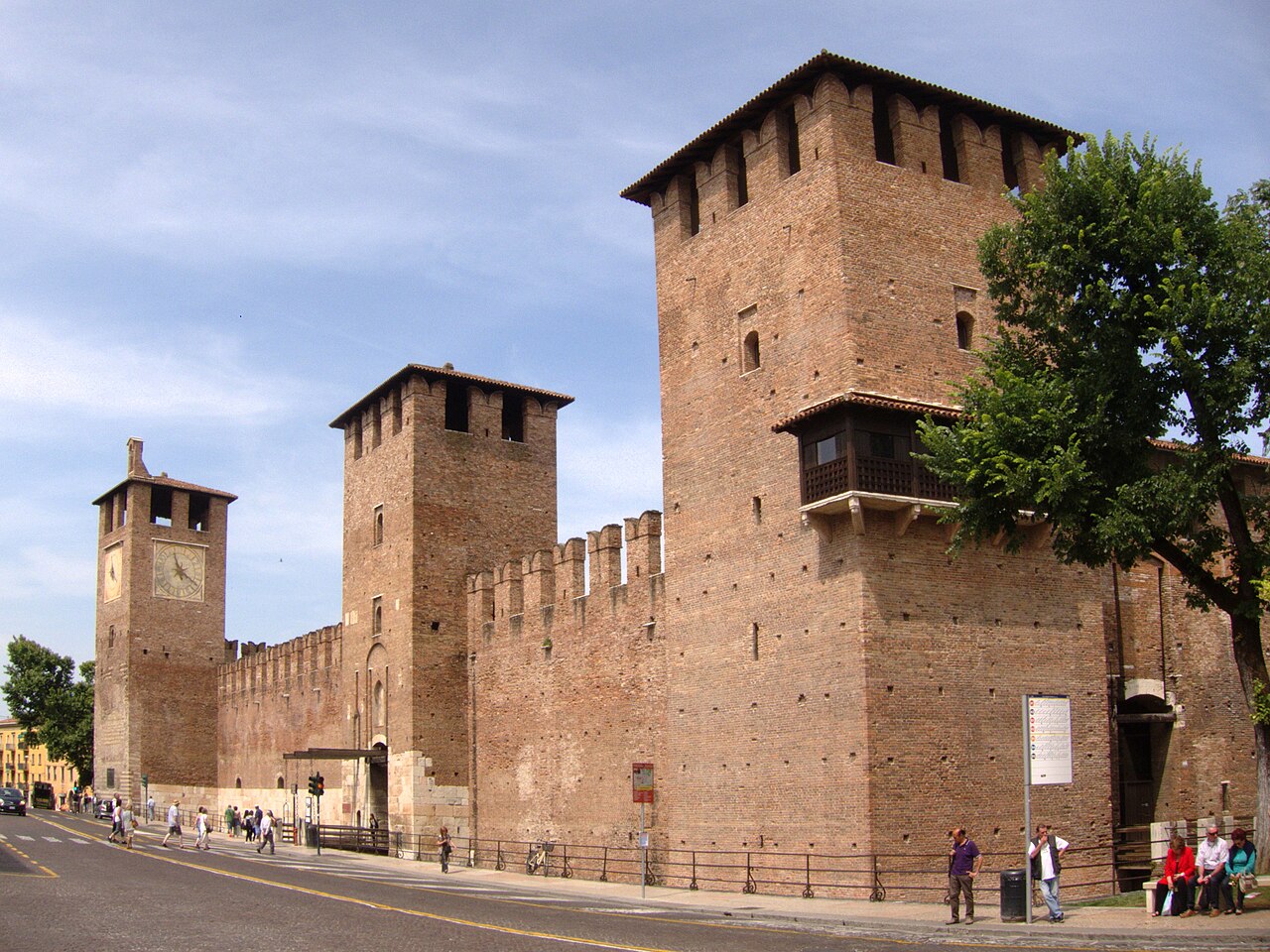
Arzignano Castle
Arzignano Castle is a significant medieval fortress located in the town of Arzignano, within the Veneto region of Italy. Positioned strategically at the entrance of the Chiampo and Agno valleys, the castle stands on a gentle ridge that naturally separates these two important geographical areas. This location provided a commanding vantage point over the surrounding landscape, including views of other notable historical fortifications such as the Castles of Montecchio Maggiore, Montecello, and the Rocca of the Bishops of Brendola. The castle's placement reflects its original defensive purpose, protecting not only the nearby Parish Church of Santa Maria but also the territorial interests of local nobility.
Historical context and origins
The origins of Arzignano Castle trace back to a primitive fortification built in the 10th or 11th century on the highest hill in Arzignano, where the church of St. Matthew now stands. This early castle likely served as a local stronghold during a period marked by frequent territorial disputes and the need for defense against invasions. However, the current castle structure is primarily attributed to the Late Medieval period, with the main construction dating to around 1370.
The castle was significantly developed under the rule of the Scaligeri family, who became the masters of Arzignano in 1312. The Scaligeri, a powerful noble family from Verona, erected robust fortifications at the current site, including a defensive ring of walls approximately 650 meters in length, featuring two gates, ten turrets, and a central fortress. This comprehensive defensive complex combined a fortified village and a stronghold, designed to protect the properties and interests of the Counts of Arzignano, an ancient noble family of the Maltraversi lineage from Vicenza.
Architectural features and layout
The castle's design reflects typical Late Medieval military architecture in northern Italy, characterized by a ringwork of defensive walls punctuated by multiple turrets and guarded by fortified gates. The Calavena Gate bears the date 1370, which likely marks either the construction of the fortified village and stronghold or significant restoration work carried out during the rule of Cansignorio II della Scala. The castle walls enclosed a small village, integrating residential buildings with defensive structures, a common feature in medieval fortified settlements.
The fortress includes a well-preserved courtyard with a 15th-century well that remains visible today, demonstrating the castle's self-sufficiency during sieges. The restoration works in the late 20th century uncovered a walkway connecting all the towers, an important defensive feature allowing defenders to move quickly along the walls. Additionally, fragments of frescoes were discovered, including the Lion of Saint Mark and five coats of arms, symbolizing the castle's later association with the Republic of Venice.
Political history and ownership
Throughout its history, Arzignano Castle changed hands among several prominent ruling powers. Initially under the control of the Scaligeri, the castle later passed to the Visconti family, who were influential rulers of Milan. By the early 15th century, the castle came under the governance of the Republic of Venice, which undertook further restoration and maintenance to secure this strategic outpost within its mainland territories.
In the 19th century, the fortress was transferred to the ownership of the local church authorities but gradually fell into disuse and abandonment. This period of neglect lasted until the late 1990s, when a comprehensive restoration project was initiated in preparation for the Great Jubilee of 2000. The restoration aimed to preserve the castle's historical and architectural heritage while adapting it as a welcoming site for pilgrims and visitors.
Restoration and current condition
Today, Arzignano Castle stands as a partially restored medieval fortress, with significant portions of the original 14th-century Scaliger construction still visible. The restoration efforts have revealed key architectural elements, including the defensive walkway connecting the towers, the ancient well in the courtyard, and decorative fresco fragments that highlight the castle's historical affiliations.
The castle's current state allows visitors to appreciate the blend of a fortified village and stronghold, illustrating the dual function of such complexes in medieval society—as centers of defense and habitation. The site serves both as a cultural monument and a reminder of the region's turbulent medieval history.
Surrounding landmarks and cultural significance
Arzignano Castle's location offers panoramic views of the surrounding valleys and neighboring castles, creating a historical landscape rich in medieval fortifications. The proximity to the Castles of Montecchio Maggiore, Montecello, and the Rocca of the Bishops of Brendola underscores the strategic importance of this area in controlling trade routes and territorial boundaries during the Middle Ages.
The castle is an important heritage site within the Veneto region, reflecting the architectural styles and feudal power structures of the Late Medieval period. Its preservation and restoration contribute to the understanding of medieval military architecture and the social history of northern Italy.
Frequently asked questions (FAQ)
- How do I get to Arzignano Castle?
- Arzignano Castle is easily accessible by car and public transport. If you are traveling by train, the nearest station is located in Arzignano, from where you can take a short bus ride or a taxi to the castle.
- What is the historical significance of Arzignano Castle?
- Arzignano Castle dates back to the 13th century and played a crucial role in the defense of the region. It stands as a testament to the medieval architecture of northern Italy and offers insights into the historical conflicts and governance of the area.
- When was Arzignano Castle built?
- The construction of Arzignano Castle began in the early 1200s, during a time of political strife and territorial disputes. Over the centuries, it has undergone numerous renovations, reflecting various architectural styles.
- Can I visit Arzignano Castle all year round?
- Yes, Arzignano Castle is open for visitors throughout the year, although opening hours may vary by season. It is advisable to check the official website or contact local tourism offices for the most up-to-date information on visiting hours.
- Why is Arzignano Castle a popular tourist attraction?
- Arzignano Castle attracts visitors due to its rich history, stunning views of the surrounding landscape, and its well-preserved architecture. It also offers a glimpse into the medieval past of Italy, making it a compelling destination for history enthusiasts.
- Is it possible to take guided tours of Arzignano Castle?
- Yes, guided tours of Arzignano Castle are available and provide a deeper understanding of its history and architecture. These tours are often led by knowledgeable guides who share fascinating stories and insights about the castle.
- What are the ticket prices for visiting Arzignano Castle?
- Ticket prices for Arzignano Castle are generally affordable, with discounts available for students and seniors. It is best to check the official website for the latest pricing information and any special promotions.
- What are the best times to visit Arzignano Castle?
- The best time to visit Arzignano Castle is during the spring and fall when the weather is mild and pleasant. Additionally, visiting during weekdays can help you avoid larger crowds and allow for a more enjoyable experience.
- Are there any nearby attractions to visit after Arzignano Castle?
- Yes, after visiting Arzignano Castle, you can explore the charming town of Arzignano, which offers local shops, cafes, and beautiful parks. Additionally, nearby attractions include other historical sites and natural parks, providing a full day of exploration.
Information
Loading map...
Visitor reviews
No reviews yet. Been here? Write the first review and help other travelers!
Write the first reviewVisited this castle? Share your experience
Your review helps other travelers and adds first-hand knowledge to our encyclopedia.