Antrim Castle
Antrim Castle, also known as Massereene Castle, was a prominent fortified mansion located in the heart of Antrim town on the banks of the Six Mile Water river in County Antrim, Northern Ireland. The castle's history spans several centuries, with construction phases dating from the early 17th century to the mid-17th century, reflecting the architectural and social changes of the period.
Historical background and construction phases
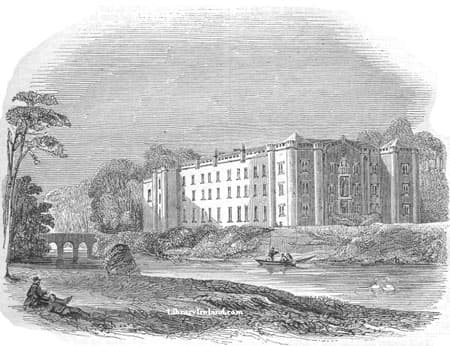
The origins of Antrim Castle are somewhat unclear, but it is generally accepted that the main structure was built between 1613 and 1662. The castle was initially constructed as a fortified mansion rather than a traditional medieval fortress. The project is often attributed to Sir John Clotworthy, Lord Massareene, who played a significant role in its development around the mid-17th century. It is believed that the castle was built atop or near the remains of an earlier fortification, as evidenced by the presence of a Norman motte within the castle grounds, which was later incorporated as a garden feature.
Sir John Clotworthy's daughter, Mary Clotworthy, married Sir John Skeffington, who became the Viscount Massareene. This union linked the castle's ownership to the Skeffington family, who maintained the estate for generations. The castle served as both a residence and a symbol of the family's status and influence in the region.
Architectural features and landscape
The castle was designed as a fortified mansion, combining defensive elements with residential comfort. Its architecture reflected the transition from medieval fortresses to more modern manor houses. While much of the original structure no longer exists, records and surviving elements provide insight into its design.
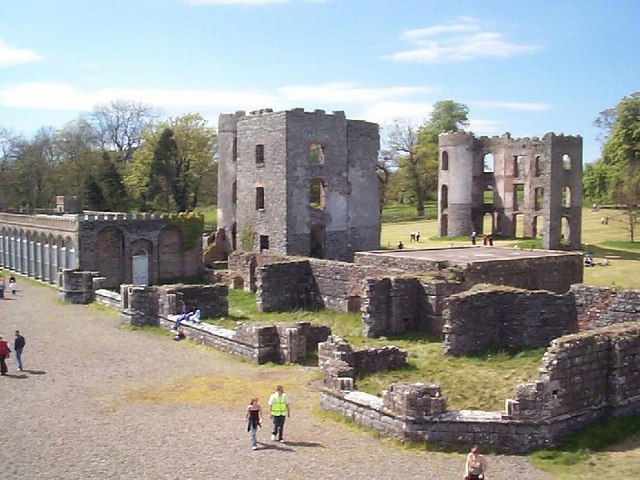
One of the most notable surviving features is the Italianate stair tower, constructed in 1887. This tower exemplifies the Victorian-era additions to the estate, showcasing the influence of Italian Renaissance styles popular during that period. The tower stands independently on the site, serving as a visual reminder of the castle's former grandeur.
The gatehouse, built around 1818, features twin neo-Tudor towers connected by older walls. This structure exemplifies the 19th-century architectural revival styles that were fashionable among the British aristocracy, blending medieval motifs with contemporary tastes.
The castle grounds included formal gardens and parkland, which remain a popular attraction today. The Norman motte within the gardens highlights the site's long history of fortification and habitation.
Destruction and current state
On October 28, 1922, during a grand ball held at the castle, a devastating fire broke out, destroying much of the main building. Although suspicion fell on arson by the Irish Republican Army (IRA), the official investigation was inconclusive, and no insurance claim was paid. The fire marked the beginning of the castle's decline.
The castle remained a ruin for several decades until it was ultimately demolished in the 1970s. Today, only a few structures survive: the Italian stair tower, the gatehouse with neo-Tudor towers, and a raised grassed platform marking the castle's former footprint.
The site is located in a public park accessible to visitors, providing a peaceful setting along the Six Mile Water river. Although the castle itself no longer stands, the remaining features and the surrounding gardens offer a glimpse into the estate's historical significance and architectural evolution.
Visiting antrim castle and its surroundings
The castle grounds are open to the public and serve as a local park and tourist attraction. Visitors can explore the remnants of the estate, including the Italian stair tower and the neo-Tudor gatehouse. The park's location on the banks of the Six Mile Water river provides scenic views and opportunities for leisurely walks.
The site is easily accessible from the town center of Antrim, located on Dublin Road. While there are no substantial castle ruins to explore, the historical context and surviving architectural elements make the visit worthwhile for those interested in Northern Ireland's heritage.
Flooding and natural conditions
The area around Antrim Castle can be prone to flooding, particularly after heavy rains, due to its riverside location. Visitors should be aware of weather conditions when planning their visit, as the grounds may be wet or waterlogged at times.
Legacy and heritage significance
Antrim Castle holds an important place in the local history of County Antrim and Northern Ireland. Although the main building no longer exists, the site preserves the memory of the region's aristocratic past and architectural developments from the 17th to the 19th centuries.
The surviving structures, including the Italianate stair tower and neo-Tudor gatehouse, reflect the layered history of the estate, illustrating changes in architectural styles and social functions over time.
The castle's gardens remain a valued green space within Antrim, attracting both residents and tourists. They serve as a reminder of the estate's former grandeur and its role in the cultural landscape of Northern Ireland.
Frequently asked questions (FAQ)
- When was Antrim Castle originally built?
- Antrim Castle was constructed in stages between 1613 and 1662, primarily as a fortified mansion rather than a medieval fortress.
- What remains of Antrim Castle today?
- Today, visitors can see a raised grassed platform marking the castle's footprint, an Italianate stair tower built in 1887, and a gatehouse with twin neo-Tudor towers built around 1818.
- Can I visit the grounds of Antrim Castle?
- Yes, the castle grounds are open to the public as a park and are freely accessible for visitors to explore the surviving structures and gardens.
- What caused the destruction of Antrim Castle?
- The castle was destroyed by a fire during a grand ball on October 28, 1922. While arson by the IRA was suspected, the official verdict was inconclusive.
- Is there any evidence of earlier fortifications on the site?
- Yes, there is a Norman motte within the castle grounds, indicating that the site was used for fortification before the current castle was built.
Photo gallery

Public domain
Information
Address
Dublin Road, Antrim, Northern Ireland
Loading map...
Visitor reviews
No reviews yet. Been here? Write the first review and help other travelers!
Write the first reviewVisited this castle? Share your experience
Your review helps other travelers and adds first-hand knowledge to our encyclopedia.