Amblève Castle

Amblève Castle: historic ruins in the woods of Wallonia, Belgium
Aywaille, Belgium
Early Medieval (5th–10th c.)
Ruins

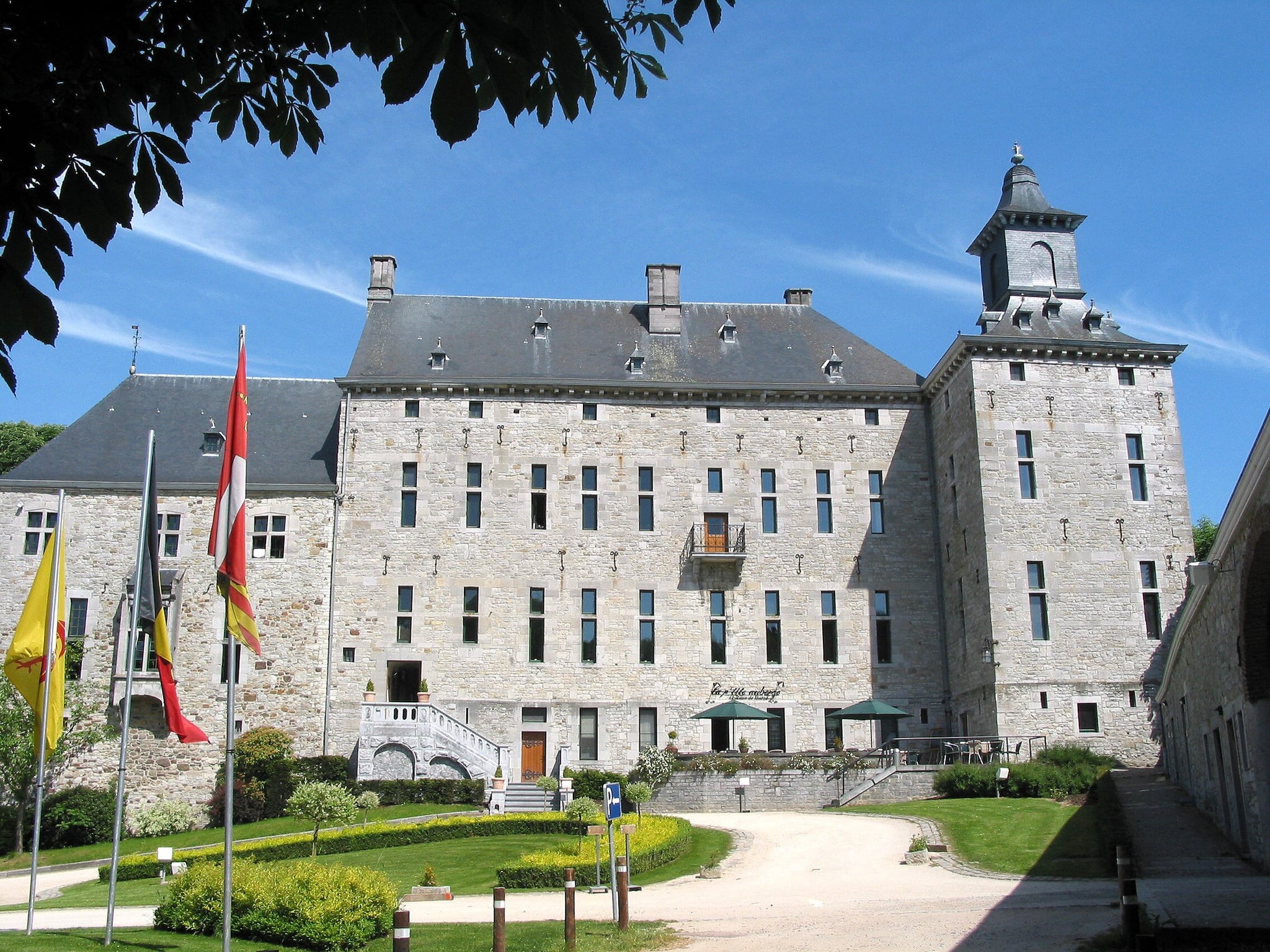
Amblève Castle, locally called Château d'Amblève, is a notable medieval ruin located in the dense woods northwest of Aywaille, in the province of Liège, within Belgium's Wallonia region. The castle's setting amidst forested terrain offers a secluded and atmospheric experience for visitors, with the ruins emerging dramatically through the trees after a scenic half-hour walk.

Early history and noble ownership

The castle is first documented in 1049, placing its origins in the early medieval period. Initially, it was part of the territories controlled by the Duchy of Limbourg in the mid-13th century, as attested in 1252. By 1285, control had shifted to the Duchy of Brabant, reflecting the complex feudal dynamics of the region. Over the centuries, Amblève Castle passed through the hands of several prominent noble families, including the influential House of Burgundy and the notable figure Philippe the Bold, Duke of Burgundy.

The de la marck family and later ownership

In 1429, the castle entered the possession of a family closely related to the powerful De La Marck lineage through marriage. This family maintained control for over a century, with Evrard II de La Marck inheriting the castle in 1531. Upon his death, his widow passed the estate in 1566 to her niece, Isabeau de Hoisteden. Isabeau's marriage in 1570 to François de Loncin brought the castle under his stewardship until its destruction.

Military conflict and destruction

The castle's strategic importance became evident during the turbulent period of the Eighty Years' War. In 1577, it was occupied by a garrison loyal to William of Orange, leader of the Protestant uprising against Spanish rule in the Low Countries. This occupation aligned the castle with the United Provinces rebellion. In response, Spanish Catholic forces ordered an assault on the castle in 1578, leading to its deliberate demolition. The castle was never rebuilt, leaving it as a ruin that reflects the violent conflicts of the era.

Architectural remains and site features

Today, Amblève Castle is classified as a castle ruin that offers visitors a glimpse into medieval fortification architecture despite its ruined state. The site includes visible architectural remnants such as several fireplaces and a cistern, which provide insight into the castle's domestic and defensive functions. The former location of the keep offers commanding views over the nearby Amblève River, highlighting the castle's strategic placement overlooking the waterway.

The ruins are largely overgrown, enhancing the sense of adventure for visitors exploring the site. The castle's woodland setting and the preserved vestiges make it a favored destination for those interested in medieval history and archaeology. Access to the ruins is free, encouraging exploration and appreciation of this historical monument.

Visiting information and cultural significance

Amblève Castle is accessible via a pleasant walk through the surrounding woods, making the journey to the ruins part of the overall experience. The site is open to the public without an entrance fee, allowing visitors to freely explore the remains at their own pace. The castle's location near Aywaille also places it within reach of other notable Walloon heritage sites, appealing to cultural tourists and history enthusiasts.

As a medieval fortress that witnessed the shifting allegiances and conflicts of the Low Countries, Amblève Castle holds historical significance as a symbol of regional power struggles and noble lineage. Its ruins serve as a tangible connection to the past, illustrating the architectural and military developments from the early medieval through the late medieval periods.

Frequently asked questions (FAQ)

What is Amblève Castle known for?
Amblève Castle is known for its stunning medieval architecture and picturesque location overlooking the Amblève River. It has significant historical importance as a former stronghold dating back to the 12th century, showcasing the region's rich heritage and strategic military history.
When was Amblève Castle built?
Amblève Castle was constructed in the 12th century, making it one of the oldest castles in the area. Its construction reflects the architectural styles and defensive needs of the medieval period, providing insight into the historical context of the time.
What are the opening hours for Amblève Castle?
Amblève Castle is open to visitors from April to October, with guided tours available from 10 AM to 5 PM. It is advisable to check the official website for any changes in hours or special events before planning your visit.
Can I visit Amblève Castle year-round?
While the castle is primarily open for visits from April to October, special events may allow access during the off-season. It is recommended to contact the castle administration directly for specific dates or to arrange private tours during winter months.
Is it possible to tour the interior of Amblève Castle?
Yes, guided tours are available that allow visitors to explore the interior of Amblève Castle. These tours typically include insights into the castle's history, architecture, and the surrounding landscape, enhancing the visitor experience.
What are the ticket prices for visiting Amblève Castle?
Ticket prices for Amblève Castle vary, usually ranging from €5 to €10 per person, with discounts for children and groups. It is advisable to check the castle's official website for the most current pricing and any special promotions.
When is the best time to visit Amblève Castle?
The best time to visit Amblève Castle is during the spring and early autumn months when the weather is pleasant and the surrounding landscapes are vibrant. Visiting during these times also allows you to enjoy various events and activities held at the castle.
Are there any nearby attractions to visit?
Yes, visitors to Amblève Castle can explore several nearby attractions, including the beautiful nature trails along the Amblève River and the charming town of Aywaille. The region is also known for its outdoor activities, such as hiking and cycling, making it a perfect destination for nature enthusiasts.
How do I get to Amblève Castle?
Amblève Castle is easily accessible by car, located just off the N640 road in Aywaille, Belgium. Public transportation options are available, but checking local schedules and connections in advance is recommended for a smooth journey.

Information

Hill Castle

Loading map...

Visitor reviews

No reviews yet. Been here? Write the first review and help other travelers!

Write the first review

Visited this castle? Share your experience

Your review helps other travelers and adds first-hand knowledge to our encyclopedia.
Write a review

(5/5)

0/2000 characters

Your review will be visible after admin approval

Nearby castles

3.6 km

Fanson Castle

Xhoris, Belgium

Fanson Castle, also known as Chateau de Fanson, is a historic medieval fortress located in the small village of Xhoris in the province of Liège, Belgium. Originally constructed in the 13th century, this castle played a significant role as a defensive stronghold in the region. Its strategic position made it an important fortification during the Middle Ages, reflecting the turbulent history of the area. Medieval origins and strategic importance The castle was built during the high medieval period, a time marked by frequent conflicts and territorial disputes in the region. Fanson Castle was designed primarily as a defense castle, featuring typical medieval fortification elements such as thick stone walls, battlements, and possibly a moat, although detailed records of its original defensive structures are limited. Its location in Xhoris allowed it to oversee and control important routes and local settlements, contributing to its military significance. Destruction and decline in the 17th century In the 17th century, Fanson Castle suffered considerable damage during a siege, a common fate for many castles of its era amid the numerous European wars and regional conflicts. Following its destruction, much of the castle's masonry was dismantled by local villagers who repurposed the bricks and stones to build smaller houses and structures in the village. This practice was typical in rural areas where castle ruins provided convenient building materials. 19th-century restoration and revival The castle remained largely in ruins until the 19th century, when it underwent significant restoration. This period saw a revival of interest in medieval architecture and heritage, often inspired by the Romantic movement. The restoration efforts aimed to preserve and reconstruct key parts of the castle, allowing it to regain some of its former appearance and structural integrity. Although the restored castle does not fully replicate the original medieval fortress, it reflects the architectural tastes and conservation approaches of the modern era. Architectural features and current condition Today, Fanson Castle stands as a partially restored medieval castle with visible elements from its original construction alongside 19th-century additions. The castle likely features a combination of stone walls, towers, and defensive structures typical of its initial design, though much has been altered or rebuilt. It is classified as a hill castle due to its elevated position, which was advantageous for defense and surveillance. Visitor experience and cultural significance Fanson Castle is open to visitors, offering a glimpse into the region's medieval past and the castle's evolution over several centuries. The site provides opportunities to explore the restored sections, appreciate the architectural details, and understand the historical context of fortifications in Belgium. Its survival and restoration highlight the cultural value placed on preserving historical landmarks and the ongoing interest in medieval heritage.

Modern (19th–20th c.)
Details
4.4 km
Harze Castle — Belgium castle

Harze Castle

Aywaille, Belgium

Harzé Castle, located in Aywaille, Belgium, is a remarkable example of a 14th-century hill castle with a rich history spanning from the medieval period to the modern era. Built initially by the de Clermont family in the early 14th century, the castle occupies a strategically important site in the region of Liège. Over the centuries, it has witnessed numerous changes in ownership, architectural transformations, and significant historical events, including a pivotal role during World War II. The castle's origins likely trace back to an earlier fortification from the 9th or 10th century, but the first documented construction dates from the early 1300s. The de Clermont family established the initial fortress, emphasizing the site's strategic importance in controlling local territories and trade routes. In the late medieval period, the castle underwent expansions and fortifications to adapt to evolving military needs. Medieval origins and ownership transitions Throughout the 14th and 15th centuries, Harzé Castle changed hands among noble families, reflecting the complex feudal dynamics of the region. In 1547, the castle passed to Jean de Ligne through his marriage to Margarete von der Marck, illustrating the common practice of consolidating power and property through marital alliances. Subsequent owners included the von Eynatten and de Rahier families, who maintained the estate during the late medieval and early modern periods. The castle's current architectural form largely dates from the early 17th century, when Count Ernest de Suys undertook significant construction between 1632 and 1645 following his marriage to Ernestine de Lynden. The coats of arms of these families, dated 1647, remain prominently displayed above the main entrance, symbolizing their lasting legacy. Architectural evolution and mosan style features Harzé Castle is a fine example of the Mosan architectural style, characterized by a courtyard enclosed by round towers, a typical feature of fortified residences in the Meuse valley region. Two large towers from the original medieval fortress survive intact, testifying to the castle's defensive origins. The north entrance is marked by two turrets added in the early 20th century by Edgar de Potter d’Indoye, bearing his coat of arms and reflecting the castle's continuous adaptation and embellishment. Between 1909 and 1924, Edgar de Potter d’Indoye led extensive restoration works that included the addition of semicircular arcades supported by Tuscan columns and windows with triple mullions, both characteristic of the Mosan style. Interior enhancements from this period include the "Salle des Comtes" (Hall of the Counts), an oriel window projecting from the wall, and three additional windows on the original building, blending medieval and early modern architectural elements harmoniously. Role during world war ii and military significance During World War II, Harzé Castle played a strategic military role as the headquarters of the U.S. XVIII Airborne Corps under the command of Major General Matthew B. Ridgway during the Battle of the Bulge in late 1944. The castle hosted several prominent military leaders, including Field Marshal Bernard Montgomery on December 24, 1944, and General Dwight Eisenhower on December 28, 1944. A commemorative plaque at the castle entrance honors these visits and highlights the castle's importance in Allied operations during one of the war's critical campaigns in the Ardennes region. Modern use, preservation, and cultural significance After the war, the castle remained in private hands until 1973, when the province of Liège acquired it. It was repurposed as a seminar center, event venue, and lodging facility, serving the public until 2020. In 2023, ownership transferred to Immobilière du Sart SRL, which is currently renovating the property with plans to reopen in 2025. Harzé Castle is protected as a classified monument since 1965 by the Royal Commission for Monuments and Sites, ensuring the preservation of its architectural and historical integrity. Museum of milling and baking The castle grounds include a unique Museum of Milling and Baking, housed in the former farm buildings. This museum offers six exhibition rooms showcasing the development of milling and baking technologies from medieval water-powered mills to early 20th-century bakery workshops. Visitors can observe operational machinery such as waterwheel-driven millstones, hydraulic levers, and gears, alongside tools related to baking, ice, and chocolate production dating from the Napoleonic era through the postwar period. This museum complements the castle's historical narrative by highlighting the region's traditional crafts and industries. Architectural details and preservation status The castle's combination of medieval fortifications and early modern renovations provides a comprehensive view of its architectural evolution. The well-preserved round towers, courtyard, and restored facades demonstrate the enduring Mosan style influence, while the early 20th-century additions reflect a sensitive approach to historic preservation. Today, Harzé Castle functions as a hotel, restaurant, conference center, and wedding venue, blending historical ambiance with modern amenities. Its preservation status as a well-preserved site allows visitors to experience the layered history of this remarkable fortress in the heart of the Belgian Ardennes.

Late Medieval (14th–15th c.)
Details
4.5 km

Montjardin Castle

Sougné-Remouchamps, Belgium

Montjardin Castle, locally known as Château de Montjardin, is a medieval fortress located near the town of Sougné-Remouchamps in the Liège province of Belgium. Perched on a rocky outcrop approximately 60 meters above the Amblève river, the castle commands a strategic vantage point over the surrounding river valley, with sheer drops on three sides providing natural defense. Early history and construction The exact date of Montjardin Castle's initial construction remains uncertain, but historical evidence suggests it was likely built during the 12th or 13th century, placing it firmly within the high medieval period. The castle's original purpose was to control and monitor the vital river valley, an important route for trade and military movements. Its location on a rocky promontory was typical of hill castles of the era, designed to maximize natural defenses. The castle's main structures included a square tower with walls approximately 2 meters thick and an adjoining smaller round tower, both characteristic of medieval military architecture focused on fortification and surveillance. Destruction and rebuilding phases In 1286, the castle suffered significant damage when John, Duke of Brabant, launched an attack that led to its complete destruction. This event marked a turning point in the castle's history, necessitating extensive reconstruction efforts. Several decades later, in 1327, John the Blind, Count of Luxembourg and King of Bohemia, initiated a rebuilding campaign. By 1369, the castle had been restored and expanded with the addition of a new residential building, reflecting evolving needs for both defense and habitation. Despite these efforts, the castle endured further hardship when it was ravaged by fire in 1492, leading to another phase of rebuilding and modification. Architectural features and layout Montjardin Castle was constructed with a focus on natural and man-made defenses. The rocky outcrop provided a formidable natural barrier on three sides, while the fourth side featured a small courtyard protected by a moat and a drawbridge, typical defensive elements in medieval castles. The main castle complex consisted of a square keep with thick stone walls, designed to withstand sieges, and an adjoining smaller round tower which likely served as a lookout or secondary defensive position. These features highlight the castle's role as a fortified residence and military stronghold. Later history and modifications During the wars between France and Spain in the late 17th century, the castle was occupied by a French garrison from 1673 to 1676, indicating its continued strategic importance well into the early modern period. Over the following centuries, ownership of Montjardin Castle changed hands multiple times, with various modifications reflecting changing architectural styles and functional needs. Notably, in 1868, a farmhouse was constructed in the center of the castle grounds by H. Delforge, marking a shift from purely military use to agricultural and residential purposes. In 1927, the smaller round tower collapsed into the river below, and a square building was erected in its place, altering the castle's original silhouette. Current status and accessibility Today, Montjardin Castle remains privately owned and is not open to the public. Visitors can view the castle only from across the Amblève river, where its elevated position still dominates the landscape. The castle's current condition reflects centuries of adaptation, partial ruin, and preservation efforts.

High Medieval (11th–13th c.)
Details