Altsachsenheim Castle Ruins

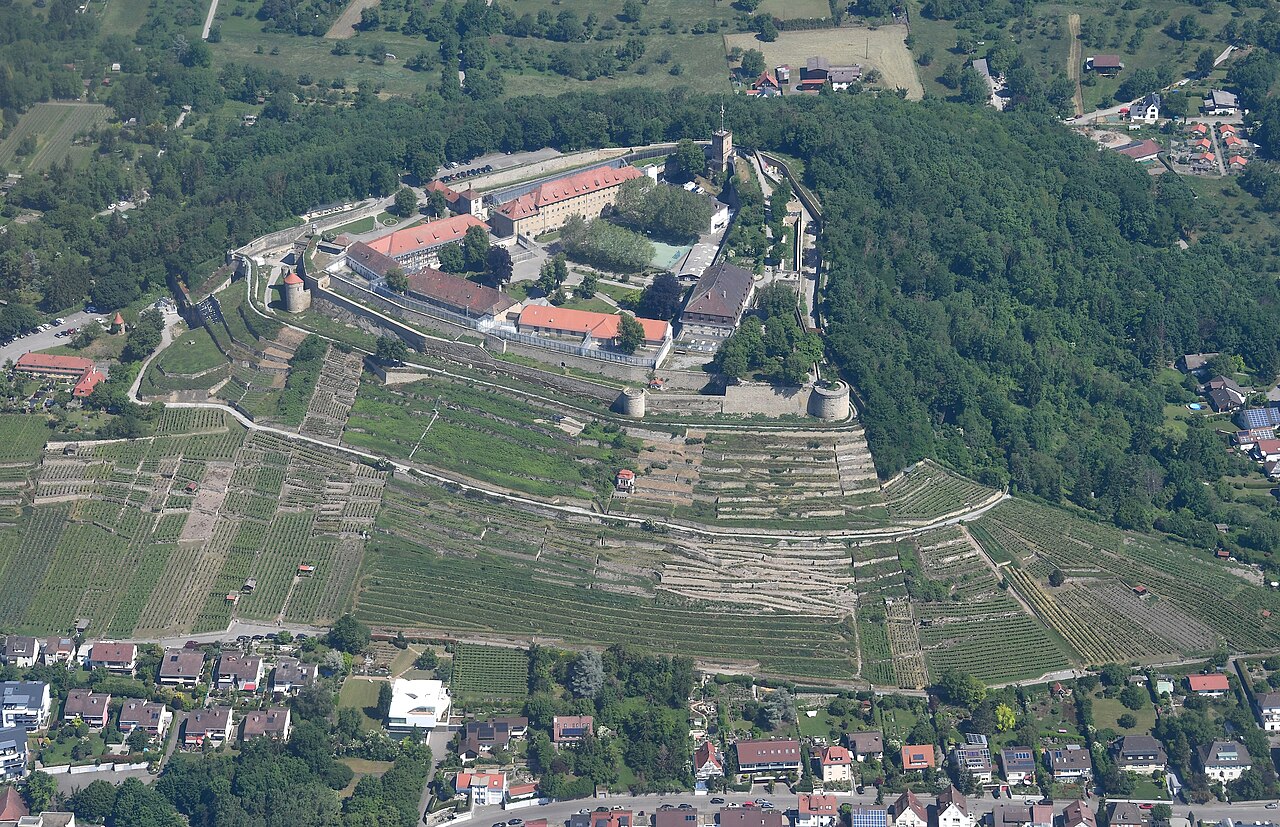
Altsachsenheim castle ruins in Sachsenheim, Germany
Sachsenheim, Germany
High Medieval (11th–13th c.)
Ruins

Altsachsenheim Castle stands as a significant high medieval fortress ruin located in Sachsenheim, Germany. Constructed in the 13th century, it originally served as the fortified headquarters for the lords of Sachsenheim, a noble family influential in the region during the Middle Ages. The castle's strategic position and robust defensive features reflected the typical military architecture of its era, designed to assert control over the surrounding lands and protect local interests.

Historical development and ownership transitions

The castle's history is marked by a series of ownership changes that illustrate the shifting power dynamics of the region. Around 1430, Altsachsenheim Castle passed into the hands of the lords of Nippenburg, a noble lineage known for their regional influence and castle holdings. This transition likely involved political maneuvering or inheritance, common in the feudal landscape of medieval Germany.

Later, in 1561, the castle came under the possession of the House of Württemberg, a prominent dynasty that played a crucial role in the history of southwestern Germany. The acquisition by Württemberg reflects the consolidation of territories and noble estates typical of the Renaissance period, although by this time, many medieval castles were gradually losing their military importance.

Architectural features and castle layout

Although today only ruins remain, the original Altsachsenheim Castle was constructed following the typical high medieval castle design principles. It likely featured a keep or donjon as the central stronghold, surrounded by defensive walls and possibly a moat or natural barriers provided by the terrain. The castle would have included residential quarters, courtyards, and service buildings such as stables and workshops.

The materials used in construction were predominantly local stone, which has contributed to the partial preservation of the ruins. Defensive architectural elements such as battlements, arrow slits, and gatehouses would have been integral to the castle's design, reflecting the military needs of the period.

Decline and current condition

Like many medieval castles, Altsachsenheim Castle eventually fell into decline as military technology and political structures evolved. The castle was likely abandoned or repurposed in subsequent centuries, leading to its current state as ruins. These remains offer valuable insights into medieval fortification techniques and noble residence layouts.

Today, the site is recognized for its cultural and historical significance within the region. The ruins attract visitors interested in medieval history and castle architecture, providing a tangible connection to the feudal past of Sachsenheim and the broader region of Baden-Württemberg.

Cultural significance and heritage preservation

Altsachsenheim Castle ruins are part of the local heritage and contribute to the understanding of medieval noble life and regional power structures. Efforts to preserve and study the site help maintain its legacy, allowing historians and visitors alike to explore the architectural and historical context of the high medieval period in Germany.

The castle's story reflects broader themes of feudalism, territorial disputes, and the evolution of military architecture in medieval Europe, making it an important subject for both academic research and cultural tourism.

Frequently asked questions (FAQ)

When was Altsachsenheim Castle built?
Altsachsenheim Castle was built in the 13th century during the high medieval period as the seat of the lords of Sachsenheim.
What is the current condition of Altsachsenheim Castle?
The castle is currently in ruins, with only partial remains visible that reflect its original medieval structure.
Who owned Altsachsenheim Castle historically?
The castle was initially owned by the lords of Sachsenheim, then passed to the lords of Nippenburg around 1430, and later to the House of Württemberg in 1561.
What architectural style does Altsachsenheim Castle represent?
Altsachsenheim Castle exemplifies high medieval castle architecture, featuring typical defensive elements such as thick stone walls and a keep.
Is Altsachsenheim Castle accessible to visitors?
The ruins of Altsachsenheim Castle are accessible to the public, offering a historical site for exploration and study, although facilities may be limited.

Information

Hill Castle

Loading map...

Visitor reviews

No reviews yet. Been here? Write the first review and help other travelers!

Write the first review

Visited this castle? Share your experience

Your review helps other travelers and adds first-hand knowledge to our encyclopedia.
Write a review

(5/5)

0/2000 characters

Your review will be visible after admin approval

Nearby castles

5.7 km
Hohenasperg — Germany castle

Hohenasperg

Asperg, Germany

Hohenasperg is a prominent Renaissance bastioned fortress located in the federal state of Baden-Württemberg, near the city of Stuttgart, Germany. This imposing stronghold sits atop a hill overlooking the town of Asperg, serving historically as a strategic military site and later as a state prison. Its commanding position and extensive fortifications reflect its long-standing role in regional defense and governance. Early history and celtic significance The site of Hohenasperg has a history that predates its Renaissance fortifications, with origins tracing back to an important Celtic oppidum. This ancient fortified settlement was a center of power and trade during the late Iron Age. The surrounding area is notable for several princely burials, including the famous Hochdorf Chieftain's Grave, which is one of the most significant archaeological finds of the Celtic period in Europe. These graves indicate the high status and wealth of the Celtic elite who once inhabited the region. Renaissance bastioned fortress architecture The fortress as it stands today primarily dates from the 16th century, during the Renaissance period, when it was extensively rebuilt and modernized to incorporate bastioned fortifications. This style was developed in response to advancements in artillery and siege warfare, featuring angled bastions that allowed defenders to cover all approaches with overlapping fields of fire. The thick walls, moats, and defensive towers of Hohenasperg exemplify this military architectural evolution. Fortification layout and features The fortress complex includes multiple bastions arranged to maximize defensive capabilities. The design reflects the principles of the Italian school of fortification, which influenced many European fortresses during the Renaissance. The site also includes curtain walls, gatehouses, and a central keep that served as the last line of defense. These features combined to make Hohenasperg a formidable stronghold in its time. Use as a prison and historical role From the early modern period onward, Hohenasperg became known primarily as a state prison. Its isolated hilltop location and robust fortifications made it suitable for detaining political prisoners, military captives, and other high-profile detainees. The fortress prison played a significant role in various periods of German history, including the Napoleonic era and the 19th century. Notable prisoners and events Throughout its history as a prison, Hohenasperg held several notable figures, including political dissidents and revolutionaries. Its reputation as a secure detention facility was well established, and it remained in use for this purpose well into the 20th century. The prison's history reflects broader social and political changes in Germany over several centuries. Cultural heritage and preservation Today, Hohenasperg stands as a significant cultural and historical monument. Its well-preserved Renaissance bastioned fortifications offer valuable insights into military architecture and regional history. The site is accessible to visitors interested in exploring its extensive history, archaeological significance, and architectural features. Efforts to maintain and restore the fortress ensure that its legacy endures for future generations. Archaeological importance The proximity of Hohenasperg to notable Celtic burial sites, including the Hochdorf Chieftain's Grave, enhances its archaeological value. These discoveries have contributed significantly to understanding Celtic culture and social structures. The fortress and its surroundings form an important historical landscape that connects ancient and early modern European history.

Renaissance (15th–17th c.)
Details
6.9 km

Seeschloss Monrepos

Ludwigsburg, Germany

Seeschloss Monrepos is a distinguished lakeside palace located in Ludwigsburg, Germany, renowned for its scenic setting by the Eglosheimer Lake. Constructed in 1714 during the post-Renaissance period, it served as a hunting lodge for the dukes of Württemberg, who had a long-standing tradition of hunting along the lake since the 16th century. The palace is situated within the extensive Ludwigsburg estate, which also includes the larger Favorite Palace and Ludwigsburg Palace. Although somewhat separated from these main palaces, Monrepos is connected to the estate by pedestrian paths, integrating it into the broader landscape of the royal grounds. Historical background and royal connections The origins of Monrepos trace back to Duke Eberhard Ludwig, who commissioned the construction of an octagonal pavilion known as the "Little Lake House" on the northern shore of Eglosheimer Lake in 1714. This pavilion marked the beginning of what would become the full palace complex. The site was chosen for its tranquil waterside location, ideal for the leisure pursuits of the Württemberg dukes, particularly hunting and relaxation. Monrepos stands out among the three main palatial structures on the estate because it remains under the ownership of the royal family of Württemberg, despite their overthrow in 1918. This continuity of private ownership contrasts with the other palaces, which have become state property and are now managed as public parks and museums. Architectural features and style The architectural character of Seeschloss Monrepos reflects post-Renaissance design principles with an emphasis on harmony with its natural surroundings. The original octagonal pavilion was expanded over time into a larger palace complex, incorporating elegant pavilions, terraces, and gardens that open onto the lake. The buildings exhibit restrained ornamentation typical of the period, focusing on refined proportions and balanced compositions rather than elaborate Baroque exuberance. The palace's location on the lake shore allows for striking views and easy access to the water, which was an essential aspect of its function as a hunting and leisure retreat. The surrounding landscape has been carefully managed to maintain a park-like atmosphere, blending natural beauty with cultivated gardens. The estate and its evolving use The lands around Monrepos have undergone significant changes since the early 18th century. While the state-owned parts of the Ludwigsburg estate have been preserved as public parks and cultural sites, the royal portion, including the grounds surrounding Monrepos, has been adapted for recreational use, notably as a golf course. This transformation reflects changing leisure trends while maintaining the estate's historic character. The palace and its grounds remain a symbol of the Württemberg family's heritage and their historical ties to the region. Monrepos' lakeside setting and architectural elegance continue to attract visitors and enthusiasts of historic royal residences. Visiting and cultural significance Although Monrepos is privately owned by the Württemberg family, its proximity to the public palaces and parks of Ludwigsburg makes it an important part of the area's cultural landscape. The palace exemplifies the tradition of hunting lodges among European nobility and illustrates the integration of leisure architecture within a natural environment. Monrepos' preservation offers insight into the lifestyle and tastes of the Württemberg dukes in the post-Renaissance period. Its continued private ownership ensures that it remains a living part of the region's aristocratic heritage.

Post-Renaissance (17th–18th c.)
Details
9.4 km

Schloss Favorite

Ludwigsburg, Germany

Schloss Favorite is a distinguished Baroque hunting lodge located in Ludwigsburg, Germany. Constructed between 1717 and 1723, it was commissioned by Duke Eberhard Ludwig of Württemberg as a retreat and showcase of princely taste and leisure pursuits. The lodge exemplifies the refined elegance and ornamental richness characteristic of the Post-Renaissance Baroque period in southern Germany. Architectural design and construction The design of Schloss Favorite was entrusted to the Italian architect Donato Giuseppe Frisoni, who was also responsible for the nearby Ludwigsburg Palace. Frisoni’s work at Favorite exhibits the Baroque architectural style with its emphasis on symmetry, grandeur, and decorative detail. The building served primarily as a hunting lodge, but its design incorporated elements of a pleasure palace, including richly decorated interiors and carefully planned gardens. The lodge features a compact, rectangular layout with a central corps de logis flanked by symmetrical wings. The façades are adorned with pilasters, stucco ornamentation, and large windows that allow ample natural light. The roofline is punctuated by dormer windows and a balustraded terrace, enhancing the building’s elegant silhouette. Interior and stylistic evolution Originally, the interiors of Schloss Favorite reflected the exuberant Baroque style, with elaborate stucco work, frescoes, and intricate wood carvings. However, in the early 19th century, significant changes were made under the direction of Nikolaus Friedrich von Thouret, a prominent architect known for his Neoclassical style. Von Thouret renovated the interiors, introducing cleaner lines, classical motifs, and a more restrained decorative scheme that aligned with the tastes of the Kingdom of Württemberg under King Frederick I. Grounds and ménagerie From 1806, the park surrounding Schloss Favorite was transformed into a ménagerie by King Frederick I. This included the introduction of exotic and native animals such as deer and chamois, creating a zoological garden that complemented the hunting lodge’s original function. The landscaped grounds were designed to offer picturesque views and leisure opportunities for the royal family and their guests. Decline and restoration During the 20th century, Schloss Favorite experienced neglect and fell into a state of disrepair. Changing political and social circumstances, along with reduced royal patronage, contributed to the lodge’s decline. However, beginning in 1980, extensive restoration efforts were undertaken to preserve and revive the building and its grounds. The restoration aimed to maintain historical accuracy and to restore the lodge’s Baroque and Neoclassical elements. Since its reopening to the public in 1983, Schloss Favorite has served as a museum and cultural site, allowing visitors to explore its architectural beauty, historical interiors, and the surrounding parkland. The site offers insight into the leisure practices of the Württemberg nobility and the evolution of aristocratic architecture in southern Germany. Cultural significance and visitor experience Today, Schloss Favorite is recognized for its architectural significance as a well-preserved example of a Baroque hunting lodge that underwent thoughtful Neoclassical renovation. It provides a window into the 18th and 19th-century court life of the Württemberg dynasty. Visitors can appreciate the blend of artistic styles, the carefully maintained gardens, and the historical context of royal hunting traditions. The castle’s location near Ludwigsburg Palace makes it an important part of the region’s cultural heritage circuit. Guided tours highlight its architectural features, the history of its patrons, and the transformation of its grounds. Seasonal events and exhibitions further enrich the visitor experience.

Post-Renaissance (17th–18th c.)
Details

