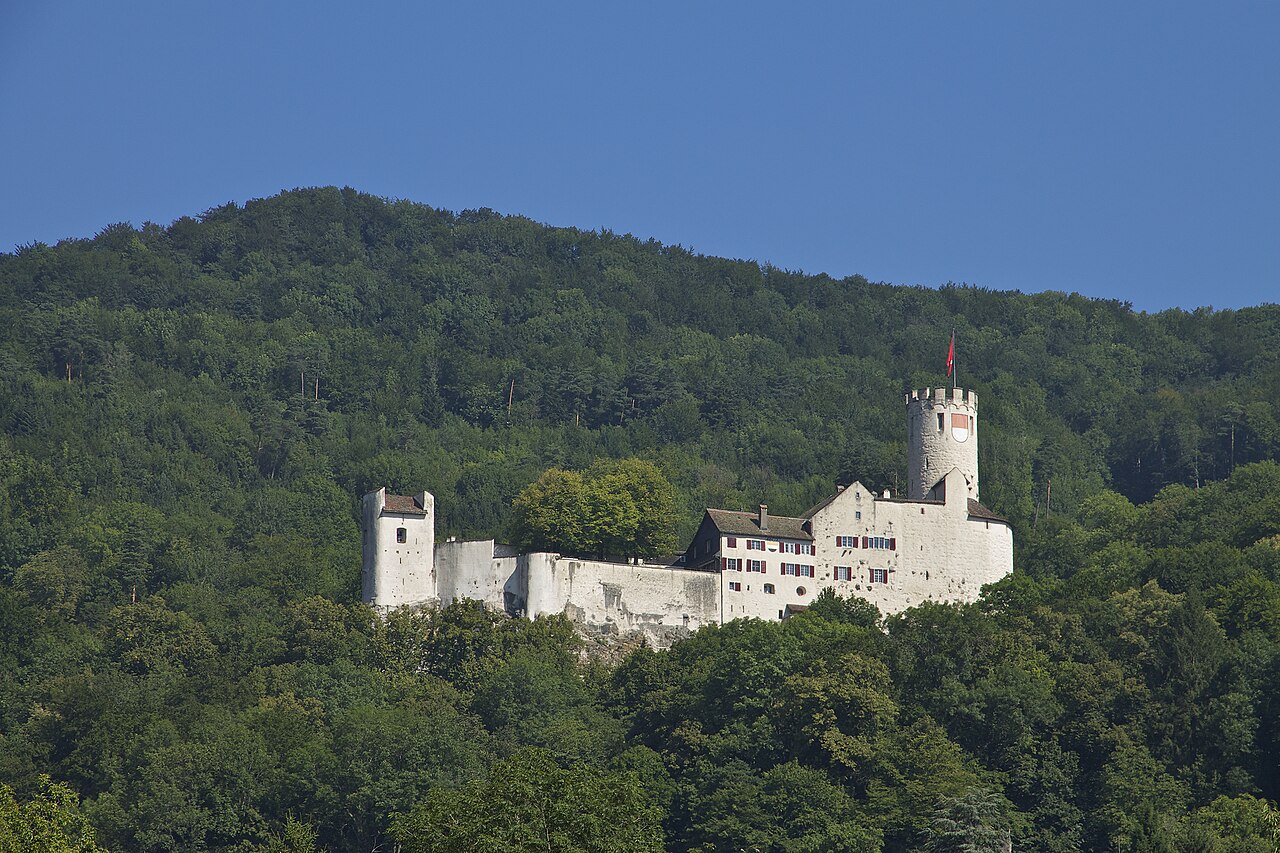
Alt-Bechburg Castle

Alt-Bechburg Castle in Holderbank, Switzerland
Holderbank, Solothurn, Switzerland
High Medieval (11th–13th c.)
Ruins

Alt-Bechburg Castle is a medieval hill castle located in Holderbank, Switzerland, dating back to around 1050. Constructed by the barons of Bechburg, it served as a strategic stronghold during the High Medieval period. The castle's position atop a hill provided commanding views of the surrounding landscape, an essential feature for defense and surveillance in the medieval era.

Historical context and origins

The castle was established in the mid-11th century, a time characterized by the consolidation of feudal power in the region. The barons of Bechburg were a noble family influential in the area, and the castle functioned as their residence and administrative center. Its founding around 1050 places it among the early medieval fortifications in Switzerland, reflecting the architectural and military trends of the High Medieval period.

Architectural features and layout

Although much of the original structure was lost, the remaining ruins provide insight into its design. The castle was built as a hill castle, utilizing the natural elevation to enhance its defensive capabilities. The remnants include foundational walls and traces of the main buildings that once formed the castle complex. One of the most notable features today is the vast Manna Table, measuring approximately 9 by 11 metres. This large flat stone surface likely served as a gathering or resting place within the castle grounds, and it remains a popular spot for visitors.

The destruction and current condition

In 1713, Alt-Bechburg Castle was severely damaged by a fire, which led to its abandonment and the decision not to rebuild. Since then, the site has existed as ruins, offering a glimpse into medieval architecture and feudal life. The castle's elevated location now makes it a favored viewpoint, attracting visitors who come to enjoy panoramic views of the surrounding Swiss landscape. The ruins are well-preserved enough to convey the castle's original form and historical significance.

Visiting Alt-Bechburg Castle

Today, Alt-Bechburg Castle is accessible to the public as a historical site. Visitors can explore the ruins and enjoy the scenic outlooks afforded by its hilltop position. The Manna Table provides a unique resting place amid the ruins, enhancing the visitor experience. The site is a point of interest for those studying medieval Swiss castles and for tourists seeking cultural heritage and natural beauty.

Significance in Swiss heritage

Alt-Bechburg Castle remains an important cultural landmark in the canton of Solothurn. Its history reflects the feudal dynamics and architectural styles of the High Medieval period in Switzerland. As a ruin, it contributes to the understanding of medieval fortifications and noble residences in the region. The castle's preservation as a viewpoint and historical site helps maintain the legacy of the barons of Bechburg and the medieval history of Holderbank.

Information

Hill Castle

Loading map...

Visitor reviews

No reviews yet. Been here? Write the first review and help other travelers!

Write the first review

Visited this castle? Share your experience

Your review helps other travelers and adds first-hand knowledge to our encyclopedia.

Write a review

(5/5)

0/2000 characters

Your review will be visible after admin approval

Nearby castles

4.7 km

Neu-Falkenstein Castle

Balsthal, Switzerland

Neu-Falkenstein Castle is an evocative medieval fortress located in Balsthal, Switzerland, perched strategically on a hilltop at 595 meters above sea level. This hill castle was originally constructed in the early 12th century by a local noble family to assert territorial control in the region. Its commanding position offers extensive views over the surrounding Jura hills and the town of Balsthal, underscoring its military and administrative significance through the centuries. The castle’s origins are tied to the High Medieval period, with the earliest possible owners mentioned in a disputed document from 1145 referring to brothers Welf and Ulrich von Falkenstein. By the late 12th century, the estate was held as a fief by the Freiherren von Bechburg under the authority of the Bishop of Basel. A branch of the Bechburg family later adopted the title Counts of Falkenstein and undertook significant expansions, including the construction of a large residential palace and a distinctive circular bergfried tower, typical of medieval defensive architecture. Historical development and ownership The documented history of Neu-Falkenstein Castle reflects the complex feudal and political dynamics of the region. Rudolf von Falkenstein, son of Rudolf von Bechburg, appears as the first clearly recorded owner in the mid-13th century. He expanded the castle’s defenses by adding a fortified outer bailey around 1250, which enhanced the stronghold’s military capabilities. The castle was briefly co-owned by Rudolf III von Wart until 1305, a figure later infamous for his involvement in the assassination of King Albert I of Germany in 1308. Rudolf von Wart sought refuge at Neu-Falkenstein but ultimately sold his shares before his arrest and execution, highlighting the castle’s entanglement in regional conflicts. The fortress suffered severe damage during the 1356 Basel earthquake, one of the most devastating seismic events in Swiss history. The restoration efforts following the earthquake were so extensive that the castle acquired the prefix "Neu" (meaning "new" in German), reflecting its renewed appearance. Further destruction occurred during the Safran War of 1374, a regional conflict involving multiple powers. Henmann von Bechburg, a key figure in this period, attacked a merchant convoy from Basel, prompting a siege led by a coalition including Bern, Basel, and several noble families. The castle was captured after a fourteen-week siege, partially destroyed, and its defenders executed. Following the Safran War, Henmann von Bechburg received funds to restore the castle but soon pawned it to Rutschmann von Blauenstein. Upon Henmann’s death, full ownership passed to the von Blauenstein family. Ownership disputes involving Henmann’s sister and the counts of Thierstein were resolved when Hans von Blauenstein sold Neu-Falkenstein to the city of Solothurn in 1402. The city formally took possession in 1417, although the Bishop of Basel remained overlord until 1669. Neu-Falkenstein served as the residence of the Solothurn bailiff, an administrative official, until 1798. During the Helvetic Revolution, the castle was set on fire and destroyed by rebelling peasants. It was subsequently abandoned and fell into ruin, marking the end of its active use as a fortress and residence. Architectural features and layout Defensive structures and bergfried The castle’s layout reveals a complex evolution from two initially separate fortifications into a single fortified complex. The western section is dominated by a tall, round bergfried tower, a hallmark of medieval military architecture designed as a last refuge and lookout point. The tower features a stone staircase with 62 steps leading to a platform approximately 15 meters above ground level. From this vantage point, visitors can appreciate panoramic views of Balsthal and the Jura hills, emphasizing the castle’s strategic importance. Residential and religious buildings The eastern part of the castle contains the foundations of a trapezoidal residential wing, representing the oldest inhabited section of the complex. Nearby remains include traces of a chapel, underscoring the religious functions integrated within the castle’s precincts. Foundations of other residential and economic buildings illustrate the castle’s role as a noble residence and administrative center. Outer defenses and adaptations The approach to the castle was fortified with an expanded entrance area comprising a forecourt and gatehouse, supplemented by a zwinger—a narrow enclosed space between defensive walls designed to trap attackers. Terraces in the forecourt have been identified as garden areas, reflecting the castle’s domestic aspects. Later additions include an artillery bastion, indicating adaptations to evolving military technology during the early modern period. Restoration and archaeological investigations Restoration efforts began around 1900, initiated by a local society in Balsthal dedicated to preserving the castle’s heritage. The initial focus was stabilizing the bergfried, which remains partially restored today. Excavations in 1938 and 1939 uncovered parts of the ruins but were hampered by inadequate archaeological methods, resulting in the loss of many artifacts. Despite these setbacks, investigations identified at least four major construction phases spanning from the 11th to 12th centuries, through late 13th-century modifications, and further work around 1640. The exact dating of the outer bailey remains uncertain. The ruins today provide valuable insights into medieval castle construction, feudal administration, and military architecture. Neu-Falkenstein castle in cultural heritage Today, Neu-Falkenstein Castle stands as an important cultural landmark in the canton of Solothurn. Its ruins, partially restored and accessible to visitors, offer a tangible connection to the region’s medieval history and architectural evolution. The castle’s layered construction phases and historical associations with noble families, regional conflicts, and administrative roles make it a significant site for understanding Swiss medieval heritage. Visitors to Neu-Falkenstein can explore the remains of its defensive towers, residential quarters, and outer fortifications while enjoying scenic views of the Jura landscape. The site’s preservation reflects ongoing efforts to maintain Switzerland’s historical monuments and promote cultural tourism.

High Medieval (11th–13th c.)
Details
5.7 km

Waldenburg Ruin

Waldenburg, Switzerland

Waldenburg Ruin stands as a remarkable example of a medieval hill castle strategically perched above the town of Waldenburg in Switzerland. Constructed around the year 1200 by the influential Counts of Frohburg, this castle played a pivotal role in overseeing and profiting from the nearby Oberer Hauenstein pass road. Its location atop the Rehag ridge provided natural defenses with steep cliffs on three sides and a man-made neck ditch securing the eastern approach. The castle's ruins today offer a fascinating glimpse into the military architecture, feudal politics, and economic strategies of the High Middle Ages. Founding and strategic importance The origins of Waldenburg Castle trace back to Count Hermann of Frohburg, who acquired the land from the Murbach Abbey and established the fortress to control the vital trade and travel route through the Oberer Hauenstein pass. This pass was a crucial corridor in the Jura Mountains, facilitating commerce and movement between regions. By situating the castle here, the Frohburg family could impose tolls and exert authority, reflecting their economic interests and regional power during the High Medieval period. Waldenburg gradually supplanted an earlier Frohburg stronghold known as Schanz or Alt-Schloss, which was abandoned around 1300. The castle’s name was also adopted by a branch of the Frohburg family, signifying its importance as a familial seat and symbol of status. Ownership transitions and political role In the mid-13th century, Count Ludwig of Frohburg attempted to sell Waldenburg to the powerful Habsburg family, aiming to secure protection for the castle and town. The sale did not materialize, and instead, in 1265, ownership transferred to the Bishop of Basel. Despite this change, the Frohburgs retained control by holding the castle and town as a fief under the bishopric, illustrating the complex feudal relationships of the era. The castle notably survived the devastating 1356 Basel earthquake with minimal damage, underscoring the robustness of its construction. After the death of Count Johan of Frohburg in 1366, the bishopric took direct control, establishing the Amt Waldenburg administrative district governed by a vogt residing at the castle. Throughout the late 14th and early 15th centuries, the Amt was pawned multiple times to noble families such as Leopold III of Austria and the Counts of Thierstein. Eventually, the city of Basel took over the pawn in 1400 and fully acquired the district by 1585. Basel appointed its own vogt to manage Waldenburg, who undertook restoration efforts after periods of neglect. In 1444, the nearby city of Solothurn launched a military campaign to capture Waldenburg and its legal rights, but the attempt failed, demonstrating the castle’s continued strategic and administrative significance. Decline and ruin Waldenburg Castle remained an administrative center until the late 18th century. However, during the revolutionary upheavals of 1798, the castle was deliberately set on fire and abandoned, leading to its current ruinous state. This destruction marked the end of its active use but initiated its transformation into a historical monument. Archaeological interest in Waldenburg began in the early 20th century, with excavations and stabilization primarily conducted between 1929 and 1931. These efforts focused on preserving the remaining structures rather than extensive archaeological research. Further conservation work took place in 2002 to address safety concerns arising from earlier repairs. Architectural features and layout Waldenburg Ruin is situated on a narrow rocky ridge approximately 700 meters above sea level, rising about 170 meters above the Oberer Hauenstein pass road. The castle’s main area measures roughly 50 by 20 meters east to west and is divided into two distinct sections: an older eastern part and a later western extension. Surrounding the core on the north, west, and south sides lies a lower outer bailey that once contained various support buildings. The eastern section The eastern sector houses the oldest surviving elements, including a prominent bergfried tower positioned in the northwest corner. This tall fortified tower served as a last refuge and a symbol of lordly power. Adjacent to the southern wall within the eastern courtyard were several residential buildings, indicating the living quarters of the castle’s inhabitants. A filtered cistern for water storage is located in this courtyard, vital for withstanding sieges. Additionally, remains of a bakery oven built against the bergfried highlight the castle’s self-sufficiency in food preparation. The western section The grandest structure in Waldenburg is found in the western part: a large palas or great hall constructed in the late 13th century. This multi-story building, likely four or five floors high, was second only to the bergfried in height. Historical illustrations depict it with a hipped roof and chimney, suggesting it housed important residential and administrative functions. Defensive works and outer bailey The outer bailey included economic buildings, particularly concentrated on the northern side where a stairway led to an outer gate at the northwest corner. A zwinger fortification enclosed the narrow western end of the ridge, designed to trap attackers in a confined space. This zwinger incorporated a gatehouse and connected to a stairway ascending to an inner gate halfway along the southern wall, which was protected further by a small moat. The burghof and the town of waldenburg About 350 meters northeast of the main castle lies the burghof or castle courtyard associated with Waldenburg. The adjacent town, a separate foundation, was fortified with its own walls and gates to control the pass road. This settlement provided essential services such as porterage, storage, and lodging for travelers and merchants, supporting the castle’s economic and strategic functions. Modern visitor experience Today, visitors to Waldenburg Ruin can climb a wooden and stone observation tower constructed within the ruins. This tower rises approximately 17.5 meters and is accessed by a stairway of 96 steps. From its summit, panoramic views extend over the surrounding villages and the Jura valleys, connecting visitors to the broader landscape that the castle once dominated. The site’s preservation as a well-preserved hill castle ruin offers a tangible connection to the High Medieval period and the complex feudal history of the region. Its combination of natural defenses, architectural sophistication, and historical significance make Waldenburg Ruin a compelling destination for enthusiasts of medieval history and castle architecture.

High Medieval (11th–13th c.)
Details
5.7 km
Neu Bechburg — Switzerland castle

Neu Bechburg

, Switzerland

Neu Bechburg Castle is a prominent hill castle located in the municipality of Oensingen within the Canton of Solothurn, Switzerland. This 13th-century fortress stands as an important example of High Medieval castle architecture in the region and is recognized as a Swiss heritage site of national significance. Historical context and origins The construction of Neu Bechburg Castle dates back to the 13th century, a period characterized by the development of numerous fortified structures across Switzerland. These castles served both defensive and administrative functions for local nobility. Neu Bechburg was initially built as a stronghold to control and oversee the surrounding territory, reflecting the strategic importance of the site on a hillside overlooking key routes. Throughout the High Medieval period, the castle played a role in regional power struggles and the administration of feudal lands. The ownership and control of Neu Bechburg shifted among various noble families, each contributing to its fortifications and modifications to suit evolving military and residential needs. Architectural features and layout Neu Bechburg exemplifies typical hill castle construction, utilizing the natural elevation for defense. The castle complex includes a combination of stone curtain walls, towers, and a central keep or donjon, which served as the last line of defense and the lord's residence. The layout is adapted to the uneven terrain, with terraced courtyards and ramparts providing layered protection. The stone masonry of the castle reflects the building techniques of the High Medieval era, with thick walls designed to withstand siege weaponry of the time. Defensive elements such as battlements, arrow slits, and a fortified gatehouse were integral to its design. The castle's position on a hill also allowed for extensive views over the surrounding landscape, aiding in early warning against approaching threats. Residential and functional spaces Within the castle walls, the great hall served as the main gathering and administrative area, while smaller chambers provided living quarters for the lord and his retinue. Storage rooms, kitchens, and stables were also part of the complex, supporting the daily life and defense readiness of the castle inhabitants. Later history and preservation Over the centuries, Neu Bechburg underwent various modifications to adapt to changing military technology and residential needs. However, like many medieval castles, it eventually lost its defensive purpose and was partially abandoned or repurposed. Despite this, significant portions of the structure remain well preserved today. The castle's designation as a Swiss heritage site of national significance underscores its cultural and historical importance. Preservation efforts have focused on maintaining the structural integrity and accessibility of the castle, allowing visitors to explore its architecture and learn about its history. Visiting Neu Bechburg castle Neu Bechburg Castle is accessible to the public and offers a glimpse into medieval fortification and noble life in Switzerland. The castle's elevated position provides panoramic views of the surrounding countryside. Visitors can explore the courtyards, towers, and remaining walls, gaining insight into the High Medieval defensive strategies and architectural styles. The castle is a notable destination for those interested in Swiss history, medieval architecture, and cultural heritage. Its location in the Canton of Solothurn makes it a valuable part of the region's historical landscape. Nearby attractions and cultural significance The region around Neu Bechburg offers additional historical sites, natural landscapes, and cultural experiences. Visitors often combine a trip to the castle with explorations of nearby towns and hiking in the surrounding hills. The castle's status as a heritage site contributes to local tourism and education about Switzerland's medieval past.

High Medieval (11th–13th c.)
Details