Allaman Castle
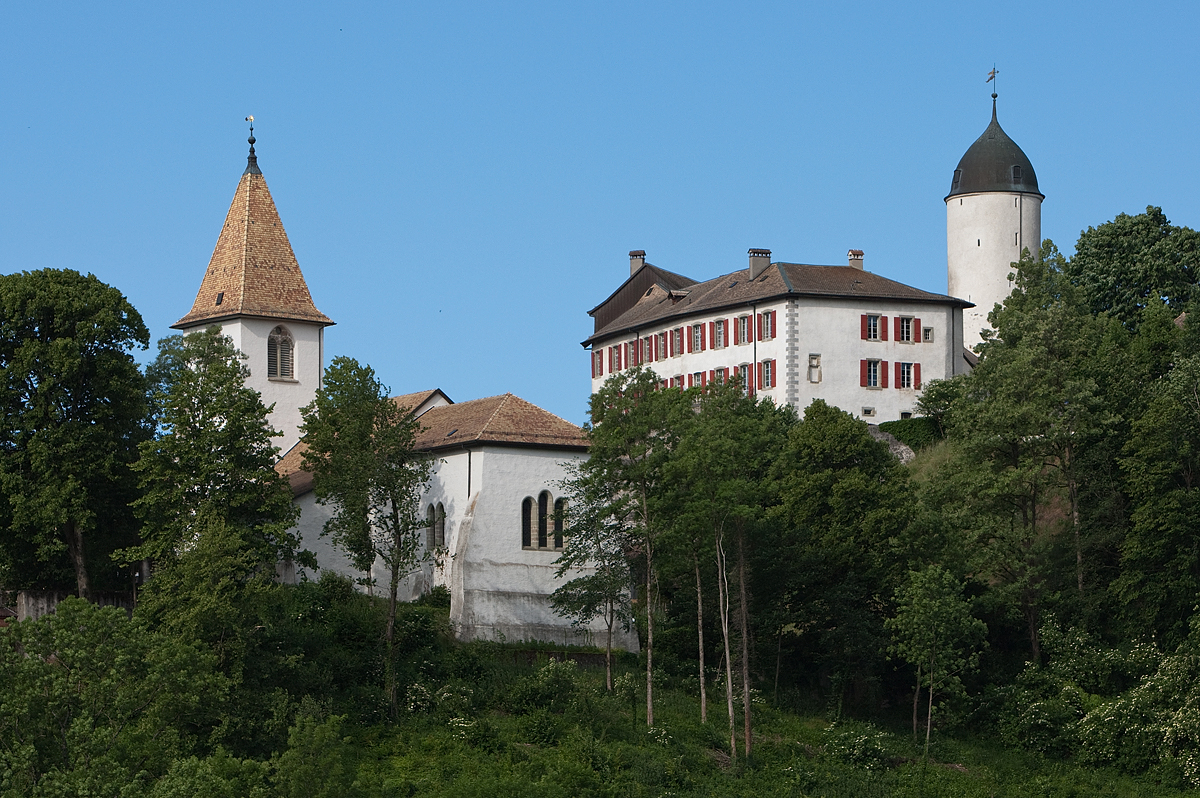
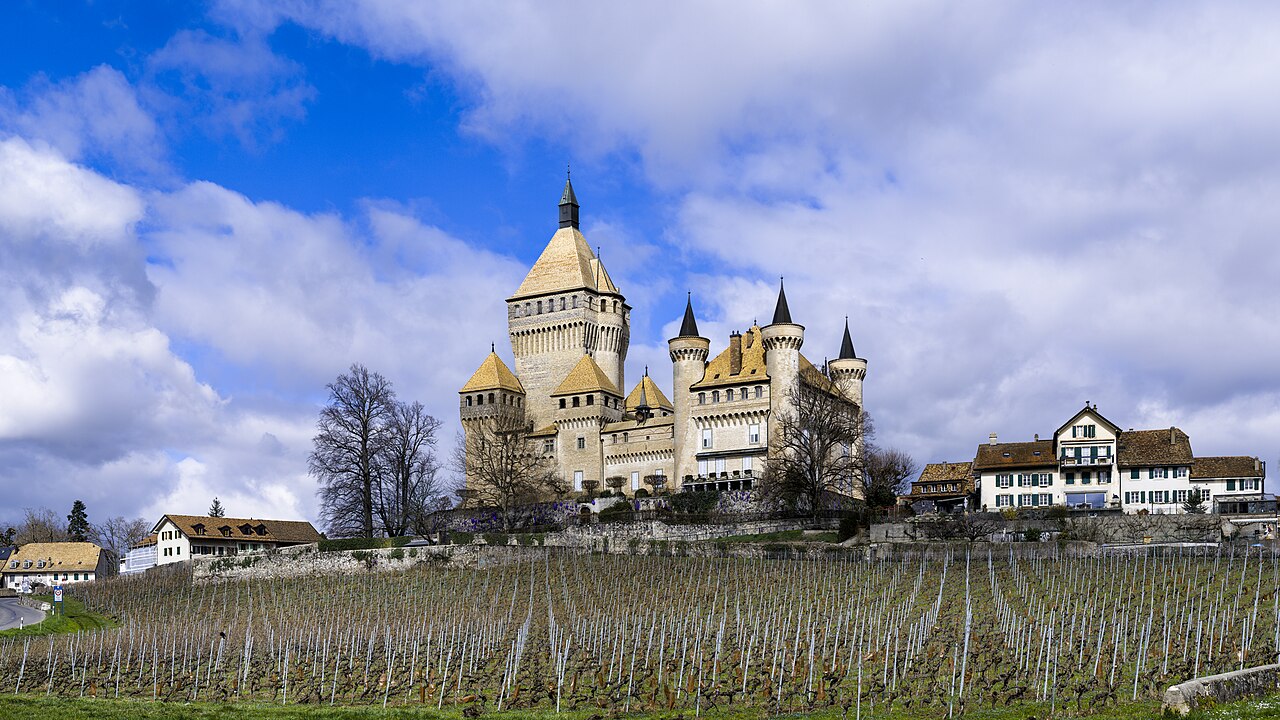
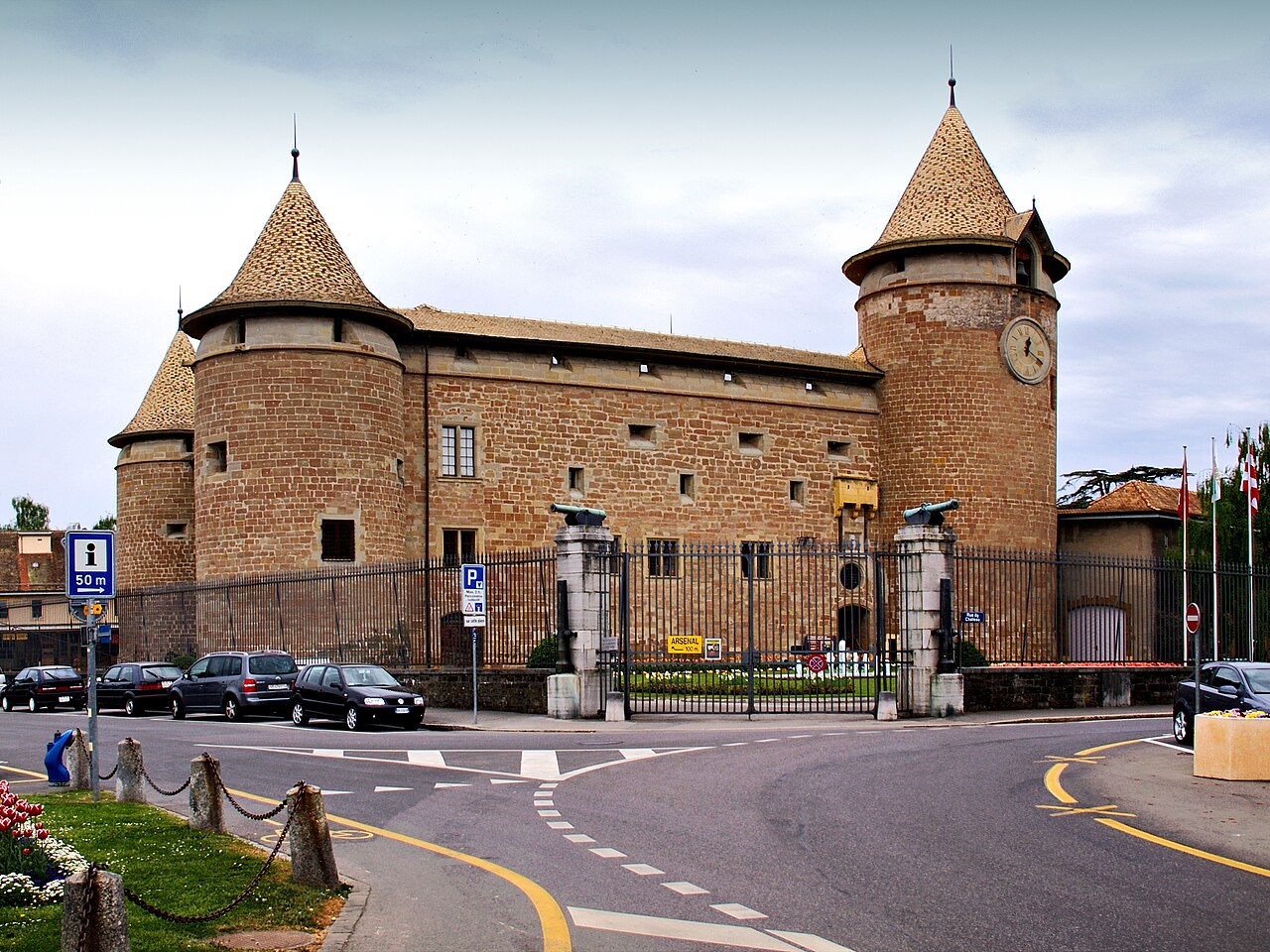
Allaman Castle is a prominent hill castle located in the municipality of Allaman, Switzerland. Its origins date back to the 11th and 12th centuries, with the main construction completed in 1253 under the direction of Louis, Duke of Savoy. The castle occupies a strategic terrace overlooking the historic road connecting Geneva and Lausanne, controlling access to important routes leading to Lake Geneva, Aubonne, and the Marchairuz pass. This commanding position highlights its medieval military and administrative significance.
Medieval origins and strategic importance
The site initially hosted a fortified residence likely owned by the ministerial family d’Allaman, documented from 1219. The first explicit record of the castle itself appears in 1375, but dendrochronological analysis of wooden elements in the southeast wall dates some construction phases to around 1291–1292. Throughout the high medieval period, the castle served as a defensive stronghold and administrative center under the Counts of Savoy, reflecting the feudal power structures of the region.
Its location on a raised terrace provided a natural defensive advantage and a vantage point to monitor and control the vital thoroughfare between Geneva and Lausanne. The castle's fortifications originally included a moat, enclosing walls, and a drawbridge, typical of medieval military architecture designed to deter sieges and assaults.
Ownership transitions and architectural evolution
During the 14th and 15th centuries, Allaman Castle changed ownership multiple times, mirroring the fluctuating political landscape of the region. A significant event occurred in 1530 when Swiss Confederate forces burned the castle during the "Chevaliers de la Cuiller" conflict, a notable episode in Swiss history.
In 1546, the castle was acquired by Jean Challet, a notary, and shortly after, in 1547, it passed to the Cerjat family. The Cerjats introduced important architectural modifications, including the addition of arcades supported by columns that enclosed the courtyard, replacing earlier defensive structures. This transformation marked a shift from purely military functions to a more residential and representational role.
The 18th century brought further changes under owners such as Marquise Jeanne-Marguerite de Langallerie and Gaspard Sellon. They replaced the medieval fortifications with elegant features befitting a noble residence. The courtyard façade gained a monumental pediment around 1757, enhancing the castle's classical appearance and reflecting contemporary architectural tastes.
Cultural significance and the peace movement
In the late 18th and early 19th centuries, the castle became a center for cultural and political activity under the ownership of Jean de Sellon and his son Jean-Jacques de Sellon. Jean de Sellon enriched the interiors with rare French wallpaper panels around 1790, which remain significant examples of period decoration.
Jean-Jacques de Sellon was a notable philanthropist and pacifist who used the castle as a refuge for political exiles, including prominent figures such as Joseph Bonaparte, Empress Joséphine de Beauharnais, composer Franz Liszt, and writer George Sand. His commitment to peace culminated in founding the Society of Peace at Allaman Castle in 1820, an early international organization that anticipated later entities like the League of Nations and the United Nations.
The castle hosted the first International Peace Summit in 1830, cementing its reputation as "The Castle of Peace." Jean-Jacques de Sellon also played a key role in advocating for the abolition of the death penalty in Switzerland, further underlining the castle's association with humanitarian causes.
19th and 20th-century renovations and preservation
In the mid-19th century, the Sellon family daughters introduced a neo-Gothic façade to the eastern wing around 1845, reflecting a revival of medieval architectural styles. The 20th century saw renewed interest in the castle's medieval heritage, with banker Gérard de Loriol overseeing renovations in the 1940s inspired by the nearby Château Chillon. These works emphasized medieval motifs and furnishings, blending historical authenticity with modern comfort.
Throughout the late 20th and early 21st centuries, Allaman Castle passed through several owners, including a local wine company and a German investor. Financial difficulties led to multiple sales until the Franck Muller Group acquired the property in 2022, repurposing it as an event venue while respecting its historical significance.
Since 1975, the castle has been protected as a Swiss historical monument and is listed as a cultural property of national importance. Extensive restoration efforts between 2009 and 2015 preserved the castle's architectural integrity and ensured its continued use as one of Switzerland's largest private estates.
Architectural features and estate grounds
Constructed primarily from local stone, Allaman Castle exhibits a blend of medieval defensive architecture and later classical and neo-Gothic elements. The courtyard, framed by arcades supported by columns added in the 16th century, replaces earlier fortifications such as the moat and drawbridge, reflecting the castle's evolution from fortress to noble residence.
The courtyard façade features a classical pediment dating to around 1757, a hallmark of the 18th-century renovations. Inside, the castle preserves rare French wallpaper panels from circa 1790, notable for their artistic and historic value. The 1940s interior renovations introduced medieval-inspired décor, complementing the castle's layered history.
The estate spans approximately 33 hectares, including private forests, parks, and gardens. A vineyard covering fifteen hectares produces the renowned Château d’Allaman wine, linking the castle's heritage to regional viticulture. The grounds also feature an English-style garden with a pond created by Jean-Jacques de Sellon around 1800, integrating naturalistic landscaping with the historic estate.
The Armary irrigation canal runs through the park and vineyard, historically supplying power to the lordly mill of Allaman, illustrating the castle's connection to local economic activities. The estate overlooks the Chanivaz landscape and the Aubonne river delta, offering scenic views of the surrounding region.
Legacy and cultural importance
Allaman Castle embodies a rich historical narrative spanning from its medieval origins to its role in early international peace efforts. Its architectural evolution mirrors broader shifts in European castle design, transitioning from fortified stronghold to elegant noble residence. The castle's association with prominent historical figures and its function as a refuge and meeting place for political exiles and peace advocates enhance its cultural significance.
Today, Allaman Castle remains a well-preserved example of Swiss heritage, blending military, residential, and diplomatic histories within its walls. Its protection as a national monument and ongoing restoration efforts ensure that it continues to be a landmark of historical and architectural interest in Switzerland.
Frequently asked questions (FAQ)
- What is the historical significance of Allaman Castle?
- Allaman Castle, dating back to the 13th century, is a remarkable example of medieval architecture in Switzerland. It has played a vital role in the region's history, serving as a fortress and residence for various noble families throughout the centuries.
- When was Allaman Castle built?
- The construction of Allaman Castle began in the early 13th century, around 1200 AD. Over the years, it underwent several modifications, reflecting the architectural styles and needs of its occupants.
- What are the opening hours for Allaman Castle?
- Allaman Castle is open to visitors from April to October, typically from 10 AM to 5 PM. However, it is advisable to check the official website for specific opening days, as hours may vary based on seasonal events or maintenance.
- Can I visit Allaman Castle year-round?
- While Allaman Castle is primarily open to visitors from April to October, special events may occur during the winter months. It's best to verify the schedule on their website before planning a visit outside the regular season.
- Is it possible to take guided tours of Allaman Castle?
- Yes, guided tours of Allaman Castle are available and highly recommended to fully appreciate its historical and architectural significance. These tours are led by knowledgeable guides who provide insights into the castle's history and features.
- What are the ticket prices for visiting Allaman Castle?
- Ticket prices for Allaman Castle are quite affordable, with discounts available for students and seniors. Family packages may also be offered, making it an accessible destination for all visitors.
- When is the best time to visit Allaman Castle?
- The best time to visit Allaman Castle is during the spring and early autumn months, when the weather is pleasant and the surrounding landscapes are particularly beautiful. Additionally, visiting during special events can enhance your experience.
- What nearby attractions can I explore while visiting Allaman Castle?
- While visiting Allaman Castle, you can also explore the picturesque village of Allaman and the stunning Lake Geneva nearby. The region offers numerous hiking trails and other historical sites that make for a perfect day trip.
- How do I access Allaman Castle?
- Allaman Castle is easily accessible by public transportation, with regular train services connecting it to major cities. If traveling by car, there is parking available near the castle for convenience.
Information
Website
Visit websiteSources & official resources
Verify the information above using these authoritative references.
Loading map...
Visitor reviews
No reviews yet. Been here? Write the first review and help other travelers!
Write the first reviewVisited this castle? Share your experience
Your review helps other travelers and adds first-hand knowledge to our encyclopedia.