Aljezur Castle
Aljezur Castle, locally known as Castelo de Aljezur, is a prominent medieval fortress perched on a strategic hill overlooking the village of Aljezur in the Algarve region of Portugal. This hill castle occupies a commanding position over the Ribeira de Aljezur, a river that historically provided vital communication links between the Alentejo coast and western Algarve. The castle's location on a sharp bend of the river allowed it to control river navigation and defend the surrounding territory effectively.
The site of Aljezur Castle has a long history of human occupation, with archaeological evidence of use dating back to the Bronze and Iron Ages. Before the medieval fortress was constructed, the hill was home to a Lusitanian castro, a fortified settlement typical of the pre-Roman peoples of the Iberian Peninsula. The Romans later utilized the site as a watch post, recognizing its strategic importance.
The castle itself was established during the High Medieval period in the 11th century, coinciding with the Islamic occupation of the Iberian Peninsula. It became a key element in the defense network governed from Silves under the Almoravid and later the Almohad Caliphates. The fortress was rebuilt and reinforced in the 12th and 13th centuries by the Almohads to better withstand attacks from advancing Christian forces during the Reconquista.
Medieval military architecture and layout
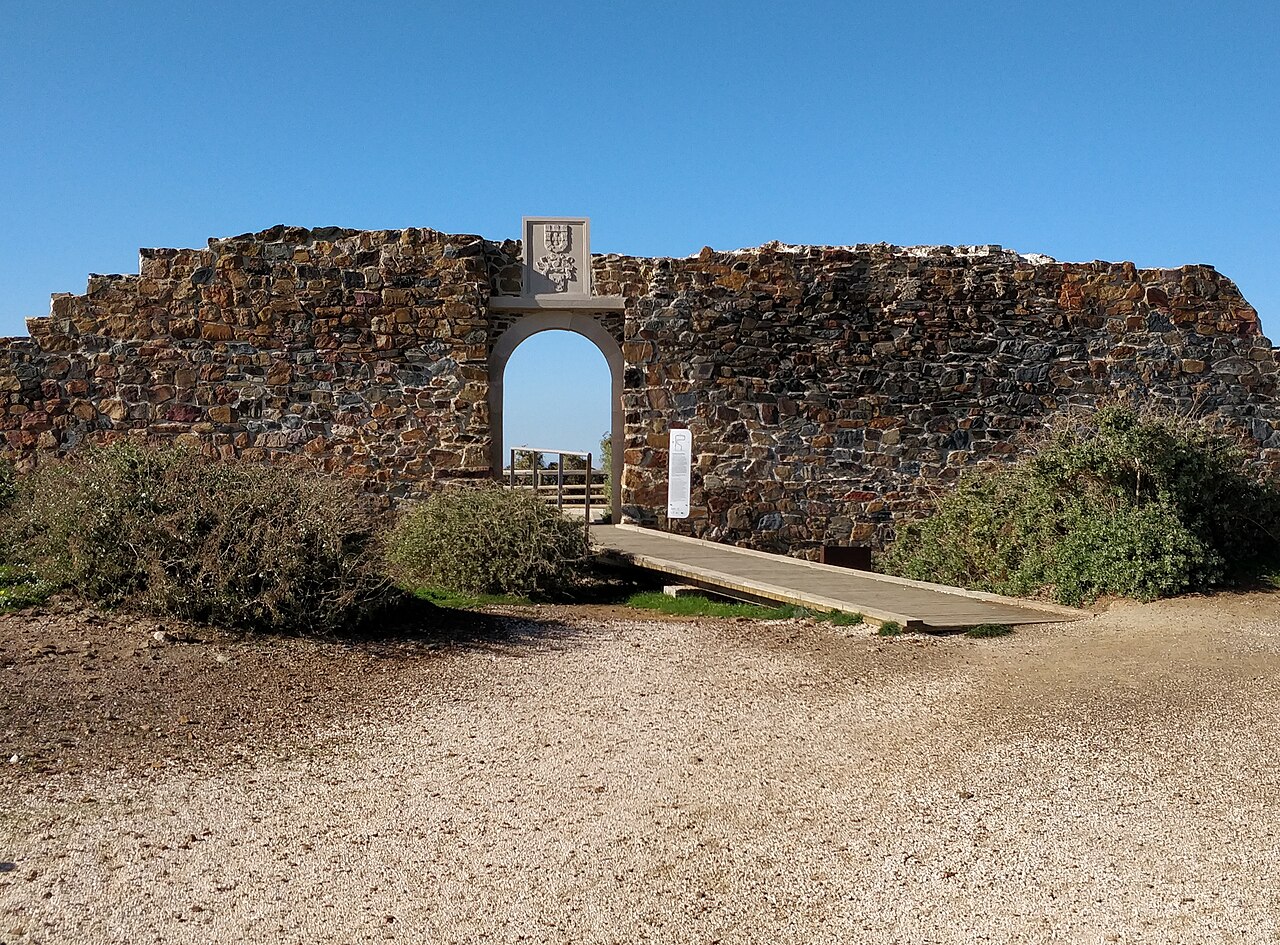
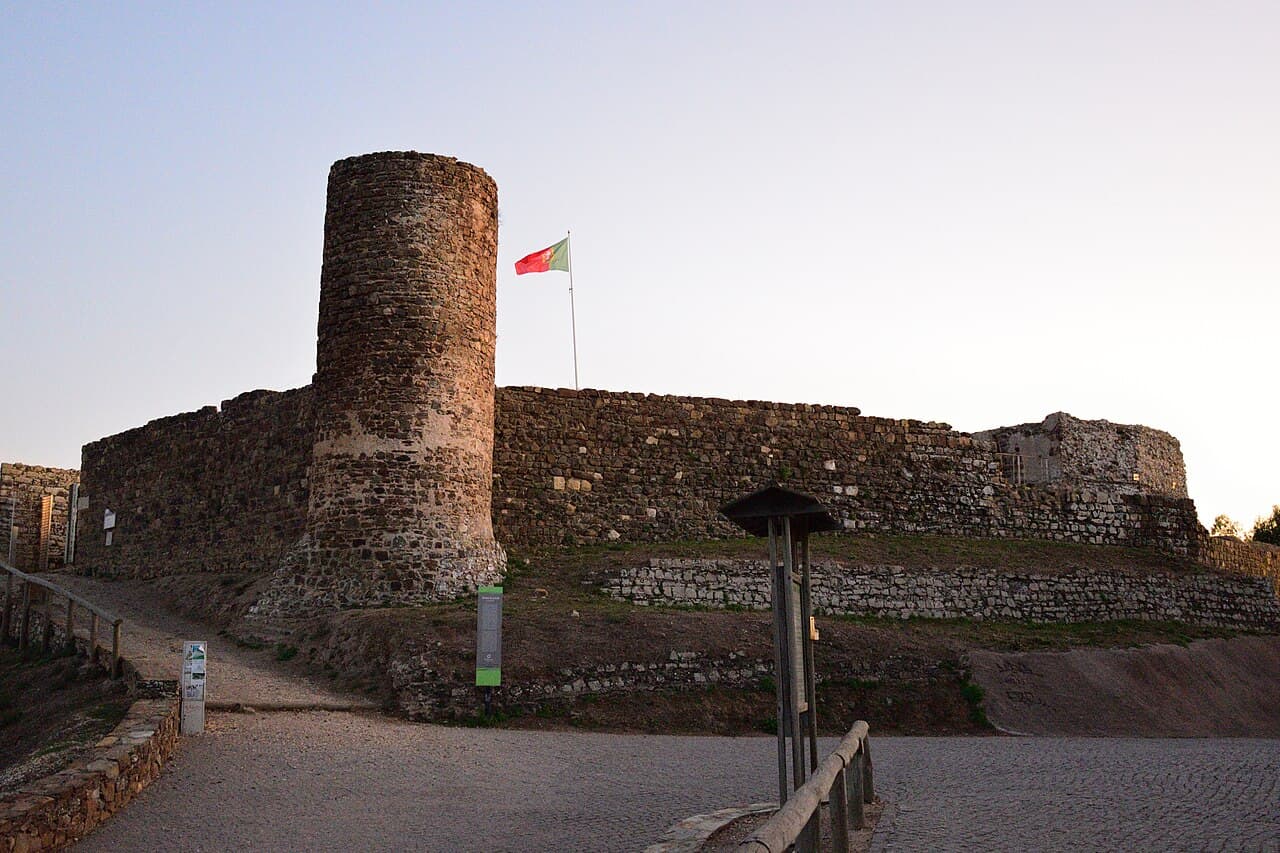
The castle's design reflects its military function and adaptation to the natural terrain. It has an irregular polygonal ground plan, roughly octagonal in shape, molded to the contours of the hilltop. The walls are constructed from local stone, approximately 1.5 meters thick and ranging from 3 to 5 meters in height, originally crowned with battlements for defense.
Two prominent towers reinforce the defensive perimeter at opposite ends of the castle. The northern tower is circular, about 5 meters in diameter and 9 meters tall, guarding the castle's sole entrance on the northeast side. The southern tower is quadrangular, measuring roughly 5 by 4.4 meters with a similar height, providing additional fortification and a vantage point over the surrounding landscape.
The castle entrance is accessed through a single gate on the northwest, near which a commemorative plaque from the 1940s restoration is located. Remnants of a barbican, a low defensive wall, survive on the northwest slope, adding an extra layer of protection. Additional wall fragments are visible on the western side, indicating the castle's former extent.
Within the walls, the courtyard contains the remains of a vaulted cistern with an arched doorway, originally used to store water during sieges. Several trapezoidal and rectangular rooms adjoin the walls, likely serving as military quarters, storage spaces, or workshops. Two silos carved directly into the rock demonstrate the castle's role in collective food storage, essential for sustaining the garrison during prolonged conflicts.
Historical significance and ownership
The castle played a critical role during the Islamic period as part of the defensive line protecting Silves, a major Moorish stronghold. Around 1242, Christian forces led by Don Paio Peres Correia, commander of the Military Order of Saint James of the Sword, captured Aljezur Castle. According to legend, the conquest was aided by a Moorish woman who betrayed her compatriots, facilitating the Christian takeover.
Following the conquest, King Afonso III granted Aljezur and its castle to the Order of Santiago, who made modifications to suit their military needs and garrisoned the fortress. The castle's strategic importance was recognized in the 1267 Treaty of Badajoz, which formally settled territorial disputes between the kingdoms of Spain and Portugal and confirmed Aljezur as Portuguese territory.
In 1280, King Dinis issued a foral (charter) to Aljezur, establishing its administrative status and formalizing governance. The castle remained under the control of the Order of Santiago, with appointed alcaides-mores (chief commanders) overseeing its defense. However, by the 15th century, the fortress had fallen into disrepair, with damaged walls and gates, reflecting its declining military relevance.
Although King Manuel I planned restoration efforts in the early 16th century, these were never fully implemented. The silting of the Ribeira de Aljezur reduced the river's navigability, diminishing the castle's strategic value and leading to its abandonment. The fortress gradually fell into ruin, exacerbated by the devastating 1755 Lisbon earthquake, which caused significant structural damage.
Archaeological discoveries and conservation efforts
Archaeological excavations at Aljezur Castle have revealed a wealth of artifacts spanning multiple historical periods. Finds include Bronze Age ceramics such as carinated bowls and containers, Iron Age and Roman materials like fine black and Campanian ceramics, and amphora fragments from the Italian Peninsula and broader Mediterranean region.
Medieval Islamic artifacts include coins, metal objects, and glazed pottery such as jars, pitchers, bowls, and cooking vessels. Faunal remains from this period indicate a diverse diet comprising fish, domesticated and wild mammals including deer, as well as estuarine and marine mollusks. These remains provide insight into the economic activities of the castle's inhabitants, including fishing, agriculture, hunting, and shellfish gathering.
Evidence of iron smelting slag points to metallurgical activity during the Islamic occupation, highlighting the castle's role as not only a military stronghold but also a center of local industry.
Conservation and restoration initiatives began in the 20th century, notably the partial reconstruction of the castle walls between 1940 and 1941, coinciding with national commemorations. Further archaeological surveys and preservation projects in the late 20th and early 21st centuries have focused on stabilizing the ruins, clarifying the castle's original layout, and protecting the site.
In 1977, Aljezur Castle was officially classified as a Property of Public Interest, and a Special Protection Zone was established in 2010 to safeguard the historic site from modern development and ensure its preservation for future generations.
Visitor experience and significance today
Today, Aljezur Castle stands as a well-preserved ruin offering visitors a glimpse into the region's rich medieval past. Its elevated position provides panoramic views over the town of Aljezur, the river valley, and the surrounding Algarve landscape, making it a favored spot for history enthusiasts and photographers.
While the castle may not boast extensive surviving structures or lavish interiors, its historical layers and archaeological significance make it an important cultural heritage site. Visitors can freely explore the grounds, including the castle walls, towers, and interior foundations, gaining insight into the military architecture and lifestyle of its former occupants.
The castle's story reflects the complex history of the Iberian Peninsula, marked by successive waves of occupation, conflict, and cultural exchange. As a high medieval hill castle with roots extending into ancient times, Aljezur Castle embodies the strategic, military, and social dynamics that shaped the Algarve region.
Frequently asked questions (FAQ)
- What is the historical significance of Aljezur Castle?
- Aljezur Castle is a significant historical site that dates back to the 10th century, during the Moorish period in Portugal. It was strategically built to defend the region and offers insight into the architectural styles and military strategies of that era.
- When was Aljezur Castle built?
- Aljezur Castle was constructed in the 10th century, with its origins linked to the Moorish occupation of the Iberian Peninsula. It was later reconstructed in the 13th century after the Reconquista, reflecting the changes in architectural styles over time.
- What are the opening hours for visiting Aljezur Castle?
- Aljezur Castle is generally open to visitors from 9 AM to 5 PM, but hours may vary seasonally. It is advisable to check the official website or local tourist information for the most current hours before planning your visit.
- Can I access Aljezur Castle with mobility challenges?
- Aljezur Castle has some accessibility features, but due to its historical nature, certain areas may be challenging for individuals with mobility issues. It is recommended to contact the castle administration in advance to inquire about specific accessibility options.
- What is the best time to visit Aljezur Castle?
- The best time to visit Aljezur Castle is during the spring and fall months when the weather is mild and pleasant. Visiting during these seasons allows for a more enjoyable experience, as summer can be quite hot and crowded.
- Are there any nearby attractions to explore after visiting Aljezur Castle?
- Yes, after visiting Aljezur Castle, you can explore the charming town of Aljezur, which features traditional architecture and local shops. Additionally, the nearby Arrifana Beach and the Costa Vicentina Natural Park offer stunning coastal views and outdoor activities.
- What are the ticket prices for Aljezur Castle?
- The ticket prices for Aljezur Castle are typically around €2 for adults, with discounts available for students and seniors. Children under a certain age may enter for free, making it an affordable attraction for families.
Photo gallery

Information
Website
Visit websiteSources & official resources
Verify the information above using these authoritative references.
Loading map...
Visitor reviews
No reviews yet. Been here? Write the first review and help other travelers!
Write the first reviewVisited this castle? Share your experience
Your review helps other travelers and adds first-hand knowledge to our encyclopedia.