Alcázar of Seville

Alcázar of seville: a historic fortified palace complex in andalucia
Seville, Andalucia, Spain
Early Medieval (5th–10th c.)
Restored

The Alcázar of Seville stands as one of Spain's most remarkable and historically rich fortified palace complexes, located in the heart of Seville, Andalucia. This hill castle has evolved over centuries, showcasing a unique blend of Islamic, Mudéjar, Gothic, Renaissance, and later architectural styles. Its origins trace back to a site continuously occupied since at least the 8th century BCE, with archaeological evidence of Phoenician, Roman, and Visigothic presence beneath the current structure, underscoring its longstanding cultural and strategic significance.

The earliest preserved palace enclosure dates from the late 11th century, attributed to the taifa king Al-Mutamid or the Almoravid dynasty. This initial construction incorporated materials from Roman walls and earlier buildings, marking the beginning of the complex's layered architectural history. During the 12th century, the Almohad dynasty expanded and fortified the Alcázar, integrating it with the city's defenses and adding major constructions, including a mosque. The original main entrance, known as Puerta de la Montería, reflected hunting traditions, later renamed Puerta del León in the 19th century after a lion motif was added.

Medieval transformations and royal patronage

After the Christian conquest of Seville in 1248 by King Ferdinand III, the Alcázar was repurposed as a royal residence. Alfonso X constructed a Gothic palace between 1252 and 1260, introducing Christian architectural elements while preserving parts of the Islamic structure. The devastating 1356 earthquake led King Pedro I to commission the renowned Mudéjar palace, a masterpiece blending Islamic and Christian styles. This palace is famed for its extensive Arabic inscriptions praising the king and its intricate decorative plasterwork, reflecting the Mudéjar artistic tradition.

Throughout the late Middle Ages and Renaissance, the Alcázar remained a vital royal residence and administrative center. It hosted significant events such as diplomatic meetings in the 14th century, the birth of Prince Juan in 1478, and the wedding of Charles I and Isabel of Portugal in 1526. The establishment of the Casa de Contratación in 1503 within the complex underscored its importance in regulating trade with the Americas, reflecting Spain's expanding empire.

Architectural highlights and notable features

Mudéjar palace and patios

The Mudéjar Palace of Pedro I (1356-1366) is the centerpiece of the Alcázar, featuring the Patio de las Muñecas, a rectangular courtyard surrounded by four galleries of lobed arches decorated with sebka and plaster reliefs. The Salón de Embajadores (Hall of Ambassadors) is distinguished by its golden hemispherical dome built in 1427, with walls adorned by azulejos (glazed tiles) and elaborate plasterwork. Arabic inscriptions praising King Pedro I decorate many walls, emphasizing the palace's cultural synthesis.

Gothic palace and other medieval structures

The Gothic Palace, constructed under Alfonso X in the 13th century, retains its original ground floor structure and includes 16th-century azulejo zócalos (decorative tile panels) and a chapel likely dedicated to San Clemente. The Sala de Justicia, built around 1340-1350 under Alfonso XI, is a square Mudéjar hall with a wooden artesonado ceiling, originally housing a tribunal with brick tiers and a stone throne.

Royal chambers and ceilings

The Alcoba Real (Royal Chamber), accessed from the Patio de las Doncellas, consists of two rooms separated by horseshoe arches. It features 15th-century wooden ceilings, stucco friezes, and doors decorated with six-armed circular lacerías (geometric patterns). Windows display star and eight-armed wheel motifs. Nearby, the Salón del Techo de Carlos V contains a ceiling with 75 octagonal coffers made in the mid-16th century, showcasing Renaissance craftsmanship.

Gardens and landscape design

The extensive gardens of the Alcázar reflect centuries of evolving landscape design, from Islamic garden traditions to Renaissance and Baroque styles. Notable features include the Estanque de Mercurio (Mercury Pond) with a 1576 bronze statue, the Galería de Grutesco, and the Jardín de la Danza, which provides access to the 12th-century vaulted Baños de María Padilla. Other gardens such as Jardín de Troya, Jardín de la Galera, and Jardín de las Flores contain fountains, marble columns, and grottos dating from the 16th to 18th centuries, illustrating the complex's rich horticultural heritage.

Archaeological discoveries and restorations

Archaeological excavations beneath the Alcázar have uncovered significant Roman and Phoenician remains, including a Roman building dating from the 2nd or 1st century BCE and a possible temple dedicated to the goddess Isis. These findings highlight the site's continuous occupation and strategic importance through millennia.

Restoration efforts have meticulously preserved many original features, including the Mudéjar garden beneath the Patio de las Doncellas. The complex contains numerous inscriptions in Arabic and Latin, including dedicatory texts praising King Pedro I and religious inscriptions on doors, contributing to the Alcázar's status as a cultural and historical treasure.

Modern significance and cultural heritage

In the 19th century, the Alcázar served as a residence for the Spanish royal family during the French intervention of 1823. The Second Spanish Republic transferred ownership to the city of Seville in 1931, ensuring its preservation as a public monument. In the 20th and 21st centuries, the Alcázar has hosted important political meetings, including sessions of the Spanish Council of Ministers in 1976 and 2010, maintaining its role in national affairs.

Today, the Alcázar of Seville is a restoredwell-preserved monument and a UNESCO World Heritage Site, attracting millions of visitors annually. Its architectural diversity, historical layers, and stunning gardens make it a premier example of Spain's rich cultural heritage and a symbol of the harmonious coexistence of different artistic traditions.

Frequently asked questions (FAQ)

What is the Alcázar of Seville?
The Alcázar of Seville is a stunning royal palace originally developed by Moorish Muslim kings. Known for its intricate architectural styles that blend Mudéjar, Gothic, Renaissance, and Baroque elements, it is one of the oldest palaces still in use in Europe and a UNESCO World Heritage Site.
When was the Alcázar of Seville built?
Construction of the Alcázar began in the 10th century, with additions and modifications made over the centuries. Its rich history reflects the various cultures that have influenced its architecture and design, making it a remarkable symbol of the region's heritage.
Can I visit the Alcázar of Seville?
Yes, the Alcázar of Seville is open to the public, allowing visitors to explore its beautiful gardens, stunning architecture, and historical rooms. It's advisable to purchase tickets in advance, especially during peak tourist season, to avoid long lines.
What are the opening hours for the Alcázar of Seville?
The Alcázar typically opens at 9:30 AM and closes at 5:00 PM in winter, and at 7:00 PM in summer. However, these hours may vary, so it's recommended to check the official website for the latest information before your visit.
Is it possible to take a guided tour of the Alcázar?
Yes, guided tours are available and provide an in-depth look at the history and architecture of the Alcázar. This is a great option for those who want to gain a deeper understanding of the site’s significance and its many hidden gems.
What is the best time to visit the Alcázar of Seville?
The best time to visit the Alcázar is during the spring (March to May) and fall (September to November) when the weather is mild and pleasant. Early mornings or late afternoons are ideal for avoiding crowds and enjoying a more tranquil experience.
Are there any nearby attractions to the Alcázar of Seville?
Yes, the Alcázar is located near several other attractions, including the Seville Cathedral and La Giralda, both of which are within walking distance. Additionally, the picturesque Barrio Santa Cruz and the Plaza de España are also nearby, making it easy to explore the area.
What are the ticket prices for the Alcázar of Seville?
Ticket prices for the Alcázar vary depending on age and type of visit, with discounts available for students and seniors. As of now, general admission is around €12, but it is advisable to check the official website for the most current pricing and any special offers.
Is the Alcázar of Seville accessible for visitors with disabilities?
Yes, the Alcázar of Seville is committed to accessibility, offering ramps and designated pathways for visitors with mobility challenges. However, some areas might still present challenges due to the historic nature of the site, so it's best to inquire about specific accommodations when planning your visit.

Information

Hill Castle

Sources & official resources

Verify the information above using these authoritative references.

Loading map...

Visitor reviews

No reviews yet. Been here? Write the first review and help other travelers!

Write the first review

Visited this castle? Share your experience

Your review helps other travelers and adds first-hand knowledge to our encyclopedia.
Write a review

(5/5)

0/2000 characters

Your review will be visible after admin approval

Nearby castles

0.8 km
Torre del Oro — Spain castle

Torre del Oro

Seville, Spain

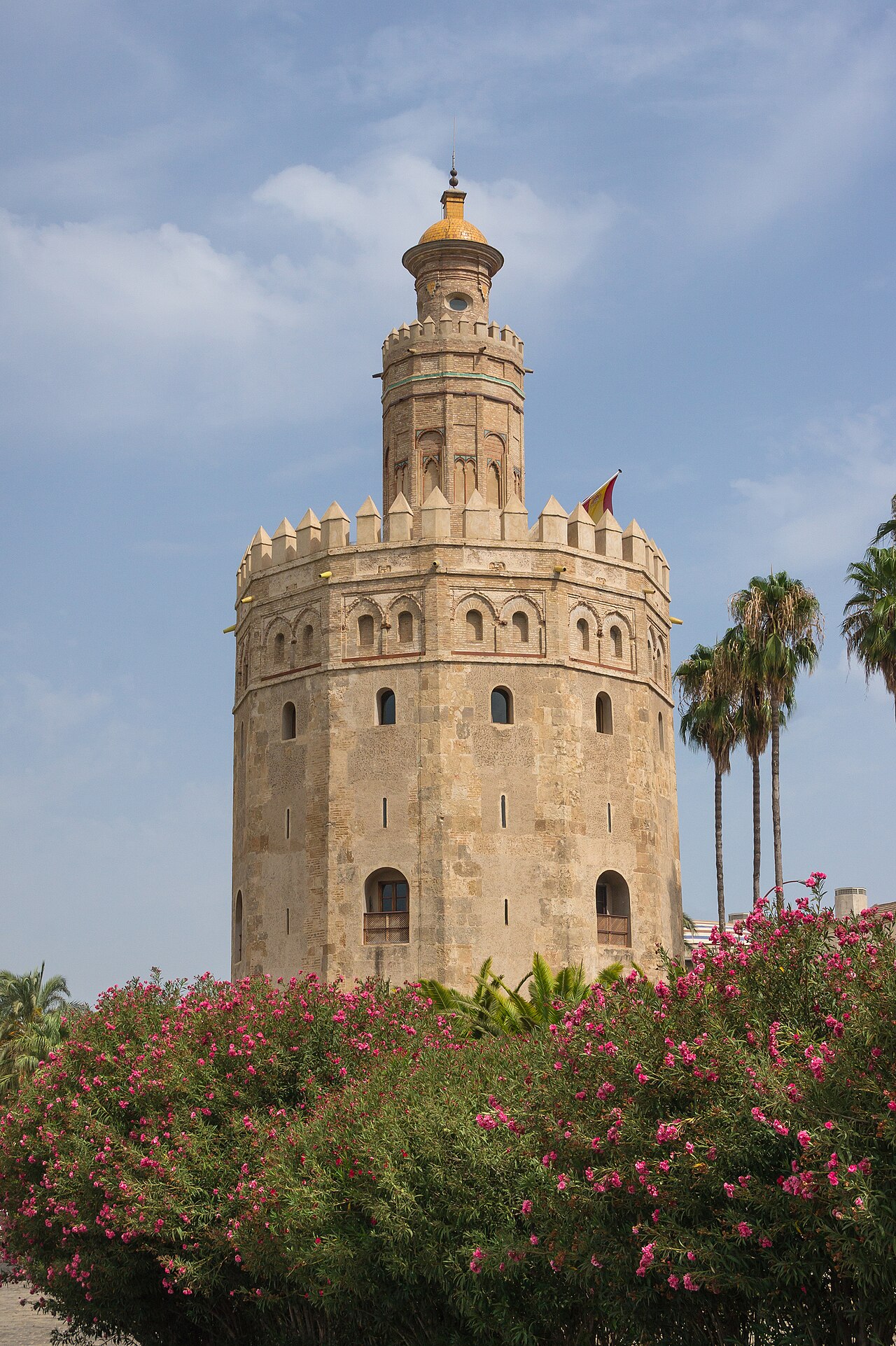
The Torre del Oro stands as a remarkable example of Almohad military architecture in Seville, Spain. This dodecagonal watchtower was constructed in the first third of the 13th century during the High Medieval period by the Almohad Caliphate to control river access along the Guadalquivir River, a vital waterway for trade and defense. Its strategic location on the riverbank allowed it to serve as a formidable barrier against naval threats and to monitor traffic entering the city. Architectural design and construction The tower's distinctive dodecagonal (12-sided) plan is a rare architectural feature among medieval fortifications, showcasing the Almohad mastery of geometric design. Built primarily from a unique mixture of mortar, lime, and pressed hay, the tower's walls were coated with a material that reflected sunlight, giving rise to the name "Torre del Oro" or "Tower of Gold." This golden sheen was visible from the river, enhancing its symbolic and practical presence as a guardian of the city. Originally, the tower was approximately 36 meters high, composed of three levels. The lower two levels date from the original Almohad construction, while the upper level was added in the 18th century during a restoration that gave the tower its current height and appearance. The upper section features a small dome and battlements, reflecting later architectural influences. Historical roles and significance Throughout its history, the Torre del Oro served multiple functions beyond its military role. During the Middle Ages, it was used as a prison for political prisoners and criminals. Its robust construction made it an effective detention facility. In addition to its defensive and penal uses, the tower was part of a larger system of fortifications protecting Seville. It worked in conjunction with another tower on the opposite riverbank, linked by a heavy chain that could be raised to prevent enemy ships from entering the city via the Guadalquivir. Restoration and current condition The Torre del Oro has undergone several restorations, notably in the 18th century when the upper level was added, and in the 20th century to preserve its structure. Today, it is well preserved and serves as a museum dedicated to Seville's maritime history, showcasing artifacts related to the city's naval past and river trade. Location and cultural context Located in the historic center of Seville, the Torre del Oro complements other significant monuments such as the Alcazar of Seville and the Seville Cathedral. This cluster of heritage sites forms a UNESCO World Heritage area, highlighting Seville's importance as a cultural and historical hub in southern Spain. The tower's proximity to the Guadalquivir River underscores its original purpose as a river defense structure and its ongoing role as a symbol of Seville's rich medieval heritage and maritime legacy.

High Medieval (11th–13th c.)
Details
1.2 km
Castle of San Jorge — Spain castle

Castle of San Jorge

Seville, Spain

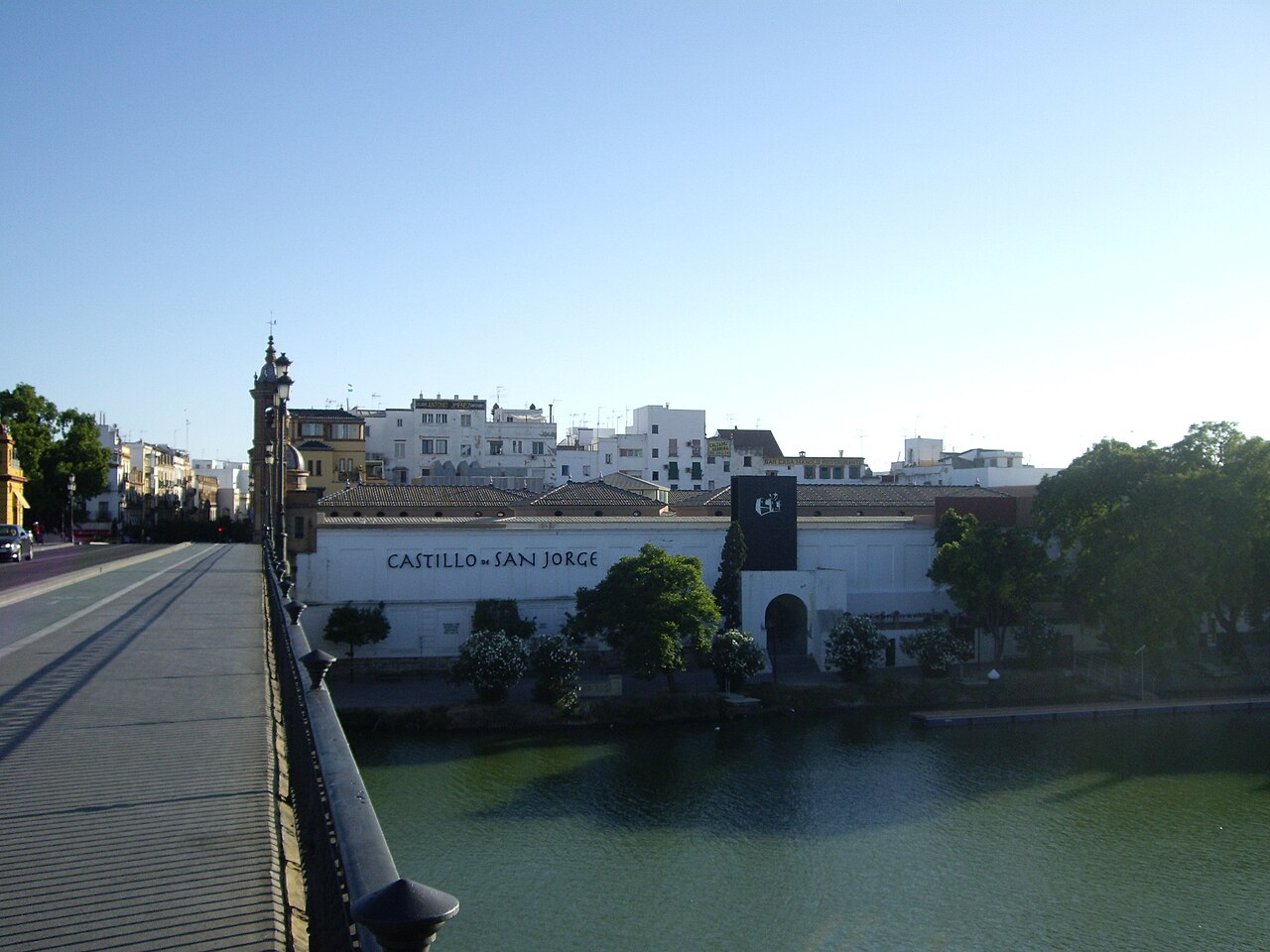
The Castle of San Jorge was a significant medieval fortress located on the west bank of the Guadalquivir river in Seville, Spain. Its strategic position allowed it to serve both as a military stronghold and later as the notorious headquarters and prison of the Spanish Inquisition. The castle's history reflects the turbulent religious and political climate of Spain during the late Middle Ages and early modern period. Historical background and strategic importance Originally constructed during the medieval period, the Castle of San Jorge played a crucial role in the defense of Seville, one of the most important cities in Andalusia. Its location on the Guadalquivir river provided a natural defensive barrier and control over river traffic, which was vital for trade and military movements. Over time, the castle's function evolved from a fortress to a center of judicial and religious authority under the Spanish Inquisition, which was established in the late 15th century. Architecture and structural features Although the castle was largely demolished in the 19th century, archaeological excavations have revealed significant elements of its original structure. The fortress featured typical medieval defensive architecture, including thick stone walls, battlements, and towers designed to repel invaders. The remains indicate a complex layout with multiple courtyards, prison cells, and administrative chambers. The Alley of the Inquisition, which still exists today, was originally part of the castle's fortifications. This narrow passage connected Castilla Street with the Nuestra Señora de la O Walk in the Barrio de Triana, highlighting the castle's integration into the urban fabric of Seville. The castle as the inquisition headquarters and prison During the height of the Spanish Inquisition, the castle was repurposed to serve as the tribunal's headquarters and prison. It became infamous for detaining and interrogating individuals accused of heresy, blasphemy, and other offenses against the Catholic Church. The castle's dungeons and prison cells were sites of considerable suffering and religious repression, reflecting the harsh methods employed by the Inquisition. Demolition and modern legacy In the 19th century, the Castle of San Jorge was demolished to make way for a food market, reflecting changing urban needs and the decline of medieval fortifications. However, the underground ruins were preserved and have since been developed into a museum dedicated to the castle's history, the Spanish Inquisition, and the broader context of religious persecution in Spain. The museum offers visitors an opportunity to explore the archaeological remains, including the fortress walls and prison cells, providing insight into the castle's dual military and judicial roles. The site serves as a poignant reminder of Seville's complex past and the enduring impact of the Inquisition on Spanish history. Visiting the castle ruins and museum today Today, visitors to the Castle of San Jorge ruins can experience a unique blend of history and archaeology. The museum presents detailed exhibitions on the castle's architecture, the Inquisition's activities, and the social and religious context of the era. The nearby Barrio de Triana offers a vibrant cultural setting, with the preserved Alley of the Inquisition providing a tangible connection to the castle's past. While the castle itself no longer stands above ground, the preserved ruins and museum ensure that its historical significance remains accessible to the public. The site is an important destination for those interested in medieval fortifications, Spanish history, and the legacy of the Inquisition.

Details
2.2 km
Puerta de la Macarena (Seville) — Spain castle

Puerta de la Macarena (Seville)

Seville, Spain

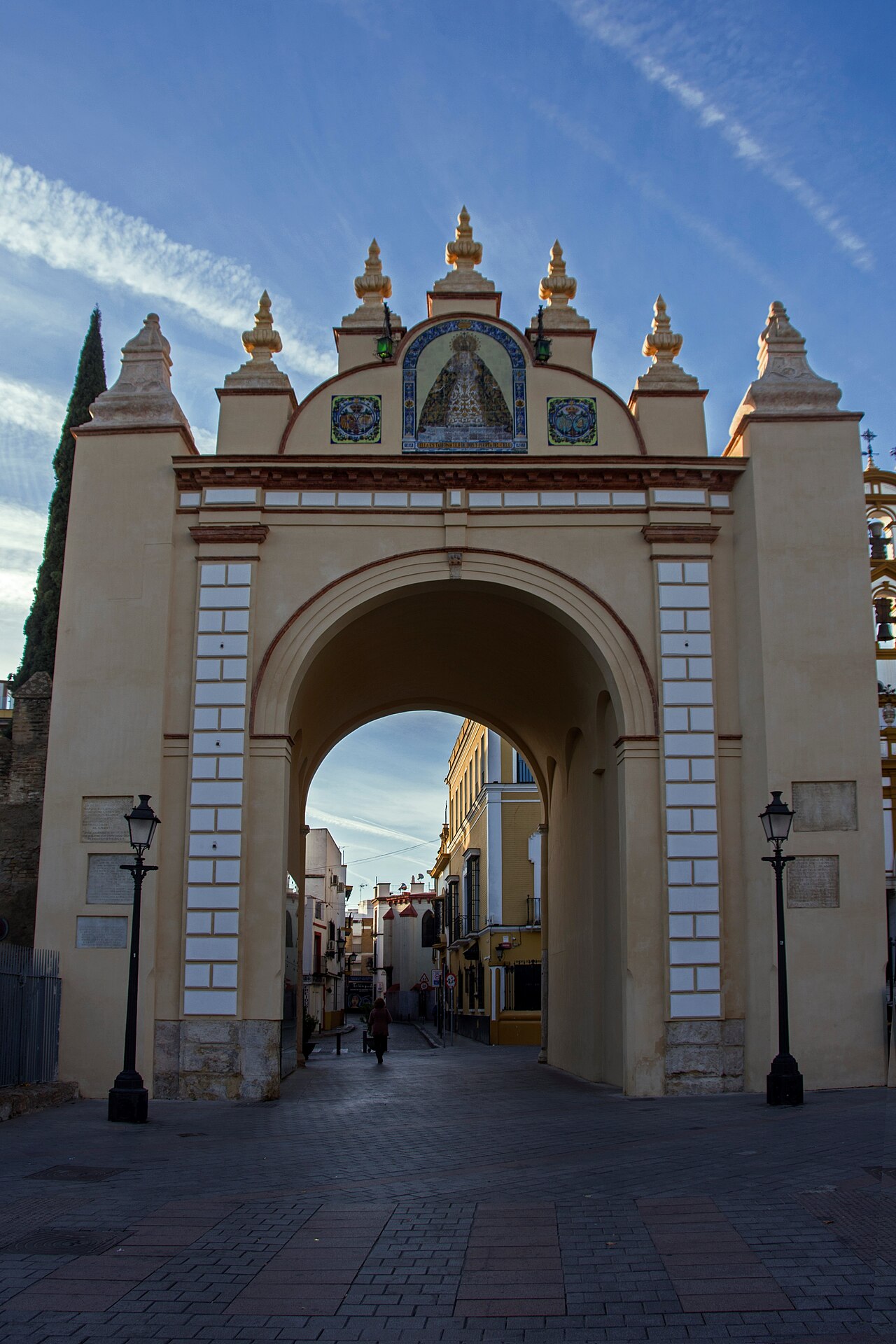
The Puerta de la Macarena (Arabic: Bab-al-Makrin), also known as Arco de la Macarena, is a significant historic city gate located in Seville, Andalusia, Spain. It stands as one of the only three surviving gates from the original medieval city walls of Seville, alongside the Postigo del Aceite and the Puerta de Córdoba. Positioned on Calle Resolana within the barrio de San Gil of the Casco Antiguo district, this gate faces the renowned Basílica de La Macarena, home to the iconic image of the Our Lady of la Esperanza Macarena, a central figure in Seville's Holy Week celebrations. Historical and architectural significance The Puerta de la Macarena serves as the northernmost entrance to the historic walled enclosure of Seville. It is the largest gate among the remaining city gates and is connected to the Puerta de Córdoba by a preserved section of the original city walls featuring seven defensive towers. These fortifications originally trace back to the Roman period, with the first walls constructed under Julius Caesar, replacing earlier Carthaginian defenses. The gate itself was constructed during the 12th century under the direction of the Almoravid sultan Ali ibn Yusuf as part of a significant expansion of Seville's defenses. This period corresponds to the High Medieval era, during which Islamic architectural styles predominated in Andalusia. The original gate featured typical Islamic military architecture, including bastioned fortress elements designed to protect the city from northern threats. Remodeling and stylistic evolution Between 1723 and 1795, the Puerta de la Macarena underwent extensive remodeling that transformed its appearance from its original Islamic design to a classicist style. This renovation replaced many of the gate's original architectural elements with features characteristic of 18th-century European classicism, including symmetrical forms, decorative pilasters, and a more monumental facade. Despite these changes, the gate retained its defensive function and historical importance. Symbolic role in royal ceremonies The Puerta de la Macarena historically served as a ceremonial entrance for monarchs visiting Seville for the first time. In front of the gate stood an altar where kings performed a symbolic homage, after which they were presented with the keys to the city. This tradition underscored the gate's role as a symbol of royal authority and municipal loyalty. Notable monarchs who participated in this ceremony include Alfonso XI of Castile (1327), Isabella I of Castile (1477), Ferdinand II of Aragon (1508), Charles V, Holy Roman Emperor, and Isabella of Portugal (1526), and Philip IV (1624). These events highlight the gate's importance in the political and social history of Seville. Artistic features and cultural heritage The gate is crowned by a ceramic altarpiece created by the painter Manuel Rodríguez. This artwork depicts the Virgin of Hope of Macarena and was inaugurated in 1923 by Infanta Maria de la Esperanza of Bourbon–Two Sicilies. The altarpiece adds a religious and cultural dimension to the gate, linking it to the strong Catholic traditions of the city. In recognition of its historical and cultural value, the remains of the walled city of Seville, including the Puerta de la Macarena, were declared a Bien de Interés Cultural in 1985. This designation helps protect the gate and surrounding fortifications as important heritage sites. Architectural features and preservation The Puerta de la Macarena is classified as a bastioned fortress, characterized by its robust defensive walls and bastions designed to withstand attacks. The gate's structure includes thick masonry walls, battlements, and defensive towers that emphasize its military purpose. The surviving section of the city walls connected to the gate preserves seven towers, offering valuable insights into medieval urban fortifications. Today, the gate is well preserved and remains a prominent landmark in Seville. Its location within the historic center makes it accessible to visitors interested in exploring the city's medieval past and architectural heritage. Location and urban context Situated in the Casco Antiguo, the oldest part of Seville, the Puerta de la Macarena is integrated into a vibrant urban landscape. The gate's proximity to the Basílica de La Macarena and other historic sites enhances its significance as a cultural and tourist attraction. Visiting information The gate is publicly accessible and can be viewed year-round. While there is no entrance fee to see the gate itself, visitors often combine their visit with nearby attractions such as the basilica and the historic district. The best time to visit is during the spring, especially around Holy Week, when the Virgin of Hope of Macarena is prominently celebrated.

High Medieval (11th–13th c.)
Details