Alcazar of Jerez de la Frontera
The Alcazar of Jerez de la Frontera is a remarkable Moorish fortress located in the city of Jerez de la Frontera, in the province of Cádiz, southern Spain. This historic site, originally built during the High Medieval period, stands on a hill that has been continuously occupied since prehistoric times, including the Copper Age and Chalcolithic periods. The fortress is a prime example of Almohad architecture and is the oldest surviving Almohad building on the Iberian Peninsula. Today, the Alcazar is a significant cultural and architectural landmark, reflecting centuries of Islamic and Christian history in Andalusia.
Historical background and evolution
The site of the Alcazar was first fortified in the 11th century when Jerez was part of the Taifa of Arcos, a Muslim principality that emerged after the collapse of the Caliphate of Córdoba. Archaeological evidence indicates that the hill was already inhabited long before the fortress was constructed, with remains of ancient huts and silos found beneath the current structure. In the 12th century, the Almohad dynasty took control of the region and erected the fortress-palace that forms the core of the present Alcazar. This construction served as both a military stronghold and a royal residence for the Muslim rulers of the area.
Following the Christian Reconquista, the fortress was captured in 1248 by King Fernando III of Castile. Despite the conquest, Muslim governors continued to administer the Alcazar until 1255, when it was finally taken over by a Christian garrison. A brief Mudéjar revolt in 1264 temporarily restored Muslim control, but after a five-month siege, King Alfonso X recaptured the fortress, expelling the Muslim population and consolidating Christian rule. Subsequently, the Alcazar became royal property and served as the seat of the first Christian mayors of Jerez.
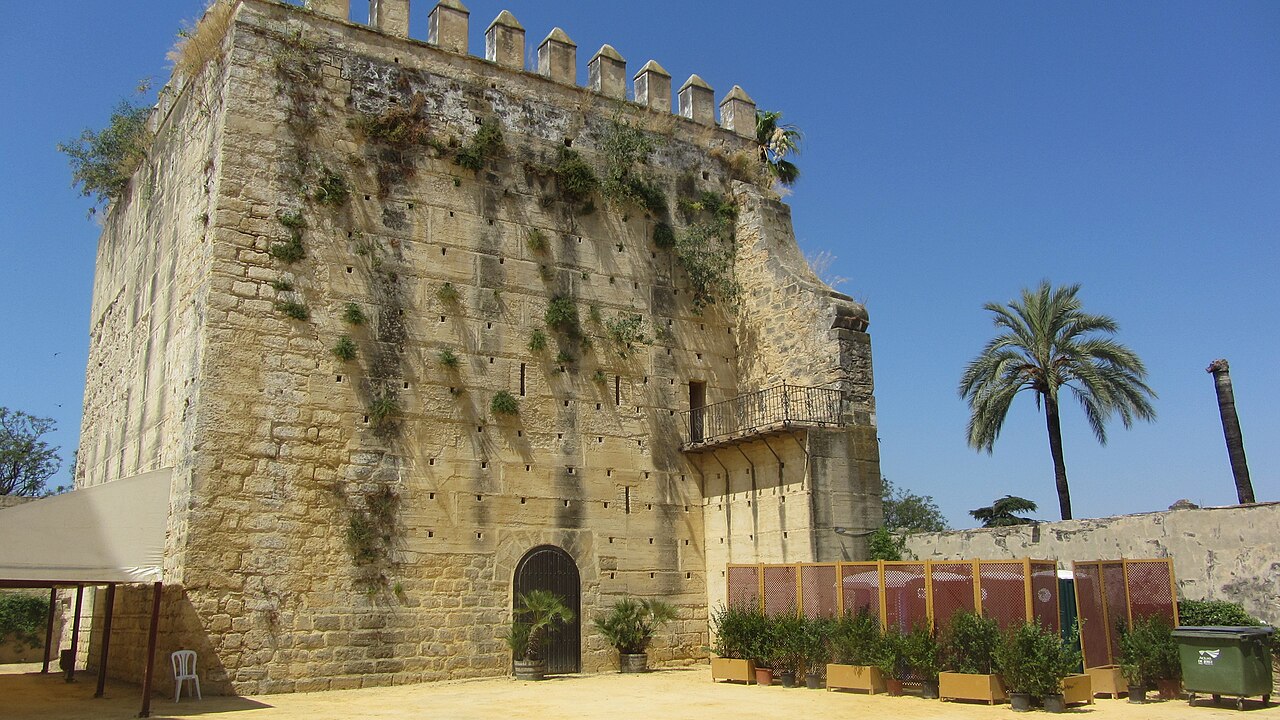
By the 15th century, the fortress had deteriorated, prompting restoration efforts by the Marquis of Cádiz in the 1470s. These works included repairing the defensive walls, constructing a new moat, and building the Ponce de León Tower, which served as a donjon and residential tower. The 16th and 17th centuries saw the gradual decline of the Alcazar, with parts falling into ruin.
In the 18th century, the Baroque Villavicencio Palace was constructed atop the ruins of the Islamic residence, introducing new architectural styles and reviving the site's prominence. The palace features well-preserved interiors and houses a unique 19th-century pharmacy collection from the former Convent of La Merced.
During the 20th century, the Alcazar was purchased and restored by industrialist Salvador Díez Pérez de Muñoz in 1926, saving it from demolition. It was declared a Bien de Interés Cultural monument in 1931. Throughout the Spanish Civil War and subsequent years, the fortress was used as a military barracks and place of repression. Archaeological excavations continue to reveal the complex layers of its history, particularly in the area known as the Royal Pavilion.
Architectural features and layout
Fortifications and towers
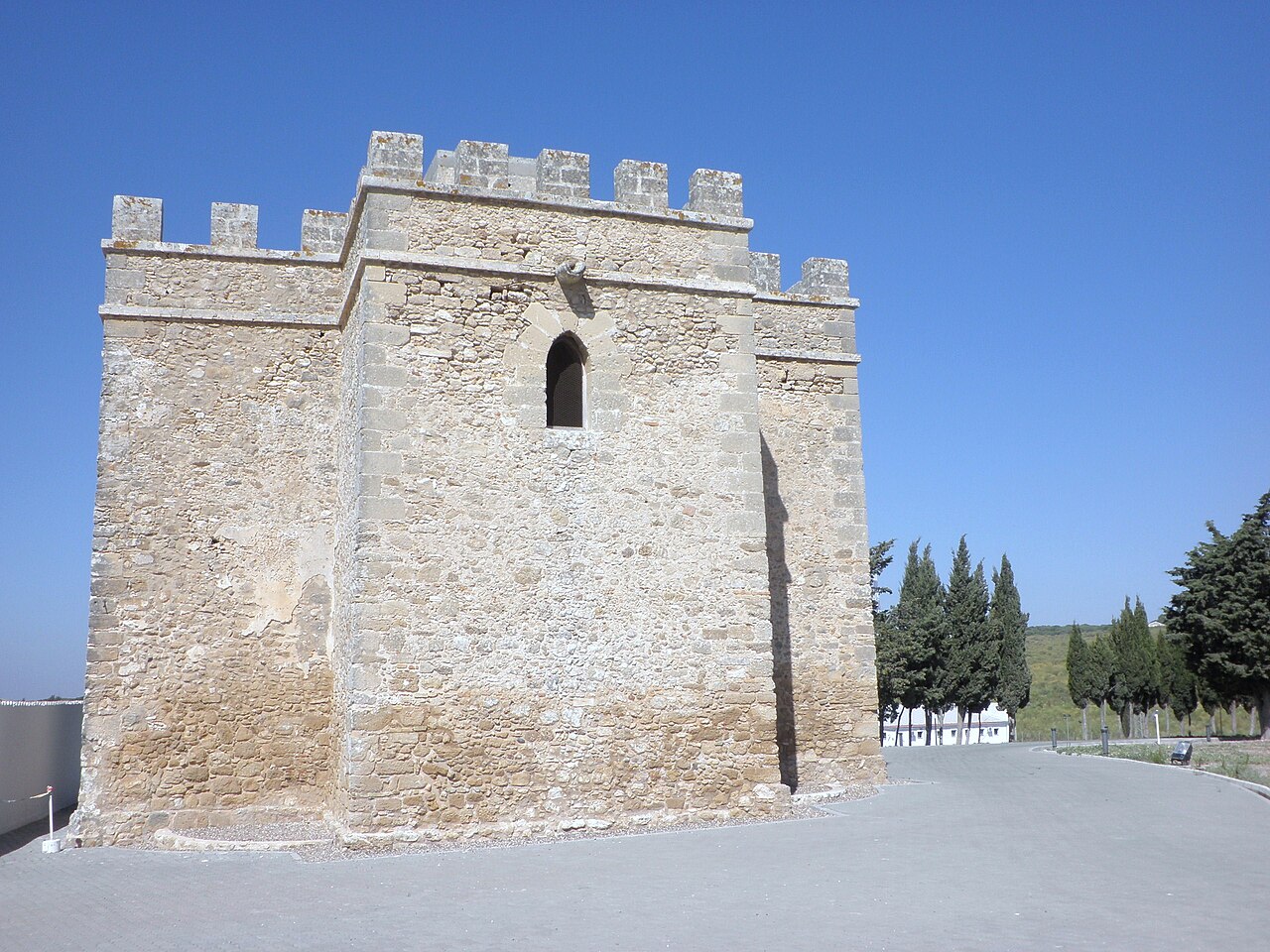
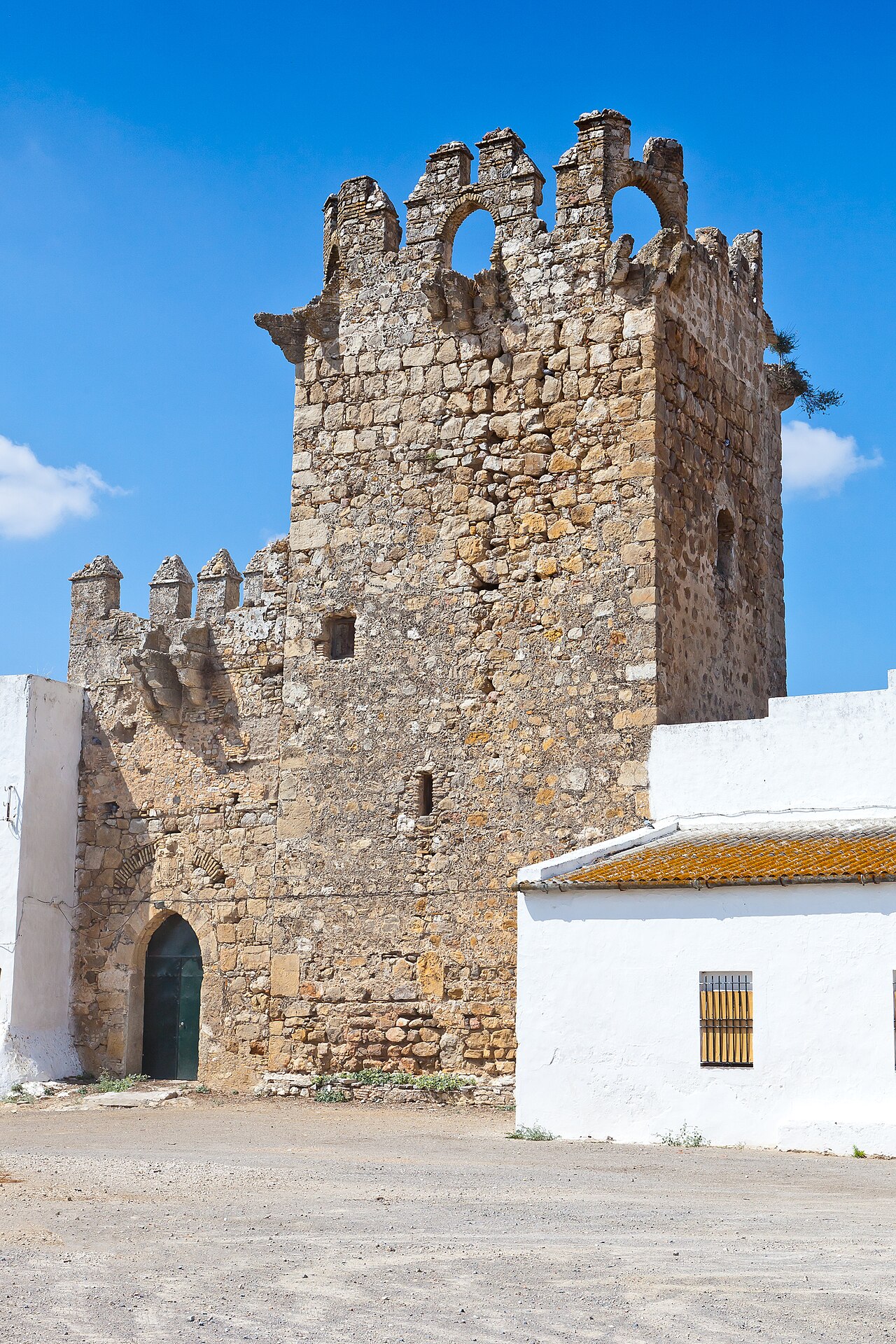
The Alcazar is a roughly quadrangular fortress with a perimeter of approximately 4,000 meters. It was originally protected by double defensive walls about four meters high, topped with battlements and punctuated by regularly spaced towers. Seven original towers remain, primarily constructed from rammed earth (pisé) and brick, with some stone elements reused from earlier structures. These towers are of the Albarrana type, meaning they are attached to the walls by short arcades rather than being fully integrated.
Among the surviving towers, the Almohad Octagonal Tower is notable for its unique eight-sided shape and distinctive double banding decoration, a hallmark of Almohad design. The 15th-century Ponce de León Tower functioned as a donjon and palace tower, containing residential chambers. The Tower of Homage, also dating from the 15th century, remains intact and is a key defensive and symbolic feature of the fortress.
Interior spaces and religious structures
The fortress's interior was designed primarily for military purposes but also included residential and religious spaces. The Patio de Armas served as an open courtyard for troop formations during the Almohad period and remains a central feature of the complex today.
The Alcazar houses the only surviving mosque from the original eighteen that once existed in Jerez. Built by the Almohads, the mosque includes its minaret, which was later converted into a bell tower following the Christian conquest. The mosque complex features a courtyard for ritual washing (ablutions), a prayer hall with a mihrab indicating the direction of Mecca, and a ribbed vault ceiling with a circular window. After the Reconquista, the mosque was transformed into the chapel of Santa María.
The Arab baths (hammam) within the Alcazar are exceptionally well preserved. They consist of three main rooms: cold, warm, and hot. The warm room is the largest and retains its original vaulted ceiling. Additional features include an entrance vestibule, furnace, wood storage, and water cistern. Some of the original heating systems remain partially conserved, showcasing the advanced engineering of Islamic bathhouses.
The Patio de Doña Blanca is a 12th-century Islamic leisure pavilion palace within the complex. Its surviving structures and courtyards reflect its original function as a place of relaxation and residence for elite occupants.
Later additions and gardens
The Baroque Villavicencio Palace, built from 1664 atop the ruins of earlier Islamic buildings, introduces new architectural elements and styles. The palace's interiors are well preserved, including a notable 19th-century pharmacy collection. The highest tower of the palace houses a Cámara Oscura, an optical device that uses lenses and mirrors to project a real-time panoramic view of Jerez and its surroundings.
The Alcazar grounds feature extensive gardens planted with olive trees, cypresses, and various flowers. Fish ponds and landscaped areas enhance the site's aesthetic and recreational appeal. Nearby gardens include those of the former Eslava Theater and an oil mill building, contributing to the cultural landscape around the fortress.
Conservation and public access
Recent conservation efforts have expanded the accessible area within the Alcazar, preserving its historical fabric and revealing more of its layered past. The site is open to visitors, offering a unique glimpse into the medieval Islamic and Christian heritage of Andalusia. Archaeological excavations continue to uncover new information, enriching the understanding of this multifaceted fortress-palace complex.
Visitors can explore the fortress's towers, walls, mosque, baths, and gardens, experiencing a rare blend of military, residential, and religious architecture spanning several centuries. The Alcazar of Jerez de la Frontera remains a vital monument for appreciating the region's complex history and architectural legacy.
Frequently asked questions (FAQ)
- What is the historical significance of the Alcazar of Jerez de la Frontera?
- The Alcazar of Jerez de la Frontera is a historic fortress that dates back to the 11th century, originally built by the Moors. It served as a royal palace and military stronghold, reflecting the architectural styles of various periods, including Islamic and Gothic influences. Today, it stands as a testament to the rich cultural heritage of Jerez and is a popular tourist attraction.
- When is the best time to visit the Alcazar of Jerez de la Frontera?
- The best time to visit the Alcazar is during the spring (March to May) and fall (September to November) when the weather is mild and pleasant. These seasons also see fewer crowds compared to the summer months, allowing for a more enjoyable experience. Additionally, visiting during local festivals can provide unique cultural insights.
- Is it possible to access the Alcazar of Jerez de la Frontera with a wheelchair?
- Yes, the Alcazar of Jerez de la Frontera is accessible for visitors with mobility challenges. The site offers ramps and designated pathways to ensure that everyone can enjoy its historical features. However, some areas may still have uneven surfaces, so planning ahead is recommended.
- Can I take photographs inside the Alcazar of Jerez de la Frontera?
- Yes, photography is allowed inside the Alcazar, and visitors are encouraged to capture the stunning architecture and beautiful gardens. However, please be respectful of other guests and refrain from using flash in certain areas. Always check for any specific restrictions at the entrance.
- What are the opening hours for the Alcazar of Jerez de la Frontera?
- The Alcazar is typically open daily from 9:00 AM to 8:00 PM during the summer months and from 9:00 AM to 6:00 PM in the winter. It's advisable to check the official website for any seasonal changes or special holiday hours before planning your visit. Last admissions are usually 30 minutes before closing.
- How do I purchase tickets for the Alcazar of Jerez de la Frontera?
- Tickets for the Alcazar can be purchased at the entrance or online through the official website. Prices are generally affordable, with discounts available for students and seniors. It's recommended to buy tickets in advance during peak tourist seasons to avoid long lines.
- What nearby attractions can I visit after the Alcazar of Jerez de la Frontera?
- After exploring the Alcazar, visitors can enjoy nearby attractions such as the Cathedral of Jerez, the Royal Andalusian School of Equestrian Art, and the local sherry wineries. Each offers a unique glimpse into the culture and history of Jerez de la Frontera. The city's vibrant atmosphere makes it easy to explore these sites on foot.
Information
Website
Visit websiteSources & official resources
Verify the information above using these authoritative references.
Loading map...
Visitor reviews
No reviews yet. Been here? Write the first review and help other travelers!
Write the first reviewVisited this castle? Share your experience
Your review helps other travelers and adds first-hand knowledge to our encyclopedia.