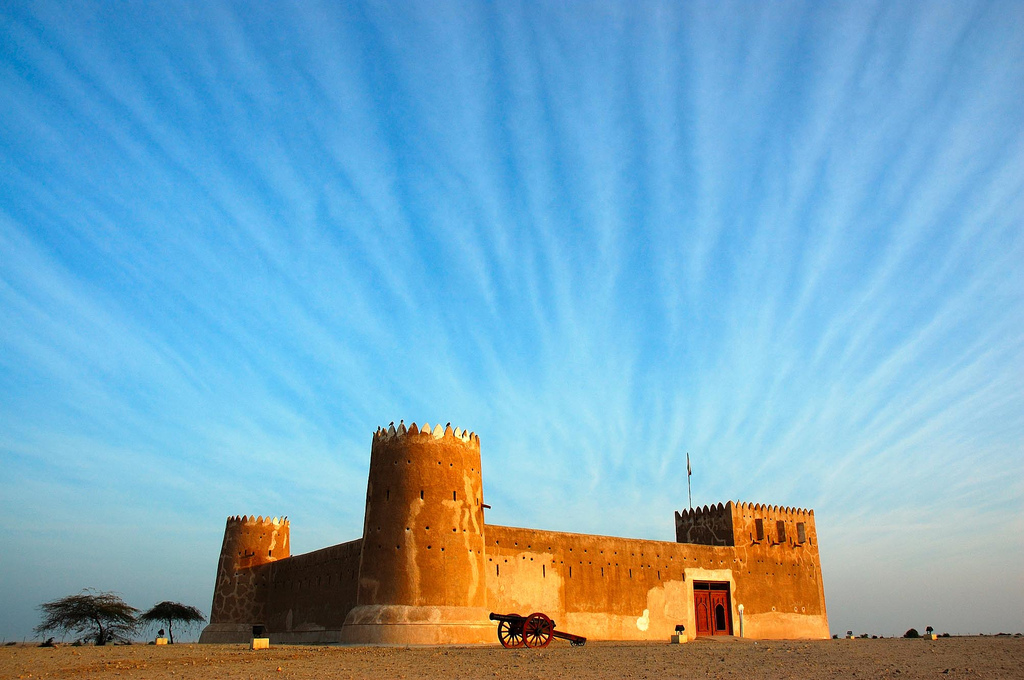
Al Thaqab Fort
Al Thaqab Fort, also known locally as Qal'at al Thaqab, is a historic desert fortress located approximately 12 kilometers south of the town of Al Ruwais in the municipality of Madinat ash Shamal, Qatar. This fort stands near a small cluster of buildings known as the village of Qalaat al Thaqab, which shares its name with the fort itself. The fort's strategic position in the arid landscape highlights its historical importance as a guardian of vital water resources in a harsh environment.
The exact date of construction for Al Thaqab Fort remains uncertain, with some sources suggesting origins in the 17th or 18th century, while others argue for a 19th-century foundation. The name "Thaqab" is believed to mean "the water in the bottom of the valley after the rain," a reference to the natural water collection point near the fort. To the west of the fort lies a deep well, which historically served as a precious water source for the local villagers. This well likely explains the fort's primary purpose: to protect the water supply and offer refuge during times of attack or conflict.
Architectural design and features
Al Thaqab Fort exemplifies the typical architectural style of desert forts found in Qatar. It features a square ground plan with three circular towers and a rectangular tower, a layout that is also seen in other regional forts such as Al Zubarah Fort to the south. The fort's design includes a bent entrance, a defensive architectural feature intended to slow down attackers and protect the interior. Surrounding the main structure are several ancillary buildings used historically for storing and processing dates, an important agricultural product in the region.
The fort was constructed using rough blocks of coral and limestone, materials readily available in the area, bonded with mud mortar. This building technique reflects traditional construction methods adapted to the desert environment. The walls and towers were designed to withstand both the harsh climate and potential assaults.
Restoration efforts
In the 1980s, Al Thaqab Fort underwent a restoration that was later criticized for lacking authenticity and careful attention to historical accuracy. A more thorough restoration took place in 2003, aiming to preserve the fort's original character and structural integrity. These efforts have helped maintain the fort as a cultural heritage site and tourist attraction.
Historical context and significance
The fort's primary role was to protect the deep well to its west, a critical water source in the desert landscape. Water scarcity in the region made such wells invaluable, and controlling access to them was essential for the survival of local communities. The fort also served as a shelter during raids or conflicts, providing safety for the villagers and their resources.
The architectural similarities between Al Thaqab Fort and other forts in Qatar, such as Al Zubarah Fort and Al Rakayat Fort, indicate a shared defensive strategy and cultural approach to fortification in the region. These forts collectively represent the historical efforts of local populations to adapt to and protect themselves within the challenging desert environment.
Visiting Al Thaqab Fort
Al Thaqab Fort is accessible to the public free of charge, offering visitors a glimpse into Qatar's desert heritage. However, reaching the fort requires some preparation. The site is located in a remote desert area, and a 4-wheel drive vehicle is recommended for the journey. Visitors using standard city cars may need to park at the end of a dirt road and walk approximately 1.5 kilometers through the desert to reach the fort.
Visitors should be prepared for the harsh desert conditions, especially during the hot months when temperatures can soar above 40 degrees Celsius. Bringing sufficient water and sun protection is essential for a safe and comfortable visit.
Nearby attractions
About 3 kilometers north of Al Thaqab Fort lies Al Rakayat Fort, another historical site accessible under similar conditions. Both forts offer valuable insights into the region's defensive architecture and history, making them worthwhile destinations for those interested in Qatar's cultural heritage.
Frequently asked questions (FAQ)
- How do I get to Al Thaqab Fort?
- Al Thaqab Fort is located in a remote desert area approximately 12 km south of Al Ruwais. It is best accessed with a 4-wheel drive vehicle due to rough terrain. If using a regular car, park at the end of the dirt road and walk about 1.5 km through the desert to reach the fort.
- What is the historical significance of Al Thaqab Fort?
- Al Thaqab Fort was built to protect a vital water well in the desert, a precious resource for local villagers. It also served as a refuge during attacks, reflecting the defensive strategies of desert communities in Qatar.
- Can I visit Al Thaqab Fort for free?
- Yes, Al Thaqab Fort is freely accessible to visitors. There is no entrance fee, but visitors should prepare for desert conditions and bring sufficient water and sun protection.
- When was Al Thaqab Fort built?
- The exact construction date is uncertain, but it is generally believed to have been built in the 18th century, with some sources suggesting the 17th or 19th century.
- What architectural features does Al Thaqab Fort have?
- The fort features a square ground plan with three circular towers and one rectangular tower, a bent entrance, and ancillary buildings for date storage and processing. It was built using coral and limestone blocks with mud mortar.
Information
Loading map...
Visitor reviews
No reviews yet. Been here? Write the first review and help other travelers!
Write the first reviewVisited this castle? Share your experience
Your review helps other travelers and adds first-hand knowledge to our encyclopedia.