Al Hisn Fort
Al Hisn Fort, also known as Sharjah Fort, is a prominent historic bastioned fortress located in the heart of Sharjah city, within the emirate of Sharjah in the United Arab Emirates. This fort is a significant cultural landmark reflecting the region's strategic and political history during the early 19th century. Originally constructed in 1820 by Sheikh Sultan bin Saqr Al Qasimi, it served as the residence of the local ruler and a defensive stronghold following the signing of the 1820 General Maritime Treaty with the British, which marked a new era in the region's relations with colonial powers.
Historical significance and early description
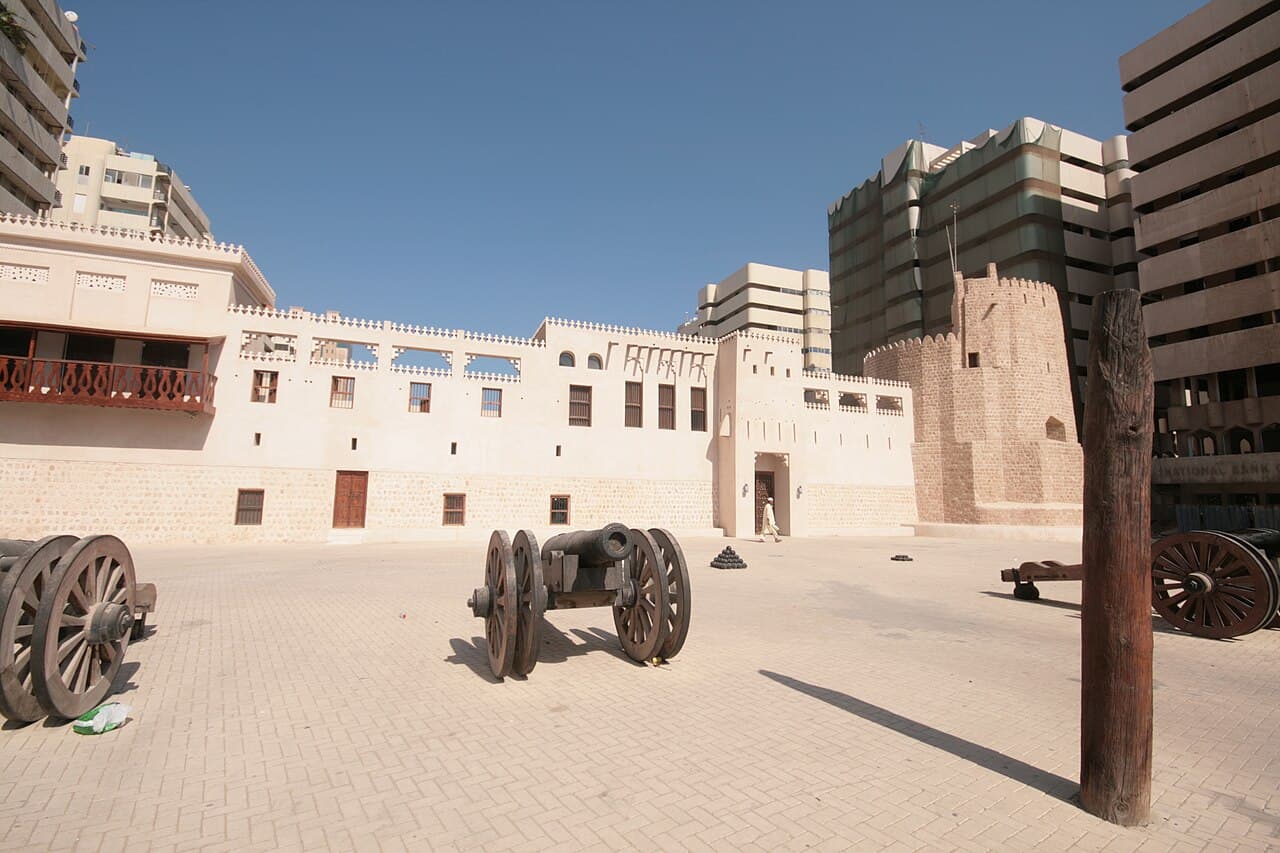
British records from the early 1830s provide a detailed account of the fort's defensive capabilities, describing it as "located on a little inland, mounting six pieces of cannon, together with some detached towers." The fort was strategically stockaded with date trees and wood to repel attacks, primarily from local Arab tribes, though it was acknowledged as less effective against organized military forces. This highlights the fort's role as a local seat of power and a symbol of the ruling family's authority during a period of regional instability and maritime conflicts.
Architectural layout and features
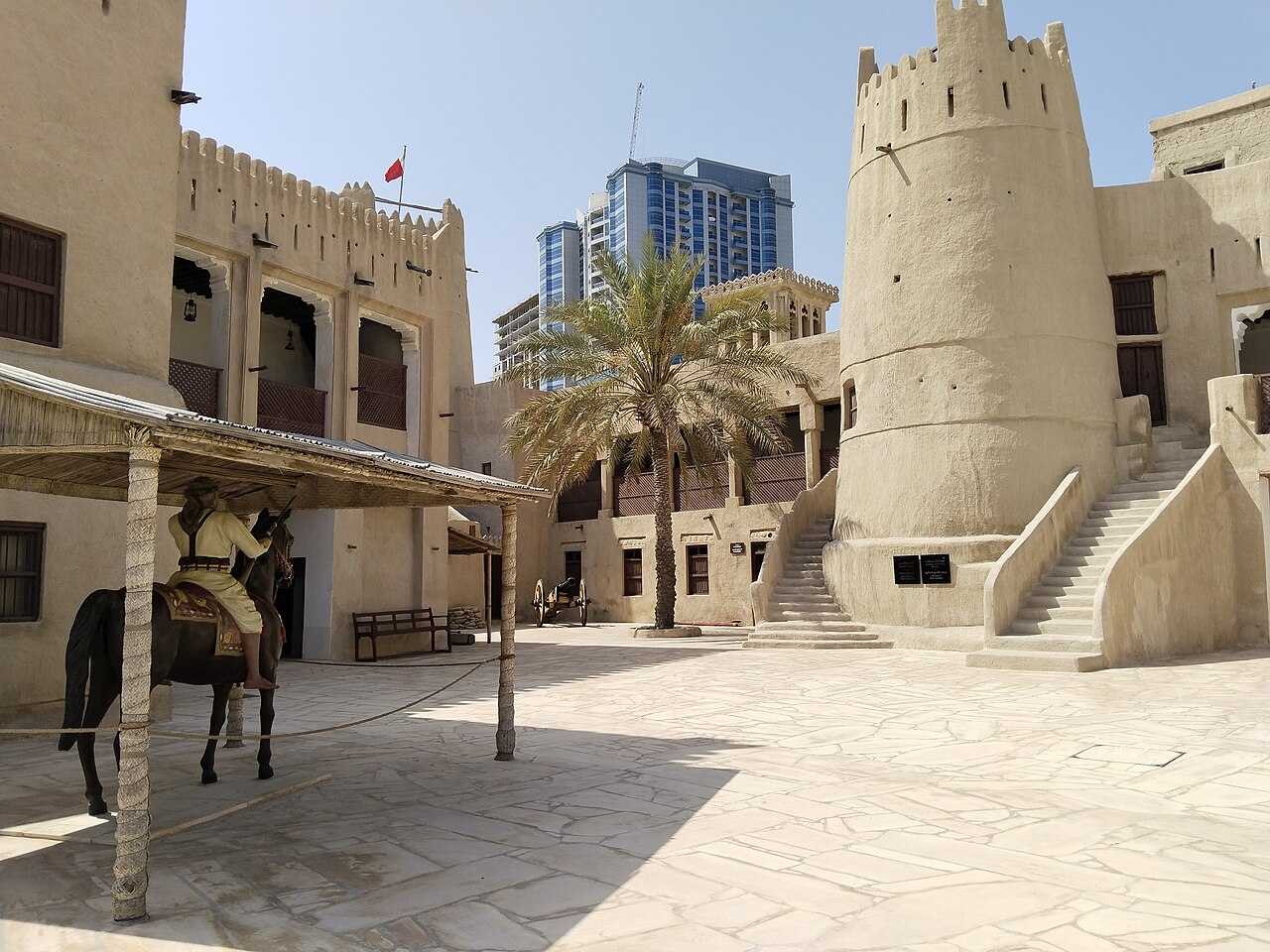
The fort's ground plan is somewhat square with a distinctive arrangement of towers: two round corner towers on one side and two rectangular towers on the opposite side. This bastioned design reflects typical defensive architecture of the era, combining elements to provide overlapping fields of fire and strong defensive positions. The walls were traditionally constructed using rock, coral, and adobe, materials readily available in the region, which also helped the fort blend into its coastal environment.
The surviving tower and demolition episode
In 1970, a significant event impacted the fort's physical integrity when Sheikh Khalid bin Muhammad Al Qasimi ordered its demolition. This decision was motivated by political reasons, aiming to erase the legacy of his predecessor, Sheikh Saqr bin Sultan Al Qasimi. However, Sultan bin Muhammad Al-Qasimi, who was studying abroad at the time, intervened upon hearing the news and managed to halt the demolition, though only the eastern corner tower, known as Al Burj, survived. This tower remains a prominent feature at the fort's entrance and lends its name to the adjacent square, "Al Burj," meaning "the tower" in Arabic.
Restoration and modern use
Between 1996 and 1997, under the leadership of Sultan bin Muhammad Al-Qasimi who had become the ruler of Sharjah, the fort was meticulously rebuilt following its original ground plan. The restoration project utilized salvaged elements such as original doors and windows that had been preserved during the demolition. This restoration was part of a broader initiative known as the Heart of Sharjah project, aimed at revitalizing the traditional core of Sharjah's old port city and preserving its cultural heritage.
Today, Al Hisn Fort functions as a museum showcasing Sharjah's history and heritage. It is open to visitors for a fee, although access may occasionally be restricted due to ongoing conservation efforts. The fort's location in the city center makes it a key attraction for tourists and locals interested in the emirate's architectural and historical legacy.
Confusions and clarifications about Al Hisn Fort in Dibba Al Hisn
It is important to distinguish Sharjah's Al Hisn Fort from another fort of the same name located in Dibba Al Hisn, also in the emirate of Sharjah. The Dibba Al Hisn fort has a different historical background, having been built by the Portuguese during their occupation of the area between 1624 and 1648. This fortification is situated on a small rectangular platform and features a rectangular tower constructed in the early 20th century by Sheikh Saqr bin Moḥammad Al Qasimi, replacing an earlier circular tower. Currently, the Dibba Al Hisn fort is undergoing renovations and is not open to the public.
Architectural style and construction period
The architectural style of Sharjah's Al Hisn Fort is characteristic of a bastioned fortress designed for defense and residence, combining traditional materials like rock, coral, and adobe with functional military features such as cannon placements and towers. Its construction in the early 19th century places it firmly within the modern historical period in the context of Middle Eastern fortifications, reflecting the transitional phase from traditional tribal conflicts to the influence of colonial powers.
Visiting information
Visitors to Al Hisn Fort can explore its restored walls, towers, and interior spaces that offer insights into Sharjah's ruling history and defensive architecture. The museum often hosts cultural exhibitions and events that highlight the emirate's heritage. Opening hours and ticket prices may vary, so it is advisable to check current visitor information before planning a visit.
Frequently asked questions (FAQ)
- When was Al Hisn Fort originally built?
- Al Hisn Fort was originally constructed in 1820 by Sheikh Sultan bin Saqr Al Qasimi following the 1820 General Maritime Treaty.
- What architectural style characterizes Al Hisn Fort?
- Al Hisn Fort is a bastioned fortress featuring traditional materials like rock, coral, and adobe, with defensive towers and cannon placements typical of early 19th-century military architecture.
- Can visitors enter Al Hisn Fort today?
- Yes, Al Hisn Fort operates as a museum open to the public, though visiting hours and ticket prices may vary. It is advisable to check ahead for any temporary closures.
- What happened to the fort in 1970?
- In 1970, most of Al Hisn Fort was demolished by order of Sheikh Khalid bin Muhammad Al Qasimi, but the eastern tower survived due to intervention by Sultan bin Muhammad Al-Qasimi.
- Is Al Hisn Fort the same as the fort in Dibba Al Hisn?
- No, the fort in Dibba Al Hisn is a different structure built by the Portuguese between 1624 and 1648, with later modifications by local rulers. It is currently under renovation and not open to visitors.
Photo gallery

Information
Opening hours
Typically 9:00-17:00, daily
Ticket prices
Variable, typically a small fee
Current owner
Government of Sharjah
Loading map...
Visitor reviews
No reviews yet. Been here? Write the first review and help other travelers!
Write the first reviewVisited this castle? Share your experience
Your review helps other travelers and adds first-hand knowledge to our encyclopedia.