Al Ghayl Fort

Al Ghayl Fort in Sharjah, United Arab Emirates
Post-Renaissance (17th–18th c.)
Well Preserved

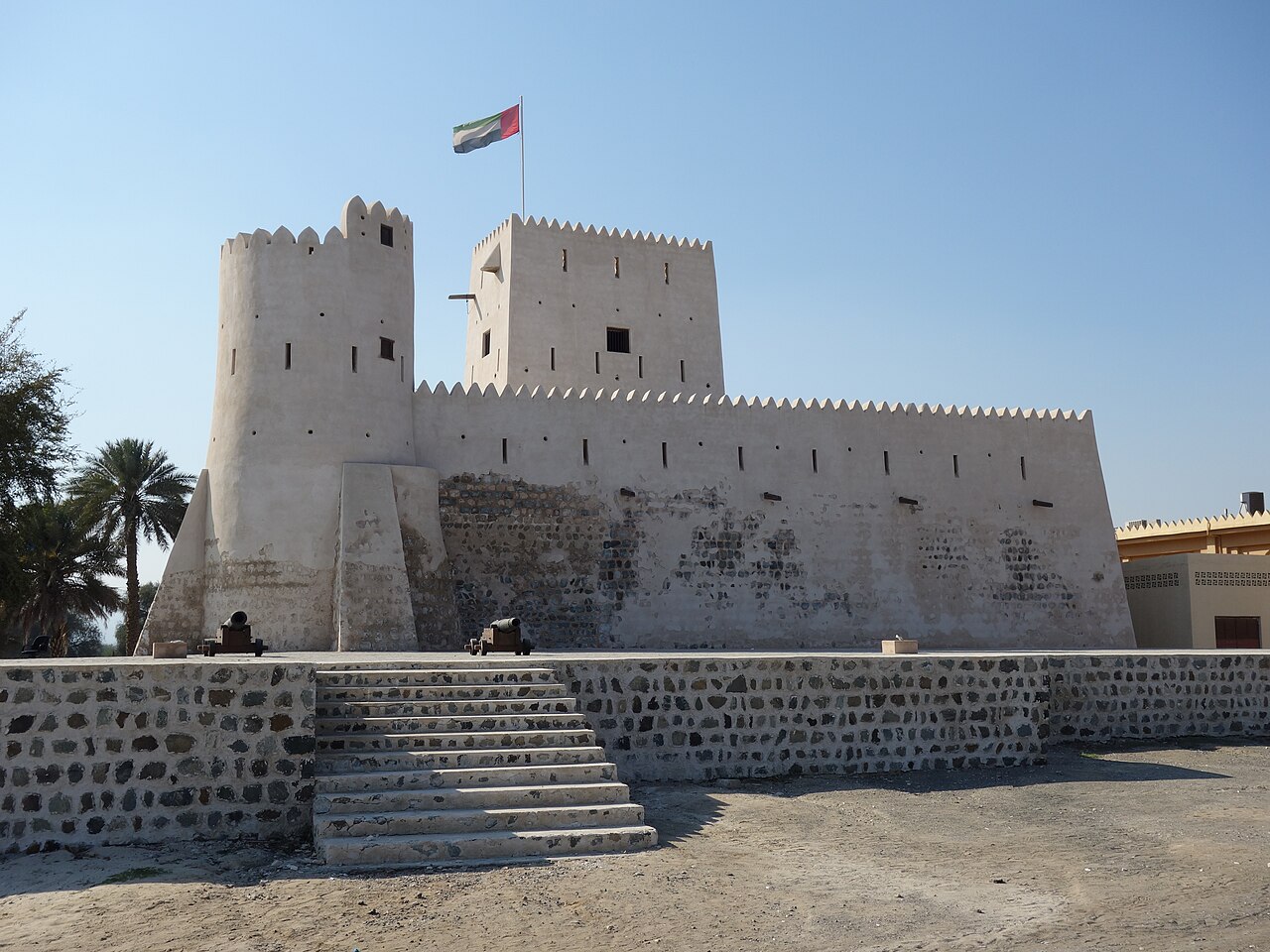
Al Ghayl Fort, also spelled as Al Ghail or Gheel, is a historic fortress located southwest of Kalba city, within the emirate of Sharjah in the United Arab Emirates. This 19th-century fort stands on a strategic hilltop overlooking the surrounding landscape, serving as a defensive stronghold in a region historically vulnerable to bandit raids. Originally constructed under the direction of Ali bin Zahi, the fort was later rebuilt or completed by Sheikh Saeed bin Hamad Al Qasimi in the early 1800s, reflecting the architectural and military needs of the time.

Historical context and strategic importance

The fort's location on a hill north of the Sharjah-Kalba Road (E102) was chosen deliberately to provide a commanding view of the surrounding area, particularly the caravan routes that were vital for trade and communication. These routes connected inland settlements to the coast, making them prime targets for bandits. Al Ghayl Fort functioned as a protective outpost to safeguard local communities and merchants traveling through the region.

The fortification played a significant role in the defense strategy of the Al Qasimi tribe, who ruled the area during the 19th century. The tribal leadership invested in strengthening such forts to assert control over their territories and maintain security for their people.

Architectural features and layout

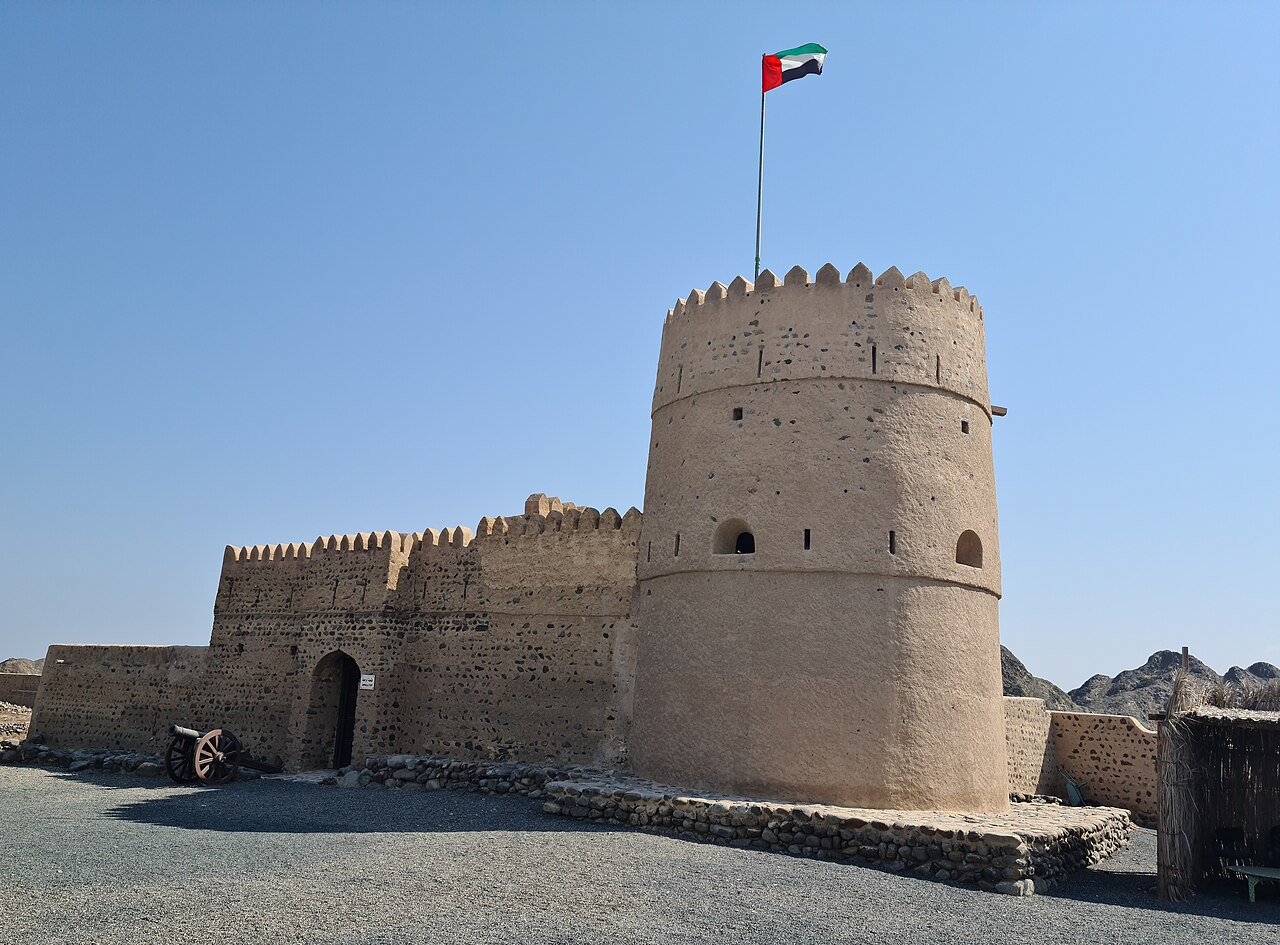
Al Ghayl Fort exemplifies typical defensive architecture of the Arabian Peninsula during the late medieval to early modern period. The fort has a rectangular enclosure with a prominent projecting round watchtower that provided extensive surveillance capabilities. This tower was crucial for early detection of approaching threats, allowing defenders to prepare accordingly.

Within the walls of the fort are several small buildings that served various functions, including residential quarters and storage facilities. One notable feature inside the fort is an old Arabic date press, highlighting the agricultural practices and daily life of the inhabitants. This press would have been used to extract juice from dates, an important local crop and staple food.

The fort’s walls are constructed from locally sourced stone and mudbrick, materials typical of the region’s traditional architecture. The robust construction was designed to withstand attacks and the harsh desert climate.

Restoration and current use

Today, Al Ghayl Fort is well preserved and forms part of the Kalba Birds of Prey Center, a conservation and educational facility dedicated to the protection of raptors native to the Arabian Peninsula. The fort's integration into the bird center offers visitors a unique combination of cultural heritage and wildlife conservation.

Visitors can explore the fort as part of their visit to the bird park, experiencing both the historical architecture and the natural environment. Though the fort itself is relatively small, its historical significance and scenic hilltop position make it a worthwhile destination for those interested in Emirati history and traditional fortifications.

Visiting information and accessibility

Access to Al Ghayl Fort is included with the entrance ticket to the Kalba Birds of Prey Center. The center operates daily with specific visiting hours, offering guided tours that explain both the fort’s history and the bird conservation efforts. Visitors are encouraged to check the center’s schedule ahead of time, as opening hours and ticket prices may vary seasonally.

The fort’s location on a hill means that visitors should be prepared for some walking and uneven terrain. The site provides a panoramic view of the surrounding area, enhancing the experience of the fort’s strategic placement.

Significance in Emirati heritage

Al Ghayl Fort represents an important piece of the United Arab Emirates’ cultural and military history. It illustrates the traditional methods of defense employed by local tribes in the 19th century and provides insight into the daily lives of those who lived in this harsh environment. The preservation of the fort alongside the Kalba Birds of Prey Center helps to maintain a connection between the country’s natural and historical heritage.

As one of the smaller forts in the region, Al Ghayl Fort nonetheless offers valuable educational opportunities for visitors interested in the architectural styles, defensive strategies, and social history of the Emirates during a period of significant change and development.

Frequently asked questions (FAQ)

What is the historical significance of Al Ghayl Fort?
Al Ghayl Fort, built in the 18th century, is a testament to the defensive architecture of the region and played a crucial role in protecting the town of Kalba. It showcases the rich heritage of the UAE and reflects the historical importance of coastal fortifications in safeguarding trade routes and local communities.
When was Al Ghayl Fort built?
Al Ghayl Fort was constructed in the late 18th century, specifically around 1722. It was strategically built to defend the area against invasions and has since become an important symbol of the region's historical legacy.
Can I visit Al Ghayl Fort?
Yes, Al Ghayl Fort is open to visitors who want to explore its historical and architectural features. The fort provides an engaging experience for anyone interested in the culture and history of the UAE.
What are the opening hours of Al Ghayl Fort?
Al Ghayl Fort is typically open to the public from 8:00 AM to 6:00 PM, but it's recommended to check for any changes or special events that may affect these hours. Visiting during the cooler months can enhance your experience.
Is it possible to access Al Ghayl Fort easily?
Yes, Al Ghayl Fort is accessible by car and is located in Kalba, making it easy for visitors to reach. There is adequate parking available nearby for those driving to the site.
What is the best time to visit Al Ghayl Fort?
The best time to visit Al Ghayl Fort is during the cooler months, from November to March, when temperatures are more pleasant. Early mornings or late afternoons are ideal for exploring the fort to avoid the midday heat.
Are there any nearby attractions to visit?
Yes, while visiting Al Ghayl Fort, you can explore other nearby attractions such as the Kalba Corniche and the Kalba Eco-Tourism Project. These sites offer beautiful scenery and additional insights into the region's natural and cultural heritage.
What are the ticket prices for Al Ghayl Fort?
Entry to Al Ghayl Fort is usually free, making it an affordable option for visitors. However, donations for the preservation of the site and its surrounding area are encouraged and appreciated.

Information

Hill Castle

Address

North of the Sharjah-Kalbe Road (E102)

Loading map...

Visitor reviews

No reviews yet. Been here? Write the first review and help other travelers!

Write the first review

Visited this castle? Share your experience

Your review helps other travelers and adds first-hand knowledge to our encyclopedia.
Write a review

(5/5)

0/2000 characters

Your review will be visible after admin approval

Nearby castles

0.8 km
Ghayl Fort — United Arab Emirates castle

Ghayl Fort

Kalba, United Arab Emirates

Ghayl Fort is a significant historical structure located inland from the coastal city of Kalba in the emirate of Sharjah, United Arab Emirates. This bastioned fortress was built in the late 19th century, erected upon the foundations of an earlier 17th-century watchtower. The fort's strategic position reflects its historical role in regional defense and control over the surrounding area. Historical background and strategic importance Constructed during a period of regional consolidation and increasing external threats, Ghayl Fort served as a military stronghold to protect inland territories near the Gulf coast. The original 17th-century watchtower that preceded the fort was part of a network of lookout points designed to monitor maritime and desert routes. The fort's location near Kalba, an important coastal settlement, allowed it to oversee trade routes and provide early warnings against potential invasions or raids. Architectural features and design The fort exemplifies typical bastioned fortress architecture of the late 19th century in the Arabian Peninsula. It features robust defensive walls with bastions at the corners, designed to provide overlapping fields of fire against attackers. The walls are constructed from local materials, including stone and mudbrick, which were common building resources in the region. The fortress layout includes a central courtyard surrounded by residential and military chambers. Bastions and defensive walls The bastions are the most prominent defensive components, projecting outward from the main walls to allow defenders to cover adjacent walls with gunfire. This design reflects the adaptation of traditional fortifications to the use of firearms and cannons. The walls are thick and high enough to withstand attacks and provide shelter for the garrison. Internal structures Inside the fort, there are various chambers that would have served different functions, including living quarters for the soldiers, storage rooms for weapons and supplies, and possibly a small mosque or prayer area. The central courtyard allowed for movement within the fort and could accommodate gatherings or military drills. Restoration and current status Ghayl Fort has undergone restoration efforts to preserve its structural integrity and historical value. These efforts aim to maintain the fort as a cultural heritage site and a tourist attraction in Sharjah. The restoration has focused on stabilizing the walls and bastions while preserving original architectural elements. Cultural significance and tourism Today, Ghayl Fort stands as a testament to the region's historical military architecture and its role in safeguarding the emirate's interior. It attracts visitors interested in the history of the United Arab Emirates and the evolution of fortifications in the Arabian Peninsula. The fort is part of Sharjah's broader efforts to promote cultural heritage and educate the public about the area's past. Visiting information Visitors to Ghayl Fort can explore the preserved bastions and internal chambers, gaining insight into 19th-century defensive architecture. The fort's location near Kalba makes it accessible for day trips from Sharjah city. Interpretive signage and guided tours may be available to enhance the visitor experience.

Post-Renaissance (17th–18th c.)
Details
9.4 km
Kalba Fort — United Arab Emirates castle

Kalba Fort

Rugaylat/Corniche Road, United Arab Emirates

Kalba Fort is a significant historical bastioned fortress located in the town of Kalba, within the emirate of Sharjah on the eastern seaboard of the United Arab Emirates. This fort stands as a prominent example of coastal defensive architecture from the post-Renaissance period, primarily dating back to the 18th century. It occupies a strategic position inland from the coastal city, overseeing the surrounding region and serving as a key military and administrative center in its time. Historical background and origins The site of Kalba Fort has a layered history of occupation and fortification that reflects the shifting control of the region. Initially, an Islamic fort stood on this location, which was captured by the Portuguese in 1623. The Portuguese constructed their own fortifications here in 1624, incorporating elements of European military architecture to secure their maritime interests along the Gulf of Oman. However, their presence was relatively short-lived; by around 1650, the Portuguese were expelled from the area by Arab forces. Following the Portuguese departure, the Arabs rebuilt the fort on the remains of the earlier structure. The present-day fort primarily reflects this 18th-century Arab reconstruction, which adapted and enhanced the existing fortifications to suit local defensive needs. This reconstruction included the addition of a square enclosure on a raised platform, a round corner tower, and a rectangular keep within the fort's interior. Architectural features and layout Kalba Fort is classified as a bastioned fortress, a style characterized by angular bastions designed to provide overlapping fields of fire and improved defense against artillery attacks. The fort covers approximately 1,435 square metres, with thick walls that enclose the central courtyard and internal structures. The fort's most notable architectural elements include its two-story murabaa (tower), which served both as a lookout point and a stronghold within the fort. The raised platform on which the fort stands enhances its defensive capabilities by providing a commanding view of the surrounding landscape and early warning against approaching threats. Inside the enclosure, the rectangular keep functioned as the last line of defense and housed important personnel and supplies. The fort's design reflects a blend of local Arab military architecture with influences from Portuguese and broader Islamic fortification traditions. Restoration and current status Kalba Fort has undergone multiple restoration efforts to preserve its structure and cultural significance. It was first restored and opened as a heritage site in December 1996, establishing it as a museum and visitor attraction that highlights the region's history and architectural heritage. The most recent restoration, completed in April 2021 under the patronage of Sultan bin Mohammed Al Qasimi, ruler of Sharjah, further enhanced the fort's condition and visitor facilities. This restoration aimed to maintain the fort's authenticity while making it accessible and informative for tourists and scholars. Today, Kalba Fort serves as a museum that offers insights into the military history of the eastern UAE coast and the cultural heritage of Sharjah. The surrounding village houses near the fort date back approximately 500 years, adding to the historical ambiance of the site. Cultural significance and visitor experience Kalba Fort is an important cultural landmark that reflects the complex history of control and defense in the Gulf region. Its preservation as a museum allows visitors to explore the architectural features typical of post-Renaissance bastioned fortresses in the Arabian Peninsula. Visitors can observe the fort's robust walls, bastions, and towers that exemplify traditional defensive strategies adapted to local conditions. The fort's location near the coast also highlights its role in protecting maritime routes and local communities. While the fort was temporarily closed to visitors at times, it is generally accessible as a heritage site, offering educational exhibits and guided tours that explain its historical context and architectural details.

Post-Renaissance (17th–18th c.)
Details
10.6 km
Awhala Fort — United Arab Emirates castle

Awhala Fort

Wahlah, United Arab Emirates

Awhala Fort, also spelled Wahlah or Wahalah, is a remarkable historic fortress located in the village of Awhala, within the emirate of Fujairah in the United Arab Emirates. This hill castle stands on a ridge overlooking a nearby wadi, commanding strategic views of the surrounding landscape and the village below. Its location highlights the fort’s enduring military and administrative importance over many centuries. The current fort structure dates to the 18th century, making it a product of the post-Renaissance period in the region, though its origins and significance stretch far deeper into history. Archaeological excavations have revealed that the fort was constructed atop the remains of a much older fortified settlement, dating back to the Iron Age, approximately the 8th century BC. This earlier settlement was part of a long sequence of occupation spanning the Wadi Suq period (circa 1500 to 1300 BCE) through the Iron Age II (1000 to 600 BCE), marking the site as one of the largest prehistoric fortified complexes in southeastern Arabia. Ancient origins and archaeological significance The site of Awhala Fort reveals a fascinating stratigraphy of human settlement and defensive architecture. The prehistoric fortifications uncovered during excavations include extensive mudbrick and stone walls from the Wadi Suq and Iron Age periods. These remains indicate the site’s longstanding role as a defensive stronghold controlling vital routes through the wadi and surrounding terrain. The fort’s position near borderlands likely contributed to its strategic importance for controlling movement and protecting local communities. Archaeologists have found numerous artifacts such as ceramic jars and pottery shards around the site, which further attest to continuous human occupation and cultural activity over many centuries. The integration of these ancient materials into the later Islamic fort’s fabric illustrates a continuity of use and respect for the site’s historical legacy. Architectural features of the 18th-century fort The present Awhala Fort is a compact, rectangular structure characterized by robust defensive features typical of Islamic military architecture of the late Islamic period. The fort’s most striking element is its circular watchtower, which rises approximately 11 meters high with a diameter of 9 meters. This tower served as a key vantage point for surveillance and defense, overseeing the surrounding valley and approaches to the fort. The fort encloses a courtyard surrounded by thick basalt stone walls, approximately two meters in thickness, reflecting the use of local materials and traditional construction techniques. The courtyard is accessed through a main entrance that leads to a series of interior rooms, including a single chamber and two majlis or council chambers. These majlis were traditionally used for social gatherings and decision-making, with separate spaces for male and female occupants, underscoring the social organization within the fort. Internal staircases connect different levels of the fort, enhancing its defensive functionality and allowing for efficient movement of inhabitants and guards. The restoration work carried out between 2003 and 2005 carefully preserved these architectural features, using basalt stones similar to the original to maintain the fort’s authenticity and historical integrity. Historical context and cultural importance Awhala Fort’s layered history reflects the broader historical dynamics of the region, where ancient settlements evolved into fortified sites responding to changing political and military needs. The fort’s construction in the 18th century coincides with a period of local tribal consolidation and increased fortification efforts across the Arabian Peninsula, as communities sought to defend their territories against rival groups and external threats. Its location in Fujairah, one of the seven emirates of the UAE, places it within a landscape rich in archaeological heritage and traditional architecture. The fort exemplifies the adaptation of ancient defensive concepts into Islamic-period military architecture, bridging millennia of human occupation and cultural evolution. Visiting Awhala Fort today Today, Awhala Fort stands as a well-preserved monument to the region’s multifaceted history. Visitors can explore the fort during daylight hours, with access managed by a local guard who requests visitors to sign a guestbook. The site offers a unique opportunity to witness the architectural and archaeological layers that tell the story of human settlement from the Iron Age through the Islamic period. The fort’s modest size and intimate setting provide a glimpse into the defensive strategies and social structures of past inhabitants. Its restoration has ensured the survival of key features, making it a valuable cultural heritage site within the UAE’s historical landscape. Nearby archaeological remains Adjacent to the fort are visible foundations of earlier dwellings, further enriching the site’s archaeological significance. These remains complement the fort itself, illustrating the continuity of habitation and the evolution of settlement patterns in the area. Architectural style and materials The fort’s architecture reflects the practical and aesthetic considerations of its builders. The use of basalt stone for walls and structural elements not only provided strength but also harmonized the fort with its natural surroundings. The rectangular layout, combined with the prominent circular tower, exemplifies a typical design approach for small Islamic forts in the region during the 18th century. Cultural heritage and preservation efforts The restoration project undertaken in the early 2000s was instrumental in preserving Awhala Fort’s structural integrity and historical character. By employing traditional materials and techniques, conservators ensured that the fort remains an authentic representation of its period. This effort reflects the UAE’s broader commitment to safeguarding its cultural heritage amidst rapid modernization.

Post-Renaissance (17th–18th c.)
Details