Al Fahidi Fort
Al Fahidi Fort, also known as Dubai Fort, is a historic bastioned fortress located in the heart of Dubai on Ali Bin Abi Taleb Street. It is the oldest building still standing in Dubai, with origins dating back to the late 18th century. The fort stands as a significant monument reflecting the city's early defensive architecture and its evolution from a small trading town to a modern metropolis.
Early construction and architectural features
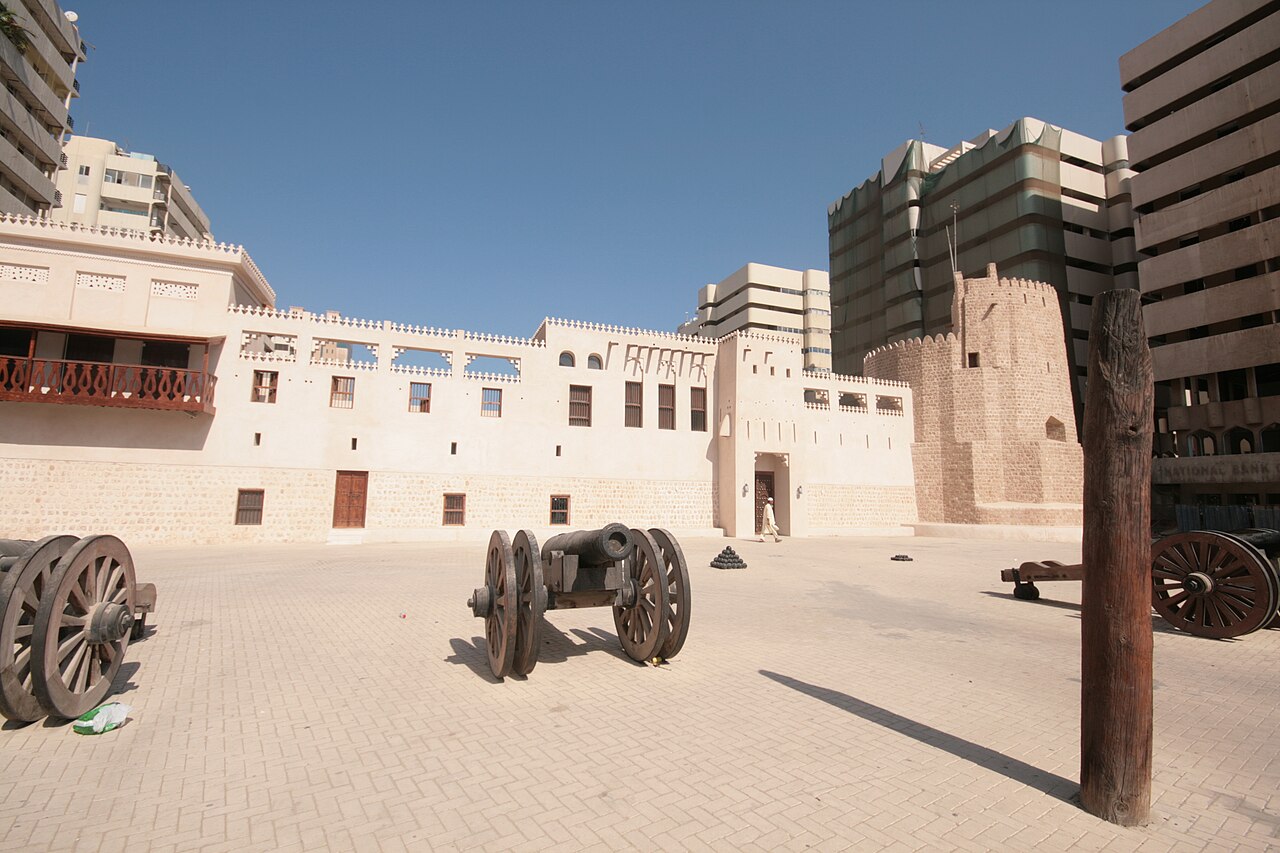
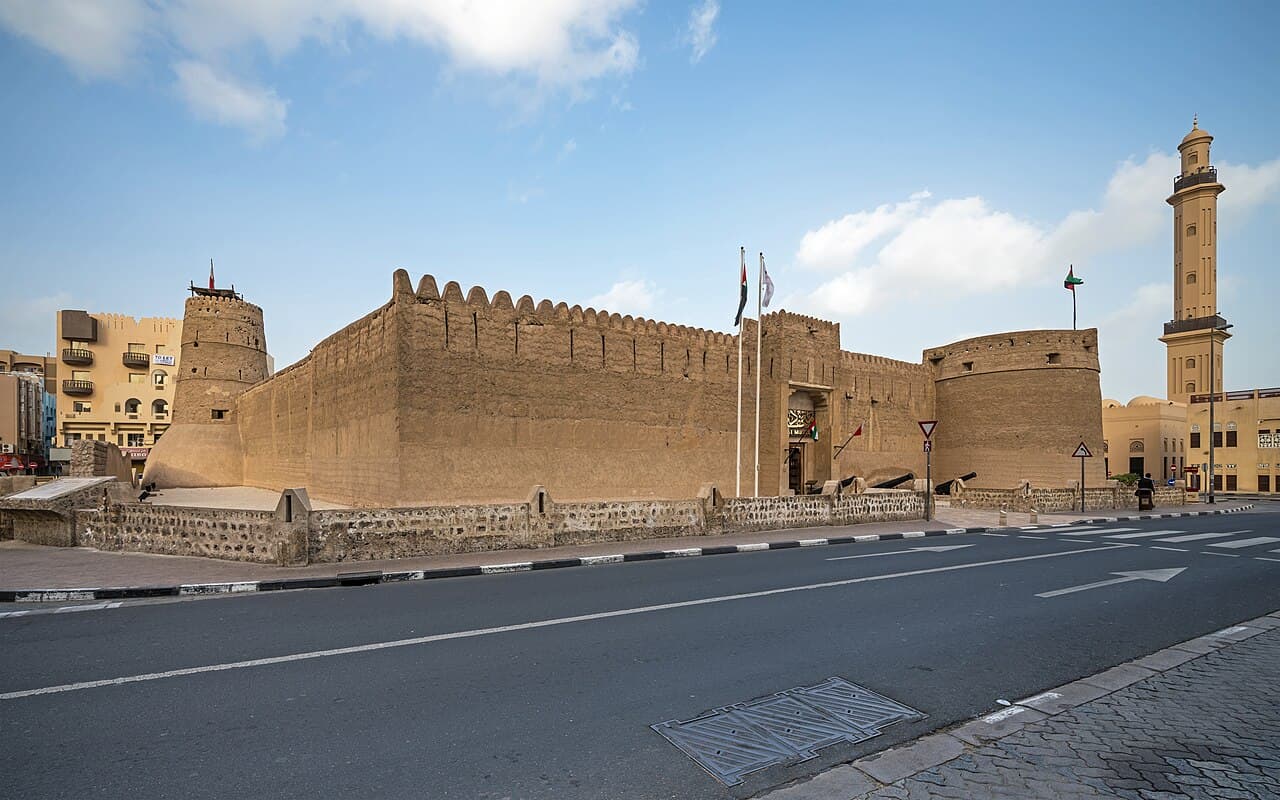
The earliest part of the fort is its slender round watchtower, constructed around 1787. This tower was originally built to serve as a lookout point to monitor the surrounding desert and coastal approaches. In 1799, this watchtower was incorporated into a larger fortification, marking the establishment of what is now known as Al Fahidi Fort. The fort's design features a square ground plan with two projecting round towers positioned on opposite corners and a rectangular tower at a third corner, providing a strong defensive perimeter.
Constructed primarily from coral rocks, mud bricks, and mortar, the fort's walls are thick and low, typical of coastal fortifications designed to withstand both land and sea attacks. The use of local materials reflects the traditional building techniques of the region during the late 18th century.
Historical significance and expansions
Al Fahidi Fort was strategically located at the edge of the urban area of Dubai to guard the landward approaches against raids by rival tribes. The fort was part of a broader defensive system that included a town wall and several smaller towers, remnants of which can still be seen today, such as the low irregular wall near the watchtower.
Between the 1830s and 1850s, the fort underwent major expansions under the rule of Sheikh Maktoum bin Butti bin Sohal. These enhancements strengthened the fort's defensive capabilities and adapted it to the changing political and military context of the region. Throughout its history, the fort served multiple purposes: it was the seat of the ruler, an arsenal for weapons and artillery, and even functioned as a prison.
Restoration and current use as a museum
By the mid-20th century, the fort had fallen into disrepair. In 1970, a significant restoration project was undertaken to preserve the fort as a cultural heritage site. Following its restoration, Al Fahidi Fort was repurposed as the Dubai Museum, opening its doors to the public to showcase the rich history and culture of Dubai and the wider United Arab Emirates.
The museum exhibits include traditional artifacts, historical photographs, and reconstructions of old Dubai life, providing visitors with a comprehensive understanding of the city's transformation from a small fishing and trading settlement to a global city. The fort's architecture itself remains a key exhibit, illustrating traditional Emirati defensive design.
Architectural details and surrounding features
The fort's bastioned fortress style is characterized by its projecting towers and thick walls designed for defense. The two round towers on opposite corners allowed for crossfire coverage of the surrounding area, while the rectangular tower provided additional vantage points. The fort's layout reflects a practical approach to defense, combining observation, protection, and control over the surrounding territory.
Visitors can observe the remnants of the town wall adjacent to the fort, which once enclosed the old city of Dubai. This wall, though largely dismantled, marks the historical boundary of the settlement and highlights the fort's role as a key defensive structure.
Visiting al fahidi fort and the dubai museum
Today, Al Fahidi Fort is open to visitors as part of the Dubai Museum complex. The museum operates daily with an entrance fee, offering guided tours and educational displays. While the site is popular and can be crowded, it remains an essential destination for those interested in the history of Dubai and traditional Emirati architecture.
The museum's location in the historic Al Fahidi neighborhood provides visitors with a broader cultural experience, including nearby traditional markets and heritage sites. The fort and museum serve as a gateway to understanding the city's past before its rapid modernization in the late 20th and early 21st centuries.
Frequently asked questions (FAQ)
- When was Al Fahidi Fort originally built?
- The oldest part of Al Fahidi Fort, the slender round watchtower, dates back to around 1787. The fort itself was completed in 1799.
- What architectural style characterizes Al Fahidi Fort?
- Al Fahidi Fort is a bastioned fortress featuring thick coral rock and mud brick walls with projecting round and rectangular towers for defense.
- Can I visit Al Fahidi Fort today?
- Yes, Al Fahidi Fort is open to the public as the Dubai Museum, with daily visiting hours from 08:30 to 20:30 and a small entrance fee.
- What was the historical purpose of Al Fahidi Fort?
- Historically, the fort served as the seat of the ruler, a weapons arsenal, a prison, and a defensive stronghold guarding Dubai from raids.
- Is the fort well preserved?
- The fort was restored in 1970 and is currently well preserved, serving as a museum and cultural heritage site.

Information
Opening hours
08:30-20:30, daily
Ticket prices
AED 3 adult, AED 1 child
Current owner
Dubai Municipality
Loading map...
Visitor reviews
No reviews yet. Been here? Write the first review and help other travelers!
Write the first reviewVisited this castle? Share your experience
Your review helps other travelers and adds first-hand knowledge to our encyclopedia.