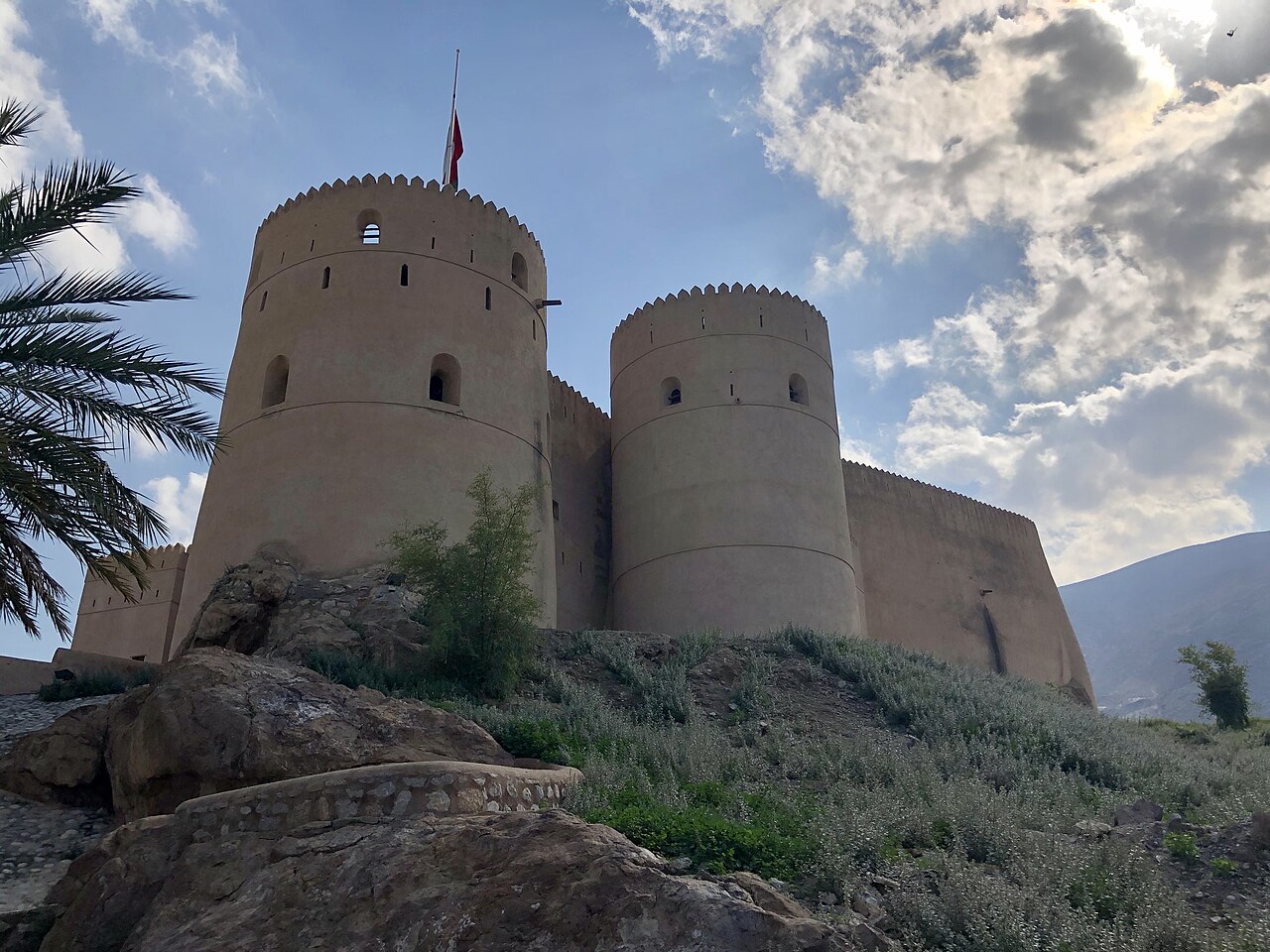
Al Awabi Castle
Al Awabi Castle, located in the town of Al Awabi in the Al Batinah South Governorate of Oman, is a historic fortification built around 1800. This castle was strategically positioned next to a wadi to guard the entrance to the fertile Wadi Bani Kharus, a vital agricultural and trade route. Serving both defensive and residential functions, it was the residence of the local wali (governor), highlighting its importance in regional governance and security during the late 18th century and early 19th century.
Architectural layout and defensive features
The castle features a square ground plan, a common design in fortifications aimed at maximizing defensible space and structural stability. At diagonally opposite corners of the square are round towers, which provided vantage points for surveillance and defense against attackers. One of these towers, known as Al Sarookh Tower, is distinguished by its complete stone facing, indicating a focus on durability and possibly serving as a key stronghold within the fort.
The use of round towers at corners was a tactical choice, as their shape deflected projectiles better than square towers and eliminated blind spots along the walls. The walls themselves would have been constructed using local stone materials, suited to withstand the arid climate and potential sieges.
Historical context and significance
Constructed around 1800, Al Awabi Castle represents a period in Omani history when local rulers fortified key locations to protect trade routes and agricultural areas. The castle's role in guarding the entrance to Wadi Bani Kharus was crucial, as this wadi is known for its fertile lands and has historically been a corridor for movement and commerce.
As the residence of the local wali, the castle was not only a military installation but also a seat of local administration. This dual function underscores the castle's importance in maintaining both security and governance in the region.
Restoration and current status
By the early 21st century, the castle had undergone restoration efforts, notably in 2008, to preserve its structure and historical value. These efforts aimed to maintain the castle's integrity and promote its cultural heritage. The restoration likely involved stabilizing the stonework, repairing damaged sections, and possibly restoring architectural details to reflect its original appearance.
Today, Al Awabi Castle stands as a well-preserved example of Omani fortifications from the late 18th century. Although it is reportedly open to visitors, access may be restricted at times. Its scenic location near the wadi adds to its appeal for tourists interested in history and architecture.
Cultural and architectural importance
The castle exemplifies traditional Omani military architecture, combining residential and defensive functions. Its strategic placement and robust construction reflect the priorities of local rulers in securing vital resources and routes. The presence of round towers and a square plan aligns with regional architectural practices of the period.
As a cultural landmark, Al Awabi Castle contributes to understanding the historical landscape of Oman during a time of local governance and regional defense. It offers insight into the living conditions and military strategies of the era.
Frequently asked questions (FAQ)
- How do I get to Al Awabi Castle?
- Al Awabi Castle is located in Al Awabi, Oman, approximately 90 km from Muscat. You can reach the castle by car or taxi, and there are local buses that may also serve the area, providing a scenic journey through Oman's landscape.
- What is the historical significance of Al Awabi Castle?
- Al Awabi Castle is an important historical site that dates back to the 17th century. It served as a defensive fortress and played a crucial role in protecting the region from invasions, showcasing the strategic military architecture of its time.
- When was Al Awabi Castle built?
- Al Awabi Castle was constructed in the late 1600s, a period marked by the consolidation of power in Oman. Its historical architecture reflects the defensive techniques and styles prevalent during that era.
- Can I visit Al Awabi Castle year-round?
- Yes, Al Awabi Castle is open to visitors throughout the year. However, the best time to visit is during the cooler months from October to March, when the weather is more pleasant for exploring the castle and its surroundings.
- Why is Al Awabi Castle an architectural marvel?
- Al Awabi Castle showcases traditional Omani architecture, characterized by its thick stone walls and strategic layout. The castle's design not only served defensive purposes but also reflects the cultural heritage and craftsmanship of the region.
- Is it possible to access the castle with mobility issues?
- Access to Al Awabi Castle may present challenges for visitors with mobility issues due to its elevated structure and uneven terrain. It is advisable to check with local guides for assistance and potential accommodations before planning your visit.
- What are the ticket prices for visiting Al Awabi Castle?
- Entry to Al Awabi Castle is generally free, making it an accessible attraction for all visitors. However, guided tours may have a fee, which enhances the experience with informative insights into the castle's history and significance.
- What are the opening hours for Al Awabi Castle?
- Al Awabi Castle is typically open to the public from 8 AM to 5 PM, allowing ample time for exploration. It is recommended to check for any seasonal variations in hours or special events that may affect access.
- Are there nearby attractions to visit after Al Awabi Castle?
- Yes, after visiting Al Awabi Castle, you can explore nearby attractions such as the picturesque landscapes of the Hajar Mountains and the quaint villages surrounding Al Awabi. Additionally, the city of Muscat offers a wealth of cultural and historical sites, making it a great next stop.
Information
Loading map...
Visitor reviews
No reviews yet. Been here? Write the first review and help other travelers!
Write the first reviewVisited this castle? Share your experience
Your review helps other travelers and adds first-hand knowledge to our encyclopedia.