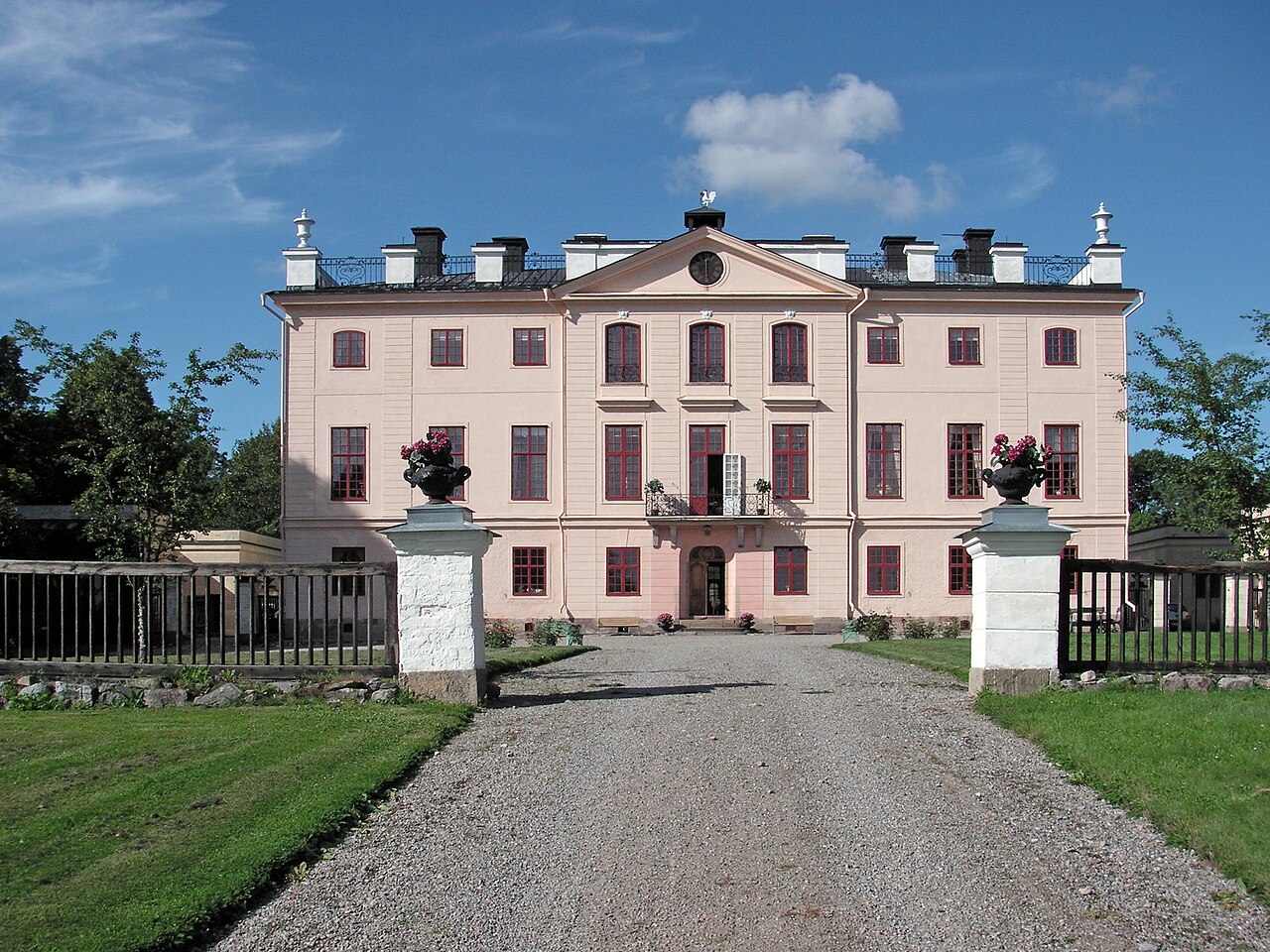
Åkerö Castle
Åkerö Castle is a notable example of a post-renaissance manor house located in Bettna, Sweden. The estate itself has a documented history dating back to 1281, marking it as a site with centuries of Swedish noble heritage. Although the original structures likely evolved over time, the castle as it stands today was constructed between 1752 and 1757 under the direction of the prominent Swedish statesman and art collector Carl Gustaf Tessin.
The design of the current castle was created by Carl Hårleman, a leading architect of the Swedish post-renaissance and early rococo periods. His architectural approach for Åkerö Castle incorporated classical symmetry and refined details typical of mid-18th century Swedish aristocratic residences. The building replaced an earlier castle that was partially destroyed by fire in 1660, which had stood on the estate for centuries prior.
Historical background of Åkerö estate
The earliest records of the Åkerö estate date back to the late 13th century, making it a historically significant property in Sweden's noble landscape. Over the centuries, the estate changed hands among various noble families, reflecting the region's shifting political and social dynamics. The fire in 1660 marked a turning point, necessitating the eventual construction of a new manor house nearly a century later.
Architectural design and features
Carl Hårleman's influence
Carl Hårleman was instrumental in introducing French rococo and classical elements to Swedish architecture. At Åkerö Castle, he designed a manor that balanced elegance with functionality. The castle features a symmetrical facade, large windows allowing ample natural light, and interior spaces arranged for both residential comfort and formal receptions.
Structural elements
The manor is characterized by its rectangular layout and two-story height, typical of Swedish noble residences of the period. The roofline is modest yet elegant, complementing the restrained decorative elements on the exterior walls. Inside, the rooms are spacious with high ceilings, and the use of classical motifs is evident in the plasterwork and wood detailing.
Åkerö apple variety and estate agriculture
Today, Åkerö Castle is known not only for its architectural heritage but also for its agricultural significance. The estate is famous for the Åkerö apple variety, a traditional Swedish apple cultivar prized for its flavor and historical association with the manor. The cultivation of this apple variety is a unique aspect of the estate's legacy, linking its cultural heritage with local horticultural traditions.
Current status and use
Currently, Åkerö Castle functions as a working farm, maintaining its agricultural roots alongside its historical identity. The manor remains a private property, and while it is not generally open to the public, it stands as a preserved example of mid-18th century Swedish aristocratic architecture and estate management.
Significance in Swedish architectural history
Åkerö Castle represents a key example of the post-renaissance architectural style in Sweden, bridging the transition from the baroque towards rococo influences. The involvement of Carl Hårleman, a seminal figure in Swedish architecture, adds to the castle's importance. The manor's design reflects the tastes and social ambitions of the Swedish nobility during the 18th century, emphasizing refinement, order, and classical aesthetics.
Legacy of Carl Gustaf Tessin
Carl Gustaf Tessin, the castle's builder, was a notable diplomat and art collector who contributed significantly to Swedish cultural life. His patronage of architecture and the arts is embodied in Åkerö Castle, which served as a residence that showcased his status and cultivated taste.
Architectural preservation
The castle is well-preserved, retaining much of its original 18th-century character. Its conservation provides valuable insight into the construction techniques and stylistic preferences of the period, making it an important heritage site within the Swedish architectural canon.
Frequently asked questions (FAQ)
- What is the historical significance of Åkerö Castle?
- Åkerö Castle dates back to 1281 and was rebuilt in the mid-18th century by Carl Gustaf Tessin, reflecting Swedish post-renaissance architecture and noble heritage.
- Can I visit Åkerö Castle today?
- Åkerö Castle is privately owned and currently functions as a farm, so it is generally not open to the public for tours or visits.
- Who designed Åkerö Castle and what style is it?
- The castle was designed by Carl Hårleman in a mixed post-renaissance style incorporating classical and early rococo elements.
- Why is Åkerö Castle famous for apples?
- The estate is known for the Åkerö apple variety, a traditional Swedish cultivar linked to the manor's agricultural history.
- When was the original castle at Åkerö destroyed?
- The original castle was partially destroyed by fire in 1660, leading to the construction of the current manor in the 1750s.
Information
Sources & official resources
Verify the information above using these authoritative references.
Loading map...
Visitor reviews
No reviews yet. Been here? Write the first review and help other travelers!
Write the first reviewVisited this castle? Share your experience
Your review helps other travelers and adds first-hand knowledge to our encyclopedia.