
Västerås Castle
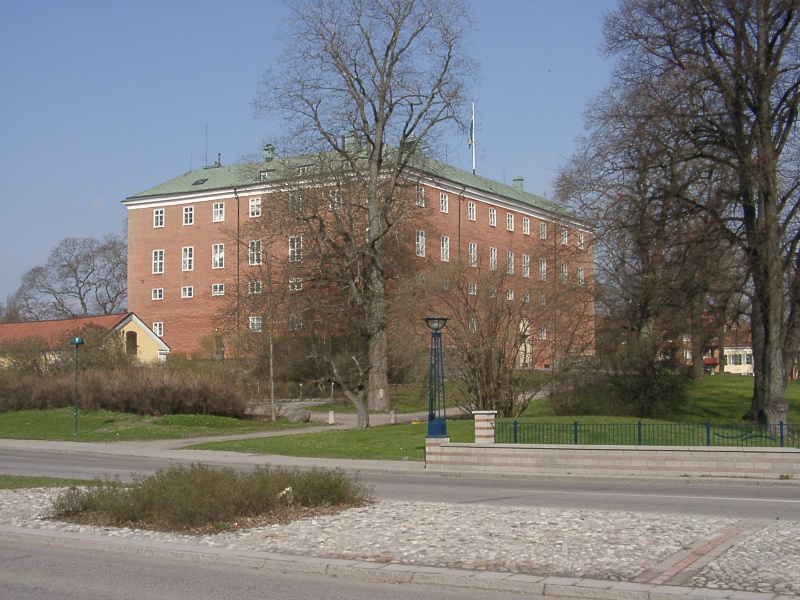
Västerås Castle, located in the city of Västerås within the province of Västmanland, Sweden, is a significant medieval fortress with a rich history spanning several centuries. Originally constructed in the 13th century as a hill castle, it has undergone numerous modifications reflecting the political and architectural developments of Sweden through the High Medieval period and beyond.
Early construction and medieval origins
The castle's origins trace back to the 13th century, a time when such fortifications were crucial for regional defense and administration. Built strategically on elevated ground, Västerås Castle was designed to oversee and protect the surrounding lands of Västmanland. The initial structure likely consisted of a fortified stone keep and defensive walls typical of high medieval hill castles in Scandinavia, providing both a military stronghold and a noble residence.
Renaissance transformations under gustav vasa
By the 16th century, the castle had suffered damage from various conflicts and was in a state of disrepair. When Gustav Vasa, the king who established Sweden’s independence from the Kalmar Union, took control of the castle, he initiated extensive renovations and expansions. These alterations, carried out primarily in the mid-1500s, transformed the medieval fortress into a more comfortable and functional residence while maintaining its defensive capabilities. The castle's architecture from this period reflects renaissance influences intertwined with its medieval origins.
The young man’s apartment and royal residence
In 1544, the government granted the castle's "Young Man’s Apartment" to Crown Prince Erik, the son of Gustav Vasa. This suite of rooms was designed to provide private quarters befitting a royal heir. The castle thus functioned not only as a military fortress but also as a royal residence, illustrating its dual role in Swedish history.
Imprisonment of erik xiv
Västerås Castle is notably remembered as the prison of King Erik XIV, the son of Gustav Vasa and Crown Prince Erik. Following his deposition, Erik XIV was confined in the castle from 14 June 1573 to 16 October 1574. He was held in what became known as the "dark prison", a harsh and isolated chamber within the castle walls. During his imprisonment, Erik was kept separated from his wife, Karin Månsdotter, and their child, emphasizing the severity of his captivity.
Shortly before his death, Erik XIV was transferred to Örbyhus Castle, where he allegedly died from poisoning, according to historical accounts involving poisoned pea soup. Despite his death elsewhere, his remains were returned to Västerås for burial in the Västerås Cathedral, cementing the castle’s connection to his legacy.
Architectural features and layout
The castle's layout reflects its evolution from a medieval fortress to a Renaissance residence. Key architectural features include robust stone walls, defensive battlements, and a central keep. The castle also contains multiple courtyards and chambers adapted over time for residential and administrative purposes. The "dark prison" remains a notable historical site within the castle, illustrating its use for royal incarceration.
Modern use and cultural significance
Today, Västerås Castle serves as the home of the Västmanland county museum, which includes the county archive, library, and administrative offices. The museum’s mission is to deepen public knowledge of the region’s cultural heritage, encourage interest in local history, and provide insights into the past that enrich contemporary perspectives. The castle’s preservation allows visitors to explore both its architectural heritage and its role in Swedish history.
Museum collections and public engagement
The museum hosts exhibitions related to the history and culture of Västmanland, including archaeological finds, historical artifacts, and documents. Educational programs and events are regularly held to engage the community and tourists, making the castle a vibrant cultural center.
Frequently asked questions (FAQ)
- How do I visit Västerås Castle?
- Västerås Castle is open to the public as it houses the Västmanland county museum. Visitors can explore the museum exhibitions and the castle grounds during regular opening hours, which are typically from morning to late afternoon. It is advisable to check the museum's official website for current visiting hours before planning your visit.
- What is the historical significance of Västerås Castle?
- Västerås Castle played a key role in Swedish history as a medieval fortress, royal residence, and prison. It was notably the prison of King Erik XIV and was significantly altered by Gustav Vasa in the 16th century. The castle reflects Sweden's political and architectural evolution from the Middle Ages to the Renaissance.
- Can I see the prison where King Erik XIV was held?
- Yes, the castle contains the "dark prison" where King Erik XIV was imprisoned from 1573 to 1574. This chamber is part of the historical exhibits and can be viewed by visitors interested in the castle's royal history.
- What architectural styles are represented in Västerås Castle?
- Västerås Castle features a combination of High Medieval defensive architecture and Renaissance modifications. The original medieval stone walls and keep coexist with Renaissance-era residential additions made during Gustav Vasa's renovations in the 16th century.
- Is Västerås Castle accessible for visitors with disabilities?
- The castle and museum strive to accommodate visitors with disabilities, but due to the historic nature of the building, some areas may have limited accessibility. It is recommended to contact the museum in advance to inquire about specific accessibility needs.

Information
Website
Visit websiteLoading map...
Visitor reviews
No reviews yet. Be the first to share your experience!