Volissos Castle
Volissos Castle stands as a significant historical fortress located on the Greek island of Chios, within the municipality of Amani. This hill castle commands a strategic vantage point, overseeing the surrounding landscape and serving as a military stronghold for centuries. Its origins are traditionally traced back to the early medieval period, with local tradition attributing its initial construction to the 6th century AD during the reign of Byzantine Emperor Justinian I. Although direct archaeological evidence from this earliest phase is scarce, the castle's location and historical mentions suggest its foundational role in the island's defensive network against invasions.
The castle's early historical significance is underscored by its mention in the 12th century by the Byzantine historian Anna Komnene in her work "Alexiad," indicating its established military importance by that time. The fortress served as a critical point in the Byzantine defensive system on Chios, protecting the northwestern approaches and contributing to the island's security during a period marked by frequent conflicts and incursions.
Historical evolution and strategic importance
Following the Byzantine era, Chios came under the control of the Genoese in the 14th century, a period that brought significant changes to Volissos Castle. The Genoese undertook extensive reconstruction and fortification efforts during the 15th and early 16th centuries to bolster the castle against the rising threat of the Ottoman Empire. These enhancements included strengthening the walls and towers, adapting the fortress to the evolving military technologies and tactics of the time.
The castle was integrated into a network of coastal watchtowers around Chios, linked by secret tunnels that allowed for rapid communication and early warning of naval threats. This system highlights the castle's role not only as a defensive bastion but also as a key component in the broader maritime security strategy of the Genoese administration.
During the subsequent Ottoman period, parts of Volissos Castle suffered damage and partial dismantling. Stones from the fortress were repurposed for other constructions, reflecting changes in military priorities and the diminished strategic necessity of the castle under Ottoman rule. Despite this, the castle retained its symbolic and historical significance as a landmark of the island's complex past.
Architectural features and layout
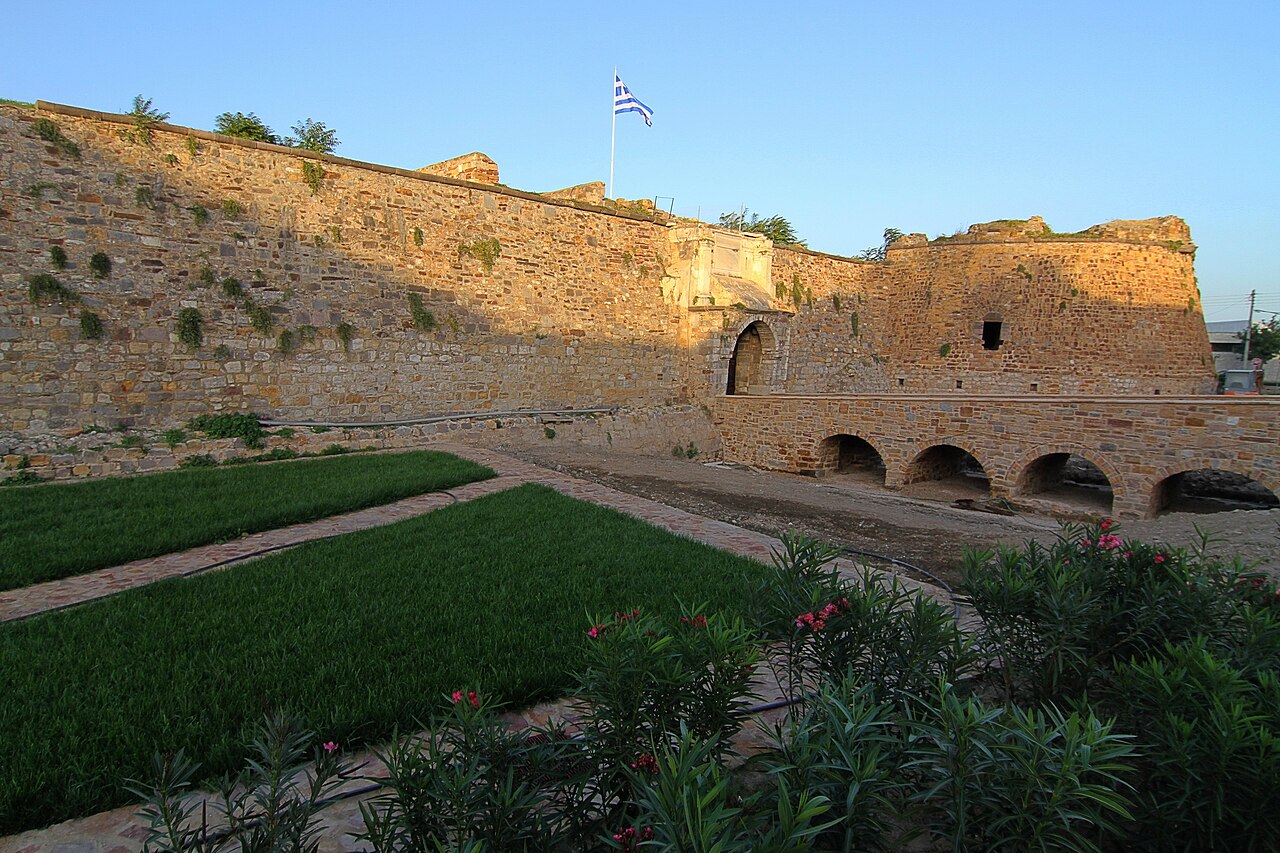
Volissos Castle occupies the summit of a hill, encompassing an area approximately 65 by 70 meters. Its five-sided polygonal shape is distinctive among medieval fortifications, designed to maximize defensive coverage and resilience against siege tactics. The walls are built from a dark, copper-rich local stone, which gives the fortress a heavy, somber appearance. Mortar and smaller stones fill the gaps between the larger blocks, ensuring structural stability.
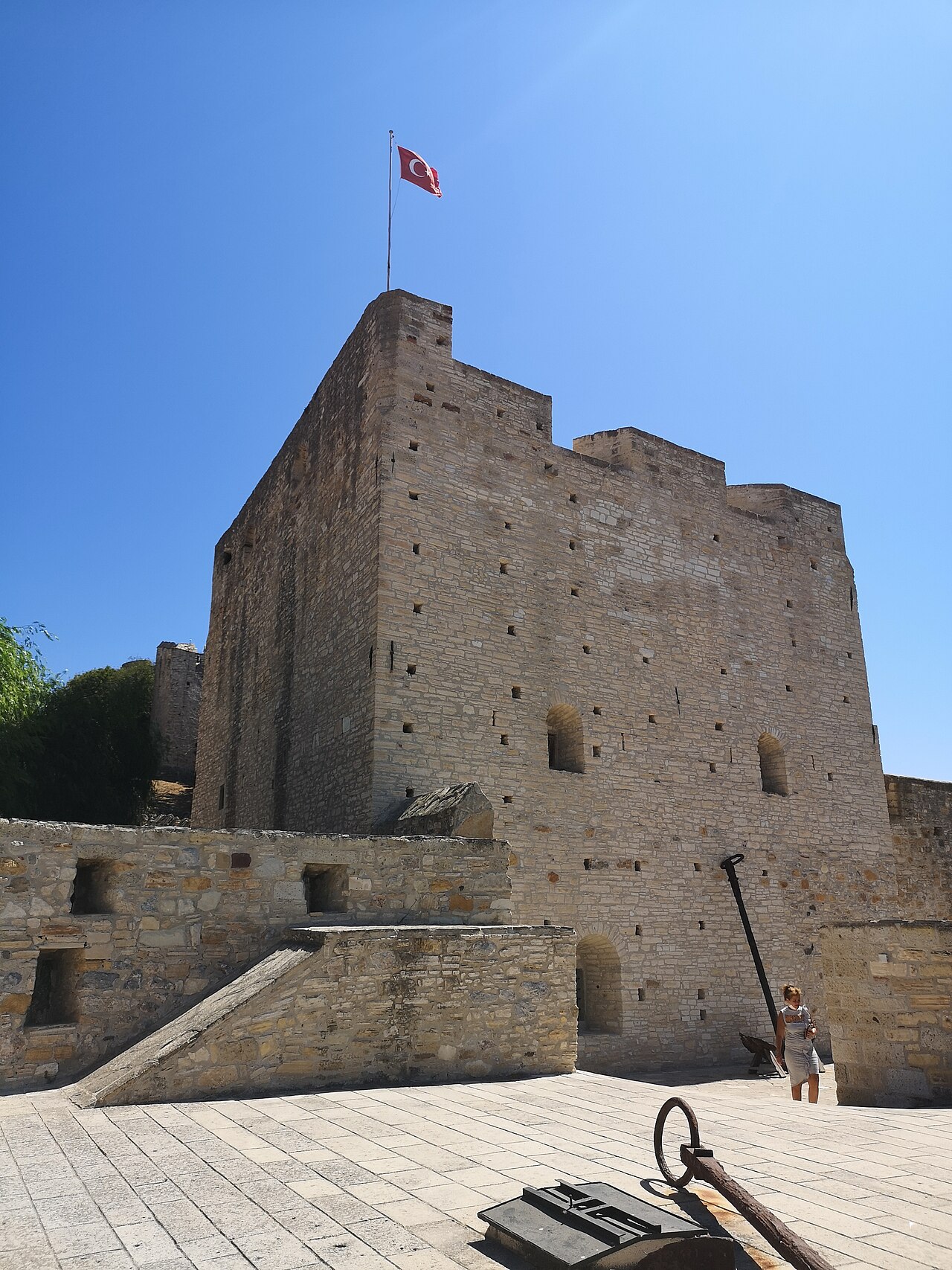
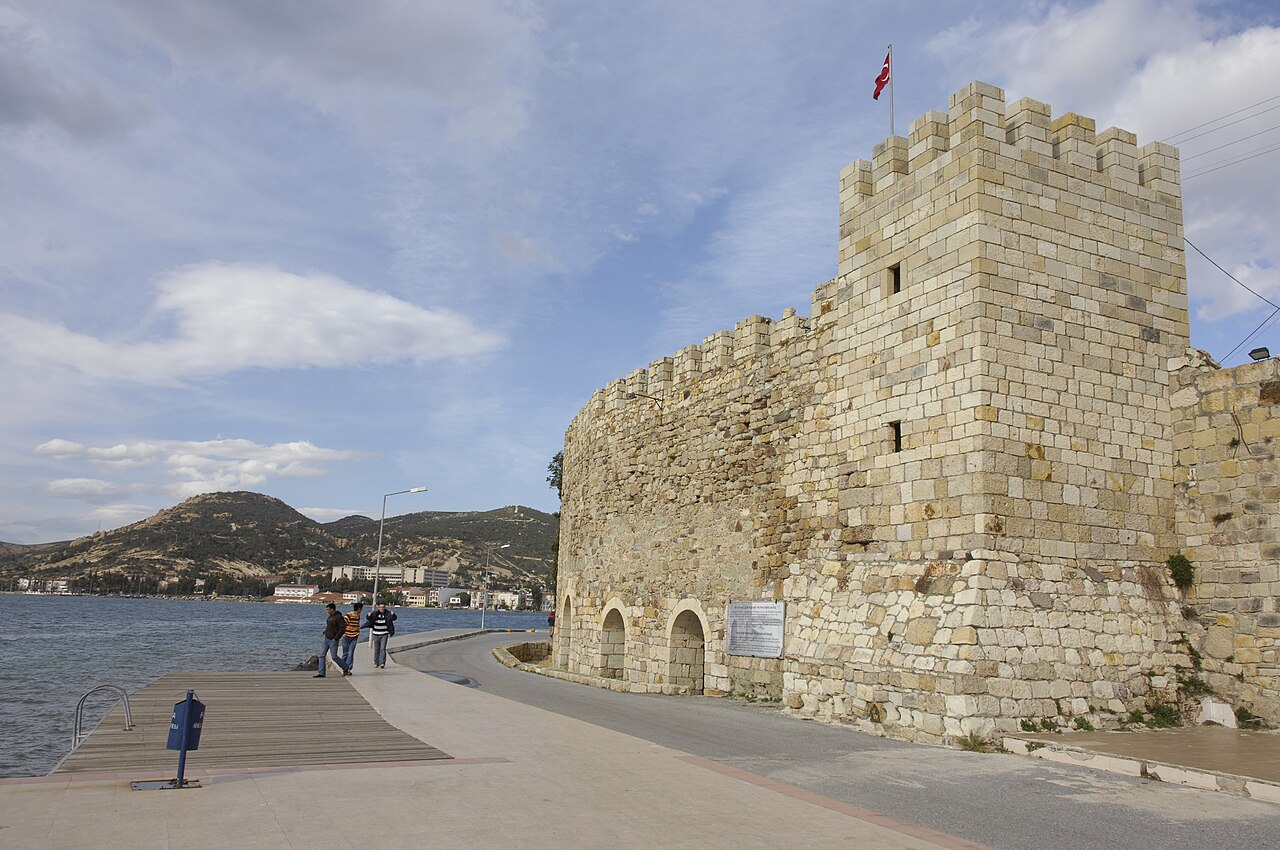
The perimeter is fortified by seven towers, including a unique horseshoe-shaped tower alongside several round towers. These towers originally rose between six and seven meters high, providing vantage points for surveillance and defense. Over time, some towers have partially collapsed or been modified, but the overall defensive layout remains evident.
The main entrance is located on the eastern side, featuring a gateway approximately three meters tall and just over one meter wide. Although now partially blocked by fallen debris, this entrance would have been a critical choke point in the castle's defense. Below the main walls, a secondary defensive structure known as a proteichisma was constructed, standing about one meter tall today. This additional wall served as an outer barrier, complicating direct assaults on the fortress.
Internal structures and facilities
Within the castle walls, essential military facilities were housed to support the garrison stationed there. These included cisterns for collecting and storing water, vital for withstanding sieges, as well as a prison and barracks for soldiers. The presence of these features underscores the castle's primary function as a military installation rather than a residential or administrative center.
The northern section of the castle has suffered significant ruin, likely due to both natural decay and human activity during the Ottoman period when stones were removed. However, the eastern and western parts retain substantial portions of their original structure, providing valuable insight into the castle's construction techniques and defensive design.
Cultural heritage and modern significance
Today, Volissos Castle is recognized as an important cultural and historical monument on Chios. Its layered history reflects the island's strategic importance in the Aegean Sea and the complex interplay of Byzantine, Genoese, and Ottoman influences. The castle's ruins attract visitors interested in medieval military architecture and the rich history of the region.
Preservation efforts focus on maintaining the remaining structures and promoting awareness of the castle's heritage. The castle's hilltop location offers panoramic views of the surrounding landscape, enhancing its appeal as a tourist destination and a symbol of Chios's enduring historical legacy.
Visiting information
Volissos Castle is accessible to visitors who wish to explore its ruins and appreciate its historical context. While the site is largely in a state of partial ruin, the visible defensive walls, towers, and internal features provide a tangible connection to the past. Visitors should prepare for uneven terrain and limited facilities on-site.
The best time to visit is during the spring and autumn months when the weather is mild. Guided tours may be available through local cultural organizations, offering detailed insights into the castle's history and architecture.
Frequently asked questions (FAQ)
- When was Volissos Castle originally built?
- Volissos Castle is traditionally believed to have been constructed in the 6th century AD during the reign of Byzantine Emperor Justinian I, although archaeological evidence mainly dates from later periods.
- What architectural features characterize Volissos Castle?
- The castle features a distinctive five-sided polygonal shape, seven towers including a unique horseshoe-shaped tower, thick defensive walls made from dark copper-rich stone, and a secondary outer wall called a proteichisma.
- How did the Genoese influence the castle's development?
- The Genoese controlled Chios from the 14th century and significantly rebuilt and fortified Volissos Castle in the 15th and early 16th centuries to strengthen defenses against Ottoman expansion.
- Is Volissos Castle accessible to visitors today?
- Yes, visitors can explore the ruins of Volissos Castle, though the site is partially preserved and may have uneven terrain. It is best visited during spring and autumn for comfortable weather.
- What remains can be seen at the castle site?
- Visitors can see the castle's polygonal walls, seven towers including the horseshoe-shaped tower, the main eastern entrance, a lower proteichisma wall, and internal features such as cisterns, a prison, and barracks.
Information
Website
Visit websiteSources & official resources
Verify the information above using these authoritative references.
Loading map...
Visitor reviews
No reviews yet. Been here? Write the first review and help other travelers!
Write the first reviewVisited this castle? Share your experience
Your review helps other travelers and adds first-hand knowledge to our encyclopedia.