
Vittskövle Castle
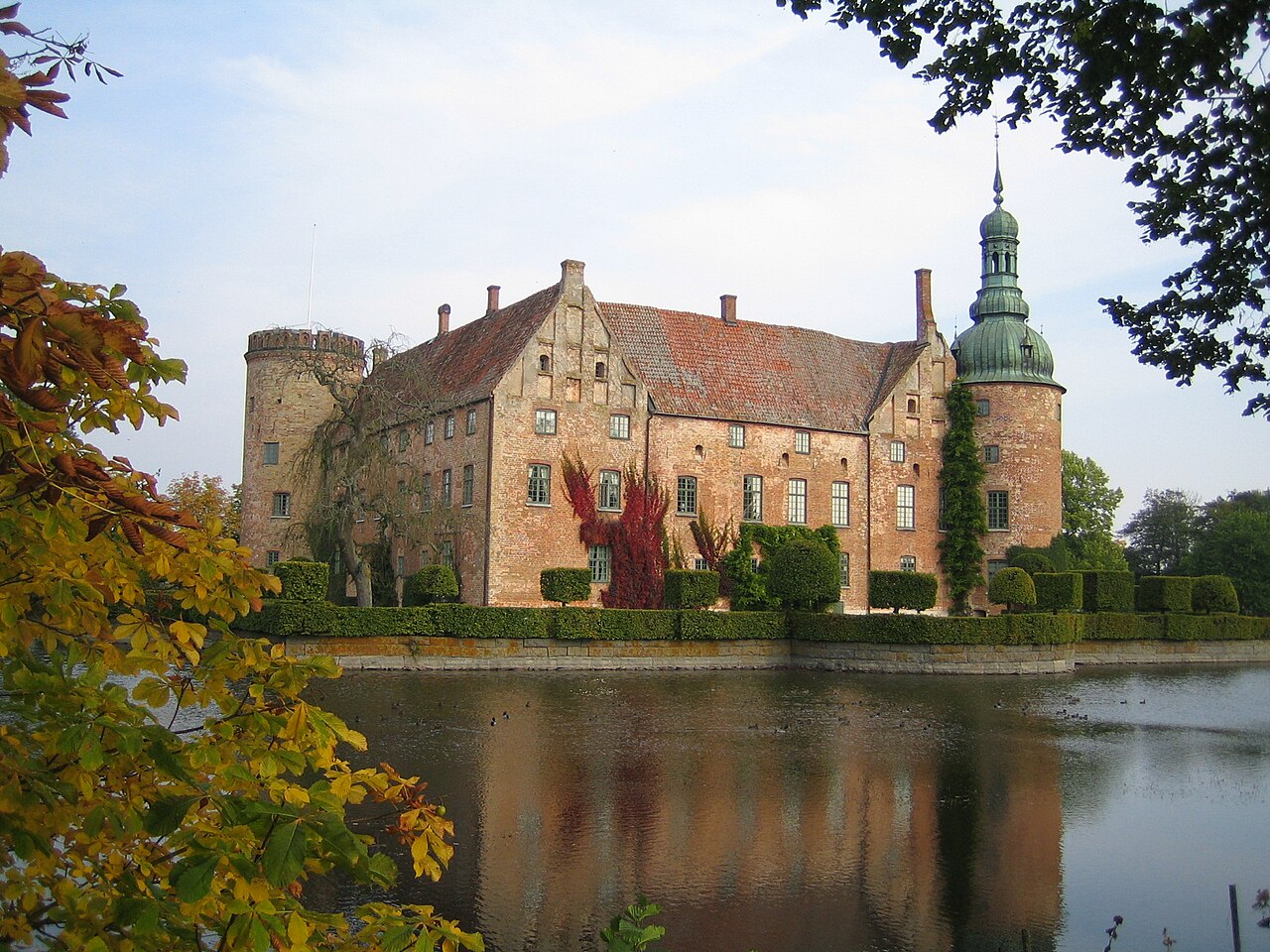
Vittskövle Castle, located in the municipality of Kristianstad in southern Sweden, stands as one of the best-preserved Renaissance castles in the Nordic countries. Built in 1553 by Jens Axelsson Brahe, this castle replaced earlier medieval structures and was designed as a defensive water castle on an island in marshland, supported by wooden piles. It is the largest castle in Skåne with approximately 100 rooms, showcasing the grandeur and military architecture of the 16th century Renaissance period.
Architectural design and defensive features
The castle's four-winged layout forms a nearly square fortress rising three stories high, surrounded by a moat that utilizes the natural marshy terrain for defense. The structure includes two strong square corner towers positioned diagonally to cover all flanking approaches, designed to withstand artillery attacks. The walls are notably thick and robust, built to resist cannon fire, highlighting the transition in military architecture during the Renaissance era when gunpowder weaponry became prominent.
One of the castle's most distinctive architectural features is the northwest tower, which was damaged by fire in the 18th century and later rebuilt with a romantic medieval spire that reflects the 18th-century romanticism movement and the era's fascination with medieval aesthetics. The castle also retains traces of shooting galleries on the upper floors, which were walkways along the roof eaves providing sheltered positions for defenders to fire upon attackers.
Historical context and ownership lineage
The estate's origins date back to medieval times when the region was under Danish rule. The earliest known settlement was called Egeside, located near Lake Yngsjön, held by the brothers Harald and Holger Egeside in the early 13th century. Through the centuries, the estate passed through prominent noble families, including the Krognos and Brahe families, and briefly to the Archbishop of Lund before returning to the Brahe family after the Reformation.
Jens Axelsson Brahe initiated the construction of the current Renaissance castle in the mid-16th century, completed by his son Henrik Brahe in 1577. Following Henrik's death, the estate passed to the Barnekow family through marriage, who maintained ownership even after the Treaty of Roskilde in 1658 transferred the region from Danish to Swedish control. The Barnekows were recognized by the Swedish House of Nobility and continued to strengthen the castle's defenses, notably in 1678 during ongoing regional conflicts.
Gardens, parklands, and later modifications
The castle is surrounded by extensive grounds that reflect evolving landscape design trends from the 18th and 19th centuries. In the late 1700s, Adolf Fredrik Barnekow, the family architect, designed formal gardens featuring pavilions, fish ponds, and a distinctive Turkish-style pavilion, exemplifying the period's interest in exotic architectural motifs. The gardens were admired by notable visitors such as the botanist Carl Linnaeus, who visited in 1749 and praised the cultivation of fruits like apricots, peaches, quince, and grapes.
In the 19th century, under the ownership of Rudolf Hodder Stjernswärd, the grounds were expanded to include an English landscape park with naturalistic features and several auxiliary buildings constructed in a medieval style. These buildings were inspired by the designs of Carl Georg Brunius, a cathedral architect from Lund and a medieval revival enthusiast. The castle interiors were also updated during this period, with painted ceilings and walls overseen by Christian Laurentius Gernandt, reflecting early 19th-century artistic trends.
Preservation and current status
Today, Vittskövle Castle remains remarkably well preserved, showcasing a blend of Renaissance military architecture, romantic medieval revival elements, and landscaped gardens that narrate its layered history. The castle continues to serve as a private residence for the Stjernswärd family, while the surrounding English park is open to the public, offering visitors a glimpse into the estate's historical grandeur and horticultural heritage.
Declared a heritage site in 1966, the castle stands as a significant cultural monument in southern Sweden. Its strategic location on an island with water defenses, combined with its architectural sophistication and rich history, make it a notable example of Nordic Renaissance castles.
Notable architectural details
- Wooden pile foundations supporting heavy masonry on marshy terrain
- Four-winged, tiled roof structure with three stories
- Diagonal corner towers designed for artillery defense
- Moat and water defenses integrated with natural landscape
- Shooting galleries on upper floors for defensive firing positions
- 18th-century romantic medieval spire on the rebuilt northwest tower
- Formal 18th-century gardens with exotic pavilions and fish ponds
- 19th-century English park and medieval-style auxiliary buildings
- Painted ceilings and walls from early 19th century interiors
Historical significance
The castle’s history reflects the complex political and cultural shifts in southern Scandinavia, from Danish medieval rule through the Renaissance and into Swedish sovereignty after 1658. Its architectural evolution mirrors advancements in military technology and changing tastes, from functional Renaissance fortifications to romanticized medieval revival and landscaped park aesthetics.
Vittskövle Castle’s continuous private ownership and preservation have allowed it to retain much of its original character, making it an invaluable resource for understanding Nordic Renaissance castles and noble estates.
Frequently asked questions (FAQ)
- What is Vittskövle Castle known for?
- Vittskövle Castle is renowned for its stunning architecture and rich history, dating back to the 16th century. It showcases a blend of Renaissance and Baroque styles, making it a remarkable example of Swedish castle design. The castle is also significant for its historical connections to Swedish nobility and its well-preserved interiors.
- When was Vittskövle Castle built?
- Vittskövle Castle was constructed in the early 16th century, with its foundation laid around 1540. Over the centuries, it has undergone various renovations and expansions, which have contributed to its unique architectural features. The castle's long history makes it an important landmark in Swedish heritage.
- Can I visit Vittskövle Castle?
- Yes, Vittskövle Castle is open to visitors, allowing you to explore its beautiful grounds and historical interiors. Guided tours are often available, providing insights into the castle's history and architecture. Be sure to check the castle's official website for information on tour availability and special events.
- What are the opening hours for Vittskövle Castle?
- The opening hours for Vittskövle Castle may vary depending on the season and special events. Typically, it is open to visitors from late spring through early autumn, with guided tours available on weekends and holidays. It's advisable to check the castle's official website for the most current opening hours before planning your visit.
- Is it possible to hold events at Vittskövle Castle?
- Yes, Vittskövle Castle offers facilities for hosting various events, including weddings, corporate gatherings, and private parties. The picturesque setting and historic ambiance make it a unique venue for special occasions. Interested parties should contact the castle administration for details on booking and available services.
- What is the best time to visit Vittskövle Castle?
- The best time to visit Vittskövle Castle is during the late spring and summer months when the weather is pleasant and the gardens are in full bloom. This period typically offers the most guided tours and events. Additionally, the castle often hosts special activities and exhibitions during these months, enhancing the visitor experience.
- Are there any nearby attractions to visit?
- Yes, there are several nearby attractions to explore while visiting Vittskövle Castle. The surrounding area features beautiful parks, historical sites, and charming villages that showcase Swedish culture. Visitors can also enjoy outdoor activities such as hiking and cycling in the scenic landscapes of southern Sweden.
- What are the ticket prices for visiting Vittskövle Castle?
- Ticket prices for Vittskövle Castle may vary depending on the type of tour and age of the visitor. Generally, there are discounted rates for children, students, and seniors. For the most accurate and up-to-date pricing information, it is recommended to check the castle's official website before planning your visit.
- How do I get to Vittskövle Castle?
- Vittskövle Castle is easily accessible by car and is located just a short drive from the nearest major city, Kristianstad. Public transportation options, including buses and trains, are also available, making it convenient for visitors. Detailed directions can be found on the castle's official website to assist with your travel planning.

Information
Loading map...
Visitor reviews
No reviews yet. Be the first to share your experience!