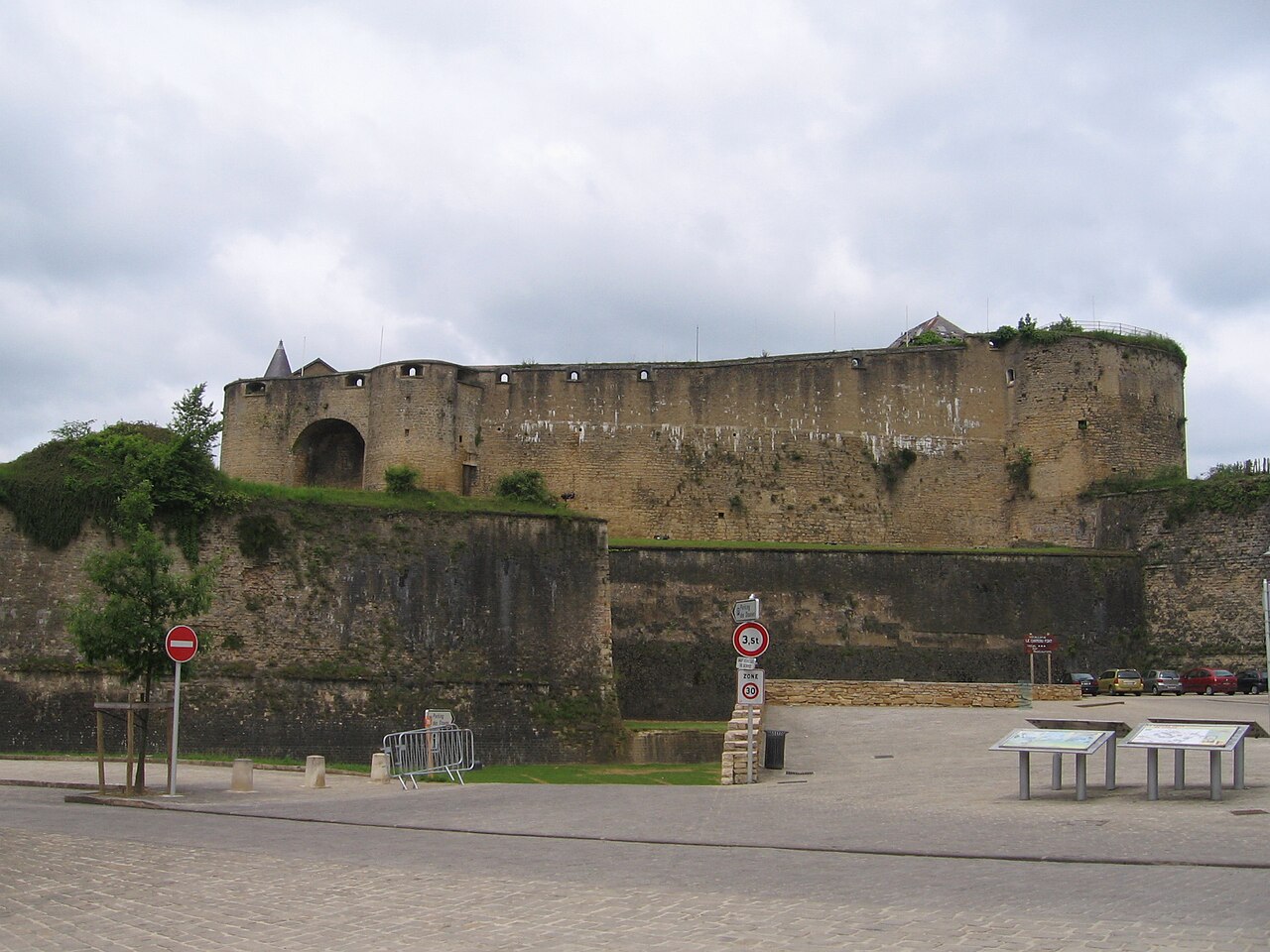
Villette Castle

Villette castle in glaire, france
Glaire, France
Renaissance (15th–17th c.)
Restored

Villette Castle, also known as Château de Villette, is located west of the city of Sedan in the Ardennes department of France. This castle has a layered history marked by destruction, rebuilding, and architectural evolution spanning several centuries.

Medieval origins and destruction in the 16th century

The site originally hosted a medieval castle owned by the Warigny-d'Aguisy family. This early fortress was likely destroyed in 1552 when the troops of Maarten van Rossum, a Dutch field marshal serving Charles V, Holy Roman Emperor, ransacked the town of Villette. This event was part of the broader conflicts in the region during the 16th century, which saw many fortifications damaged or destroyed.

17th-century rebuilding and cardinal mazarin's stay

Following its destruction, the castle was rebuilt over the subsequent decades, culminating in a significant reconstruction during the 17th century. The castle's architecture from this period reflects Renaissance influences typical of French noble residences of the time. Notably, Cardinal Mazarin, a key political figure in France, is recorded to have stayed at Villette Castle briefly during the Fronde of the Princes (1650-1653), a series of civil wars challenging royal authority.

18th-century modifications and revolutionary refuge

In the 18th century, Villette Castle was acquired by Jean-François Maucomble, Lord of Glaire, who undertook further rebuilding efforts that shaped much of the castle's present appearance. During the turbulent years of the French Revolution, the Maucomble family discreetly sheltered Bishop Nicolas Philbert of Sedan within the castle. The bishop remained there until his death in 1797, highlighting the castle's role as a place of refuge during revolutionary upheavals.

19th-century ownership and architectural changes

The 19th century saw the castle come under the ownership of the Kistemann family, wool merchants from Sedan. They made further modifications to the structure, adapting it to the needs and styles of the period. These changes contributed to the castle's evolving architectural character, blending its Renaissance origins with later stylistic elements.

20th-century decline and restoration

After the Second World War, Villette Castle experienced a period of vacancy and neglect. However, it was subsequently restored, preserving its historical and architectural significance. Today, Villette Castle serves as a private residence and has been made available as a holiday apartment, allowing visitors to experience its historic ambiance firsthand.

Architectural features and surrounding landmarks

Villette Castle exhibits characteristics typical of Renaissance castle architecture in France, including symmetrical layouts, classical details, and possibly defensive elements adapted for residential use. While specific architectural details are less documented, the castle's successive rebuildings reflect changing tastes and functions over time.

The castle is situated near other notable sites such as the castles of Bellevue and Sedan, as well as the Old Subprefecture, making it part of a rich historical landscape in the Ardennes region.

Visiting villette castle today

Currently, Villette Castle is private property, and access may be limited. It appears maintained as a private residence, but it has also been listed as a holiday rental, offering a unique opportunity to stay in a historic castle setting. Visitors interested in the region's history can explore nearby castles and landmarks to complement their visit.

Frequently asked questions (FAQ)

How do I get to Villette Castle?
Villette Castle is located in Glaire, France, and can be accessed by car or public transport. The nearest train station is a short distance away, and local buses also provide service to the area. Make sure to check the latest schedules for a smooth journey.
What is the historical significance of Villette Castle?
Villette Castle dates back to the 17th century and is an excellent example of French Renaissance architecture. It has served various purposes throughout history, including as a noble residence and a military stronghold. Its rich history adds to the cultural heritage of the region.
When was Villette Castle built?
Construction of Villette Castle began in the early 1600s and was completed in 1684. Over the years, it has undergone several renovations, which have preserved its architectural integrity and historical charm. Visitors can appreciate the layers of history reflected in the castle’s structure.
Can I take guided tours of Villette Castle?
Yes, guided tours are available for visitors who wish to explore the castle’s rich history and architectural features. These tours typically include access to the main rooms and gardens, providing a comprehensive overview of the site. Advanced booking is recommended during peak tourist seasons.
Why is Villette Castle considered an architectural gem?
Villette Castle is renowned for its stunning Renaissance architecture, characterized by intricate stonework and elegant symmetry. The castle’s design reflects the artistic movements of its time, making it a significant example of French heritage. Its beautifully landscaped gardens also enhance its architectural appeal.
Is it possible to host events at Villette Castle?
Yes, Villette Castle offers facilities for hosting private events, including weddings and corporate gatherings. The picturesque setting and historical ambiance make it a unique venue. Interested parties should contact the castle management for more details on availability and services.
What are the opening hours of Villette Castle?
Villette Castle is typically open to visitors from Tuesday to Sunday, with varying hours depending on the season. It is advisable to check the official website for the most current opening hours before planning your visit. Special events may also affect regular hours.
What are the ticket prices for Villette Castle?
Ticket prices for Villette Castle vary based on age and group size, with discounts often available for students and seniors. Children under a certain age may enter for free. Visitors should check the castle’s official website for up-to-date pricing and any special promotions.
When is the best time to visit Villette Castle?
The best time to visit Villette Castle is during the spring and early autumn when the weather is pleasant, and the gardens are in full bloom. These seasons also tend to be less crowded, allowing for a more enjoyable experience. Special events may occur during summer, which can also be a great time to visit.
Are there nearby attractions to visit after touring Villette Castle?
Yes, there are several attractions near Villette Castle, including local museums and beautiful parks. The surrounding area offers hiking trails and charming villages that showcase the region's heritage. Visitors can easily spend a full day exploring the history and natural beauty of Glaire.

Information

Lowland Castle

Loading map...

Visitor reviews

No reviews yet. Been here? Write the first review and help other travelers!

Write the first review

Visited this castle? Share your experience

Your review helps other travelers and adds first-hand knowledge to our encyclopedia.

Write a review

(5/5)

0/2000 characters

Your review will be visible after admin approval

Nearby castles

1.5 km

Bellevue Castle

Glaire, France

Bellevue Castle, known locally as Château de Bellevue, is situated on a commanding hilltop in Glaire, just west of the historic city of Sedan in the Ardennes department of France. This château offers panoramic views eastward over Sedan and westward across the Meuse River, emphasizing its strategic and scenic location. Architectural characteristics and layout The castle exhibits a rectangular plan, a common design for many 18th and 19th-century French country houses, blending residential comfort with defensive features. At its opposite ends stand square towers, each complemented by attached round turrets. These towers are believed to predate the central section of the château, suggesting phases of construction or later expansions. The presence of such towers hints at a transitional architectural style, merging elements of older fortifications with more modern residential design. The château's overall architectural style aligns with the Modern period of construction, likely dating from the 18th or 19th century. Its design, while not heavily fortified, retains features reminiscent of earlier defensive structures, such as the towers and turrets, which were more symbolic by this era than functional military elements. Historical significance Bellevue Castle is historically notable as the site where French Emperor Napoleon III surrendered to William I, German Emperor, during the Franco-Prussian War in 1870. Following the decisive Battle of Sedan, Napoleon III was first received at Bellevue by Otto von Bismarck, the influential German Chancellor and general. It was here that Napoleon was compelled to sign his capitulation papers before William I's arrival. Later that day, William I arrived at Bellevue Castle, where Napoleon formally handed over his sword, marking a pivotal moment in European history. This event symbolized the end of the Second French Empire and the rise of the German Empire, reshaping the political landscape of the continent. Current status and accessibility The château remains private property. While at times it has appeared closed and disused, it is known to be available as a holiday apartment, allowing visitors to experience its historic ambiance firsthand. Its preservation status is not fully documented, but it appears to be maintained sufficiently to accommodate guests. Nearby historic sites include the castles of Villette and Sedan, as well as the Old Subprefecture, offering visitors a rich cultural itinerary within the Ardennes region. Location and surroundings Located in the Ardennes, a region known for its dense forests and rolling hills, Bellevue Castle benefits from a picturesque setting. The proximity to the Meuse River adds to its scenic value and historically strategic importance. The city of Sedan itself is renowned for its own massive fortress, one of the largest medieval fortifications in Europe, which complements the historical context of Bellevue. Architectural and historical context The château reflects the evolution of French aristocratic residences transitioning from fortified medieval castles to more comfortable and stylistically refined homes during the Modern period. The retention of the square towers with round turrets indicates a respect for tradition and a desire to maintain a noble appearance despite the reduced military function. Though the exact architect or original builder of Bellevue Castle remains unknown, its design and historical associations place it firmly within the narrative of 18th and 19th-century French country estates that witnessed significant historical events.

Modern (19th–20th c.)
Details
3.2 km

Old Subprefecture

Sedan, France

The Old Subprefecture of Sedan, locally known as Ancienne Sous-Prefecture de Sedan, is a significant historic building located in the city of Sedan, within the Ardennes department of France. This structure represents a fascinating blend of architectural styles and historical functions, situated near the river Meuse and surrounded by a walled garden, reflecting its importance in the region's administrative and military history. Architectural design and construction Construction of the Old Subprefecture began in 1865 under the direction of the architect Auguste Reimbeau and was completed in 1868 by Jean-Baptiste Couty. The building showcases a unique mix of Louis XIII, Renaissance, and Louis XIV architectural styles, combining elements from these distinct periods to create an elegant yet functional administrative edifice. The rectangular main building is complemented by an auxiliary structure located in the southwest corner of the property, adjacent to the river Meuse, enhancing the site's strategic and aesthetic appeal. Historical significance and uses Upon completion, the Old Subprefecture served as the headquarters for the General Staff of the armed forces, emphasizing its strategic military role during a turbulent period in French history. It also briefly housed Napoléon, the Prince Imperial, son of Emperor Napoleon III, underscoring its importance as a residence for prominent figures. Notably, Emperor Napoleon III himself stayed at the building for three nights in 1870 during the Battle of Sedan, a decisive conflict in the Franco-Prussian War. Following this, the emperor moved to nearby Bellevue Castle to surrender to German Emperor William I. Subsequently, the building functioned as the residence for the local subprefects, continuing its administrative role well into the modern era. Despite its historical prominence, the Old Subprefecture eventually fell into disuse and became overgrown, with access currently restricted. However, its striking ruins have attracted urban explorers and photography enthusiasts, who have documented its evocative interior spaces. Current condition and surroundings Today, the Old Subprefecture stands as a gloomy ruin, its once-grand interiors and gardens largely reclaimed by nature. The building and its domain are not open to the public, preserving its mysterious and melancholic atmosphere. It remains an important cultural landmark in Sedan, located near other significant historic sites such as the Castle of Sedan, Bellevue Castle, and Villette Castle. Nearby castle of Sedan: a medieval fortress The nearby Castle of Sedan is one of Europe's largest feudal fortresses, dominating the city with its imposing presence. Its origins date back to around 1424, when Eberhard II von der Mark constructed a manor house with twin towers. The fortress was expanded and fortified over the centuries, notably by Robert II de la Marck, who completed significant works during the late medieval period. Fortifications and military architecture In the early 16th century, the castle's defenses were modernized with thickened curtain walls and a circular terrace designed for cannon placement. The following century saw the addition of bastions, although some were lost by the late 19th century. This evolution reflects the castle's adaptation to changing military technologies and strategic needs. Historical events and heritage The castle was the birthplace of the renowned military leader Turenne in 1611, who later became a Marshal of France. It also played a pivotal role during the Franco-Prussian War, when it was besieged by the Prussian army in 1870. The subsequent surrender of Emperor Napoleon III marked a turning point in French history. Present-day status Following extensive restorations in the 20th century, the Castle of Sedan now serves as a major tourist attraction in the Ardennes. It houses the city's tourism office and a 3-star hotel, blending historical preservation with modern hospitality.

Post-Renaissance (17th–18th c.)
Details
3.8 km
Sedan Castle — France castle

Sedan Castle

Sedan, France

Sedan Castle, also known as Château Fort de Sedan, stands prominently in the city of Sedan in the Ardennes department of France. It is renowned as one of the largest fortified castles in Europe, covering an impressive area of approximately 35,000 square meters across seven floors. This monumental fortress has played a crucial role in European military history from the 15th century through modern times, reflecting the evolution of fortification architecture and the turbulent political landscape of the region. The origins of Sedan Castle date back to a small Benedictine priory established in the 9th century. However, the castle as it is known today began to take shape around 1424 when Évrard III de La Marck (also known as Eberhard II von der Mark) constructed a moated manor encompassing the priory church, which was repurposed as the castle chapel. This initial construction included a substantial triangular layout featuring a large round corner tower and a distinctive twin-towered gatehouse, setting the foundation for a fortress that would be expanded and fortified over the next two centuries. Medieval origins and early expansions Following Évrard III's death in 1440, his son Jean de La Marck undertook significant strengthening and enlargement of the castle between 1440 and 1470. His efforts were continued by his descendants, notably Robert I and his son Robert II de La Marck, who completed major fortification works before his death in 1536. These developments included thickening the curtain walls and adding artillery terraces, reflecting the growing importance of gunpowder weaponry in castle defense. Fortification advancements in the 16th century The 16th century marked a transformative period for Sedan Castle under the stewardship of Robert IV de La Marck, who converted it into a formidable fortress. He added four large bastions equipped with gun terraces, and some walls reached a staggering thickness of about 27 meters, designed to withstand artillery bombardment. This extensive modernization coincided with the rise of the De La Marck family, who elevated their fief into an independent principality by 1560, further enhancing the castle's strategic and political significance. The castle as a princely seat and military stronghold The principality's prominence continued with the marriage of Charlotte de La Marck to Henri de La Tour d'Auvergne in 1591. After Charlotte's untimely death, Henri became the sole ruler and owner of Sedan Castle. Their son, also named Henri de La Tour d'Auvergne and born in 1611 within the castle walls, would become the famed Marshal Turenne, one of France's greatest military commanders. In 1642, the Principality of Sedan was absorbed into the Kingdom of France during the Thirty Years' War. The castle then served as the seat of the Governor of Sedan, Abraham de Fabert, and was converted into barracks for a military garrison. The renowned military engineer Vauban contributed to the castle's defenses by constructing the door of the Princes in 1699, adapting the fortress to the evolving artillery technology of the time. 19th-century modifications and military history In the 19th century, the castle underwent significant changes. The original priory church of Saint-Martin, located in the heart of the castle, was demolished in 1822 to make way for a cannonball storage facility. Additionally, the medieval twin-towered gatehouse was altered in 1828 to accommodate an artillery platform, reflecting the castle's continued military use. Napoleon Bonaparte visited Sedan Castle in 1803, underscoring its ongoing strategic importance. Later, during the Franco-Prussian War in 1870, Sedan Castle was central to the Battle of Sedan. The French Emperor Napoleon III was besieged within the fortress and ultimately surrendered to the Prussian and Saxon forces, marking a pivotal moment in European history. The largest bastion of the castle was dynamited in 1873 during military tests and has remained a ruin since. 20th-century conflicts and modern use During World War I, the German army occupied Sedan Castle, using it as a labor camp for captured French and Belgian resistance fighters. The castle also witnessed conflict during World War II, notably in the 1940 Battle of Sedan, when German forces again asserted control over the region. In 1962, the French Army transferred ownership of the castle to the city of Sedan. Today, Sedan Castle functions as a museum, hotel, and restaurant, welcoming visitors eager to explore its rich history and extensive fortifications. The castle complex offers insights into the lives of its inhabitants over centuries and the military events that shaped its legacy. Architectural features and layout The castle's layout is characterized by its massive moated walls, large bastions, and a complex system of defensive terraces designed to accommodate artillery. The original triangular plan expanded over time to include a circular boulevard with terraces for cannons. The thick curtain walls, some augmented to over 27 meters, exemplify the transition from medieval to early modern fortress design. The castle's interior once included the priory church, which served as the chapel, but was replaced by military facilities in the 19th century. The surviving structures include the imposing twin-towered gatehouse (although modified), the round corner tower, and various bastions, some partially ruined due to later demolitions. Cultural significance and heritage status Sedan Castle has been classified as a historical monument since January 4, 1951, recognizing its outstanding cultural and architectural value. Its strategic location on a promontory overlooking the Meuse River and flanked by the Bièvre and Vra streams contributed to its defensive strength and historical importance. The castle is part of a broader heritage landscape that includes nearby sites such as the Old Subprefecture, Bellevue Castle, and Villette Castle, offering visitors a comprehensive experience of the region's history. Visiting information and tourism Today, visitors to Sedan Castle can explore its extensive fortifications, museum exhibits detailing its history, and enjoy accommodations in its hotel and dining at the on-site restaurant. The castle is open for tours, with ticket prices and opening hours typically available through the official visitor center or local tourism offices. Its rich history, impressive scale, and well-preserved features make it a highly recommended destination for enthusiasts of medieval and military architecture.

High Medieval (11th–13th c.)
Details