
Vardøhus Fortress
Vardøhus Fortress stands as one of the northernmost and oldest fortifications in Norway, located in the town of Vardø on the island of Vardøya, near the mouth of the Varangerfjord on the Barents Sea. Established in 1306 under the reign of Haakon V Magnusson, it has played a crucial role in Norway's defense and border control, particularly given its proximity to the Russian border. The fortress is an example of a bastioned fortress, reflecting military architectural developments from the late medieval period onward.
Early history and strategic importance
The origins of Vardøhus Fortress trace back to the early 14th century when the Kingdom of Norway sought to assert control over its northern territories and secure its borders against neighboring powers such as the Republic of Novgorod. In 1251, a diplomatic exchange occurred between Novgorod and King Haakon IV Haakonson of Norway to resolve conflicts involving the Karelians in northern Finnmark. This diplomatic activity underscored the region's strategic importance and the need for a permanent military presence.
The first fortification, known as Varghøya, was constructed in 1306. Although details about its exact structure and duration of manning remain scarce, records indicate that by 1307 the Archbishop of Trondhjem consecrated a new church at Vardø, suggesting an established settlement alongside the fortification. The earliest extant document defining the border between Norway and Russia dates from 1326, emphasizing the fortress's role in territorial demarcation.
Development and architectural evolution
Between the 15th and 16th centuries, a second fortification was constructed in the nearby Østervågen (East Bay) area. This structure was rectangular with two corner bastions, reflecting the evolving military architectural style that emphasized bastions for improved defense against artillery. The fortress is documented on various maps from the 14th and 15th centuries, highlighting its ongoing significance.
Ownership and economic aspects were intertwined with the fortress's operation; for example, the Captain of Vardøhus held shares in local fisheries, linking military and economic control in the region. By the 18th century, the original fortifications had deteriorated significantly. In the 1730s, the seat of government for Finnmark was moved from Vardøhus to Altengaard, reflecting shifts in administrative priorities.
Major reconstruction and upgrades began in 1738, transforming Vardøhus into a modern bastioned fortress designed to withstand contemporary military threats. The fortress's layout was adapted to incorporate bastions, curtain walls, and artillery placements suitable for the period's warfare.
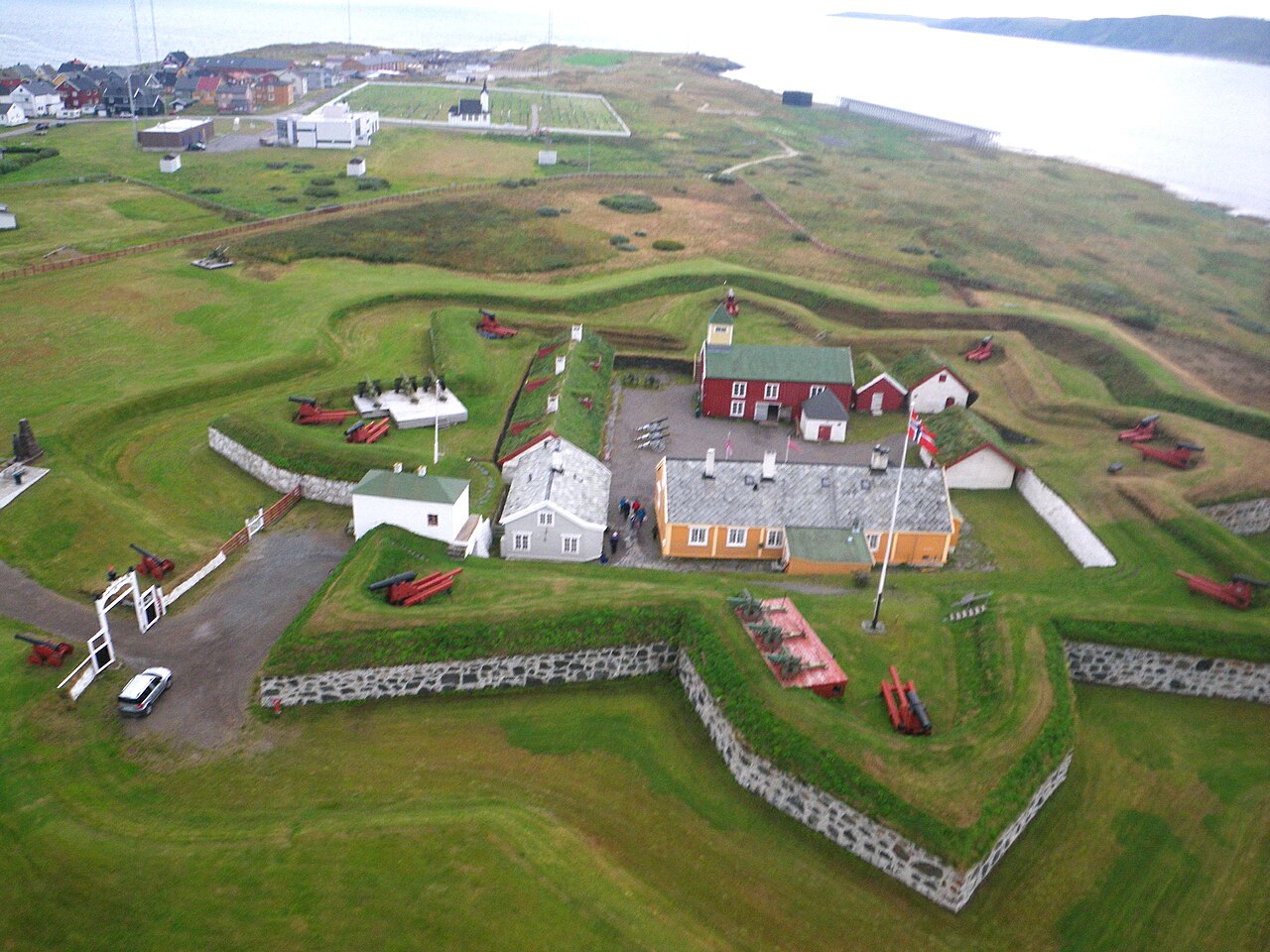
Photo by Timo Noko • CC BY-SA 2.0
Military role and historical significance
Despite its long history, Vardøhus Fortress did not witness direct enemy action until the 20th century. During the First World War, it served as an active anti-invasion post. In the period leading up to and during the Second World War, Vardøhus was under the command of Naval District no. 3 in Tromsø, maintaining a military presence in the far north of Norway.
Following the war, from 1945 to 1947, the fortress was demilitarized and repurposed as a prison for those convicted of treason during the post-war legal purge. In 1947, it was reinstated as a fortress with a small garrison under the Royal Norwegian Navy. Today, the fortress is manned by a commander and a few soldiers, serving primarily ceremonial and symbolic roles.
Unique traditions and cultural role
Vardøhus Fortress is notable for its ceremonial functions, particularly the firing of gun salutes on significant national occasions such as Norwegian Constitution Day (17 May) and Dissolution of the Union with Sweden Day (7 June). A unique local tradition involves firing a two-round salute on the day the sun reappears after the polar night, signaling the return of daylight to the region. This salute is a celebrated event for the community, especially for schoolchildren who receive a day off in honor of the sun's return.
Architectural features and preservation
The fortress exemplifies the bastioned fortress style, characterized by angular bastions designed to cover each other with defensive fire, thick curtain walls, and strategic placement on the island to maximize control over the surrounding sea approaches. Its position on Vardøya island provides a commanding view of the Barents Sea and the Varangerfjord, crucial for monitoring naval activity and securing the northern border.
Today, Vardøhus Fortress is well preserved, with many original structures and bastions maintained or restored. It remains under the ownership and command of the Royal Norwegian Navy, reflecting its continued symbolic importance to Norway's military heritage and northern sovereignty.
Visiting vardøhus fortress
Visitors to Vardøhus can explore its historic bastions, walls, and the surrounding landscape that shaped its military role. The fortress offers insights into centuries of northern Norwegian defense strategies and border politics. While it no longer serves as an active military installation, it is accessible for tours during select times, allowing visitors to appreciate its architecture and history firsthand.
Frequently asked questions (FAQ)
- What is the historical significance of Vardøhus Fortress?
- Vardøhus Fortress is one of the oldest stone fortifications in Norway, built in the 14th century to protect the region from invasions. It played a crucial role in Norway's defense strategy during the Kalmar Union and the various wars with Sweden and Russia. The fortress is also a symbol of the town's rich maritime history and its role in the fishing industry.
- When was Vardøhus Fortress built?
- Construction of Vardøhus Fortress began in 1307, and it was completed in the early 14th century. Over the centuries, it has undergone various renovations and expansions, reflecting changes in military architecture and strategy. Today, it stands as a well-preserved example of fortification design from the medieval period.
- Can I visit Vardøhus Fortress?
- Yes, Vardøhus Fortress is open to visitors year-round, allowing you to explore its historic grounds and enjoy stunning views of the surrounding area. Guided tours are available to provide deeper insights into the fortress’s history and architecture. Be sure to check the local guidelines for any seasonal hours or restrictions.
- What are the opening hours for Vardøhus Fortress?
- The fortress typically opens at 10 AM and closes at 6 PM during the summer season, while winter hours may vary. It is advisable to check the official website for the most current opening hours, especially during holidays or special events. This ensures you have the best experience during your visit.
- Is it possible to access Vardøhus Fortress with mobility aids?
- Yes, Vardøhus Fortress is accessible for visitors with mobility aids, though some areas may have uneven surfaces due to the historical nature of the site. There are pathways that facilitate access to key areas of the fortress. It is recommended to contact the visitor center for specific accessibility details before your visit.
- What is the best time to visit Vardøhus Fortress?
- The best time to visit Vardøhus Fortress is during the summer months, from June to August, when the weather is mild and the days are longest. This allows visitors to fully enjoy the outdoor areas and guided tours. However, autumn also offers beautiful scenery with colorful foliage, making it a lovely alternative time to visit.
- Are there any nearby attractions to visit?
- Yes, nearby attractions include the Vardø Museum, which showcases the town's history and culture, and the iconic Vardø Lighthouse. The region is also famous for its unique coastal landscape and opportunities for birdwatching. Exploring the charming town of Vardø itself is a delightful experience with its quaint streets and local shops.
- What are the ticket prices for Vardøhus Fortress?
- Ticket prices for Vardøhus Fortress are generally affordable, with discounts available for children, students, and seniors. Family packages are also offered to make it more economical for larger groups. For the latest pricing and any available promotions, it's best to check the official website before your visit.
Photo gallery

Information
Loading map...
Visitor reviews
No reviews yet. Be the first to share your experience!