
Szydłów
Szydłów castle stands as a remarkable example of a late medieval bastioned fortress in central Poland, embodying centuries of military architecture and regional history. Located in the historic town of Szydłów, this castle is part of one of the few Polish towns retaining a well-preserved medieval urban layout with its defensive walls intact, offering a unique glimpse into the defensive strategies and urban planning of the period.
The earliest records of Szydłów date back to 1191, when it was a royal village obliged to pay tithes to the collegiate church in Sandomierz. Over time, this village evolved into a thriving trade settlement. Notably, the presence of Prince Bolesław the Chaste in Szydłów suggests the existence of a princely court, possibly located on the hill crowned by the Church of All Saints. The town was officially founded under Magdeburg law in 1329 by King Władysław Łokietek, who also incorporated Szydłów and surrounding villages into a non-fortified starosty.
Fortifications and castle construction under kazimierz wielki
The extensive fortification campaign initiated by King Casimir the Great in the 14th century included Szydłów, leading to the construction of stone defensive walls around the town and a royal castle within their perimeter around 1350. The castle was strategically positioned on the edge of a steep escarpment, with natural 10-meter high cliffs protecting it from the north and west. This location maximized the defensive advantages offered by the terrain.
The castle's plan was an elongated polygon, characteristic of the period's military architecture. In the northwest corner, two massive cylindrical stone towers were erected, each about 10.6 meters in diameter with walls approximately 3 meters thick. One tower projected slightly beyond the corner of the curtain walls, while the other stood free-standing just behind it. Along the northern wall, the main castle house was built—a two-story, single-tract building with three chambers on each floor. The entrance featured a finely crafted stone portal, and the structure measured approximately 15.3 by 35.5 meters with robust walls nearly 1.7 meters thick. The castle's entrance was likely through an eastern gate embedded in the curtain wall, facing the town.
The castle was constructed primarily from locally quarried light cream-colored limestone, a material that not only provided strength but also contributed to the castle's distinctive appearance.
Expansion and residential enhancements
During the late reign of Casimir the Great or early in the rule of his successor Louis I of Hungary, the castle underwent significant expansion. The southern defensive section was enlarged to include a residential wing, highlighted by a stone Gothic palace located in the southwest corner. This palace was a rectangular building measuring roughly 12.75 by 35 meters, containing two rooms on each of its two floors. A prominent four-sided risalit projected from the southern facade, possibly housing a chapel. The palace was richly decorated with stonework and uniquely featured a hypocaust heating system, a rare luxury in medieval Polish castles.
Following this expansion, the castle covered nearly 7,000 square meters, reflecting its dual role as a defensive stronghold and a royal residence.
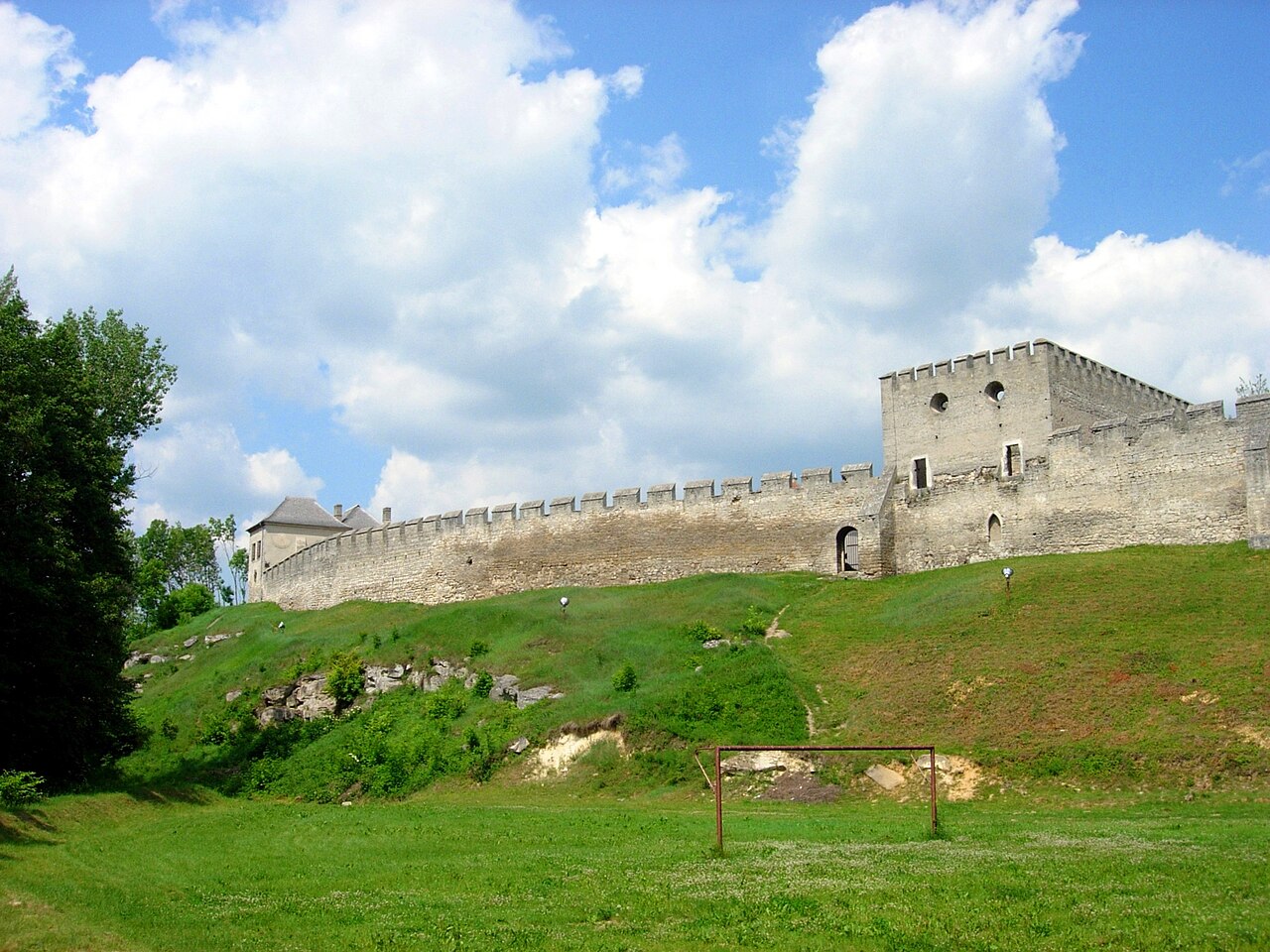
Photo by Jakub Hałun • CC BY-SA 3.0
Historical significance and royal connections
King Władysław Jagiełło, who frequently traveled throughout his realm, visited Szydłów castle at least 17 times, underscoring its importance during the late 14th and early 15th centuries. However, by the late 15th and early 16th centuries, the castle's military significance diminished, and it gradually lost its status as a royal residence.
During this period, the original defensive towers were dismantled and replaced by a two-story building known as the "skarbczyk" or treasury house. Szydłów suffered several devastating fires, including a major blaze in 1541 that destroyed much of the town and the castle. The castle was later renovated under Sigismund III Vasa, who enhanced its appearance and constructed a new gatehouse that survives to this day.
Decline, destruction, and preservation efforts
The castle endured further damage during the 17th century from military conflicts, including an attack in 1630 by royal troops rebelling over unpaid wages, which set fire to the castle and nearby suburbs. Subsequent invasions by the Transylvanian prince George II Rákóczi, the Swedish "Deluge," and the Northern Wars inflicted additional destruction.
In 1723, the castle was partially rebuilt by starost Józef Załuski, as evidenced by a heraldic cartouche and an inscription plaque. Nevertheless, the castle gradually fell into ruin. The passage of Napoleonic troops, who used the castle as stables, accelerated its decay. By 1822, the castle walls were put up for auction but failed to find buyers, partly due to the abundance of free stone in local quarries. This lack of commercial interest ironically helped preserve the ruins until modern times.
20th-century restoration and current state
After World War II, restoration efforts led by the local priest Father Tomala focused on rebuilding significant portions of the town's defensive walls and the castle's fortifications. Some of these restorations, such as the raising of the southern building's walls and the addition of crenellations, were ahistorical and not supported by historical evidence. In the 1930s, a school building was constructed within the eastern part of the castle courtyard, later expanded in 1998 with additional structures and a gymnasium, despite concerns from heritage conservators.
Today, the castle remains a ruined bastioned fortress featuring the enduring southern building known as the "knights' hall", the gatehouse or "skarbczyk" housing the Regional Museum, and the defensive walls that trace the hill's edge. These ruins stand as a testament to the castle's historical significance and architectural evolution over nearly seven centuries.
Architectural features and layout
The castle's design reflects the evolution of medieval Polish military architecture, combining natural topography with constructed defenses. The use of thick stone walls, cylindrical towers, and a polygonal layout exemplify the defensive priorities of the 14th century. The later addition of the Gothic palace with its hypocaust system reveals the increasing importance of residential comfort alongside fortification.
The castle's location on a steep escarpment provided natural protection, while the surrounding town walls created a fortified urban environment. The eastern gate controlled access to the castle and town, integrating the military and civic functions of Szydłów.
Cultural heritage and tourism
Szydłów castle is a significant cultural heritage site in Poland, attracting visitors interested in medieval history, architecture, and the legacy of Polish kings. The Regional Museum housed in the gatehouse offers insights into the castle's past and the broader historical context of the region.
Visitors can explore the castle ruins, walk along the preserved defensive walls, and appreciate the blend of military and residential architecture. The site also serves as a focal point for local cultural events and educational programs, helping to preserve and promote the historical identity of Szydłów.
Frequently asked questions (FAQ)
- What is the historical significance of Szydłów Castle?
- Szydłów Castle, built in the 14th century, played a crucial role in the defense of the region during various conflicts. It is notable for its well-preserved medieval architecture and its association with the local nobility, showcasing Poland's rich history.
- When is the best time to visit Szydłów Castle?
- The best time to visit Szydłów Castle is during the spring and summer months when the weather is pleasant, and the surrounding landscape is in full bloom. Additionally, visiting during local festivals can enhance your experience with cultural events and activities.
- Can I access Szydłów Castle with a wheelchair?
- While Szydłów Castle has made efforts to improve accessibility, some areas may still present challenges for wheelchair users. It is advisable to check in advance for specific accessibility options and to contact the castle administration for assistance.
- What are the opening hours for Szydłów Castle?
- Szydłów Castle is typically open to visitors from 10 AM to 6 PM during the tourist season, which runs from April to October. However, it is recommended to verify the hours before your visit, as they may vary depending on the season or special events.
- Is there an admission fee to visit Szydłów Castle?
- Yes, there is an admission fee to enter Szydłów Castle, which helps maintain the site's historical integrity. Ticket prices are generally affordable, and discounts may be available for students and seniors.
- What nearby attractions can I explore while visiting Szydłów Castle?
- While visiting Szydłów Castle, you can also explore the charming village of Szydłów, known for its picturesque streets and historic architecture. Additionally, nearby attractions include the Szydłów defensive walls and the beautiful landscapes of the Świętokrzyskie Mountains.
- How do I get to Szydłów Castle?
- Szydłów Castle is easily accessible by car or public transportation from major cities in Poland. If you're driving, there are designated parking areas nearby, and local bus services regularly connect Szydłów with surrounding towns.
- What architectural features should I look for at Szydłów Castle?
- Szydłów Castle features impressive Gothic and Renaissance architectural elements, including thick stone walls, a moat, and well-preserved towers. Be sure to pay attention to the intricate stone carvings and the layout of the castle, which reflect its historical significance and defensive purpose.
Photo gallery

Information
Loading map...
Visitor reviews
No reviews yet. Be the first to share your experience!