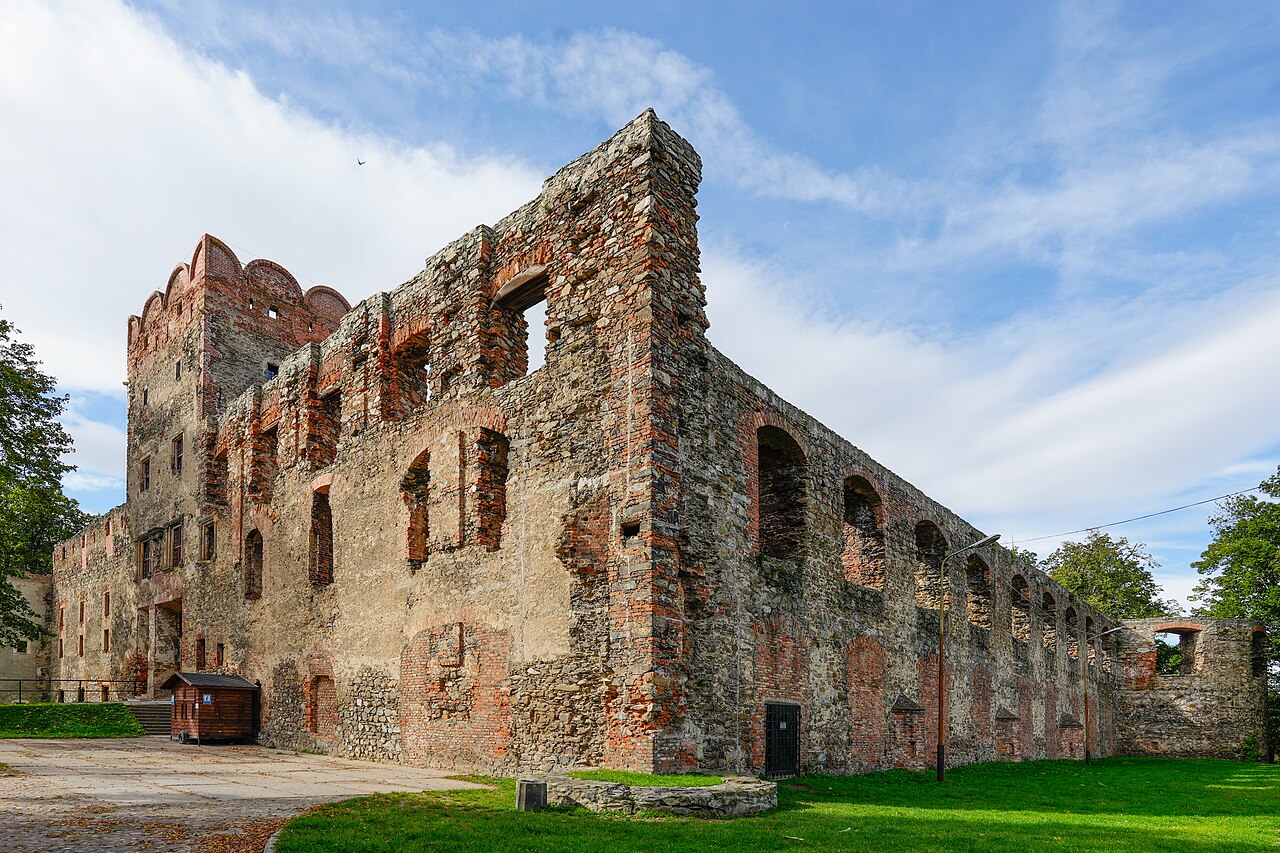
Stolec
Stolec Castle, located in the village of Stolec in Poland, stands as a testament to centuries of architectural evolution and historical significance. The first recorded mention of Stolec dates back to 1240, when it was under the ownership of the noble von Biberstein family. Although detailed records from the early period are scarce, it is known that a stone castle existed on the site during the High Medieval period. This original fortress featured two towers, surrounded by a stone wall and a moat, characteristic defensive elements of medieval fortifications.
Medieval origins and destruction
The earliest explicit mention of the castle itself appears in 1316. Unfortunately, the limited historical data does not provide a comprehensive description of its appearance. However, the castle's strategic importance is evident from its robust fortifications. Around the time of the Hussite Wars circa 1430, the castle suffered significant damage. The conflict led to its partial demolition, preserving only one of the original towers, marking the beginning of a long history of transformation.
Renaissance transformation and subsequent reconstructions
In the mid-16th century, the medieval fortress was replaced by a Renaissance defensive manor. This new structure likely owed its construction to Siegmund von Burghaus, who acquired Stolec in 1558 for 25,000 talers. Around 1608, the manor underwent remodeling, adapting to contemporary architectural and defensive needs. However, after a devastating fire in 1656, the manor required rebuilding. The estate changed hands in 1729 when Johan Heinrich, Count von Churschwand, purchased it and restored the manor. Unfortunately, due to ground subsidence, the manor had to be dismantled in 1772, highlighting the challenges posed by the site's geology.
Baroque palace construction and innovations
Following ground stabilization efforts between 1773 and 1779, a Baroque palace was constructed on the site. This palace was built on a rectangular plan featuring two square towers flanking the main building. The palace comprised two stories, while the towers rose to three stories, creating a stately and imposing silhouette. Notably, the palace was the first building in Silesia to be equipped with a lightning protection system, a pioneering safety feature for the time.
The construction reused materials from the dismantled medieval castle, integrating the site's historical fabric into the new Baroque design. Surrounding the palace were outbuildings arranged with a northern driveway, a rosarium, and terraced gardens. A large park extended to the north and east, enhancing the estate's grandeur. At the park's highest point stood a Baroque viewing tower with a glazed orangery, offering panoramic views and serving as a symbol of the estate's prestige. The entire complex was enclosed by a two-meter-high stone wall with bastions, emphasizing both security and aesthetic appeal.
19th-century renovations and 20th-century history
The palace acquired its current appearance during a significant renovation in the mid-19th century. The estate remained the seat of the free state country of Ziębice-Ząbkowice, with its last private owner being Johan Maria Stanislaus, Count von Harbuval-Chamare. Upon his death in 1939, the palace was taken over by the state and repurposed as an SA officer school for the Obergruppe "Schlesien". The final officer promotion occurred during Easter 1945.
During the final stages of World War II, the palace served as a storage site for museum collections evacuated from Wrocław. Post-war, the estate housed the Red Army for nearly a year. When Polish authorities regained control, the interiors were stripped of valuable furnishings and museum artifacts. Neglect and lack of preservation efforts led to the palace's deterioration. A particularly egregious act occurred in 1978 when the northern facade was dismantled to provide materials for road construction, reflecting a disregard for cultural heritage.
Current condition and remaining features
Today, the ruined palace is owned by the Agricultural Property Agency (ANR). Only fragments of its former grandeur remain, including some Baroque window and portal decorations. In contrast, the former outbuildings—such as the palace wings, barns, calf pens, stables, pigsties, and carriage houses—are much better preserved, offering insight into the estate's operational scale.
Visitors exploring the neglected park can reach the ruins of the tower, the sole surviving remnant of the once magnificent orangery. These ruins evoke the estate's past splendor and the layered history of architectural styles and functions that have characterized Stolec Castle throughout its existence.
Architectural significance and heritage value
Stolec Castle represents a complex palimpsest of architectural styles and historical periods, from its High Medieval origins through its Renaissance manor, Baroque palace, and 19th-century modifications. Its evolution reflects broader regional trends in fortification, residential architecture, and landscape design. The site's integration of defensive features, elegant residential quarters, and landscaped gardens illustrate the multifunctional nature of such estates.
Despite its current ruined condition, the castle remains an important cultural landmark in the Lower Silesian region. Efforts to preserve and interpret its history could enhance public appreciation of Poland's rich architectural heritage and the narratives embedded in such historic sites.
Frequently asked questions (FAQ)
- What is the historical significance of Stolec Castle?
- Stolec Castle, located in Poland, boasts a rich history that dates back to the Middle Ages. It served as a strategic stronghold and has undergone various renovations over the centuries, reflecting different architectural styles and historical influences.
- When was Stolec Castle built?
- The construction of Stolec Castle began in the late 14th century, with significant expansions occurring in the 16th and 17th centuries. This long history contributes to its unique blend of Gothic and Renaissance architectural elements.
- How do I get to Stolec Castle?
- Stolec Castle is easily accessible by car or public transport from nearby cities. The castle is located just off the main road leading through the region, making it a convenient stop for travelers exploring southwestern Poland.
- What are the opening hours for Stolec Castle?
- Stolec Castle is typically open to visitors from 10 AM to 6 PM, but hours may vary seasonally. It is recommended to check the official website or contact the castle administration for the most current information before planning your visit.
- Can I take guided tours of Stolec Castle?
- Yes, guided tours are available at Stolec Castle, providing an in-depth look at its history and architecture. These tours are often led by knowledgeable guides who can share fascinating stories and insights about the castle's past.
- Is it possible to host events at Stolec Castle?
- Stolec Castle offers facilities for hosting various events, including weddings and corporate gatherings. The picturesque setting and historical ambiance make it a popular choice for memorable occasions.
- What is the best time to visit Stolec Castle?
- The best time to visit Stolec Castle is during the spring and early autumn months when the weather is mild and the gardens are in full bloom. These seasons also tend to have fewer visitors, allowing for a more enjoyable experience.
- Are there any nearby attractions to visit?
- Yes, there are several attractions near Stolec Castle, including scenic hiking trails and charming small towns. Visitors can also explore other historical sites in the region, making it a perfect base for a day of exploration.
- How much do tickets cost to enter Stolec Castle?
- Tickets for Stolec Castle are reasonably priced, with discounts available for students and seniors. It is advisable to check the official website for current pricing and any special promotions before your visit.
Information
Loading map...
Visitor reviews
No reviews yet. Been here? Write the first review and help other travelers!
Write the first reviewVisited this castle? Share your experience
Your review helps other travelers and adds first-hand knowledge to our encyclopedia.