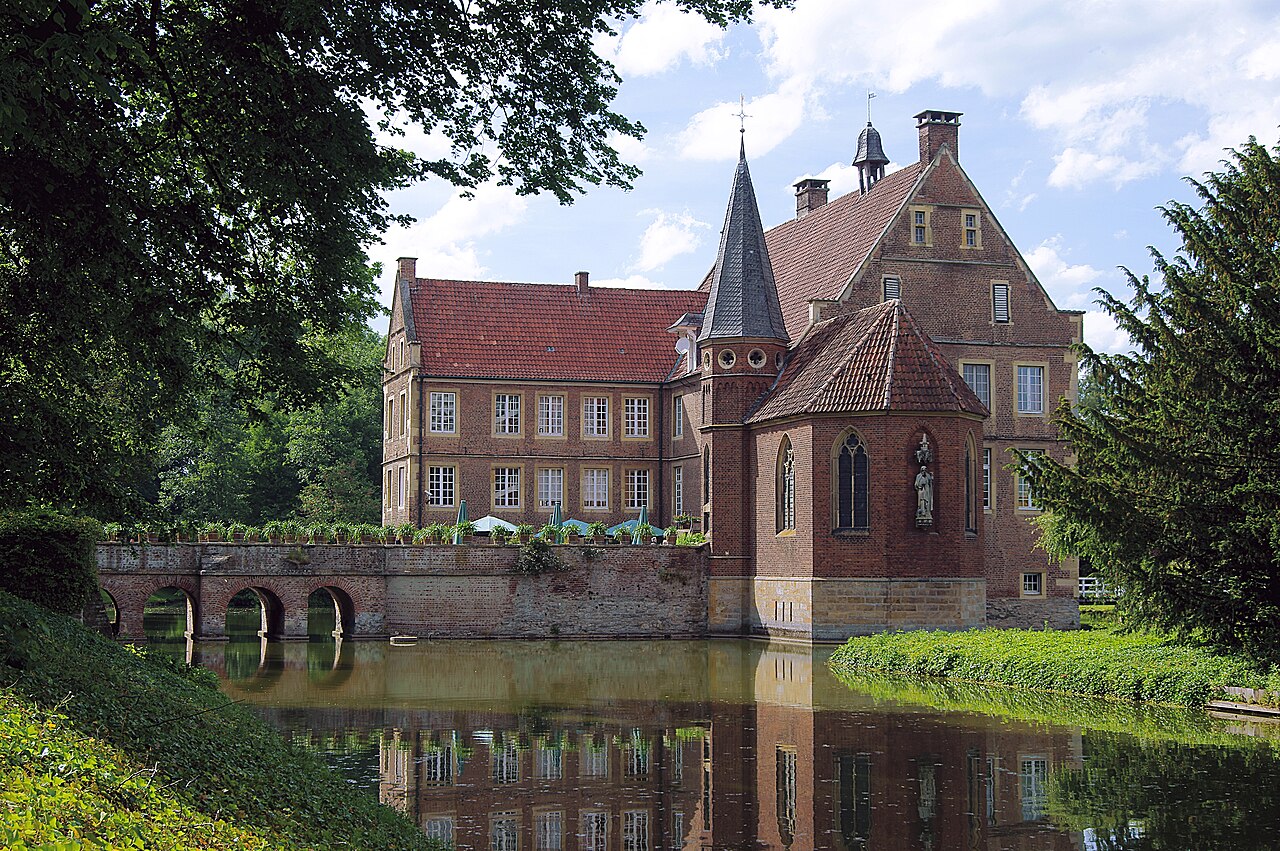
Stapel Castle
Stapel Castle, located near Havixbeck in Westphalia, Germany, is one of the largest and most historically significant moated castles in the region. Its origins date back to the early 13th century, with the first documented mention in 1211 as the seat of the noble Kerckerinck family. Over the centuries, the castle evolved architecturally and functionally, reflecting the changing tastes and needs of its aristocratic owners. Stapel Castle remains a remarkable example of Renaissance architecture combined with later stylistic influences.
Historical background and ownership lineage
The castle estate known as Haus Stapel has a unique history of continuous ownership by landed gentry families. Remarkably, it was never sold; instead, the property passed through the female line of succession, preserving its aristocratic heritage. This uninterrupted lineage has contributed to the castle's well-maintained condition and the preservation of its original character.
The name "Stapel" derives from the Middle High German word stave, meaning "traffic jam". This refers to the extensive system of dams constructed in the area since the early Middle Ages. These dams were designed to control stream water and operate a large fishing center, which was a significant economic activity for the estate. The deep and wide ditches visible in the castle park today are remnants of these medieval water management structures.
Architectural features and construction phases
Outer bailey and gate tower
The castle complex includes a prominent outer bailey fortified with flanking towers, most of which were constructed between 1607 and 1608. These towers and the associated outbuildings form an imposing defensive perimeter around the main residence. The gate tower, a key architectural feature, is believed to have been built later, possibly in 1719, based on designs attributed to the renowned architect Maximilian von Welsch. This tower serves as a grand entrance and a symbol of the castle's defensive and residential functions.
Main building and classicist influences
The main building of Stapel Castle showcases classicist architectural elements, a style introduced during the early 19th century. The design was created by the architect August Reinking, whose work culminated in the completion of the castle buildings in 1828. This classicist influence is visible in the symmetry, proportion, and refined decorative details of the main residence, contrasting with the earlier Renaissance and medieval structures.
Castle grounds and parkland
The castle is surrounded by extensive parkland, which includes the remnants of the medieval dams and ditches used for water management and fishing. These features contribute to the unique landscape character of the estate. The park is maintained and occasionally opened to the public, providing visitors with a glimpse of the castle’s historical setting and natural environment.
Public access and events
Although the estate is privately rented and generally closed to the public, Haus Stapel opens its doors a few times annually. During these occasions, visitors can explore the inner courtyard, admire the staircase, and enjoy concerts held within the castle. On Open Monument Day, guided tours led by the castle owner allow guests to visit the ballroom and learn about the castle’s history and architecture.
Since 2023, the castle offers a garden tour from February to September on the first Saturday of each month at 14:00. These tours, conducted by Dr. Mechthild Baroness Raitz von Frentz, provide detailed insights into the park’s design and the estate’s historical water features. The tours require no advance booking and have a modest fee of 5 euros per person.
Cultural and heritage significance
Stapel Castle stands as a valuable cultural monument in Westphalia, illustrating the evolution of noble estates from the Middle Ages through the Renaissance and into the classicist period. Its well-preserved structures and landscape features offer important insights into aristocratic life, architectural trends, and land use practices over several centuries.
The castle’s continuous ownership by noble families and its careful preservation make it a rare example of a historic moated castle that retains both its architectural integrity and its historical context. Its combination of Renaissance fortifications, classicist residential architecture, and medieval water management systems provides a multifaceted perspective on castle development in Germany.
Frequently asked questions (FAQ)
- How do I get to Stapel Castle?
- Stapel Castle is located in Havixbeck, Germany, and can be easily reached by car or public transportation. If you're coming by train, the nearest station is in Münster, from which you can take a bus or taxi to the castle.
- What are the opening hours of Stapel Castle?
- Stapel Castle is open to visitors from Tuesday to Sunday, from 10 AM to 5 PM. Be sure to check for any seasonal changes in hours or special closures before your visit.
- Is there an admission fee to visit Stapel Castle?
- Yes, there is an admission fee to explore Stapel Castle. Ticket prices are generally around €6 for adults, with discounts available for students and children, making it an affordable outing for families.
- When was Stapel Castle built?
- Stapel Castle was originally constructed in the 13th century and has undergone various renovations throughout its history. Its medieval architecture reflects the rich history of the region and offers a glimpse into the past.
- Can I take guided tours of Stapel Castle?
- Yes, guided tours are available and are a great way to learn about the history and architecture of Stapel Castle. Tours are typically offered in German, but English-speaking guides may be available upon request.
- Why is Stapel Castle historically significant?
- Stapel Castle is significant due to its well-preserved architecture and its role in regional history, particularly during the Middle Ages. It served as a noble residence and a strategic fortification, reflecting the feudal culture of the time.
- What is the best time to visit Stapel Castle?
- The best time to visit Stapel Castle is during the spring and early autumn when the weather is mild and the gardens are in full bloom. This is also when you can enjoy various outdoor events and festivals hosted at the castle.
- Is Stapel Castle accessible for visitors with disabilities?
- Yes, Stapel Castle strives to be accessible to all visitors. There are facilities available for those with mobility challenges, including ramps and accessible restrooms, ensuring everyone can enjoy the castle and its grounds.
- Are there any nearby attractions to visit along with Stapel Castle?
- Yes, visitors can explore the beautiful surrounding area, including the scenic Havixbeck village and the nearby Münsterland countryside. Other attractions include the historical city of Münster, which is just a short drive away, offering additional cultural experiences.
Information
Loading map...
Visitor reviews
No reviews yet. Been here? Write the first review and help other travelers!
Write the first reviewVisited this castle? Share your experience
Your review helps other travelers and adds first-hand knowledge to our encyclopedia.