
Słobity Palace
Słobity Palace (Polish: Pałac w Słobitach; German: Schloss Schlobitten) stands as a significant example of Baroque architecture in what is now the Warmian-Masurian Voivodeship of Poland. Constructed between 1622 and 1624, this palace was originally the seat of the Schlobitten branch of the Dohna family, an influential noble lineage in East Prussia. The palace was part of the network of so-called 'royal palaces' in the former province of East Prussia, designed to serve as residences for the king of Prussia during his travels across the region.
Architectural design and historical significance
The palace was a prime example of Baroque style architecture, characterized by its grandeur, ornamental details, and symmetrical layouts. Its design featured typical Baroque elements such as elaborate facades, grand staircases, and richly decorated interiors. The palace's layout and artistic embellishments reflected the tastes and social status of the Dohna family, who played a prominent role in the region's history.
The palace complex included extensive gardens and a landscape park, which complemented the architectural elegance of the main building. This park was originally designed in the Baroque style, with carefully planned avenues, ornamental ponds, and sculptural elements, enhancing the overall aesthetic and prestige of the estate.
The Dohna family and their legacy
The Dohna family was a noble family with roots in the region dating back several centuries. The Schlobitten branch, which resided in Słobity Palace, was particularly prominent in the political and social life of East Prussia. Their ownership of the palace underscored their status and influence, as the estate was not only a private residence but also a symbol of their power and connection to the Prussian monarchy.
Throughout its history, the palace witnessed numerous events tied to the fortunes of the Dohna family and the broader political changes in East Prussia. The family's collections and artifacts once housed in the palace reflected their cultural interests and wealth.
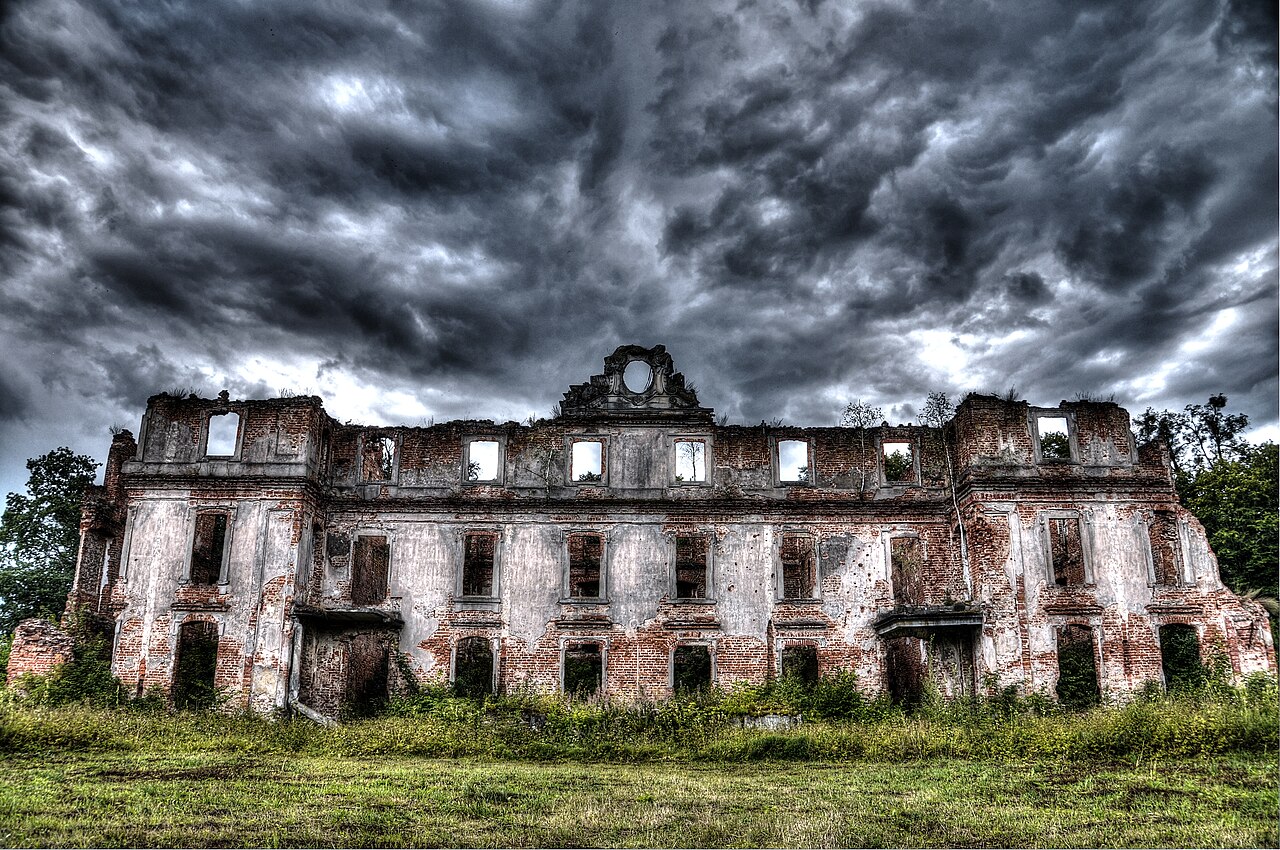
Photo by Kuba1664 • CC BY-SA 3.0 pl
Destruction and current state
In 1945, during the final stages of World War II, the palace was looted and plundered by the Red Army. Following this, it was deliberately set on fire, resulting in severe damage. Since then, the palace has remained in a state of ruin, with much of its original structure deteriorating over time.
Today, Słobity Palace is classified as a ruin, with only fragments of its former grandeur still visible. The surrounding landscape park has suffered from neglect and is largely overgrown, losing much of its original Baroque character.
Preservation efforts and cultural heritage
Despite the palace's ruined condition, parts of its valuable inventory and collections were rescued by Prince Alexander zu Dohna-Schlobitten (1899–1997). He safeguarded these artifacts and later transferred them to the Prussian Palaces and Gardens Foundation Berlin-Brandenburg. Today, these items are displayed as the Dohna-Schlobitten collection in Schloss Doberlug in Doberlug-Kirchhain, Germany, preserving the cultural legacy of the family and the palace.
While the palace itself remains in ruins, its historical importance as a former royal residence and a masterpiece of Baroque architecture continues to be recognized. Efforts to document and study the site contribute to understanding the region's noble heritage and architectural history.
Architectural features worth noting
The palace originally featured ornate facades with Baroque stucco work and sculptural decoration. Its grand halls and ceremonial chambers were designed to impress visitors and reflect the wealth of the Dohna family. The palace's courtyards and battlements were integrated into the overall design to balance aesthetics with functionality.
Visiting and accessibility
Currently, Słobity Palace is not maintained as a tourist site due to its ruined state and lack of restoration. Visitors interested in Baroque architecture and East Prussian history may view the ruins from a distance, but access to the interior is limited and potentially unsafe. The nearby region offers other historical sites and natural attractions that complement a visit to the area.
Frequently asked questions (FAQ)
- When was Słobity Palace built?
- Słobity Palace was constructed between 1622 and 1624 in the Baroque architectural style.
- What caused the ruin of Słobity Palace?
- The palace was looted and set on fire by the Red Army in 1945, which led to its current ruined condition.
- Who owned Słobity Palace historically?
- The palace was historically the seat of the Schlobitten branch of the Dohna family, a noble family in East Prussia.
- Can I visit the interior of Słobity Palace today?
- Due to its ruined state and safety concerns, access to the interior of Słobity Palace is generally restricted, but the ruins can be viewed from outside.
- Where can I see the Dohna family collections from Słobity Palace?
- The Dohna-Schlobitten collection rescued from the palace is exhibited at Schloss Doberlug in Doberlug-Kirchhain, Germany.
Photo gallery

Information
Loading map...
Visitor reviews
No reviews yet. Be the first to share your experience!