
São Marcelo Fort
São Marcelo Fort (Portuguese: Forte São Marcelo), also known as Forte de Nossa Senhora do Pópulo e São Marcelo or Forte do Mar, is a remarkable example of coastal military architecture located in Salvador, Bahia, Brazil. This bastioned fortress stands uniquely on a small reef about 300 metres from the mainland in the Baía de Todos os Santos, making it one of only two Brazilian forts separated from the shore by water, alongside Fort Tamandaré da Laje Tamandaré in Rio de Janeiro. Its distinctive cylindrical design sets it apart as the only fort of this shape in Brazil, drawing architectural inspiration from the Castel Sant'Angelo in Italy and the São Lourenço do Bugio Fort in Portugal.
Historical context and strategic importance
Constructed during the colonial period, São Marcelo Fort was a critical element in the defense system of Salvador, which was the first capital of Brazil and a vital port city. The fort was built to protect the city from naval attacks and invasions, especially during times of conflict with foreign powers and pirates. Salvador was known for having the largest number of forts in Brazil during the colonial era, reflecting its strategic maritime significance.
Architectural design and features
Cylindrical bastioned fortress layout
The fort's cylindrical shape is highly unusual among Brazilian coastal defenses, which more commonly adopted star-shaped or polygonal bastion designs. This circular plan provided 360-degree defense capability, allowing artillery to cover all approaches from the sea. The fort's thick walls are constructed of stone and mortar, designed to withstand cannon fire and harsh marine conditions.
Influences from European military architecture
São Marcelo Fort was inspired by European fortifications such as the Castel Sant'Angelo in Rome and the São Lourenço do Bugio Fort in Portugal, both of which feature similar cylindrical forms and maritime defensive roles. These influences reflect the Portuguese colonial military engineering traditions brought to Brazil in the 17th century.
Interior structures and facilities
Inside the fort, there are multiple levels including gun decks equipped with artillery placements, storage rooms for ammunition, and living quarters for the garrison. The design optimizes space within the circular walls, with staircases connecting the different floors. The fort also features a central courtyard that allowed for troop assembly and movement.
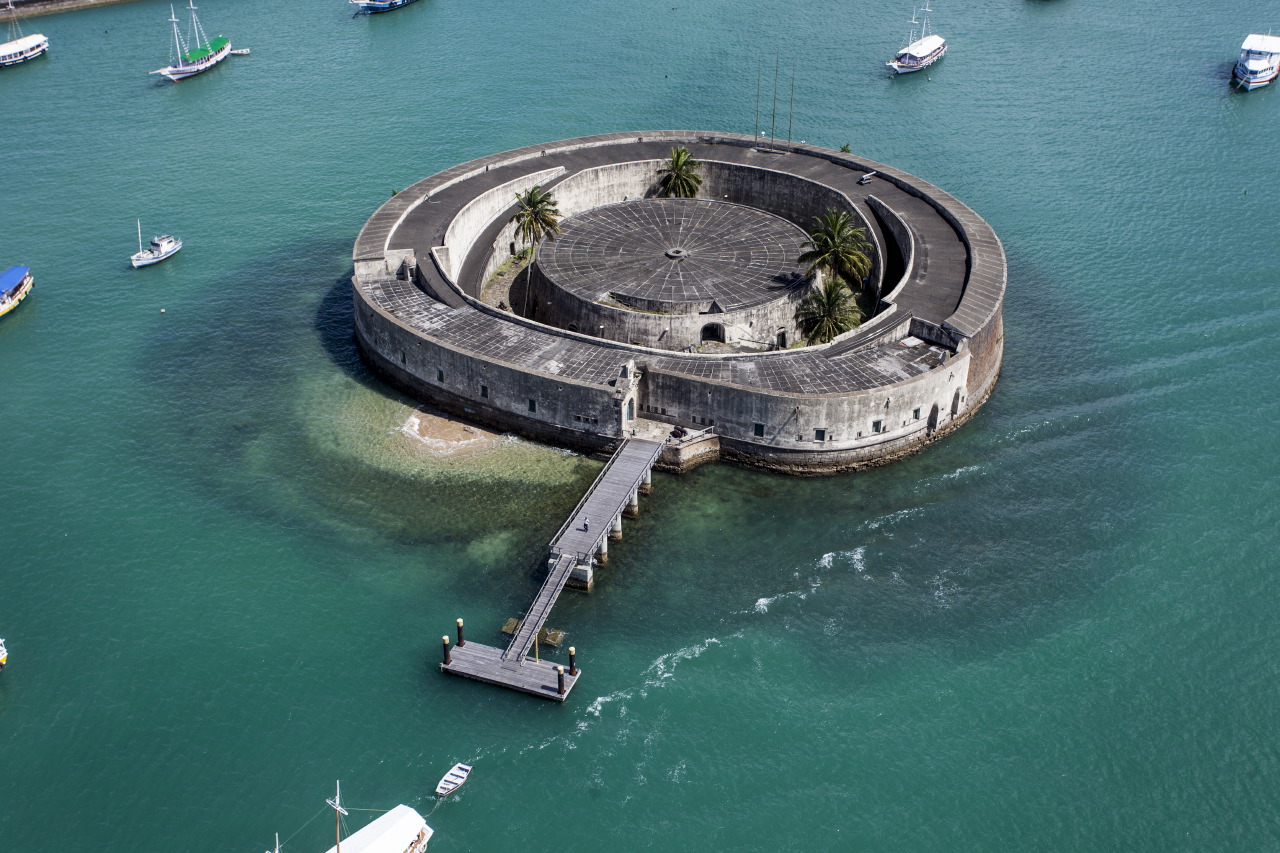
Photo by Portal da Copa/ME (victoria.camara) • CC BY 3.0 br
Construction timeline and modifications
The initial construction of São Marcelo Fort began in the early 17th century, with significant work completed by the mid-1600s. Over the centuries, the fort underwent various repairs and modifications to adapt to evolving military technology and threats. Despite these changes, the core cylindrical structure has been preserved, maintaining its historical integrity.
Role in Brazilian history
São Marcelo Fort played an active role in several key historical events, including the defense against Dutch invasions in the 17th century. Its position in the bay allowed it to control access to Salvador's harbor, making it a formidable obstacle for enemy fleets. The fort also served as a prison and a military base during different periods of Brazil's history.
Preservation and current status
Today, São Marcelo Fort is well preserved and recognized as an important cultural heritage site in Brazil. It is maintained by local authorities and is accessible to visitors interested in military history and colonial architecture. The fort's unique location and design continue to attract scholars and tourists alike, offering insights into 17th-century fortification techniques and Brazil's colonial past.
Visiting São Marcelo Fort
The fort can be reached by boat from Salvador's coast, providing a scenic approach across the bay. Visitors can explore the fort's ramparts, artillery positions, and interior chambers. Informational plaques and guided tours help contextualize the fort's historical significance and architectural features.
Frequently asked questions about São Marcelo Fort
- What is the significance of São Marcelo Fort's cylindrical shape?
Its cylindrical design allows for 360-degree defense against naval attacks, a rare feature among Brazilian forts, inspired by European maritime fortifications. - How can visitors access São Marcelo Fort?
The fort is accessible only by boat from Salvador, with regular tour services available during the tourist season. - When was São Marcelo Fort built?
Construction began in the early 17th century, with major completion by the mid-1600s, reflecting Portuguese colonial military architecture. - What role did the fort play in Brazilian history?
It defended Salvador against Dutch invasions and controlled access to the bay, serving also as a prison and military base over time. - Is São Marcelo Fort open to the public?
Yes, it is open for guided tours and educational visits, offering insights into colonial fortifications and Brazilian history. - What architectural influences shaped São Marcelo Fort?
The fort's design was influenced by the Castel Sant'Angelo in Italy and São Lourenço do Bugio Fort in Portugal, reflecting European military engineering traditions.
Frequently asked questions (FAQ)
- What is the historical significance of São Marcelo Fort?
- São Marcelo Fort, built in the 17th century, played a crucial role in protecting the city of Salvador from pirate attacks and foreign invasions. It is a testament to the military architecture of the period and reflects Brazil's colonial history. Today, it stands as a symbol of Salvador's rich heritage and attracts history enthusiasts from around the world.
- When was São Marcelo Fort constructed?
- Construction of São Marcelo Fort began in 1600 and was completed in 1624. It was strategically positioned to guard the entrance to the Bay of All Saints, showcasing the military engineering techniques of its time. The fort has undergone various renovations over the centuries to preserve its structure and historical significance.
- What are the opening hours for visiting São Marcelo Fort?
- São Marcelo Fort is open to visitors from Tuesday to Sunday, from 9 AM to 5 PM. It is advisable to check for any special holiday hours or events that may affect regular visiting times. Early visits can provide a more serene experience with fewer crowds.
- Is it possible to access São Marcelo Fort by boat?
- Yes, visitors can reach São Marcelo Fort by taking a boat from the Mercado Modelo or other nearby docks. This scenic boat ride allows for stunning views of the fort and the surrounding bay. It is a popular option for tourists looking to enjoy the maritime beauty of Salvador.
- Can I purchase tickets in advance for São Marcelo Fort?
- Tickets for São Marcelo Fort can typically be purchased on-site, but it is advisable to check for any online purchasing options or special group rates. During peak tourist seasons, purchasing tickets in advance may help avoid long lines. Keep an eye on the official website for any updates regarding ticket sales.
- What is the best time to visit São Marcelo Fort?
- The best time to visit São Marcelo Fort is during the dry season, from September to March, when the weather is more favorable for outdoor activities. Early mornings or late afternoons can offer cooler temperatures and beautiful lighting for photography. Additionally, visiting during weekdays may result in fewer crowds.
- What nearby attractions can I visit after São Marcelo Fort?
- After visiting São Marcelo Fort, consider exploring the historic Pelourinho district, known for its colonial architecture and vibrant culture. The Mercado Modelo and Elevador Lacerda are also nearby, offering additional opportunities to experience Salvador's rich history and local crafts. Each of these attractions enhances your visit with unique insights into the city's heritage.
- How do I get to São Marcelo Fort from the city center?
- To reach São Marcelo Fort from the city center, you can take a taxi, ride-sharing service, or walk to the nearby docks to catch a boat. The boat ride provides a scenic view of the bay and is a popular mode of transportation. Alternatively, public transportation options may also be available for those preferring a budget-friendly approach.
Photo gallery

Information
Loading map...
Visitor reviews
No reviews yet. Be the first to share your experience!