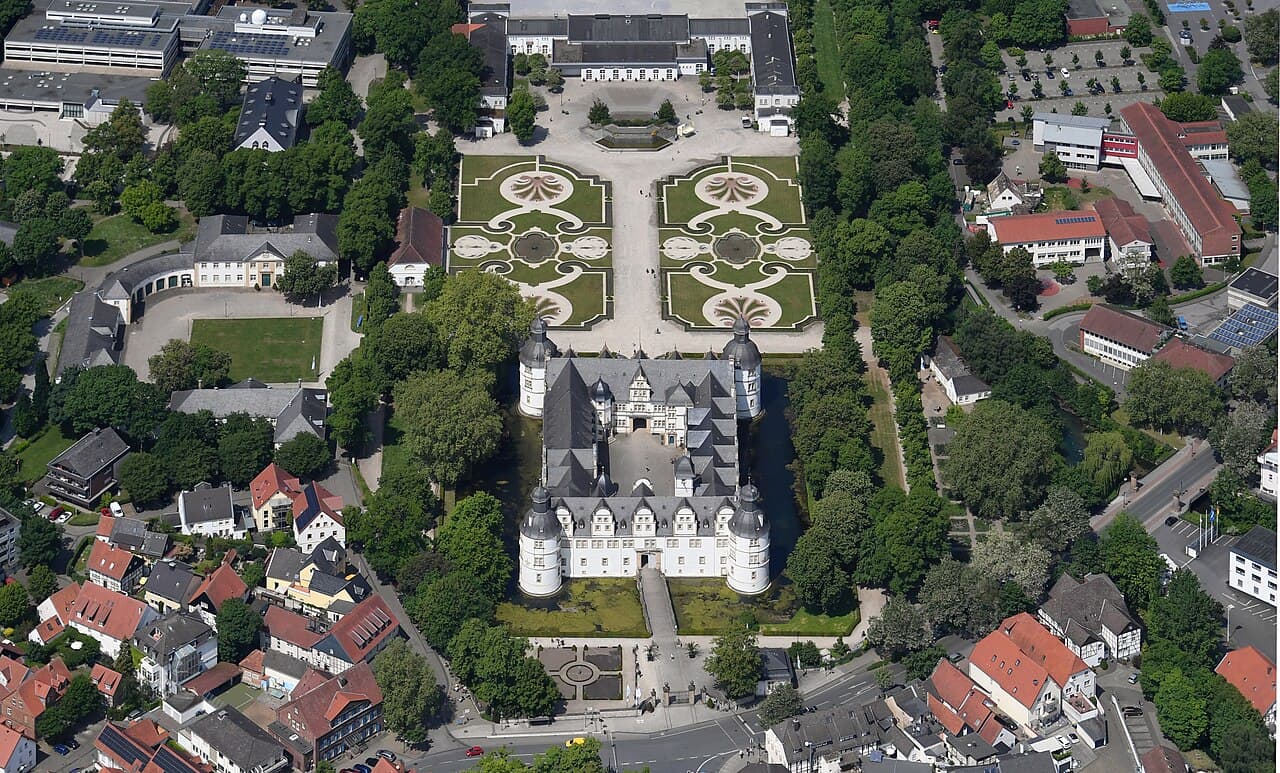
Schloss Neuhaus
Schloss Neuhaus stands as a remarkable example of Weser-Renaissance architecture in Paderborn, Germany. Originally first mentioned in 1016, the castle evolved over several centuries into the impressive four-winged palace known today. Construction began in the 13th century, with significant development continuing up to the 16th century, resulting in the castle's distinctive layout featuring four round corner spires and a surrounding moat.
Historical development and architectural evolution
The site of Schloss Neuhaus was initially established as a stronghold in the early medieval period, with its first documented mention dating back to the early 11th century. The castle served as the residence of the Prince Bishops of Paderborn, a significant ecclesiastical and political authority in the region. Over the centuries, the castle underwent multiple phases of construction and renovation, reflecting changing architectural styles and the evolving needs of its occupants.
The core of the castle was constructed in the high medieval period, around 1257, forming a fortified hill castle with defensive features typical of the era. During the Renaissance period, the castle was extensively remodeled to incorporate the elegant and ornate elements characteristic of the Weser-Renaissance style. This included the addition of the four wings arranged around a central courtyard, the distinctive round corner towers, and the moat that encircles the complex.
Architectural features and layout
Schloss Neuhaus is notable for its harmonious blend of medieval fortification and Renaissance aesthetics. The castle's four-winged layout encloses a central courtyard, a common design in Renaissance palaces, promoting both defense and residential comfort. Each wing is anchored by round corner spires, which serve both as watchtowers and architectural focal points.
The surrounding moat adds a further layer of defense and enhances the castle's picturesque setting. The integration of water features was a typical characteristic of Renaissance castles in the Weser region, combining practicality with visual appeal.
Inside, the castle houses several notable spaces, including the hall of mirrors, a grand chamber used for concerts, presentations, and receptions. This hall exemplifies the castle's role as a cultural venue in addition to its historical significance.
Gardens and parkland
Adjacent to the castle are the Baroque gardens, which complement the Renaissance architecture with their formal design and landscaping. Beyond the gardens, the castle is surrounded by approximately 42 hectares of parkland, offering extensive footpaths, playgrounds, and recreational areas.
This green space is a popular destination for both locals and visitors, providing a natural setting that enhances the castle's historic ambiance. The gardens and parkland are also venues for various cultural events, including the annual Schloßsommer (Summer in the Palace) program, which runs from May to October and features concerts and other outdoor activities.
Current use and cultural significance
Today, much of Schloss Neuhaus serves educational purposes, housing a local school within its historic walls. The castle also functions as a cultural hub, hosting events in the hall of mirrors and the surrounding gardens.
The castle complex includes a museum dedicated to the natural history of the Paderborner Land. The museum's exhibitions cover the region's geography, geology, habitats, fauna, and flora, offering visitors a comprehensive understanding of the area's natural environment. A special feature of the museum is the Kids’ Museum, designed to engage children through interactive and educational displays.
Visiting Schloss Neuhaus
Visitors to Schloss Neuhaus can explore the castle's architectural features, stroll through the Baroque gardens and parkland, and attend cultural events during the warmer months. The combination of historical architecture, natural beauty, and educational exhibits makes Schloss Neuhaus a multifaceted destination in Paderborn.
Frequently asked questions (FAQ)
- What are the opening hours of Schloss Neuhaus?
- Schloss Neuhaus is typically open to visitors from 10 AM to 6 PM during the summer months and from 10 AM to 5 PM in the winter months. It is advisable to check the official website for any seasonal changes or special events that may affect these hours.
- How do I get to Schloss Neuhaus from Paderborn city center?
- You can easily reach Schloss Neuhaus from Paderborn city center by taking a short bus ride or enjoying a 20-minute walk through the scenic park. Signage is available throughout the area to guide you to the castle.
- What is the historical significance of Schloss Neuhaus?
- Schloss Neuhaus, built in the 16th century, served as a residence for the Prince-Bishops of Paderborn and reflects the Renaissance architectural style. Its rich history and beautiful gardens make it an important cultural landmark in the region.
- Is it possible to take guided tours of the castle?
- Yes, guided tours are available at Schloss Neuhaus, providing visitors with in-depth knowledge of the castle's history, architecture, and art. These tours are offered in various languages, but it's recommended to check availability in advance.
- Can I bring my children to Schloss Neuhaus?
- Absolutely! Schloss Neuhaus is family-friendly and offers activities that engage children, including interactive exhibits in the museum. The spacious gardens also provide a great place for kids to explore and play.
- When is the best time to visit Schloss Neuhaus?
- The best time to visit Schloss Neuhaus is during the spring and summer months when the gardens are in full bloom and special events are frequently held. Autumn also offers a beautiful backdrop with colorful foliage.
- What are the ticket prices for visiting Schloss Neuhaus?
- Ticket prices for Schloss Neuhaus are generally affordable, with discounts available for students, seniors, and children. Family tickets are also offered, making it a budget-friendly option for group visits.
- Are there any nearby attractions to Schloss Neuhaus?
- Yes, nearby attractions include the Paderborn Cathedral and the historic city center, both of which offer rich cultural experiences and beautiful architecture. A visit to these sites can easily complement your trip to Schloss Neuhaus.
- Is Schloss Neuhaus accessible for individuals with disabilities?
- Schloss Neuhaus is committed to accessibility and offers facilities for individuals with disabilities, including ramps and accessible restrooms. It is advisable to contact the castle in advance to ensure a smooth visit.
Photo gallery

Information
Current owner
Municipality of Paderborn
Loading map...
Visitor reviews
No reviews yet. Been here? Write the first review and help other travelers!
Write the first reviewVisited this castle? Share your experience
Your review helps other travelers and adds first-hand knowledge to our encyclopedia.



