
Örup Castle
Örup Castle stands as a significant example of late medieval fortifications in southern Sweden, located in Tomelilla Municipality, Scania. Completed around the year 1500, this castle was part of a network of defensive structures including Glimmingehus, Bollerup Castle, and Tosterup Castle. These castles were strategically constructed during a turbulent period marked by ongoing conflicts between the Swedish and Danish kingdoms, reflecting the need for local lords to protect their lands from both external military threats and internal unrest.
Historical background and ownership
Örup Castle was first mentioned in historical records in 1437, when it was owned by the Danish noble family Qvitzow. Over the centuries, the castle changed hands among several prominent families, including the Flemming and Ulfstrand families. A significant period of ownership began in 1558 when the Rosencrantz family took possession of the castle, maintaining control until 1913. Today, the castle is privately owned by the Swartz family.
Architectural features and style
Örup Castle is classified as a hill castle, built on elevated terrain to maximize its defensive capabilities. Its construction dates to the Renaissance period, which is evident in certain architectural details, though the overall design retains many features typical of late medieval fortresses. The castle's robust stone walls, narrow windows, and fortified gatehouse reflect its primary function as a defensive stronghold.
Defensive structures
The castle includes thick curtain walls designed to withstand attacks and sieges, with battlements and parapets that provided defenders with protected positions. The presence of a moat or ditch around the castle, common in Scandinavian fortifications of this era, would have further enhanced its defensibility, although specific details about Örup’s moat are less documented.
Residential and functional spaces
Inside the walls, the castle housed residential quarters, storage areas, and possibly a great hall for gatherings and administrative functions. The design balanced the need for security with the requirements of noble living, including comfort and status display. Over time, modifications likely adapted the castle to changing military technologies and domestic needs.
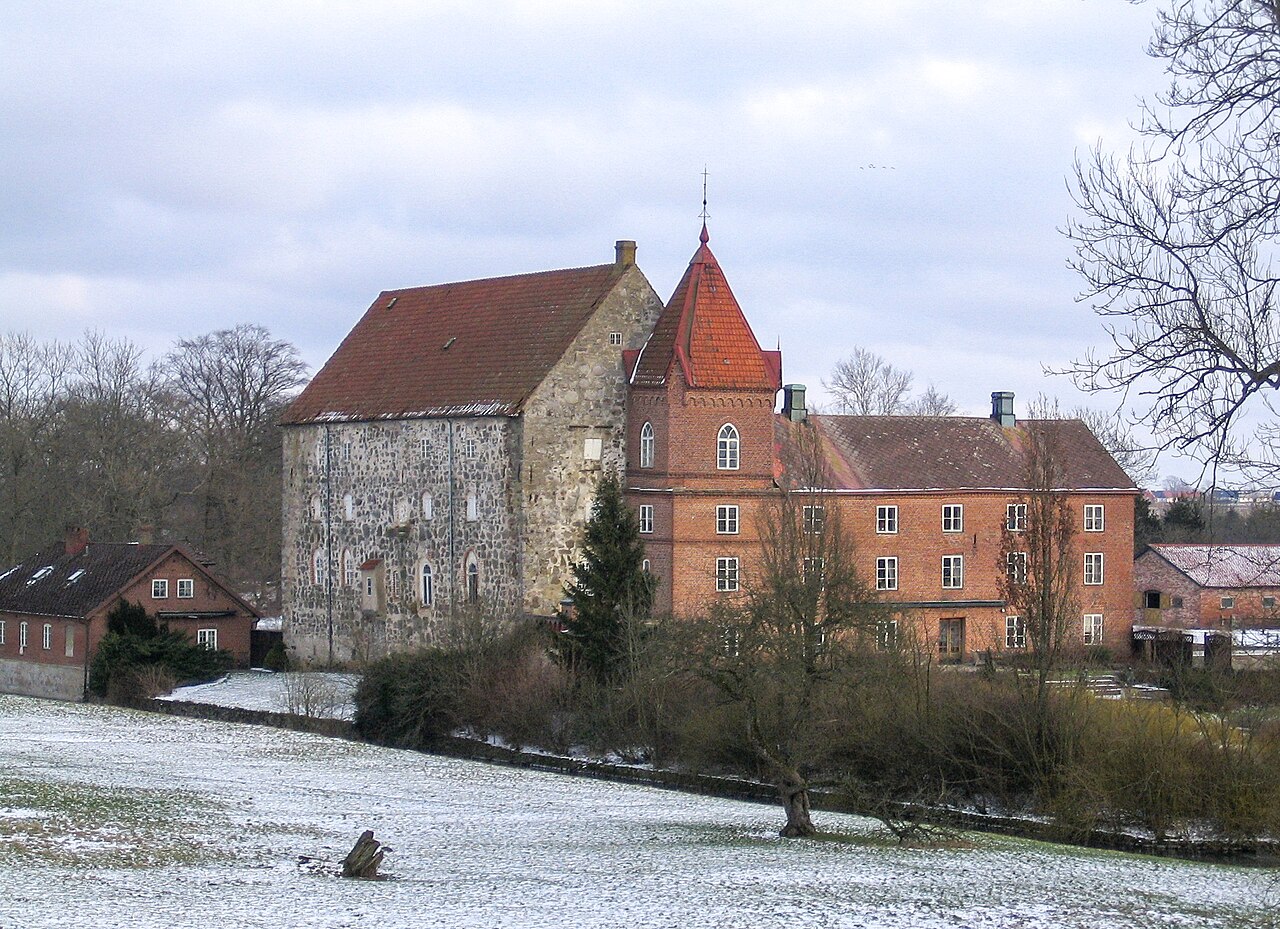
Photo by jorchr • CC BY-SA 3.0
Context of construction and regional significance
During the late 15th and early 16th centuries, the region of Scania was a contested borderland between Denmark and Sweden. The construction of Örup Castle and its contemporaries was a direct response to the uncertain political and military climate. These castles served not only as military fortresses but also as symbols of noble power and territorial control.
The castles of this region, including Örup, played a role in the defense strategies during the numerous conflicts that shaped Scandinavian history, such as the Count’s Feud and other Danish-Swedish wars. Their presence helped secure local governance and provided refuge during times of unrest.
Current status and visitor information
Today, Örup Castle remains a privately owned property and is not generally open to the public. Its preservation status is considered well preserved, maintaining much of its historical character and structural integrity. While it does not operate as a public museum, the castle contributes to the cultural heritage of the Scania region and is part of the historical landscape that attracts interest from historians and enthusiasts of medieval architecture.
Nearby castles and heritage tourism
Visitors to the area often explore the cluster of castles in southern Scania, including Glimmingehus, which is open to the public and offers exhibitions on medieval life and castle architecture. These sites collectively illustrate the defensive network and noble residences that shaped the region’s history.
Architectural legacy and cultural importance
Örup Castle exemplifies the transition from medieval fortresses to Renaissance residences, reflecting broader changes in military technology and noble lifestyle during the period. Its enduring stone walls and strategic location highlight the importance of territorial defense in Scandinavian history. As part of the network of Scanian castles, Örup contributes valuable insight into the architectural and historical landscape of the era.
Frequently asked questions (FAQ)
- When was Örup Castle built?
- Örup Castle was completed around the year 1500 during the Renaissance period, reflecting the architectural and defensive needs of that era.
- What was the primary purpose of Örup Castle?
- The castle served as a defensive stronghold in a region contested by Danish and Swedish forces, protecting the local nobility and their lands.
- Is Örup Castle open to the public?
- Örup Castle is privately owned and generally not open to the public, but it remains an important historical site in Scania.
- Which families have owned Örup Castle?
- Notable owners include the Danish Qvitzow family, the Flemming and Ulfstrand families, and the Rosencrantz family from 1558 to 1913. Currently, it is owned by the Swartz family.
- How does Örup Castle compare to nearby castles?
- Örup Castle is part of a group of Scanian castles built for defense during the late Middle Ages, alongside Glimmingehus, Bollerup Castle, and Tosterup Castle, each with unique architectural features and historical roles.
Photo gallery

Information
Current owner
Private owner
Loading map...
Visitor reviews
No reviews yet. Be the first to share your experience!