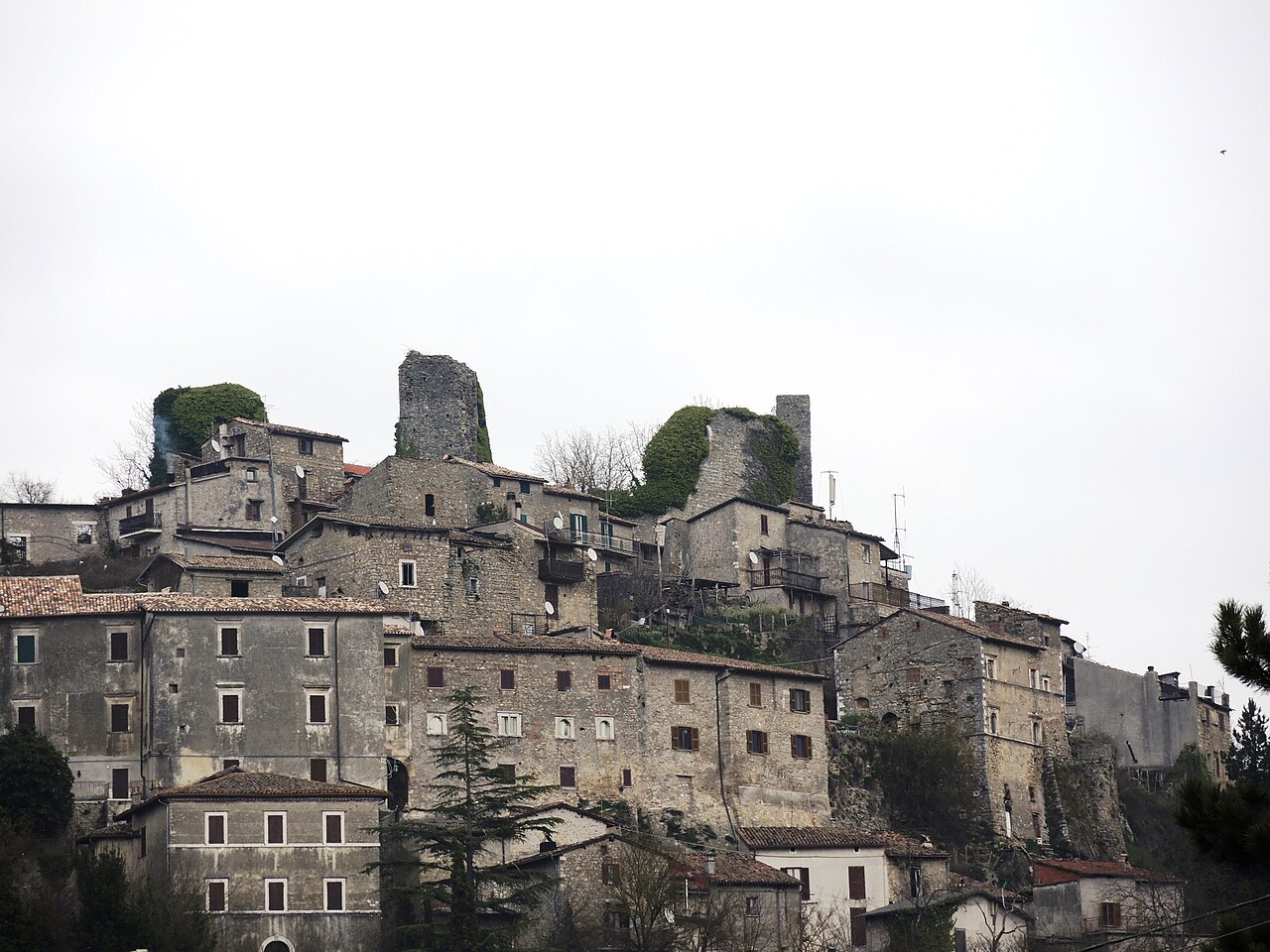
Rocca Sinibalda Castle
Rocca Sinibalda Castle stands as a remarkable example of a fortress evolving through centuries from a medieval military stronghold into a Renaissance aristocratic residence. Located strategically overlooking the Turano valley in Lazio, Italy, the castle's origins date back to the mid-11th century. It was initially established as a military fortress, named after Sinibaldo, count and rector of Sabina between 1058 and 1065, reflecting its early defensive purpose in controlling the surrounding territory.
Medieval origins and early ownership
The castle's earliest phase was closely linked to the turbulent political landscape of the region during the early medieval period. Its position on a rocky spur provided a commanding view and control over the valley, a common strategic choice for hill castles of this era. Throughout the following centuries, the castle came under the ownership of the Benedictine monks of Farfa Abbey, a powerful religious institution that held extensive lands in the Sabina area. However, as the Abbey's influence waned and its assets deteriorated, the castle passed during the 14th and 15th centuries into the hands of noble families, notably the Buzzi and the Brancaleone di Romancia, both of which eventually disappeared from historical records.
Renaissance transformation under the cesarini family
During the pontificate of Clement VII Medici (1523-1534), the castle was granted to the Cesarini family, a noble lineage tasked with maintaining and reinforcing its strategic significance on the volatile border between the Papal States and the Kingdom of Naples. This period marked a pivotal transformation for Rocca Sinibalda, as it transitioned from a purely military fortress to a residence that embodied Renaissance ideals.
Baldassarre peruzzi's architectural vision
Alessandro Cesarini commissioned the renowned architect Baldassarre Peruzzi, famed for his work on the Fabbrica di San Pietro in Rome, to redesign the castle. Peruzzi's innovative project sought to blur the lines between fortress and villa, integrating defensive features with elegant residential spaces suitable for social events and noble gatherings. The architectural plans, preserved in the Uffizi Gallery in Florence, reveal a bold concept that combined military functionality with Renaissance aesthetics, a rare approach in 16th-century castle design.
Unfortunately, Peruzzi's premature death in 1536 meant that the renovation was never fully completed according to his original vision. Subsequent builders, including Peruzzi's son Giovanni Sallustio and architect Bartolomeo De Rocchi, adapted the plans during construction, resulting in a unique blend of styles and functions.
Architectural features and layout
The castle's layout is distinctive, often described as resembling an eagle or a scorpion in its plan, an exceptional design among European castles of the period. The fortress features a prominent spur front with crenellated towers that emphasize its defensive origins. The north wing houses the noble residence and a striking "Coda"—a tail-like extension serving defensive purposes.
The castle's hanging gardens, redesigned in 1972 by landscape architect Ippolito Pizzetti, add to its charm, blending natural beauty with the fortress's imposing structure.
Interior decoration and artistic significance
The interiors of Rocca Sinibalda Castle are renowned for their exquisite frescoes, which richly decorate the palace walls. The primary theme draws from Ovid's Metamorphoses, reflecting the Renaissance fascination with classical mythology. These frescoes, attributed to artists including Girolamo Muziano and various schools of Roman and Umbrian-Tuscan Mannerism, narrate mythological transformations alongside episodes from the history of the Cesarini family.
In addition to the 16th-century frescoes, some reception halls feature 18th-century landscape paintings depicting the surrounding region, further emphasizing the castle's dual role as a fortress and a noble residence designed for cultural refinement and social functions.
Historical role and later ownership
Rocca Sinibalda Castle's location on the border between the Papal State and the Kingdom of the Two Sicilies made it a significant military and political asset throughout its history. Its fortifications were strengthened notably after the Sack of Rome in 1527, reflecting the heightened tensions of the period.
Over the centuries, the castle changed hands multiple times, reflecting the complex feudal and political dynamics of the region. Despite various ownership transitions, the castle has maintained its architectural integrity and historical importance.
Modern preservation and cultural heritage
Today, Rocca Sinibalda Castle is recognized both for its well-preserved Renaissance architecture and its medieval military origins. The castle's frescoes have undergone recent restoration efforts, ensuring the survival of its unique artistic heritage. The site attracts visitors interested in the fusion of military architecture with Renaissance art and noble living.
The castle's gardens and its distinctive architectural silhouette continue to captivate historians, architects, and tourists alike, making it a significant cultural landmark in Lazio.
Frequently asked questions (FAQ)
- How do I get to Rocca Sinibalda Castle?
- Rocca Sinibalda Castle is located in the town of Rocca Sinibalda, Italy, which is easily accessible by car or public transport from nearby cities. The nearest major city is Rieti, from where you can take a bus or drive for approximately 30 minutes. Make sure to check local schedules for public transport options.
- What is the historical significance of Rocca Sinibalda Castle?
- Rocca Sinibalda Castle, built in the 11th century, served as a defensive fortress and a noble residence throughout the Middle Ages. It played a crucial role in local power dynamics, particularly during the feudal era, and has witnessed various historical events over the centuries. Today, it stands as a testament to the region's rich history and architectural heritage.
- When was Rocca Sinibalda Castle built?
- Construction of Rocca Sinibalda Castle began in the 11th century, with various modifications and expansions occurring over the following centuries. Its design reflects the military architecture of its time, aimed at both defense and residence. The castle's structure has been preserved, allowing visitors to glimpse its historical grandeur.
- Can I visit Rocca Sinibalda Castle year-round?
- Yes, Rocca Sinibalda Castle is open to visitors throughout the year, although hours may vary by season. It's advisable to check the official website or contact local tourist information for the most current visiting hours. Special events and guided tours may also be available during peak tourist seasons.
- Why is Rocca Sinibalda Castle a popular tourist destination?
- Rocca Sinibalda Castle attracts visitors due to its stunning medieval architecture, picturesque views of the surrounding landscape, and rich historical context. The castle offers a unique glimpse into the past and is a favorite spot for photography and exploration. Additionally, its proximity to other attractions in the Sabina region makes it an ideal stop for tourists.
- Is it possible to take guided tours of Rocca Sinibalda Castle?
- Yes, guided tours are available at Rocca Sinibalda Castle, providing an in-depth look at its history and architecture. These tours can enhance your experience by offering insights that you might miss on a self-guided visit. Check ahead for scheduling and availability, especially during peak tourist seasons.
- What are the ticket prices for Rocca Sinibalda Castle?
- Ticket prices for Rocca Sinibalda Castle are generally affordable, with discounts available for students and seniors. Children under a certain age may enter for free or at a reduced rate. For the most accurate and up-to-date information, it's best to visit the castle's official website or contact local tourism offices.
- What is the best time to visit Rocca Sinibalda Castle?
- The best time to visit Rocca Sinibalda Castle is during the spring and fall when the weather is mild, and the surrounding landscapes are particularly beautiful. Summer can be quite warm, while winter may bring colder temperatures that could affect your visit. Regardless of the season, be sure to check local events that might coincide with your visit.
- Are there any nearby attractions to Rocca Sinibalda Castle?
- Yes, nearby attractions include the beautiful Sabina countryside, historic towns like Rieti, and various hiking trails in the area. Visitors can also explore local churches and museums that reflect the rich cultural heritage of the region. A visit to Rocca Sinibalda Castle can easily be combined with these nearby sites for a full day of exploration.
Information
Website
Visit websiteSources & official resources
Verify the information above using these authoritative references.
Loading map...
Visitor reviews
No reviews yet. Been here? Write the first review and help other travelers!
Write the first reviewVisited this castle? Share your experience
Your review helps other travelers and adds first-hand knowledge to our encyclopedia.