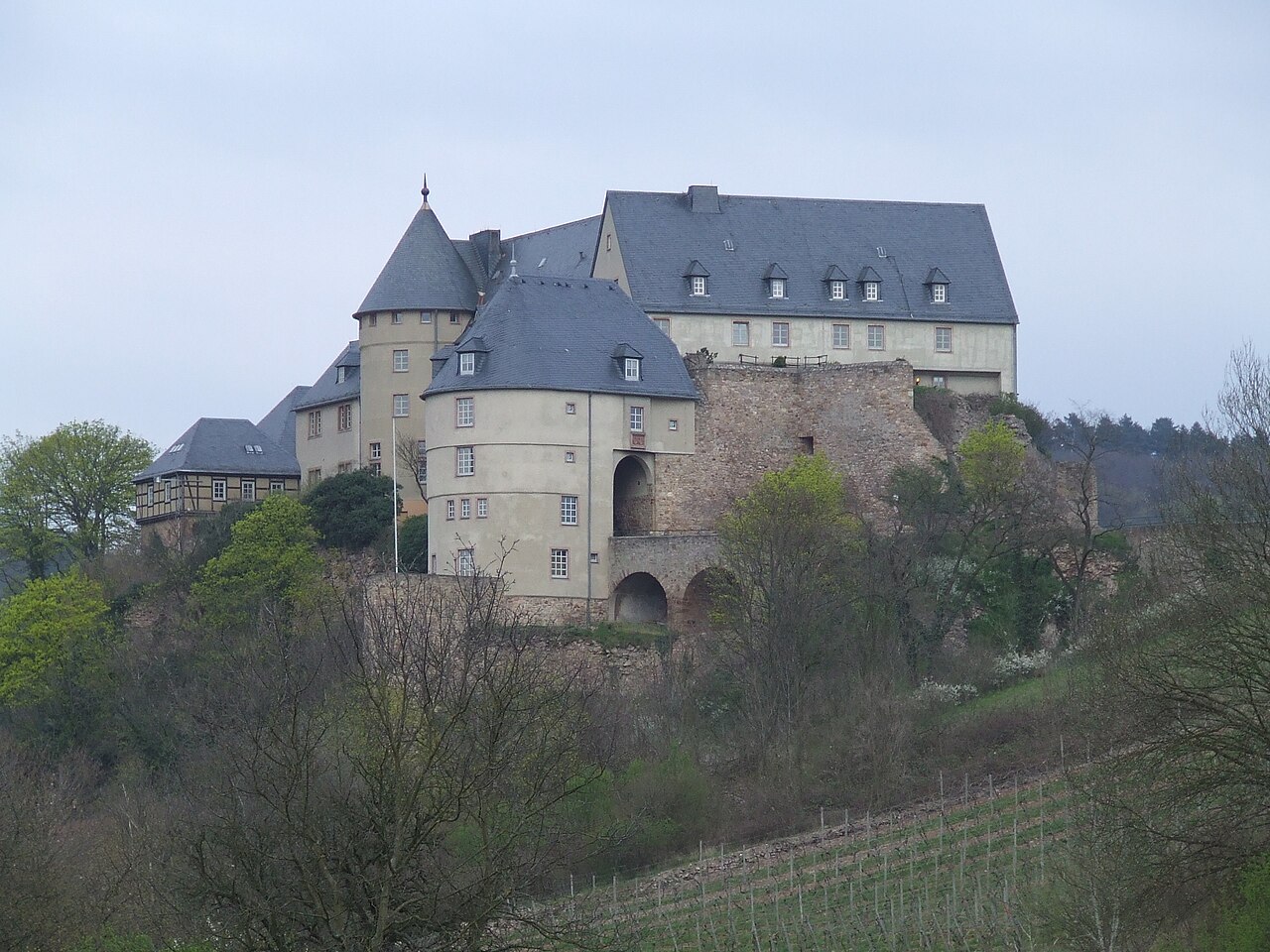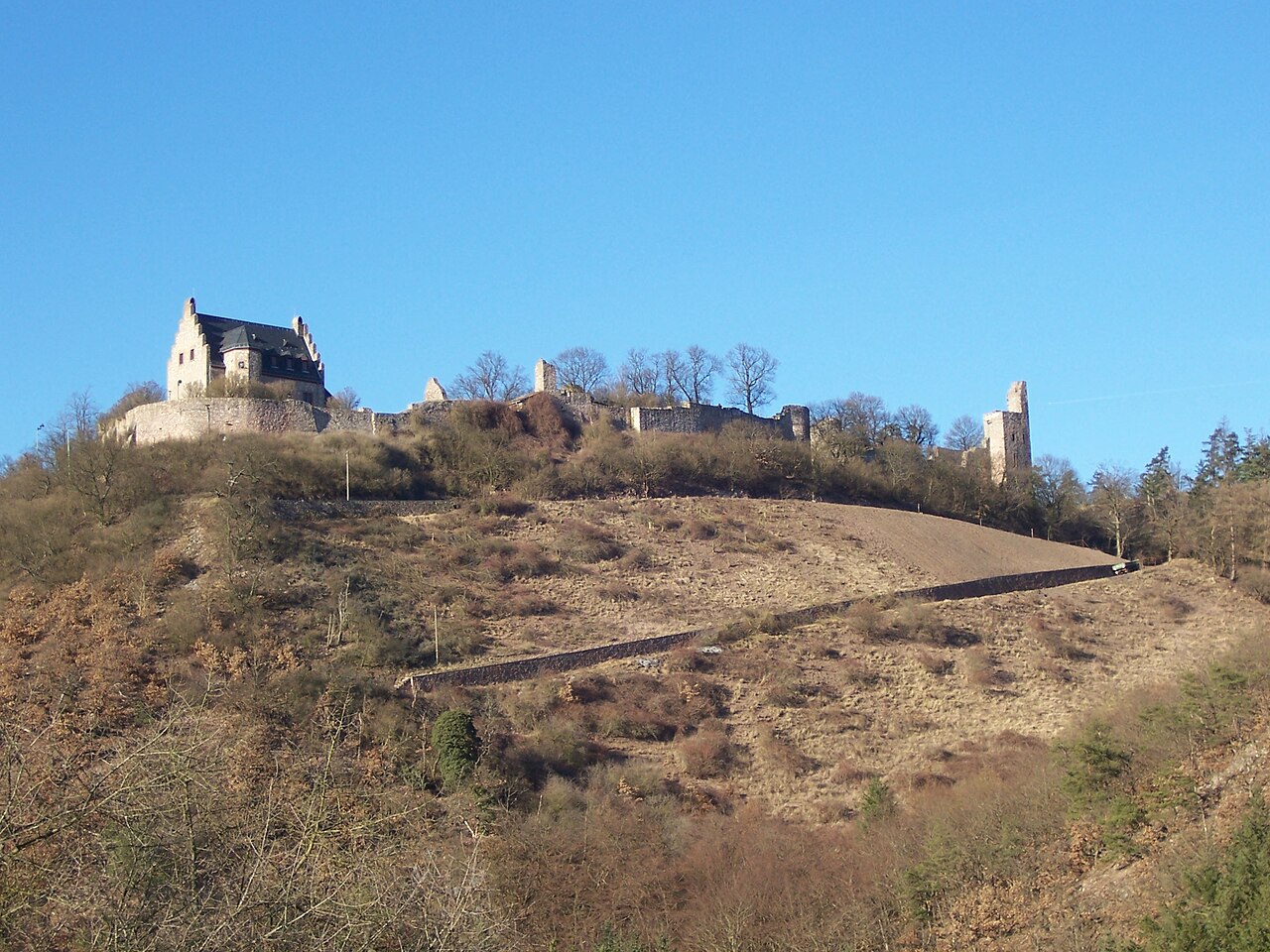
Rheingrafenstein Castle
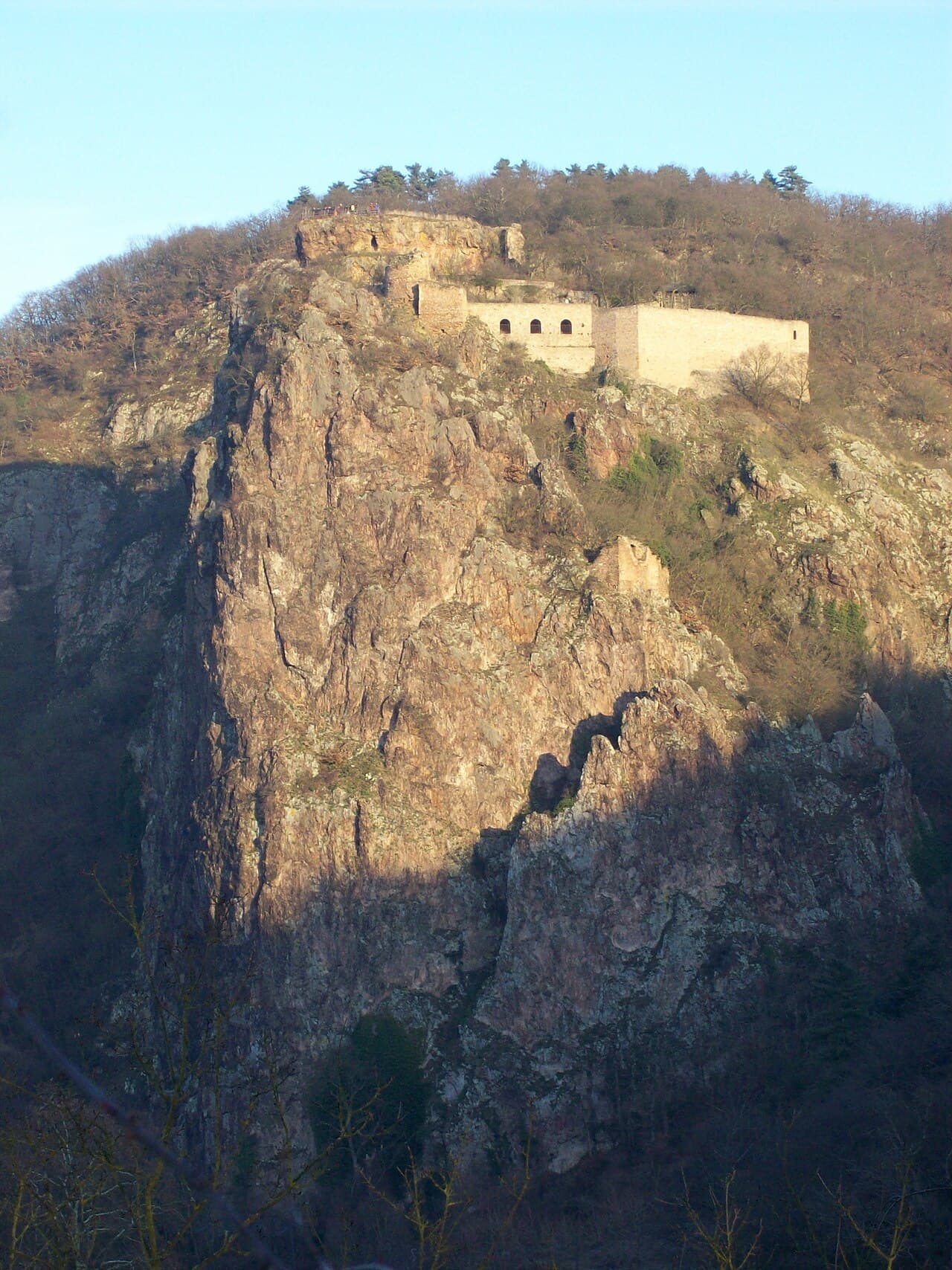
Rheingrafenstein Castle is a notable example of a high medieval hill castle strategically perched on a 136-metre-high porphyry rock formation overlooking the Nahe river in Bad Münster am Stein-Ebernburg, Germany. This imposing rock castle, also historically known as Huhinstein, commands a dominant position opposite the town, offering both natural defense and panoramic views of the surrounding landscape.
Early history and origins
The castle's origins trace back to the 11th or 12th century, with strong indications that it was constructed by the Counts of Nahegau from the influential Emichones family. These counts were regional nobles who controlled territories along the Nahe river during the high medieval period. Rheingrafenstein Castle served as a fortified residence and a symbol of their power in the region.
While the castle itself is first unambiguously mentioned in records from the 13th century, the noble family associated with it, the Lords of Stein, appear in historical documents from the 12th century. The Lords of Stein were the direct ancestors of the later titled Wildgraves and Rhinegraves, who played significant roles in the region's feudal hierarchy.
The relationship between the Lords of Stein and the Counts of Nahegau is somewhat unclear, but it is certain that the castle was the ancestral seat of the Lords of Stein. Through strategic marriage alliances in the second half of the 12th century, the Lords of Stein acquired the Rheingau region, further elevating their status.
In 1196, Lord Wolfram of Stein began to use the title Rhinegrave, a noble designation that was subsequently linked to the castle itself, hence the name Rheingrafenstein (literally "Rhinegrave's rock"). This title reflected their authority over the Rhine region and their elevated noble rank.
Architectural features and layout
Rheingrafenstein Castle is classified as a hill castle, built on a natural rock outcrop that provided significant defensive advantages. The castle's construction took advantage of the steep, rugged porphyry rock, making direct assault difficult for attackers.
Although much of the original structure has been lost, several architectural elements remain visible today. These include parts of the enceinte (the surrounding defensive walls), a vaulted cellar that hints at the castle's storage and living facilities, and remnants of the tower house, including a few steps and the foundations of the former tower staircase.
One notable feature is a staircase carved into the rock that leads visitors to a viewing platform, offering expansive views of the Nahe valley and the town below. This feature highlights the castle's integration with the natural landscape and its use of the terrain for defense and observation.
On the southern slope of the rock formation lie the ruins of the bailey Affenstein, an outer ward or courtyard that would have housed additional buildings and served as a protective buffer zone for the main castle.
Historical significance and events
Throughout its history, Rheingrafenstein Castle was a center of noble authority and witnessed several significant historical events. During the Thirty Years' War (1618–1648), the castle was captured by both French and Spanish forces, reflecting its strategic importance in this turbulent period of European conflict.
In 1688, the castle suffered severe damage when it was destroyed by troops under the command of General Mélac, a French military leader known for his campaigns in the Rhineland during the Nine Years' War. This destruction marked the end of Rheingrafenstein as a fully operational fortress.
Following its destruction, the castle's ruins were repurposed. In 1721, a salt works was constructed atop the ruins, indicating the site's continued economic use despite the loss of its military function.
The last noble owner of the castle was the Prince of Grumbach, who eventually moved his residence to nearby Gaugrehweiler, leaving Rheingrafenstein Castle abandoned as a noble seat.
Current condition and visitor experience
Today, Rheingrafenstein Castle stands as a partially preserved ruin, with several structural elements still visible and accessible to visitors. The remaining vaulted cellar and traces of the tower house provide insight into the castle's medieval architecture and defensive design.
Visitors can explore the rock-cut staircase leading to the viewing platform, which remains a popular spot for appreciating the castle's dramatic setting and the scenic Nahe valley. The ruins of the bailey Affenstein on the southern slope add to the historical atmosphere and offer further exploration opportunities.
The castle's location opposite Bad Münster am Stein-Ebernburg makes it accessible for day trips, and its historical significance as the ancestral seat of the Rhinegraves enriches the cultural heritage of the region.
The legacy of rheingrafenstein castle
Rheingrafenstein Castle is a significant monument in the history of the Rhineland, representing the medieval nobility's power and architectural ingenuity. Its connection to the Lords of Stein and the title of Rhinegrave underlines its importance in regional feudal structures.
The castle's dramatic setting on a porphyry rock formation and its survival through centuries of conflict and change make it a valuable site for understanding medieval military architecture and noble life in the Nahe valley.
As a hill castle with remnants of its original defensive walls and towers, Rheingrafenstein offers a tangible link to the past and continues to attract historians, architects, and visitors interested in Germany's medieval heritage.
Frequently asked questions (FAQ)
- How do I get to Rheingrafenstein Castle from Bad Münster am Stein-Ebernburg?
- Rheingrafenstein Castle is located opposite Bad Münster am Stein-Ebernburg on the Nahe river. Visitors can reach the castle by crossing the river and following local hiking trails that lead up to the rock formation where the castle stands.
- What is the historical significance of Rheingrafenstein Castle?
- Rheingrafenstein Castle was the ancestral seat of the Lords of Stein, later known as the Rhinegraves. It played a strategic role in regional power dynamics during the high medieval period and was involved in conflicts like the Thirty Years' War.
- Can I visit the viewing platform at Rheingrafenstein Castle?
- Yes, visitors can access a staircase carved into the rock that leads to a viewing platform. From there, they can enjoy panoramic views of the Nahe valley and the town of Bad Münster am Stein-Ebernburg.
- When was Rheingrafenstein Castle destroyed and by whom?
- The castle was destroyed in 1688 by French troops under General Mélac during the Nine Years' War, marking the end of its military use.
- Are there any other ruins near Rheingrafenstein Castle worth visiting?
- Yes, the ruins of the bailey Affenstein are located on the southern slope of the rock formation and offer additional historical interest for visitors exploring the area.
Photo gallery

Information
Loading map...
Visitor reviews
No reviews yet. Been here? Write the first review and help other travelers!
Write the first reviewVisited this castle? Share your experience
Your review helps other travelers and adds first-hand knowledge to our encyclopedia.