
Örbyhus Castle
Örbyhus Castle stands as a significant example of a late medieval hill castle in the historic province of Uppland, Sweden. The estate's origins trace back to the 14th century, but it was around 1450 that the first true castle was constructed by John Kristiernsson Vasa, the grandfather of the famous Swedish king Gustav Vasa. This initial fortification was built as a strong defensive tower, typical of the period's military architecture, designed to assert control over the surrounding landscape and provide refuge during conflicts.
Historical development and ownership
The castle remained in the possession of the royal Vasa family until the late 16th century. In 1548, Gustav Vasa acquired Örbyhus through an exchange with his cousins, marking a pivotal moment in the castle's history. Under his direction, the fortress was transformed into a national stronghold, featuring extensive ramparts, moats, and imposing 54-foot-high stone walls encircling the original tower. These enhancements reflected the strategic importance of Örbyhus in consolidating royal power in Uppland.
Architectural features from the Vasa period
Gustav Vasa's renovations included the addition of numerous hidden passages and casemates—fortified chambers capable of housing a garrison and storing supplies sufficient for prolonged sieges. This design illustrates the castle's dual function as both a defensive fortress and a secure royal residence. The presence of these features emphasizes the military engineering advancements of the 16th century in Sweden.
King Erik XIV's imprisonment
One of Örbyhus Castle's most notable historical roles was as a prison for King Erik XIV, Gustav Vasa's son, who was confined here from 1574 until his death in 1577. His imprisonment marks a dark chapter in the castle's history, reflecting the turbulent political struggles of the Swedish monarchy during the late Renaissance period.
Baroque transformation and later ownership
In 1641, the castle passed into the hands of Gustav Banér, the governor of Västergötland, who undertook significant rebuilding efforts that gave Örbyhus its present Baroque architectural appearance. This transformation included modernization of the castle's residential quarters and the adaptation of its defensive structures to suit the changing needs of the period.
Throughout the 18th and 19th centuries, Örbyhus was owned by prominent families such as the de Geer family at Leufsta, who made both estates entailed properties. Notably, the scientist Charles de Geer was among the estate's notable residents. Subsequent owners included the von Platen, de la Gardie, Klingspor, and Barnekow families, each leaving their mark on the estate's history and upkeep.
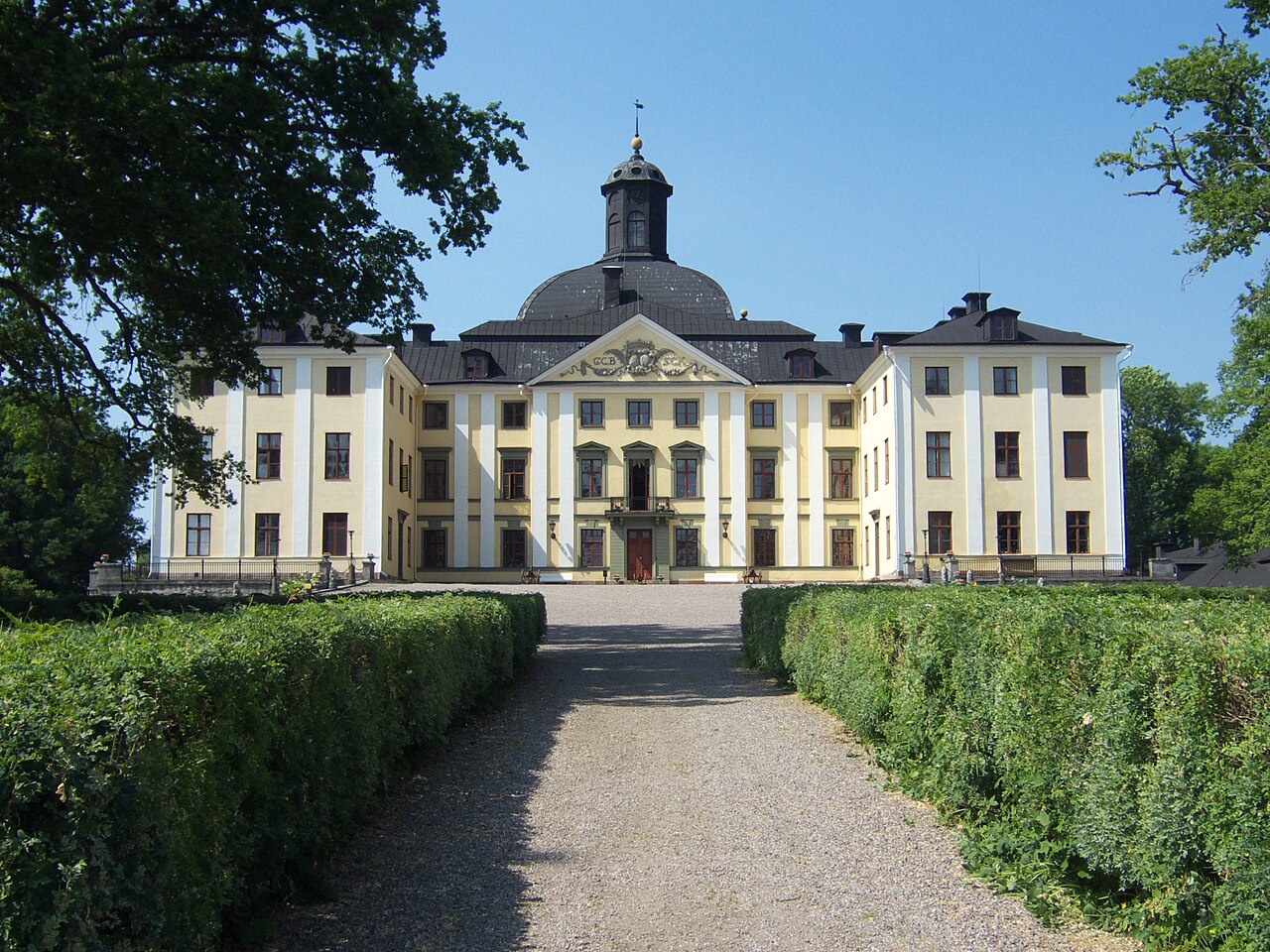
Photo by Zejo • Public domain
20th-century restoration and current status
At the dawn of the 20th century, Count Carl Gustav von Rosen purchased Örbyhus, but it was Count Eugène von Rosen who took over the castle in the same year and commissioned extensive restoration and decorative work. These efforts helped preserve the castle's historical integrity while adapting it for modern use.
Today, Örbyhus Castle is a well-preserved historical site offering guided tours during the summer months. Visitors can explore the prison quarters of King Erik XIV, the castle park, and a carriage museum housed on the grounds. The castle's location, approximately 12 kilometers east of the European route E4 between Uppsala and Gävle, makes it accessible for those interested in Swedish history and medieval architecture.
Architectural characteristics and significance
Örbyhus Castle exemplifies the evolution of Swedish castle architecture from a fortified medieval tower to a Baroque residence. Its hilltop location provided natural defensive advantages, enhanced by man-made features such as moats and ramparts. The castle's stone walls and towers reflect the military needs of the 15th and 16th centuries, while later modifications introduced more comfortable living spaces and aesthetic elements characteristic of the Baroque style.
The castle's use as a prison, especially for a monarch, adds a unique historical dimension, illustrating the interplay between power, architecture, and political intrigue in Sweden's past. The survival of hidden passages and casemates offers valuable insights into the defensive strategies employed during the Renaissance.
Visiting Örbyhus Castle
Visitors to Örbyhus can experience a rich blend of history and architecture. The guided tours provide detailed narratives about the castle's construction phases, its role in Swedish royal history, and stories of its famous prisoners. The castle park offers a scenic setting for leisurely walks, and the carriage museum displays historical vehicles, adding to the cultural experience.
Örbyhus remains an important cultural heritage site, reflecting centuries of Swedish history through its architecture and preserved artifacts. It stands as a testament to the country's medieval fortification traditions and the evolving tastes of its aristocracy.
Frequently asked questions (FAQ)
- How do I get to Örbyhus Castle?
- Örbyhus Castle is located about 12 kilometers east of the European route E4, roughly halfway between Uppsala and Gävle. It is accessible by car and local roads leading to the town of Örbyhus in Tierp Municipality.
- What is the historical significance of Örbyhus Castle?
- Örbyhus Castle is historically significant as a late medieval fortress built by the Vasa family and later transformed into a Baroque residence. It was also the prison of King Erik XIV, adding to its royal historical importance.
- When was Örbyhus Castle built?
- The original castle was built around 1450 by John Kristiernsson Vasa. It underwent major expansions and renovations under Gustav Vasa in the mid-16th century and later Baroque modifications in the 17th century.
- Can I visit King Erik XIV's prison at Örbyhus Castle?
- Yes, guided tours during the summer season include visits to the prison quarters where King Erik XIV was held until his death. This part of the castle offers a glimpse into its use as a royal prison.
- What architectural styles are visible at Örbyhus Castle?
- Örbyhus Castle primarily exhibits late medieval military architecture with significant Baroque modifications from the 17th century, combining defensive features with residential elegance.
Photo gallery

Photo by Zejo•Public domain
Information
Website
Visit websiteLoading map...
Visitor reviews
No reviews yet. Be the first to share your experience!