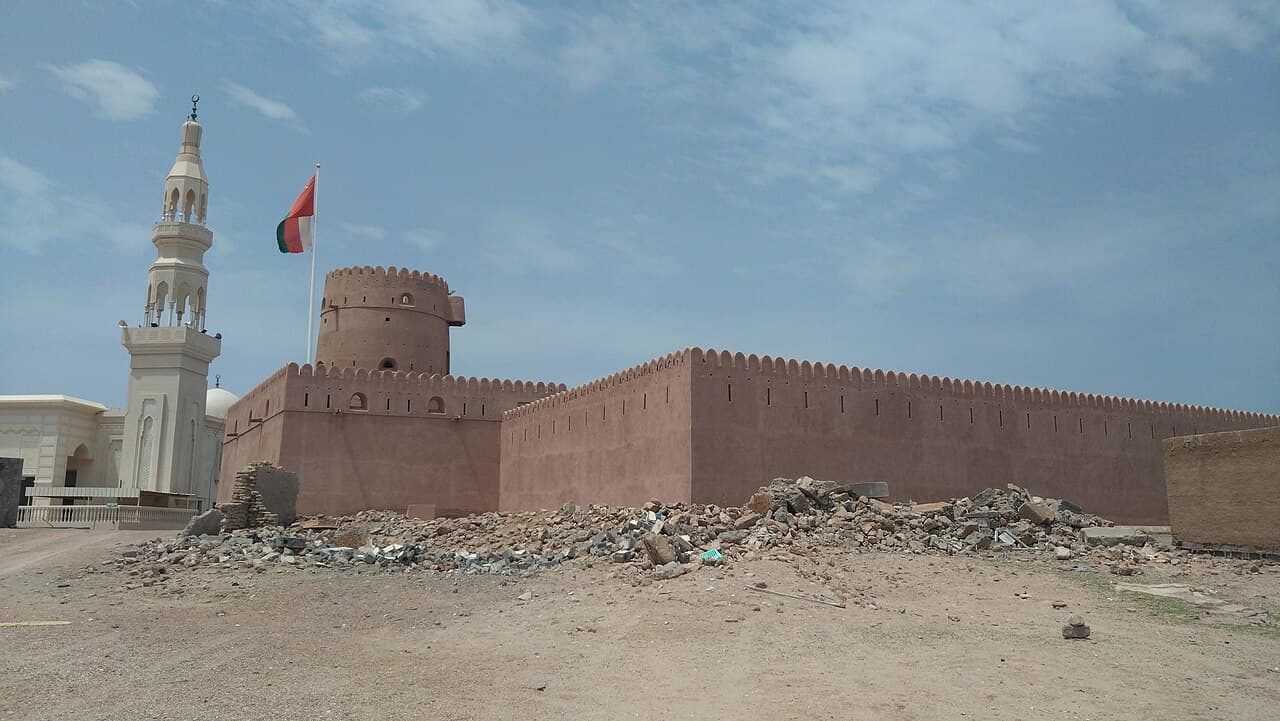
Ras Al Hadd Castle — Oman castle

Ras Al Hadd Castle

Ras Al Hadd Castle in Oman: coastal bastioned fortress of the 16th century
Ras Al Hadd, Oman
Late Medieval (14th–15th c.)
Well Preserved

Ras Al Hadd Castle is a historic bastioned fortress located in the village of Ras Al Hadd, within the Ash Sharqiyah South Governorate of Oman. This castle occupies a strategic position on a sandy coastal strip where the Gulf of Oman converges with the Arabian Sea, a location that historically attracted various powers seeking control over this vital maritime junction.

Historical context and strategic importance

The castle was constructed between 1560 and 1590 by local tribes to defend their territory from foreign incursions and to assert control over the coastal area between the sea and the Ras Al Hadd Lagoon. This period corresponds to the late medieval era in the region, during which Oman was a nexus of maritime trade and occasional conflict involving regional and European powers.

The fortress's placement at the cape allowed it to monitor and control maritime traffic entering and leaving the Gulf of Oman, making it a critical point of defense against naval threats. The presence of a watchtower at the shore of the lagoon enhanced its surveillance capabilities, providing early warning of approaching vessels.

Architectural features and layout

Ras Al Hadd Castle is designed with a square ground plan, characteristic of many coastal fortifications of the period. The fortress includes two round towers positioned at its northern corners, which would have served as vantage points for lookouts and platforms for defensive artillery or archers.

Dominating the southern curtain wall is a larger square tower topped by a round tower, likely functioning as the castle's keep or main stronghold. This layered tower design provided enhanced defense and command capabilities, allowing defenders to observe and repel attackers effectively.

The castle's walls are robust, constructed to withstand both land and sea attacks, reflecting the military architectural principles of the 16th century in Oman. The bastioned fortress style integrates angular bastions to deflect cannon fire and improve defensive coverage.

Current condition and visitor experience

Today, Ras Al Hadd Castle is well preserved and accessible to the public. Visitors can explore the castle grounds free of charge during opening hours. While the interior spaces are somewhat sparse, the castle offers valuable insights into the region's defensive architecture and maritime history.

The castle's coastal setting also provides scenic views of the surrounding sea and lagoon, enhancing the visitor experience beyond the historical structures themselves.

Significance in Omani heritage

As a coastal bastioned fortress, Ras Al Hadd Castle is an important example of Oman's military architecture during the late medieval period. It illustrates the local tribes' efforts to protect their lands and maintain sovereignty in a region marked by maritime trade and foreign interest.

The castle remains a symbol of the strategic maritime defense network that Oman developed to safeguard its shores and control critical sea routes.

Frequently asked questions (FAQ)

How do I visit Ras Al Hadd Castle?
Ras Al Hadd Castle is open to visitors free of charge during its opening hours. It is recommended to check local tourism sources for the current visiting times before planning your trip.
What is the historical significance of Ras Al Hadd Castle?
The castle was built in the late 16th century by local tribes to defend the strategic coastal area where the Gulf of Oman meets the Arabian Sea. It served as a military bastioned fortress to protect against foreign occupation.
What architectural features does Ras Al Hadd Castle have?
The castle features a square ground plan with two round towers at the northern corners and a larger square tower topped by a round tower on the southern wall, likely serving as a keep. It exemplifies bastioned fortress design typical of the late medieval period.
Is Ras Al Hadd Castle well preserved?
Yes, Ras Al Hadd Castle is well preserved and accessible to the public. While the interior is relatively empty, the structure and defensive features remain intact for visitors to explore.
Can I see views of the sea from Ras Al Hadd Castle?
Yes, the castle's coastal location offers scenic views of the Arabian Sea and the Ras Al Hadd Lagoon, providing a picturesque backdrop to the historic fortress.

Photo gallery

Ras Al Hadd Castle
Click to view

Photo by Braveheart•CC BY 4.0

1 photo • Click any image to view in full screen

Information

Bastioned Fortress

Ticket prices

Free

Loading map...

Visitor reviews

No reviews yet. Been here? Write the first review and help other travelers!

Write the first review

Visited this castle? Share your experience

Your review helps other travelers and adds first-hand knowledge to our encyclopedia.

Write a review

(5/5)

0/2000 characters

Your review will be visible after admin approval

Nearby castles

0.7 km

Ras Al Hadd Tower

Ras Al Hadd, Oman

Ras Al Hadd Tower is a historic coastal watchtower located near the village of Ras Al Hadd in the Ash Sharqiyah South Governorate of Oman. Positioned on a sandy cape where the Gulf of Oman meets the Arabian Sea, this tower played a significant role in the region's maritime defense during the late 16th century. Strategic location and historical context The village of Ras Al Hadd is situated on a narrow strip of land bordered by the sea on one side and the Ras Al Hadd Lagoon on the other. This unique geographical position made it a critical point of control for local tribes and regional powers who sought to secure the coastline against foreign naval incursions and piracy. To safeguard their territory, the local inhabitants constructed the Ras Al Hadd Tower between approximately 1560 and 1590. The tower's placement near the shore of the lagoon was deliberate, enabling it to serve as an early warning post and defensive stronghold. It provided surveillance over the surrounding waters and coastline, helping to detect approaching ships and potential threats. Architectural features and design Ras Al Hadd Tower is a simple yet functional round watchtower typical of coastal fortifications built in the region during the late medieval period. It is constructed primarily from local stone and mortar, designed to withstand harsh coastal weather and possible attacks. The tower's compact form includes narrow slit windows for observation and defense, allowing guards to monitor the sea while being protected. The tower's height and position on the shore provided a commanding view of the surrounding maritime routes. Access to the tower is via a series of stone steps, which may require careful climbing. Despite its modest size, the tower's design reflects the practical needs of coastal defense, emphasizing visibility and resilience over elaborate decoration. Role in local defense and cultural significance During the period of its construction, the Arabian Peninsula's coastal areas were vulnerable to attacks by foreign naval powers and pirates. The Ras Al Hadd Tower formed part of a network of similar watchtowers and fortifications along the Omani coast, which collectively helped secure the region's maritime borders. Its presence near the village center underscores the importance of protecting local communities and trade routes. Today, the tower stands as a tangible reminder of the region's historical efforts to maintain sovereignty and security over strategic coastal points. Current condition and visitor information The Ras Al Hadd Tower remains well preserved and is freely accessible to visitors. The tower's simple structure invites exploration, though climbing the stone steps requires caution due to their uneven nature. Visitors can appreciate the tower's historical context and its commanding views of the Ras Al Hadd Lagoon and the adjoining sea. The site offers insight into Oman's coastal defense architecture and the historical significance of maritime security in the region. It is a modest but important cultural landmark within the Ash Sharqiyah South Governorate.

Late Medieval (14th–15th c.)
Details
8.2 km

Khor Grama Tower

Khor Grama, Oman

The Khor Grama Tower is a coastal fortification located in a small, unnamed hamlet west of the village of Ras Al Hadd, within the Ash Sharqiyah South Governorate of Oman. This tower occupies a rocky knoll on the southern shore of the Khor Grama Lagoon, overlooking the Arabian Sea. Despite its modest size and ruinous condition, the tower represents a significant example of the region's defensive architecture, reflecting the strategic importance of coastal watchpoints in Oman’s history. Architectural features and layout The Khor Grama Tower consists primarily of a round tower perched atop a rocky outcrop, which is encircled by a somewhat elliptical defensive wall that contours the knoll’s natural shape. This configuration suggests an adaptation to the terrain, maximizing defensive capabilities while minimizing construction effort. The tower’s circular plan is typical of many coastal watchtowers designed to provide a wide field of view and to better deflect projectiles. The enclosing wall, though now largely in ruins, would have served as a first line of defense, enclosing a small courtyard or platform around the tower. The defensive wall’s elliptical shape is unusual compared to more common rectangular or square enclosures, indicating a possible local adaptation or a response to the specific topography of the site. Currently, the tower and its walls are in a very ruinous state, with much of the masonry collapsed or eroded. Despite this, the fundamental form and layout remain discernible, allowing visitors to appreciate the original defensive design. Historical context and significance The history of the Khor Grama Tower remains poorly documented. Some sources have referred to it as the "Portuguese Tower," a common but often inaccurate label applied to many coastal fortifications in Oman due to the Portuguese presence in the region during the 16th and 17th centuries. However, this attribution is doubtful, especially considering that the nearby castle in Ras Al Hadd was constructed by local tribes specifically to resist Portuguese incursions. It is more plausible that the Khor Grama Tower was built by local Omani communities or tribal groups to monitor maritime activity and protect the coastline. Its position near the lagoon and the sea would have made it an effective lookout point against potential threats or pirates. The tower’s strategic location highlights the importance of coastal defense in Oman’s history, where controlling access to the sea and safeguarding trade routes were crucial concerns. While not as grand or well-preserved as other fortifications, the Khor Grama Tower offers valuable insight into the smaller-scale defensive structures that complemented larger castles and forts. Visiting the site The Khor Grama Tower is freely accessible to visitors. Its remote and quiet setting offers an opportunity to explore a lesser-known ruin without the crowds common at more famous sites. Visitors can walk around the tower and the remains of the defensive wall, enjoying views over the Khor Grama Lagoon and the surrounding landscape. Due to its ruinous condition, caution is advised when exploring the site, as some areas may be unstable. There are no formal visitor facilities or interpretive signage, making it best suited for those with an interest in archaeology, history, or coastal fortifications. Comparative significance among Omani coastal defenses While the Khor Grama Tower is modest compared to larger coastal forts like the castle at Ras Al Hadd, it exemplifies the network of smaller watchtowers that dotted Oman’s coastline. These towers functioned as early warning posts and local defense points, providing communication links along the shore. The tower’s round shape and elliptical wall distinguish it from other coastal structures, suggesting a unique local architectural approach. Its preservation as a ruin allows for archaeological study and contributes to understanding the evolution of defensive strategies in Oman during the late medieval and early modern periods.

Details
25.7 km

Al Ayjah Castle

Sur, Oman

Al Ayjah Castle, also known as Al Hamouda Castle, stands in the Al Ayjah neighborhood of Sur, a coastal city in the Ash Sharqiyah South Governorate of Oman. This castle is part of Sur's historic defensive network, which protected one of the region's most important maritime trading hubs. Sur's strategic location on a small bay with a natural harbor and a large lagoon fed by two creeks made it a vital center for maritime trade as early as the 6th century. By this time, Sur had established connections with East Africa, facilitating the exchange of goods and culture. The city's prominence continued through the centuries, although it experienced decline during the 16th century under Portuguese rule. The Portuguese favored Muscat as their main stronghold, leading to Sur's diminished status. This period ended in the early to mid-17th century when the Portuguese were expelled by Imam Nasir ibn Murshid, marking a revival of Sur's economy and maritime importance. Following the Portuguese departure, Sur regained its stature as a key port for trade with India and East Africa. The city also became renowned for its dhows shipyards, where traditional wooden vessels were crafted using time-honored techniques. The need to protect this prosperous trade network and shipbuilding industry led to the construction of a defensive system around Sur. Fortifications and defensive network of Sur Sur was fortified with a network that originally included five castles and multiple watchtowers, dating primarily to the 17th century. These fortifications served to safeguard the city from seaborne and land-based threats. Some of these structures may have originated as Portuguese fortifications that were later modified and enhanced by the Omanis to suit their defensive needs. Al Ayjah Castle's architectural features Al Ayjah Castle was constructed to the east of Sur's bay by Sheikh Rashid bin Salem Al Hamouda. The castle has a square ground plan with rectangular towers positioned at three of its corners, a design typical of defensive architecture aimed at providing overlapping fields of fire and surveillance. The castle features two entrances: a main gate through a gate building located in the east wall, and a secondary entrance resembling a sally port situated in a tower on the north wall. This sally port would have allowed defenders to launch sorties or escape in emergencies. The castle is now surrounded by a square of merchant houses, indicating how the urban fabric of Sur has grown around this historic fortification. Complementary defenses and strategic importance The defense of Sur's eastern flank, including Al Ayjah Castle, was supported by multiple watchtowers and a coastal battery. These outposts provided early warning of approaching threats and added layers of defense against naval attacks. While specific historical records about Al Ayjah Castle itself are limited, its role within Sur’s broader defensive strategy is clear. It formed part of a coordinated system ensuring the security of this vital maritime city during a period of regional conflict and economic resurgence in the 17th century. Historical context and significance The history of Sur and its fortifications reflects the broader geopolitical dynamics of the Arabian Peninsula and the Indian Ocean trade routes. The expulsion of the Portuguese by Imam Nasir ibn Murshid was a turning point that restored Omani control and initiated a period of economic and cultural revival. Sur's fortresses, including Al Ayjah Castle, illustrate the military architecture of the time, combining indigenous building techniques with influences from Portuguese and Islamic defensive styles. The castle's robust walls and towers were designed to withstand artillery and provide a secure base for controlling the surrounding area. Current condition and accessibility Today, Al Ayjah Castle is partially preserved and remains a notable landmark in Sur. It occasionally opens to visitors, although information about regular visiting hours is scarce. When closed, the castle can be viewed from the surrounding streets, offering a glimpse into Sur’s fortified past. Sur itself is a compelling destination for those interested in maritime history and traditional Omani culture, with multiple fortifications such as Bilad Sur Castle, Sunaysilah Castle, and Harat Al Aqbah Tower contributing to the city's historic landscape. Architectural details and materials The castle’s construction employs local materials typical of Omani fortifications, including coral stone and limestone, bonded with lime mortar. The thick walls and towers provided defense against cannon fire and small arms. The design reflects practical considerations for the hot, humid coastal environment, with limited openings to reduce heat and improve security. Internally, the castle would have contained storage rooms, guard chambers, and possibly a central courtyard, although much of the interior layout is not well documented. The presence of multiple entrances suggests a complex defensive strategy balancing accessibility and security. Sur's maritime heritage and castle's role Sur’s identity as a maritime city is inseparable from its fortifications. The castle and its associated watchtowers ensured the protection of the bustling harbor, safeguarding the trade routes that connected Oman with the wider Indian Ocean world. The shipyards of Sur, famous for producing dhows, were vital to the city’s economy and regional influence. The castle's position east of the bay allowed it to oversee the shipyards and the harbor, enabling control over maritime traffic and defense against pirate raids or foreign incursions. Cultural significance Al Ayjah Castle is part of Sur’s cultural heritage, representing the city’s resilience and historical importance. It stands as a symbol of Omani sovereignty and maritime prowess during a period of significant political change and economic development.

Early Medieval (5th–10th c.)
Details

