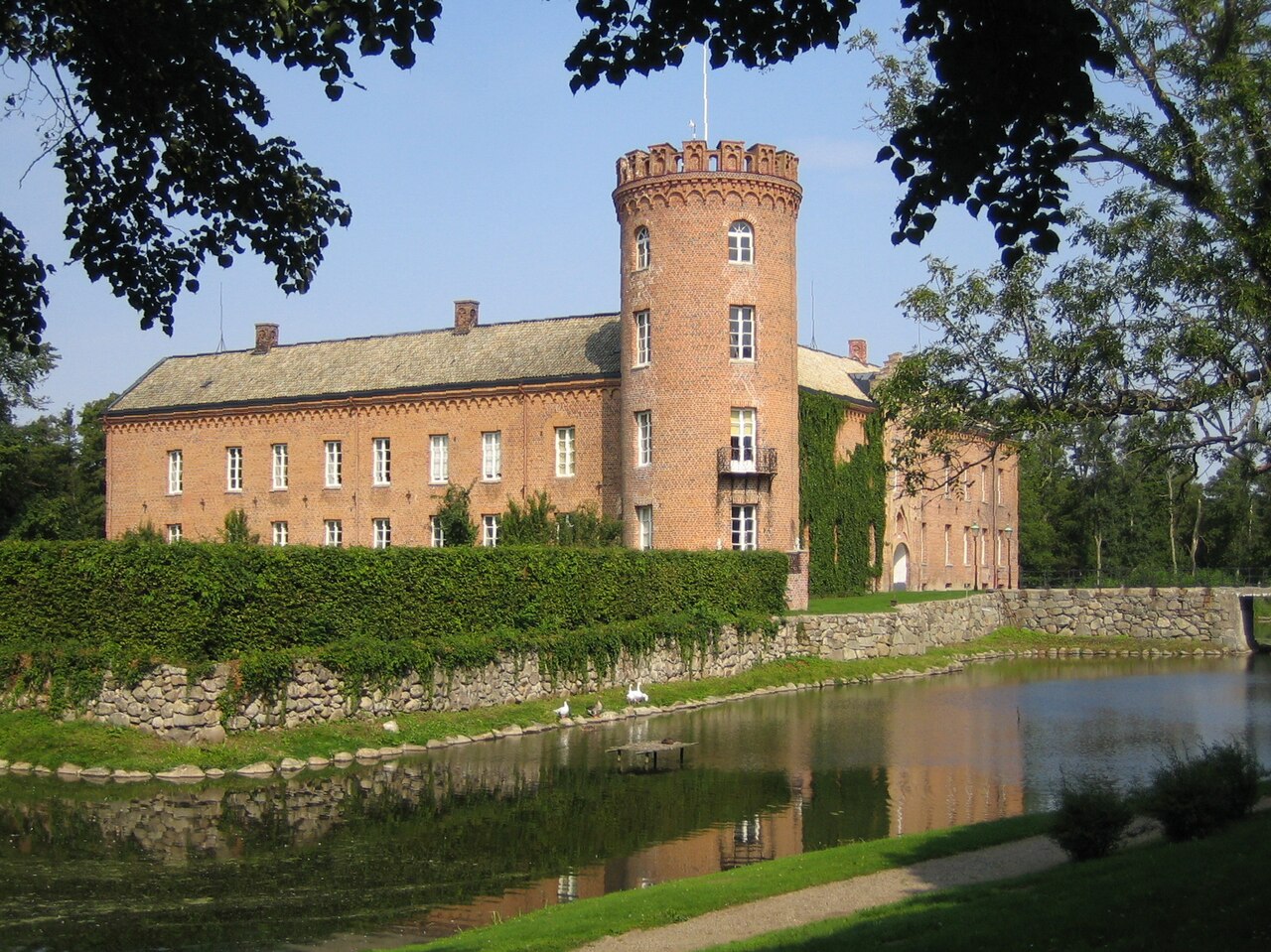
Övedskloster Castle
Övedskloster Castle stands on a site with a layered history dating back to the Middle Ages, originally established as a Premonstratensian monastery. This religious institution was significant during the medieval period until the 16th-century Reformation led to its transfer to the Danish Crown. The original monastery complex suffered destruction by fire in the early 1600s, erasing much of the medieval structures.
The present-day Övedskloster Castle was constructed between 1765 and 1776 under the direction of Hans Ramel, a prominent Swedish nobleman. The castle was designed by the noted Swedish architect Carl Hårleman, who was influential in bringing French Rococo architectural style to Sweden. The main building is distinguished by its elegant red sandstone facade and refined Rococo detailing, which was fashionable among Swedish aristocracy in the post-Renaissance 18th century.
Historical background and monastic origins
The site of Övedskloster Castle was originally occupied by a Premonstratensian monastery, founded during the Middle Ages. The Premonstratensians, also known as the Norbertines, were a religious order known for their strict communal life and missionary work. This monastery played a key role in the religious and social landscape of the region until the Protestant Reformation dramatically altered church properties across Scandinavia.
Following the Reformation in the 16th century, the monastery was secularized and its lands were transferred to the Danish Crown, as the area was under Danish rule at the time. This change marked the end of the monastery's religious function and the beginning of its transformation into a noble estate.
Destruction and reconstruction in the 17th and 18th centuries
The original monastery buildings were destroyed by a fire in the early 17th century. After this event, the site lay in ruins for several decades until it was acquired by the Ramel family. The current castle was commissioned by Hans Ramel, who sought to create a grand residence that reflected contemporary tastes and his family's status.
The construction of the new manor house began in 1765 and was completed in 1776. The project was entrusted to Carl Hårleman, a leading figure in Swedish architecture known for his role in introducing the Rococo style to Sweden. Hårleman's design for Övedskloster Castle features a harmonious blend of elegance and restraint, characteristic of French Rococo influences adapted to Swedish sensibilities.
Architectural features and style
Övedskloster Castle is a prime example of French Rococo architecture in Sweden. The main building is constructed from red sandstone, which gives the facade a warm and distinctive appearance. The design emphasizes symmetry and incorporates delicate ornamental details typical of the Rococo movement, such as intricate moldings and refined window frames.
The castle's layout includes a central main building flanked by wings, creating a balanced and inviting courtyard. The interiors, though private and not open to the public, are known to reflect the same elegant Rococo style with emphasis on light, pastel colors, and decorative art.
Gardens and grounds
The castle is surrounded by gardens that are accessible to visitors year-round from 9 a.m. to 4 p.m. These gardens complement the architectural elegance of the manor and are designed in a style consistent with 18th-century landscaping trends, featuring carefully arranged plantings and pathways that enhance the visual impact of the estate.
Current status and access
Today, Övedskloster Castle remains the private residence of the Ramel family. It is not open to the public for interior tours, preserving its status as a family home. However, the gardens provide a rare opportunity for visitors to experience the estate's historic ambiance and natural beauty.
Övedskloster Castle is a notable cultural landmark in Sjöbo, Sweden, representing the transformation of a medieval monastic site into an 18th-century aristocratic manor. Its architectural significance and historical depth make it an important subject of study for enthusiasts of Swedish Rococo architecture and post-Reformation noble estates.
Frequently asked questions (FAQ)
- What is the historical significance of Övedskloster Castle?
- Övedskloster Castle, built in the 17th century, is an important example of Swedish Renaissance architecture. The castle has a rich history, having served as a monastery before being transformed into a residence, reflecting the cultural shifts in Sweden over the centuries.
- When was Övedskloster Castle built?
- Övedskloster Castle was constructed in the early 1600s, with its foundation attributed to the architectural designs of the era. The castle has undergone various renovations, preserving its historical essence while adapting to modern needs.
- Can I visit Övedskloster Castle?
- Yes, Övedskloster Castle is open to the public for tours. Visitors can explore the castle's rich history, stunning architecture, and beautiful gardens, making it a great destination for history enthusiasts and families alike.
- What are the opening hours of Övedskloster Castle?
- Övedskloster Castle is typically open to visitors from 10 AM to 5 PM during the summer months. It's advisable to check the official website for seasonal changes and special opening days.
- Is it possible to access Övedskloster Castle by public transport?
- Yes, Övedskloster Castle is accessible by public transport with nearby bus stops serving the area. Visitors can also enjoy scenic walks from the nearest train station, making it convenient for those without a car.
- What is the best time to visit Övedskloster Castle?
- The best time to visit Övedskloster Castle is during the summer months when the weather is pleasant, and the gardens are in full bloom. Additionally, many events and guided tours are offered during this period, enhancing the visitor experience.
- Are there any nearby attractions to Övedskloster Castle?
- Yes, there are several nearby attractions, including beautiful parks and local museums that showcase the history of the region. Visitors can also explore the charming town of Sjöbo, which offers a variety of shops and dining options.
- What are the ticket prices for Övedskloster Castle?
- Ticket prices for Övedskloster Castle vary by age and group size, with discounts available for children and seniors. It's best to check the official website for the most current pricing information and any special offers.
Information
Loading map...
Visitor reviews
No reviews yet. Been here? Write the first review and help other travelers!
Write the first reviewVisited this castle? Share your experience
Your review helps other travelers and adds first-hand knowledge to our encyclopedia.