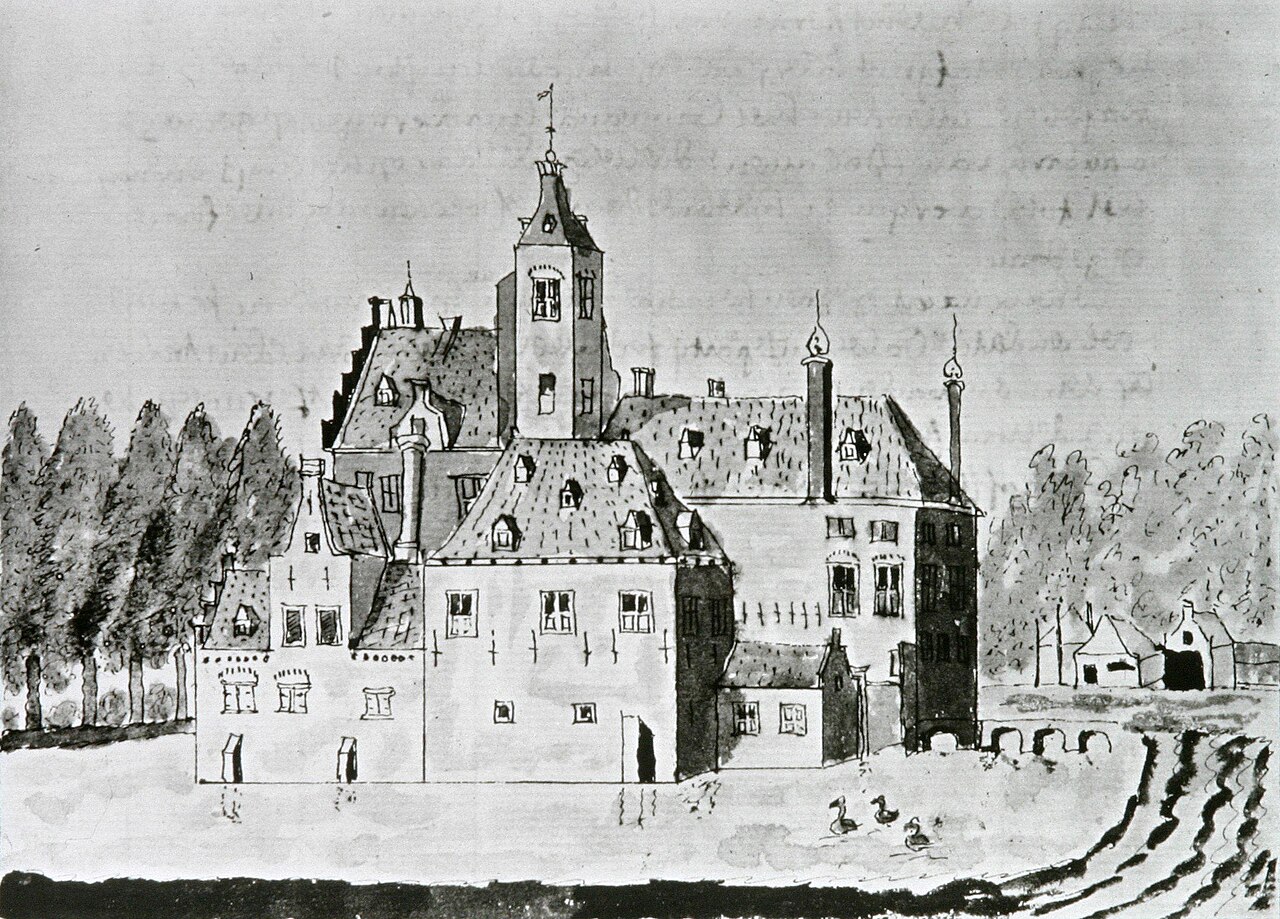
Oostvoorne Castle
Oostvoorne Castle, also known locally as Burcht van Oostvoorne or Jacoba Burcht, is a significant medieval fortress ruin located in the village of Oostvoorne in the province of South Holland, Netherlands. This castle stands as a testament to the region’s medieval history and the influence of the noble Lords of Voorne, who played a pivotal role in local governance and defense during the High Medieval period.
Founded in the 12th century, the exact founder of Oostvoorne Castle remains unknown, but its strategic position at the mouth of the Meuse River underscores its importance in controlling the surrounding waterways and land routes. The castle’s original design centered on a keep constructed atop a motte approximately 10 meters high, with foundations resting on dune sand, a unique geological feature that influenced its construction and longevity.
Architectural design and defensive features
The motte and keep
The central feature of Oostvoorne Castle is its motte-and-bailey layout, a common design in medieval fortifications. The motte is a natural sand hill enhanced with additional layers of sand and loam to support the castle’s heavy stone structures. At the heart of the motte lies the remains of the main tower house, measuring about 12.6 meters square with walls over 2.5 meters thick. This tower likely had two floors above a vaulted cellar, with the lower half of the basement still visible today. Originally, the keep had a thatched roof, which was replaced in the 14th century by wooden structures and slate roofing for better durability.
Ramparts and gatehouse
Surrounding the keep was a palisade and moat, which were soon replaced by more durable brick ramparts. In the 13th century, renovations added a gatehouse, a horseshoe-shaped bastion, and a postern to the defensive walls. The 14th century saw further enhancements including a wall-walk, a square bastion, and two additional horseshoe-shaped bastions, improving the castle’s defensive capabilities. The gate tower was accessed via an arched bridge leading to a drawbridge, a typical medieval defensive feature designed to control entry and exit.
The bailey and supporting structures
Adjacent to the motte was the bailey, which housed the residence of the Lords of Voorne and included essential buildings such as a great hall, a chapel, a bakery, a farm, and stables. Surrounding the bailey were an orchard and vineyard, indicating a self-sustaining estate. The bailey served as the main living and administrative area, while the motte was primarily defensive.
Historical significance and ownership
Lords of voorne and early history
The Lords of Voorne were influential nobles governing the Zeeland province on behalf of the Count of Holland. Early figures such as Hugo van Voorne and Floris van Voorne were active in the 12th century, with the castle's construction following the destruction of an earlier fortification during the Loon War (1203-1206). The current castle was built shortly after 1200, serving as both a defensive stronghold and noble residence.
Jacqueline, countess of hainaut
One of the castle’s most notable residents was Jacqueline, Countess of Hainaut (Jacoba van Beieren), who lived briefly at Oostvoorne Castle from 1434 to 1436 during her marriage to Frank II of Borssele, Lord of Voorne and St. Maartensdijk. Although her stay was short, her association with the castle led to its popular nickname, Jacoba Castle.
Decline and ruin
After 1503, Oostvoorne Castle was abandoned and fell into disrepair. The bailey and its buildings were demolished in 1534, and in 1552 the keep and bastions were intentionally demolished to prevent them from serving as landmarks for enemy ships. By the 17th century, the ruins had become state property and suffered further neglect. In the 18th century, the site was partially leveled and covered with soil as part of plans to build a lighthouse, which was never realized.
Archaeological excavations and restoration efforts
20th-century excavations
In 1934, archaeological excavations began, uncovering the castle’s foundations and moat. Post-World War II efforts rebuilt the foundations to reveal the castle’s layout, with further restorations in 1958. During construction in 1959, workers discovered a graveyard belonging to the chapel’s bailey, providing valuable insights into the castle’s religious and social functions.
Current preservation and access
Today, Oostvoorne Castle’s ruins are well preserved and protected as a national heritage monument (rijksmonument number 38897). Visitors can explore the site freely, although access to the gate requires obtaining a key from the local tourist information office. The castle remains a poignant symbol of medieval nobility and military architecture in the Netherlands, offering a tangible connection to the region’s feudal past.
Architectural and cultural legacy
The castle exemplifies the motte-and-bailey design typical of the High Medieval era, showcasing the evolution of fortification techniques from wooden palisades to brick ramparts and complex bastions. Its strategic location near the Maas estuary highlights the importance of controlling waterways in medieval military strategy. The association with historical figures such as Jacqueline, Countess of Hainaut, enriches its cultural significance, making Oostvoorne Castle a key site for understanding the noble dynamics and territorial governance of medieval Zeeland.
Despite centuries of decay and partial demolition, the site’s archaeological remains and restoration efforts have preserved its core features, allowing historians and visitors alike to appreciate the castle’s architectural sophistication and historical context. Oostvoorne Castle remains an important heritage site that reflects the intersection of military, residential, and administrative functions in medieval Dutch castles.
Frequently asked questions (FAQ)
- How do I visit Oostvoorne Castle?
- Visitors can explore the ruins of Oostvoorne Castle for free. To access the gate, you need to obtain a key from the local tourist information office in Oostvoorne.
- What is the historical significance of Oostvoorne Castle?
- Oostvoorne Castle was a key stronghold for the Lords of Voorne during the High Medieval period and was briefly home to Jacqueline, Countess of Hainaut, linking it to important regional history.
- When was Oostvoorne Castle built?
- The castle was founded in the 12th century, shortly after 1200, following the destruction of an earlier fortification during the Loon War.
- What architectural style is Oostvoorne Castle?
- Oostvoorne Castle features a motte-and-bailey design typical of High Medieval fortifications, with brick ramparts and bastions added in later centuries.
- Is Oostvoorne Castle accessible for people with limited mobility?
- The castle ruins are outdoors with uneven terrain and some elevation due to the motte, which may pose challenges for visitors with limited mobility.
- What can I see at Oostvoorne Castle today?
- Visitors can see the foundations of the keep, the polygonal ring wall, bastions, and the moat, which outline the castle’s original layout and defensive structures.
Information
Sources & official resources
Verify the information above using these authoritative references.
Loading map...
Visitor reviews
No reviews yet. Been here? Write the first review and help other travelers!
Write the first reviewVisited this castle? Share your experience
Your review helps other travelers and adds first-hand knowledge to our encyclopedia.