Moydrum Castle — Ireland castle

Moydrum Castle

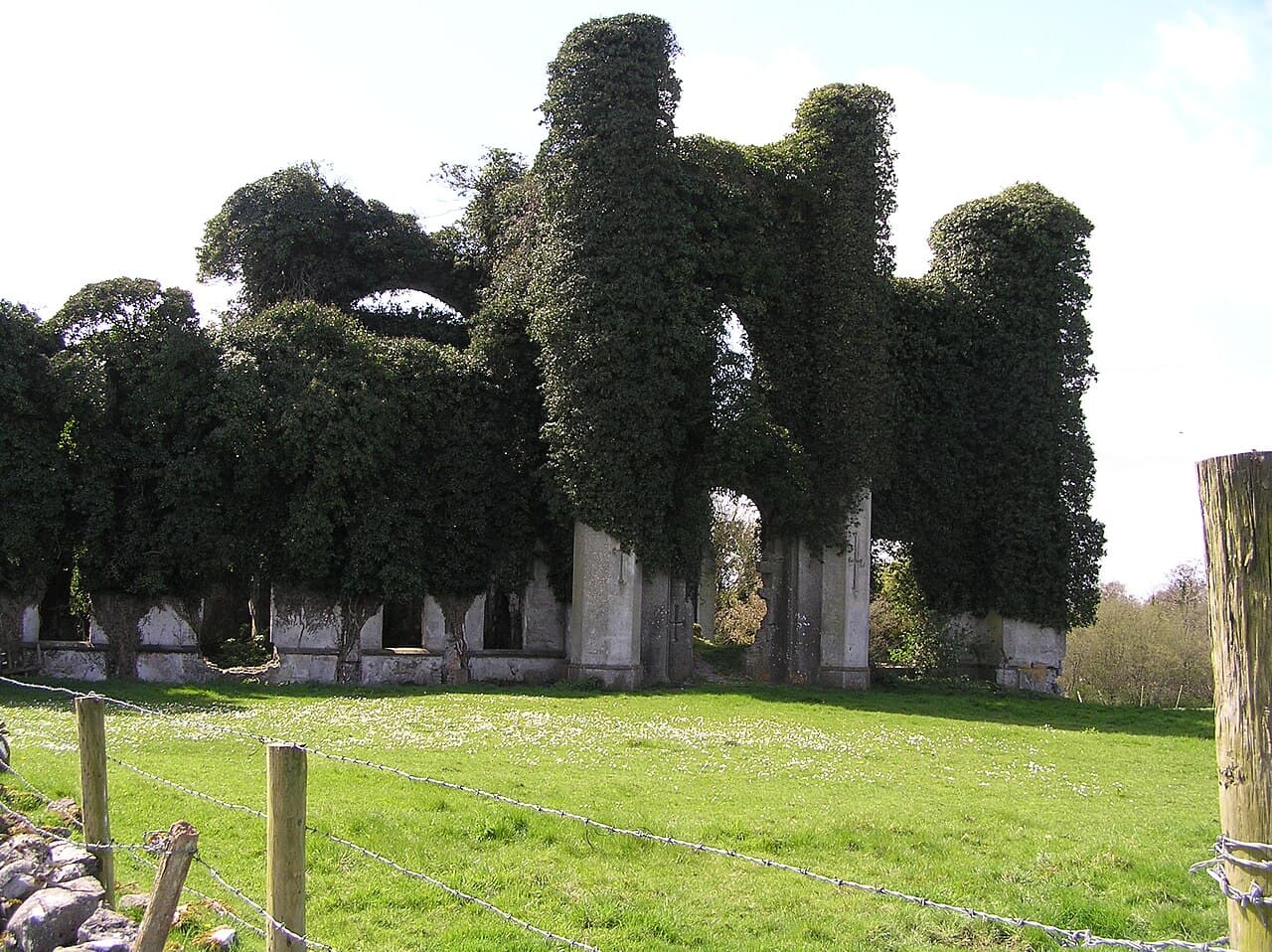
Moydrum Castle: the ruins of a 19th-century Irish baronial mansion
Post-Renaissance (17th–18th c.)
Ruins

Moydrum Castle (Irish: Caisleán Maigh Droma, meaning "plain of the ridge") stands as a prominent example of a 19th-century Irish country house built in the Gothic Revival style. Located in the townland of Moydrum in County Westmeath, just east of Athlone, this castle is now a striking ruin that reflects both the architectural ambitions and turbulent history of Ireland during the 19th and early 20th centuries.

Constructed in the mid-19th century, Moydrum Castle was designed as a grand residence for the Handcock family, the Barons of Moydrum. The castle replaced an earlier manor house on the site and was built in the style of a Gothic baronial mansion, featuring characteristic elements such as battlemented parapets, turrets, and pointed arch windows. Its design was influenced by the broader European revival of medieval Gothic architecture, which was popular among the Anglo-Irish aristocracy seeking to evoke a romanticized medieval past.

Architectural features and design

The castle's architecture is distinguished by its Gothic Revival style, which blends medieval motifs with Victorian-era construction techniques. The structure included a large central block flanked by towers and turrets, with crenellated battlements crowning the walls. The windows were tall and narrow with pointed arches, and the interiors originally featured ornate woodwork, plaster ceilings, and grand reception rooms designed for social functions.

Moydrum Castle's layout was typical of a baronial mansion, combining the defensive appearance of a castle with the comforts expected of a 19th-century aristocratic residence. The grounds surrounding the castle were landscaped to complement its imposing silhouette, with formal gardens and parkland enhancing its visual impact.

Historical context and ownership

The Handcock family, who held the title Baron Moydrum, were the primary owners of the castle. The family's prominence in the region was reflected in the scale and style of the castle, which served both as a family home and a symbol of their social status. The castle was completed around the 1820s to 1840s, during a period when many Irish landowners were building or renovating country houses in revivalist styles to demonstrate their wealth and lineage.

During the early 20th century, Moydrum Castle became entangled in the political upheavals of Ireland. In 1921, during the Irish War of Independence, the castle was attacked and severely damaged by the Irish Republican Army (IRA). The destruction was part of a wider campaign against symbols of British rule and Anglo-Irish landlordism. Following this event, the castle was left in ruins and has remained so ever since.

Current condition and preservation

Today, Moydrum Castle is classified as ruins and is privately owned. The structure's remains include significant portions of the outer walls and some of the towers, which continue to evoke the castle's former grandeur. The ruins have attracted interest from historians, architects, and visitors intrigued by Ireland's complex history and architectural heritage.

Despite its ruined state, Moydrum Castle remains an important cultural landmark in County Westmeath. Its silhouette is famously depicted on the cover of the 1984 album "Moydrum" by the band The Waterboys, highlighting its place in Irish cultural memory.

Visiting moydrum castle

As the castle is privately owned and in ruins, public access is limited and visitors should seek permission before attempting to visit the site. The surrounding area near Athlone offers additional historical and natural attractions, making it a worthwhile destination for those interested in Irish history and architecture.

Frequently asked questions (FAQ)

What is the historical significance of Moydrum Castle?
Moydrum Castle is significant as a 19th-century Gothic Revival mansion that reflects the Anglo-Irish aristocracy's lifestyle and the political turmoil of early 20th-century Ireland, including its destruction during the Irish War of Independence.
Can I visit Moydrum Castle?
Moydrum Castle is privately owned and in ruins, so public access is limited. Visitors should obtain permission from the owners before attempting to visit the site.
When was Moydrum Castle built?
Moydrum Castle was constructed in the mid-19th century, around the 1820s to 1840s, replacing an earlier manor house on the site.
What architectural style characterizes Moydrum Castle?
The castle is designed in the Gothic Revival style, featuring battlemented parapets, turrets, and pointed arch windows typical of 19th-century baronial mansions.
Why is Moydrum Castle in ruins?
The castle was severely damaged during the Irish War of Independence in 1921 by the Irish Republican Army as part of their campaign against symbols of British rule and Anglo-Irish landlords.

Photo gallery

Moydrum Castle
Click to view
1 photo • Click any image to view in full screen

Information

Archaeological Site / Ruins

Current owner

Private owner

Loading map...

Visitor reviews

No reviews yet. Been here? Write the first review and help other travelers!

Write the first review

Visited this castle? Share your experience

Your review helps other travelers and adds first-hand knowledge to our encyclopedia.
Write a review

(5/5)

0/2000 characters

Your review will be visible after admin approval

Nearby castles

5.3 km
Athlone Castle — Ireland castle

Athlone Castle

Athlone, Ireland

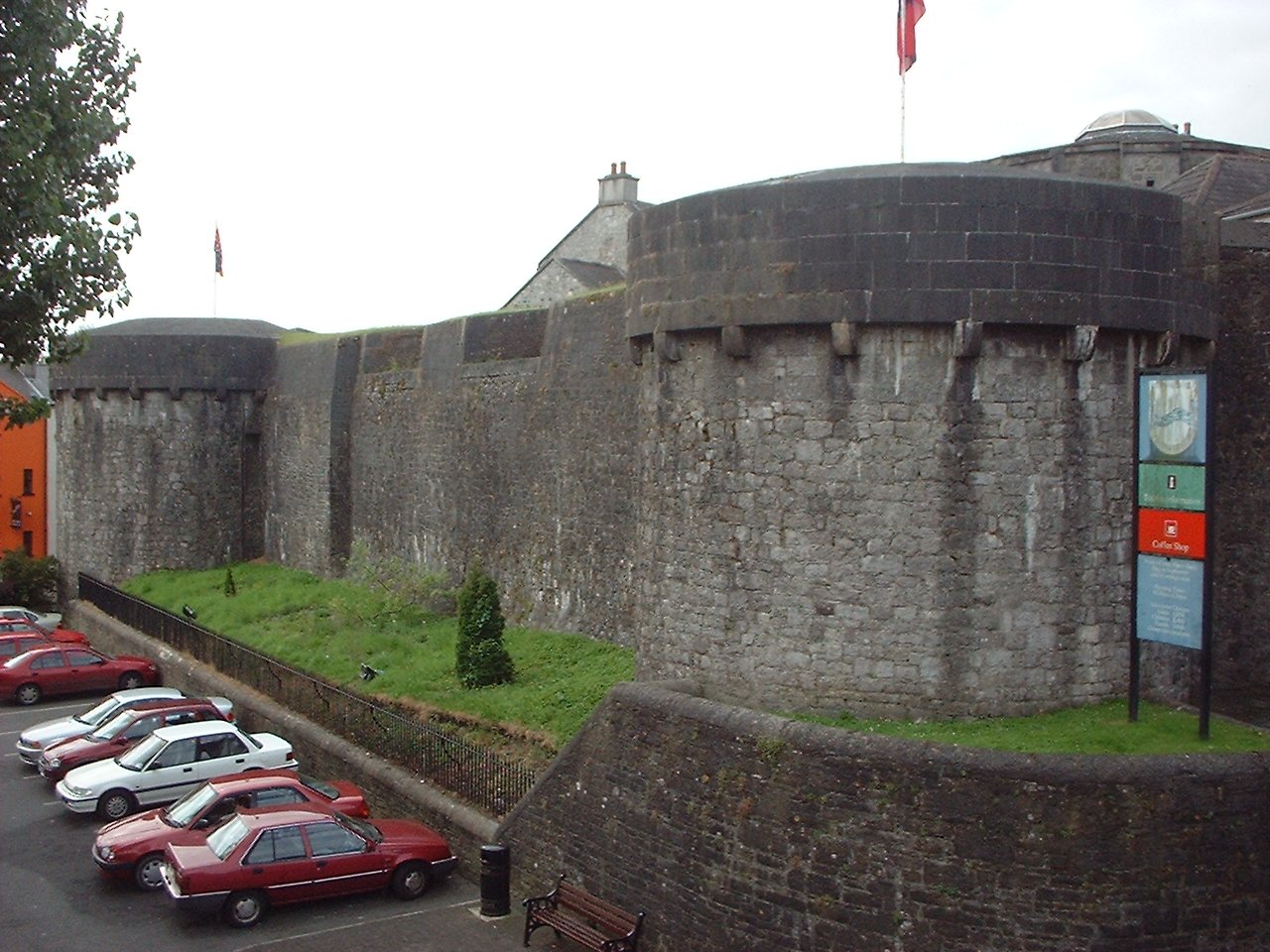
Athlone Castle, also historically referred to as Adamson Castle, is a prominent 12th-century hill castle situated in the town of Athlone, County Westmeath, Ireland. It occupies a commanding position overlooking the River Shannon, a key strategic crossing point in central Ireland. The castle's location was critical for controlling river traffic and defending the region during the High Medieval period. Historical background and strategic importance Constructed in the 12th century, Athlone Castle was originally built by the Normans following their invasion of Ireland. Its primary function was to secure the crossing over the River Shannon, which was a vital artery for trade and military movements. The castle played an important role in various conflicts, including the Williamite War in Ireland during the late 17th century, where it was besieged multiple times due to its strategic significance. Architectural features and layout The castle is a classic example of a hill castle with a robust stone structure. It features a large keep built with thick walls designed for defense. The castle's curtain walls enclose a courtyard, which historically contained various outbuildings and living quarters. The walls are punctuated by towers and battlements that provided vantage points for archers and lookouts. Athlone Castle's construction reflects typical High Medieval military architecture, with an emphasis on fortification and control. The stonework includes narrow windows and arrow slits, which were intended to repel attackers while allowing defenders to fire upon them. Defensive structures The castle's defensive design includes a gatehouse that controlled access to the interior, often protected by a drawbridge or portcullis in its early phases. Surrounding the castle, the natural elevation of the hill enhances its defensive capability, making it difficult for enemies to mount a direct assault. Later history and preservation Over the centuries, Athlone Castle underwent several modifications and repairs, especially during periods of military conflict. Despite damage sustained in sieges, much of the original stone structure remains intact, allowing visitors today to appreciate its medieval character. Today, Athlone Castle is a well-preserved historical monument managed as a cultural heritage site. It serves as a museum, offering exhibitions on the castle's history, the local area, and Ireland's medieval past. The site attracts tourists interested in military architecture and Irish history. Visiting Athlone Castle Visitors to Athlone Castle can explore the castle's interior, including the keep, the courtyard, and the battlements. The museum provides detailed information about the castle's role in Irish history and features artifacts recovered from the site. The castle's location by the River Shannon also offers scenic views and opportunities to learn about the surrounding landscape's strategic importance. The castle is accessible year-round, with guided tours available during peak seasons. It is an essential destination for those interested in medieval castles and Irish heritage.

High Medieval (11th–13th c.)
Details
5.3 km

Athlone Castle

Athlone, United Kingdom

Athlone Castle is a prominent high medieval fortress located in the town of Athlone, situated on the banks of the River Shannon in Ireland. Constructed around 1210, this hill castle has played a vital role in the region's military and political history for over eight centuries. Its strategic position controlling a key crossing over the Shannon made it a focal point in numerous conflicts and power struggles throughout Irish history. Historical background and strategic importance The castle was originally built under the orders of the Anglo-Norman lord Justiciar John de Gray during the reign of King John of England. Its primary purpose was to secure the important river crossing and to establish Norman authority in the central midlands of Ireland. Athlone Castle's location on a natural hill overlooking the Shannon allowed it to control traffic and trade along this vital waterway. Over the centuries, Athlone Castle witnessed significant historical events, including sieges during the Irish Confederate Wars in the 17th century and the Williamite War in Ireland. Its fortifications were repeatedly tested and upgraded in response to evolving military technologies and threats. Architectural features and construction The castle's initial construction phase featured a stone curtain wall enclosing a roughly rectangular bailey. The central feature was a large keep or donjon, designed for both defense and residence. The keep's robust walls and narrow windows reflect the medieval emphasis on fortification against siege warfare. Subsequent modifications included the addition of battlements, arrow slits, and a fortified gatehouse. The castle's walls were thickened and reinforced to withstand artillery fire as gunpowder weapons became prevalent. Defensive features such as a moat or water defenses may have been incorporated, taking advantage of the nearby river. Restoration and current condition Athlone Castle has undergone extensive restoration to preserve its structural integrity and historical character. Today, it stands as a restored medieval fortress open to the public. The restoration work has focused on stabilizing the walls, restoring the battlements, and refurbishing the interior spaces to illustrate the castle's historical phases. The castle now houses a museum that showcases the rich history of Athlone and the surrounding region, including displays on medieval life, military history, and the castle's role in Irish history. Architectural style and influences The castle reflects typical high medieval military architecture with elements characteristic of Norman fortifications. Its design emphasizes defensive functionality, with thick stone walls, limited access points, and elevated positions for archers and lookouts. The architectural style is primarily Romanesque transitioning into early Gothic, evident in the rounded arches and solid masonry. Over time, adaptations incorporated more advanced defensive features responding to the evolving nature of warfare during the late medieval period. Role in regional history and heritage significance Athlone Castle remains a symbol of the town's historical importance as a military and administrative center. Its control over the River Shannon crossing was crucial in the medieval and early modern periods for controlling movement and asserting dominance in central Ireland. Today, the castle is a protected heritage site and a focal point for cultural tourism in Athlone. It serves as a tangible link to Ireland's medieval past and offers insights into the complex history of Anglo-Norman influence and Irish resistance. Visitor experience and accessibility Visitors to Athlone Castle can explore its restored battlements, towers, and museum exhibits. The site provides interpretive displays and guided tours that explain the castle's architectural features and historical context. Its location near the town center makes it easily accessible for tourists. The castle grounds often host cultural events and educational programs, enhancing public engagement with Ireland's medieval heritage.

High Medieval (11th–13th c.)
Details
13.9 km

Clonmacnoise

Clonmacnoise, United Kingdom

Clonmacnoise stands as one of Ireland's most significant early Christian monastic sites, located in the heart of the country along the banks of the River Shannon. Founded in the 6th century by Saint Ciarán, this monastery rapidly grew into a major religious, educational, and cultural center during the Early Medieval period. It attracted students and scholars from across Europe, becoming a renowned university of its time. Historical significance and foundation The establishment of Clonmacnoise monastery around 544 AD marked a pivotal development in Irish monasticism. It was strategically situated at a crossroads of ancient trade routes and near the River Shannon, facilitating communication and travel. The site gained prominence not only as a religious center but also as the seat of the high kings of Connacht, underscoring its political and cultural importance in medieval Ireland. Architectural features and layout The extensive ruins at Clonmacnoise illustrate the complex monastic settlement that evolved over several centuries. The site contains the remains of a cathedral, multiple churches, two round towers, and a collection of high crosses renowned for their intricate carvings. These crosses served both as religious symbols and as markers for sacred ground, showcasing exceptional examples of early medieval Irish stonework. The cathedral and churches The cathedral ruins at Clonmacnoise date primarily from the 12th century and reflect the transition from Romanesque to early Gothic architectural styles. Alongside the cathedral, there are remains of nine churches, each with distinctive features that reveal the evolving ecclesiastical architecture of the period. These structures were built primarily of local sandstone and limestone, materials typical of Irish medieval construction. Round towers and high crosses The two surviving round towers are iconic elements of Irish monastic sites, serving defensive and bell-ringing purposes. These towers, built between the 10th and 12th centuries, stand tall as markers of the monastic complex's wealth and status. The three high crosses at Clonmacnoise are among the finest examples of early medieval sculpture in Ireland, featuring biblical scenes and intricate Celtic knotwork. These crosses are invaluable for understanding the religious art and iconography of the time. Manuscript production and cultural influence Clonmacnoise was famed for its scriptorium, where monks produced some of the finest illuminated manuscripts in Ireland. These manuscripts contributed significantly to the preservation and dissemination of Christian texts and Irish scholarship throughout Europe. The monastery's literary legacy inspired many later works and remains a testament to its role as a center of learning. Gravestones and burial grounds The site contains over 700 gravestones, providing a rich archaeological record of the people who lived and died in the monastic community and surrounding areas. These gravestones vary in style and inscription, offering insights into medieval Irish funerary customs and social history. Preservation and visitor experience Today, Clonmacnoise is a well-preserved archaeological site open to the public. Visitors can explore the extensive ruins, including the cathedral, churches, round towers, and high crosses, while learning about the site's historical and religious significance. The site remains a powerful symbol of Ireland's early Christian heritage and continues to attract scholars, historians, and tourists alike. Access and facilities Clonmacnoise is accessible year-round, with visitor facilities including an interpretive center that provides detailed information about the site's history and archaeology. Guided tours are available, enhancing the educational experience for those interested in medieval Irish culture and architecture.

Early Medieval (5th–10th c.)
Details
