
Żmigród
Zmigród Castle stands as a testament to the layered history of medieval and early modern Poland, located in the town of Żmigród in the historic region of Lower Silesia. Founded in 1253 by Duke Henry III of Wrocław, the castle was strategically positioned near a ford on the Barycz River, serving as a vital defensive and administrative center guarding the borderlands and the important trade route between Wrocław and Poznań.
Historical origins and medieval foundations
The earliest mention of the settlement dates back to a papal bull issued by Pope Adrian IV in 1155, referencing a place "lying by the ford of Zunigrod," which corresponds to the area near present-day Żmigródek on the right bank of the Barycz River. The town of Żmigród itself was established on the left bank in the mid-13th century. The original defensive complex, dating from the late 13th century, featured an irregular plan adapted to the natural marshy terrain, with a notable tower located in the northeast corner and a southern gate providing access. The castle was protected by a water-filled moat, leveraging the surrounding wetlands for enhanced defense.
Ownership and political significance in the medieval period
In 1315, Żmigród came under the ownership of Duke Konrad of Oleśnica. Following the extinction of the Oleśnica Piast line in 1492 with the death of Konrad Biały, the territory passed to King Władysław Jagiellończyk of Bohemia, marking a shift in feudal allegiance. At this time, the castle and town were granted to the German noble Zygmunt von Kurzbacha, initiating the era of the Free State of Żmigród. This entity was unique in that it was a state estate directly subordinate to the Bohemian crown, rather than being part of any Silesian duchy, highlighting its distinct political status within the region.
Architectural development and transformations
The castle underwent significant structural changes over the centuries. In 1560, Wilhelm Kurzbach constructed a new residential and defensive tower on the foundations of the 13th-century structure. This tower was built of stone on a rectangular plan measuring approximately 10 meters in length, rising to four stories with walls two meters thick, reflecting Renaissance military architecture adapted for residential comfort.
Fires and ownership changes in the late 16th and early 17th centuries
The castle suffered from several destructive fires between 1579 and 1605, which necessitated repairs and rebuilding efforts. In 1592, Adam von Schaffgotsch acquired the Free State of Żmigród for 195,000 talers, ushering in a new period of ownership. The Schaffgotsch family maintained control until the early 17th century when political turmoil affected the estate.
Seventeenth-century conflicts and baroque reconstruction
In 1635, the then-owner Hans Ulryk von Schaffgotsch was accused of treason and executed, leading to the confiscation of the estate by Emperor Ferdinand II. During the Thirty Years' War, the castle was besieged multiple times and captured by Swedish forces under General Torstenson in 1641. The Swedes fortified the castle with bastion fortifications and used it as a strategic base for eight years. During this occupation, the main tower was heightened by one floor, earning the name "Swedish Tower."
Following the war, Emperor Ferdinand III granted the estate to Austrian Field Marshal Melchior von Hatzfeldt in 1641. Between 1655 and 1657, Hatzfeldt transformed the castle into a magnate's baroque residence, reflecting contemporary architectural trends and the shift from purely military fortification to stately home.
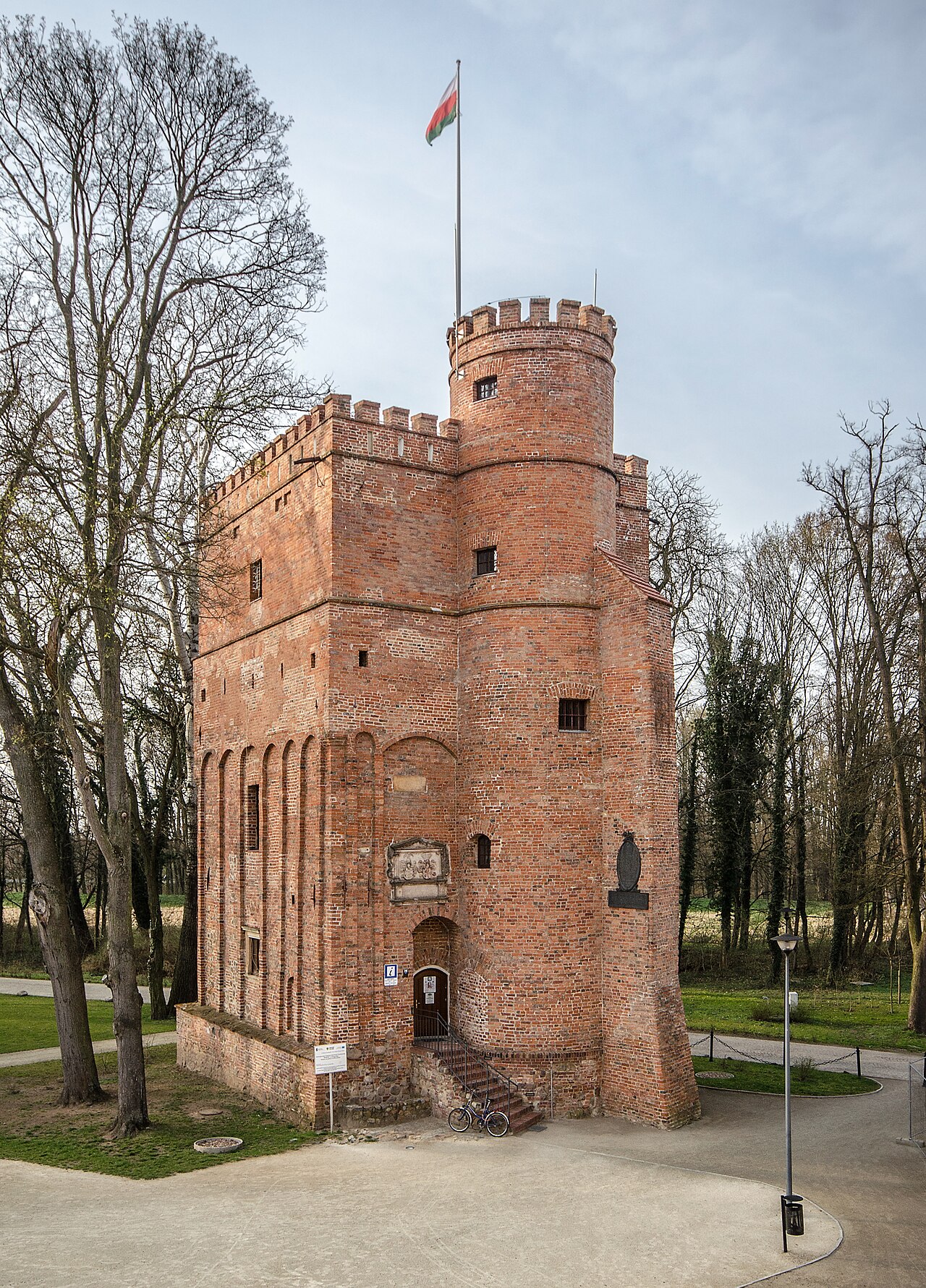
Photo by Sławomir Milejski • CC BY-SA 3.0 pl
Notable historical events and decline
One of the most significant events associated with Żmigród Castle occurred on 12 July 1813, when key European leaders including Tsar Alexander I of Russia, Grand Duke Constantine, King Frederick William III of Prussia, Crown Prince Charles John of Sweden, and ambassadors from England and Austria convened secretly at the castle. Their meeting aimed to coordinate the campaign against Napoleon, culminating in the so-called Żmigród Protocol, a pivotal moment in the Napoleonic Wars.
The castle's fortunes declined in the 20th century, suffering extensive damage during World War II. Today, only the residential tower remains standing, albeit altered during 19th-century renovations which removed its original four-sided roof and added a stair turret. The once grand baroque palace and its surrounding park have largely disappeared, leaving ruins that evoke the castle's rich and turbulent history.
Architectural features and current condition
Originally, the castle was a fortified complex adapted to its marshy surroundings, featuring a moat and bastion fortifications added in the 17th century. The surviving tower, constructed of stone with thick walls and multiple floors, exemplifies the transition from medieval fortress to Renaissance and baroque residence. Despite its ruined state, the tower remains a prominent landmark in Żmigród, symbolizing the area's historical significance.
Visitors to Żmigród can explore the ruins and appreciate the castle's strategic location by the Barycz River, which played a crucial role in regional defense and trade. The site offers insights into the evolution of castle architecture in Silesia, from medieval fortifications to baroque palatial adaptations.
Frequently asked questions (FAQ)
- When was Żmigród Castle founded?
- Żmigród Castle was founded in 1253 by Duke Henry III of Wrocław as a strategic defensive site near the Barycz River.
- What architectural styles are represented in Żmigród Castle?
- The castle features a blend of medieval defensive architecture and later Renaissance and Baroque modifications, especially evident in the surviving tower and 17th-century reconstructions.
- What is the current condition of Żmigród Castle?
- Today, Żmigród Castle is in ruins, with only the residential tower remaining after damage in World War II and subsequent loss of the baroque palace.
- Can visitors access Żmigród Castle?
- Visitors can explore the ruins of Żmigród Castle, which remain a significant historical landmark in the town of Żmigród, although facilities and detailed visiting hours may vary.
- What historical events took place at Żmigród Castle?
- Żmigród Castle hosted a secret meeting of European leaders in 1813 to coordinate the campaign against Napoleon, known as the Żmigród Protocol, marking its importance in European history.
Photo gallery

Information
Loading map...
Visitor reviews
No reviews yet. Be the first to share your experience!