Melsztyn
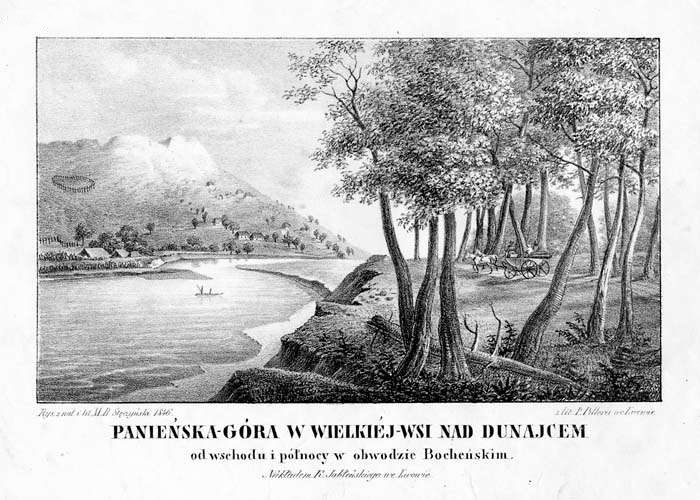
Melsztyn Castle stands as a striking ruin atop Zamczysko Hill overlooking the Dunajec River in the village of Melsztyn, Poland. This hill castle was originally constructed in the 14th century by Spicymir Leliwita, the castellan of Kraków, marking the beginning of a fortress that would serve as a noble residence and military stronghold through the late medieval and Renaissance periods. Its strategic location on steep, natural slopes rising over 40 meters above the river allowed it to dominate the surrounding landscape and control important routes.
The castle’s initial construction began around 1340 and was completed by 1352. The original layout was an irregular polygon occupying the eastern tip of the hill, incorporating a residential building with an outward-projecting round tower housing a cistern, alongside various economic buildings. The earliest documented mention of the castle dates to 1364, referring to the consecration of a chapel dedicated to the Holy Spirit within the fortress, underscoring its dual role as both a defensive and religious site.
Architectural evolution and defensive enhancements
By the late 14th century, the castle underwent significant expansion with the addition of a five-story rectangular Gothic keep on the western edge of the hill. This tower combined military and residential functions, evidenced by arrow slits on the lower and upper floors for defense, and living quarters on the middle levels. The old and new sections were integrated by a surrounding curtain wall, creating a unified defensive perimeter. To stabilize the terrain, retaining walls were built on the western and southern slopes, preventing erosion and reinforcing the fortifications.
In approximately 1461, further upgrades were made to adapt the castle’s defenses for the emerging use of firearms. Earthen ramparts were constructed on the northern side, pushing the first line of defense outward, and the main gate was fortified. These modifications coincided with the Melsztyński family’s involvement in the Hussite movement and their opposition to the royal court, reflecting the turbulent political climate of the time.
Renaissance transformation
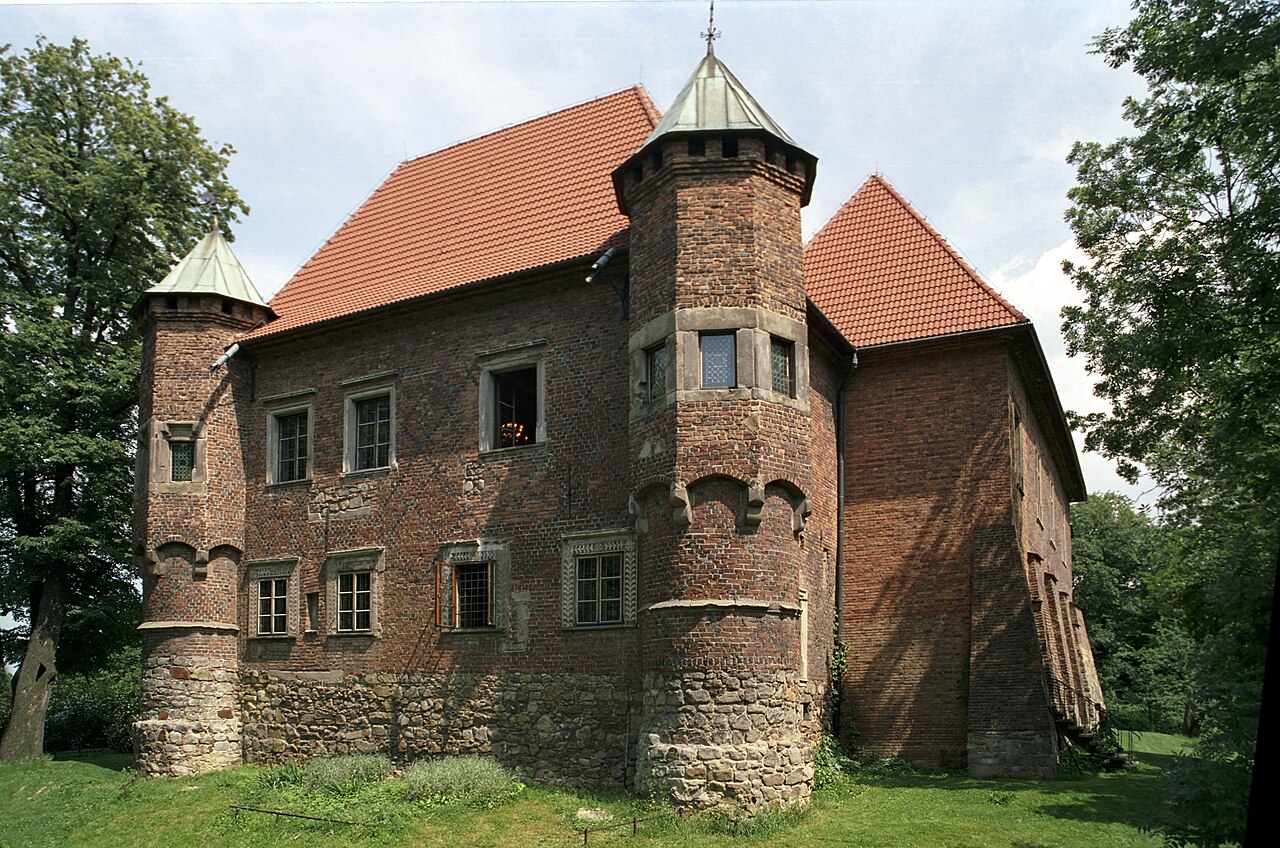
After the castle was sold in 1511 to the Jordan family, it underwent a Renaissance-style remodeling in the mid-16th century. The oldest part of the castle was reconstructed into a two-story, single-tract residential building aligned east-west. The lower floor featured narrow defensive loopholes, while the upper floor served as a representational and residential space. This transformation marked the shift from a purely military fortress to a magnate residence, blending comfort with defense.
Historical significance and ownership changes
For nearly two centuries, Melsztyn Castle was the seat of the powerful Melsztyński family, prominent members of the Polish nobility. Notable figures included Spytko of Melsztyn (d. 1399) and Spytko Melsztyński (1398–1439). The castle was a center of the Polish Hussite movement in the 15th century and hosted leaders of the Taborite faction.
In 1511, ownership passed to Mikołaj Jordan of Myślenice, who initiated Renaissance renovations. Through marriages, the castle later belonged to the Zborowski, Sobek, and Tarło families, before finally coming into the possession of the Lanckoroński family in 1744.
The castle endured numerous conflicts, including resisting Swedish attacks in the 17th century. However, its fate was sealed during the Bar Confederation in 1771 when it was occupied by confederates and subsequently captured and burned by Russian forces. This event left the castle in ruins, a state in which it remains today.
Ruin and preservation efforts
Following its destruction, parts of the castle were dismantled between 1789 and 1796 to provide building materials for a nearby church. Neglect and natural decay led to further collapse, including the fall of the keep in 1846. Early archaeological and conservation efforts began in the 19th century, notably under the patronage of Karol Lanckoroński in the late 1800s, who secured the site as a protected ruin and constructed a shelter over the courtyard.
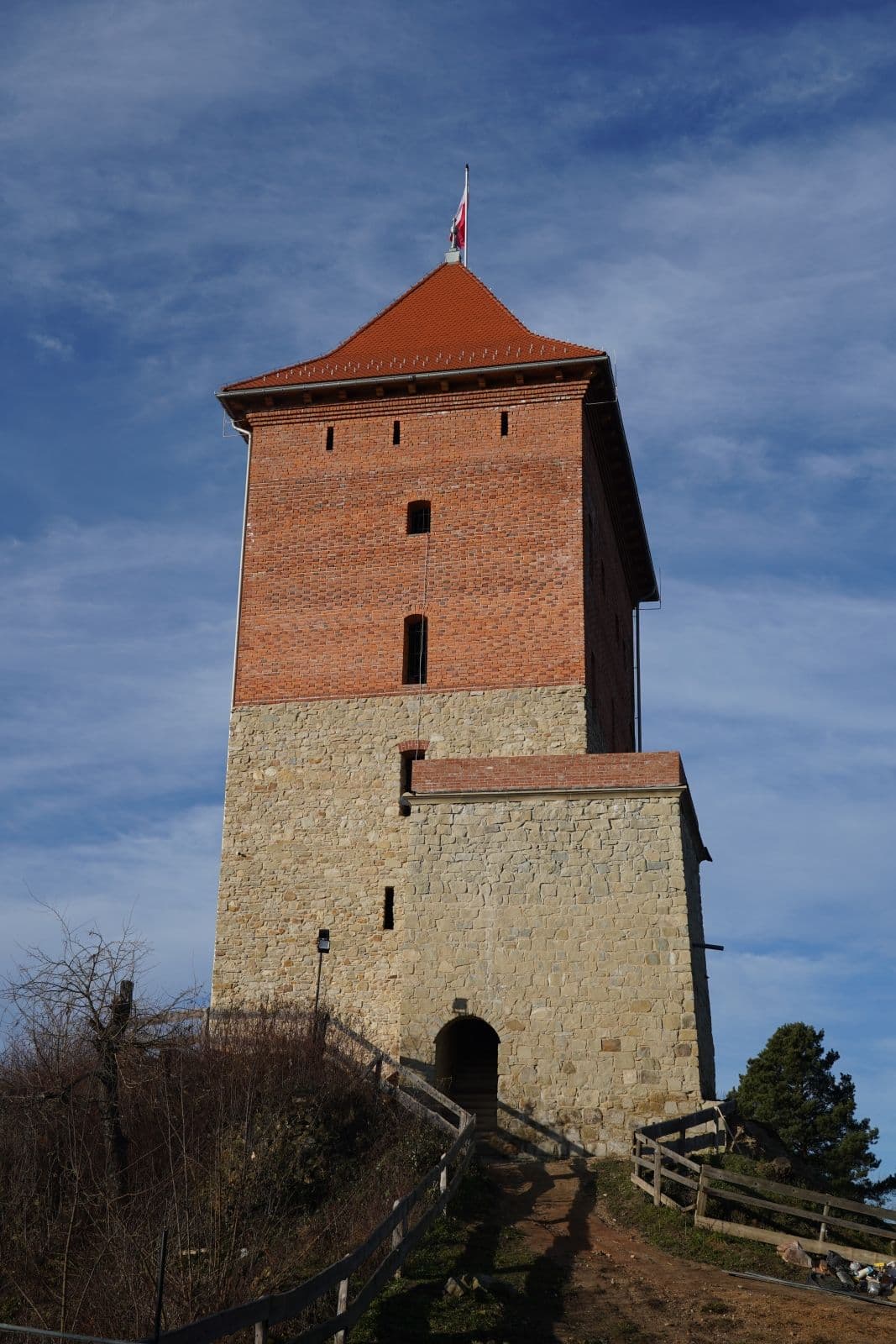
Since 2008, the castle has been managed by the municipality of Zakliczyn. Archaeological excavations in 2017 revealed foundational structures and clarified the castle’s layout. Restoration work from 2018 to 2023 focused on rebuilding the tower and defensive walls. The tower has been reconstructed to about 20 meters, with plans to reach 28 meters and include a viewing terrace. These efforts, funded by national and local sources, aim to preserve the castle as a cultural monument and tourist attraction.
Architectural features and remains
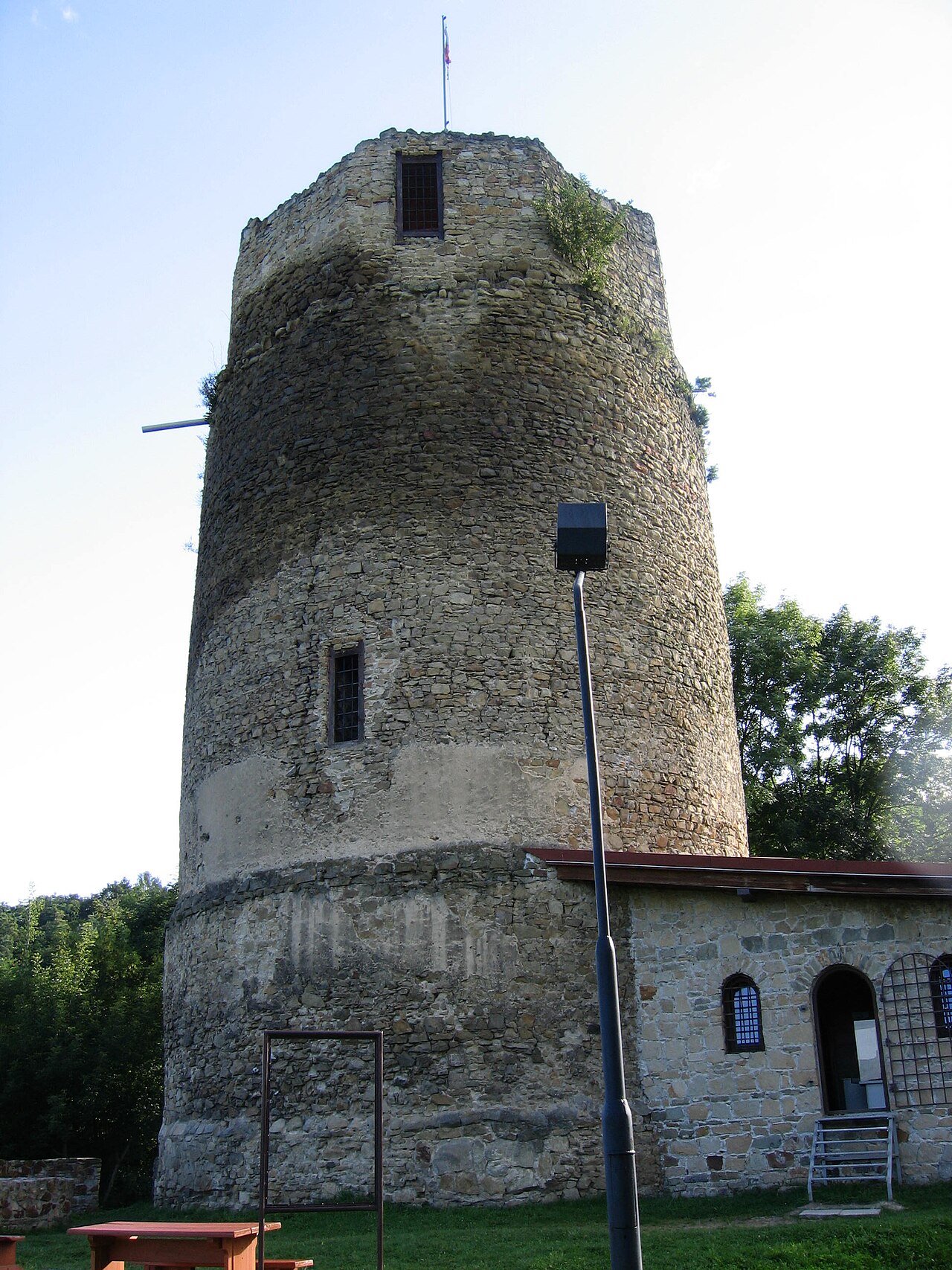
The remaining ruins illustrate the castle’s complex history. The eastern section preserves stone walls up to window height, while the western Gothic tower survives as three walls rising 25 meters high, constructed of stone and brick. The tower’s walls feature numerous arrow slits and Gothic window arches on the upper floors. A partially preserved curtain wall connects the tower to the eastern buildings, running along the northern ridge of the hilltop.
The southern slope is protected by a 4-5 meter high brick wall, while earthworks and a moat, once integral to the defense, are now faintly visible in the terrain. A collapsed vault in the central part of the castle reveals the basement level of the lower floor.
Historical records and archaeological findings also indicate the presence of a gatehouse at the northeastern base of the tower and various wooden outbuildings such as stables, a bakery, and a bathhouse, reflecting the castle’s role as a self-sufficient residence.
Cultural legacy
Melsztyn Castle has inspired numerous artists, including the renowned painter Jan Matejko, who captured its romantic ruins. Its history as a noble seat, a center of religious reform, and a site of military conflict embodies the rich tapestry of Polish medieval and early modern history. Today, it stands as a testament to the architectural ingenuity and turbulent past of the region.
Frequently asked questions (FAQ)
- How do I get to Melsztyn Castle?
- Melsztyn Castle is located in the village of Melsztyn in Lesser Poland Voivodeship. It is accessible by local roads from Zakliczyn and nearby towns, with parking available near the site.
- What is the historical significance of Melsztyn Castle?
- Melsztyn Castle was a key stronghold of the Melsztyński noble family and a center of the Polish Hussite movement in the 15th century. Its Renaissance renovations reflect the transition from fortress to noble residence.
- When was Melsztyn Castle built and by whom?
- Construction began around 1340 by Spicymir Leliwita, castellan of Kraków. The castle was expanded through the 15th century and remodeled in the Renaissance style in the 16th century.
- Can I visit the tower and ruins of Melsztyn Castle?
- Yes, visitors can explore the ruins and the restored tower, which offers panoramic views. Restoration efforts have made the site safer and more accessible.
- What architectural styles are present at Melsztyn Castle?
- The castle features Gothic military architecture in its keep and Renaissance residential elements from later renovations, showcasing a blend of medieval and early modern styles.
- Is Melsztyn Castle open year-round?
- The castle ruins are generally open to visitors year-round, though access may be limited in winter due to weather. It is best to check local tourist information for current conditions.
Photo gallery

Information
Current owner
Municipality of Zakliczyn
Loading map...
Visitor reviews
No reviews yet. Been here? Write the first review and help other travelers!
Write the first reviewVisited this castle? Share your experience
Your review helps other travelers and adds first-hand knowledge to our encyclopedia.