
Älvsborg Fortress
Älvsborg Fortress, often called Old Älvsborg or Älvsborg Castle, was a significant late medieval stronghold located on Klippan, a rocky outcrop on the southern bank of the Göta Älv river in what is now the city of Gothenburg, Sweden. The fortress played a crucial role in controlling access to the river and the important trade routes leading to the interior of Sweden. Its strategic position made it a key defensive site during the medieval period and later conflicts.
Historical context and strategic importance
Constructed in the 14th century, Älvsborg Fortress was built to protect the vital waterway of the Göta Älv, which served as a main artery for commerce and military movement. The castle's location on a rocky promontory provided natural defenses and a commanding view of the river, enabling it to monitor and control naval traffic effectively.
Throughout its history, Älvsborg was involved in several military engagements, especially during the numerous conflicts between Sweden and Denmark. Its control was essential for maintaining Swedish access to the North Sea, and it was often a target during wars in the region.
Architectural features and layout
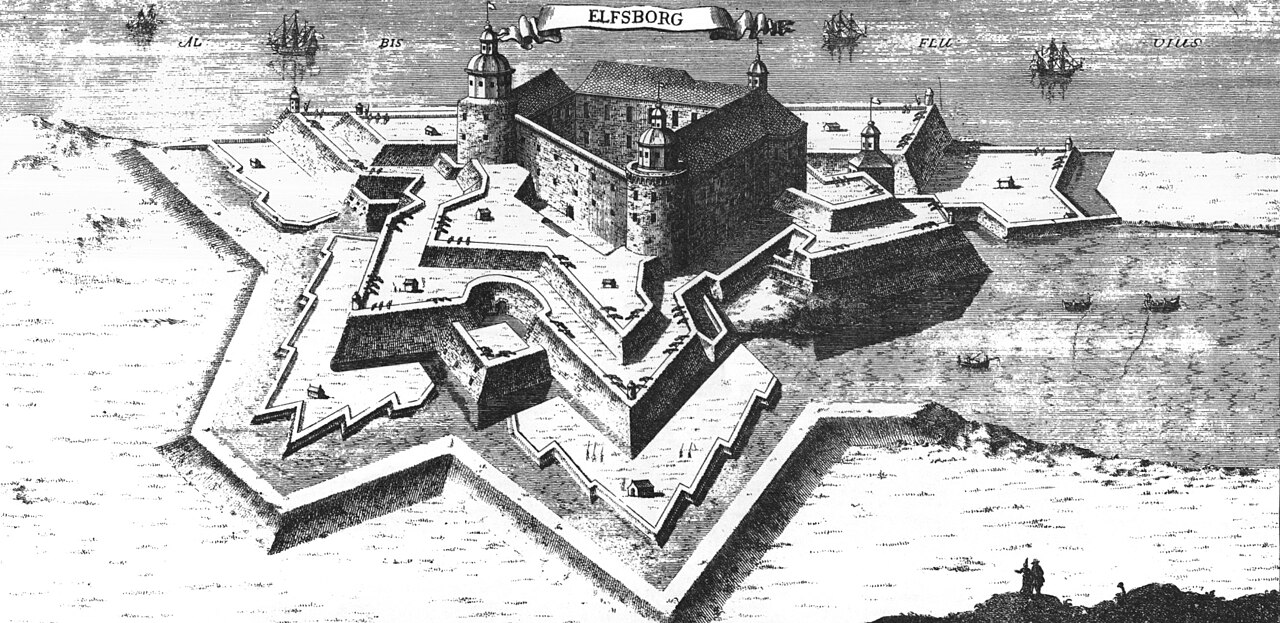
The fortress was characterized by typical medieval defensive architecture, including thick stone walls, battlements, and towers designed to withstand sieges and attacks. The natural rocky terrain of Klippan was incorporated into the castle's defenses, enhancing its resilience.
Though detailed architectural plans are scarce, historical records suggest that Älvsborg included a keep or donjon, curtain walls, and a gatehouse. The castle was likely surrounded by a moat or other water defenses, common features in medieval fortifications to hinder attackers.
Defensive structures
The fortress's position on a rocky outcrop served as a natural barrier on several sides, reducing the need for extensive fortifications in those directions. Walls were reinforced with towers at key points to provide vantage points for archers and artillery. The main gate would have been heavily fortified to control access.
Living quarters and internal buildings
Inside the walls, the castle contained residential quarters for the garrison and commanding officers, storage facilities, and possibly a chapel. These structures were built to support the fortress's military function while providing necessary accommodations for its defenders.
Public domain
Decline and current state
Älvsborg Fortress was demolished in the late 17th century, following changes in military technology and shifting strategic priorities that rendered the castle obsolete. The construction of newer fortifications, including the New Älvsborg Fortress on an island in the river, reflected the evolution of coastal defense systems.
Today, the site of Old Älvsborg is an archaeological ruin with some remnants of stone walls and foundations visible near the southern pylon of the Älvsborg Bridge. The ruins serve as a historical landmark, offering insight into medieval military architecture and the region's turbulent history.
Cultural significance and heritage preservation
The remains of Älvsborg Fortress are an important part of Gothenburg's cultural heritage, symbolizing the city's medieval origins and its role in regional defense. Efforts to preserve and study the ruins contribute to understanding Sweden's medieval fortifications and historical landscape.
Visitors to the site can explore the ruins and learn about the castle's history through local museums and informational displays, connecting the present-day city with its medieval past.
Frequently asked questions (FAQ)
- What is the historical significance of Älvsborg Fortress?
- Älvsborg Fortress was a key medieval stronghold controlling access to the Göta Älv river and trade routes, playing a vital role in Swedish defense against Danish forces.
- Can I visit the ruins of Old Älvsborg today?
- Yes, the ruins of Old Älvsborg are accessible near the southern pylon of the Älvsborg Bridge in Gothenburg, offering a glimpse into medieval fortifications.
- When was Älvsborg Fortress built and demolished?
- The fortress was built in the 14th century and demolished in the late 17th century as military strategies evolved and new fortifications were established.
- What architectural features did Älvsborg Fortress have?
- It featured thick stone walls, battlements, towers, and a gatehouse, utilizing the natural rocky outcrop for defense, typical of late medieval military architecture.
- Why was Älvsborg Fortress demolished?
- Advances in military technology and changing strategic needs led to its demolition, with newer fortifications like New Älvsborg Fortress replacing it.
Photo gallery

Public domain
Information
Current owner
Municipality
Address
Klippan, Gothenburg, Sweden
Loading map...
Visitor reviews
No reviews yet. Be the first to share your experience!