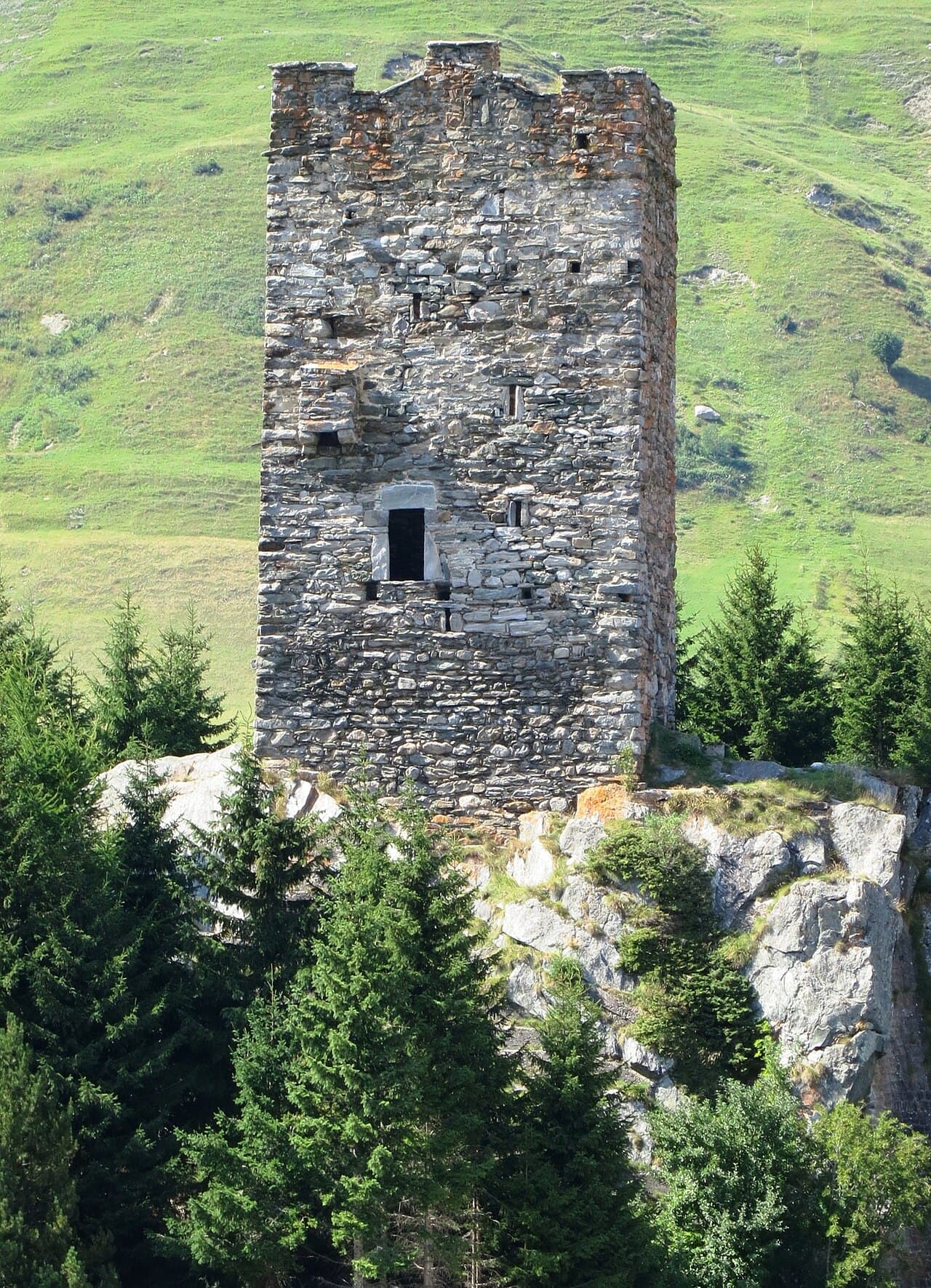
Longobard Tower
Longobard Tower, also known as the Langobarden Towers, is a significant high medieval castle ruin located in the municipality of Hospental in the canton of Uri, Switzerland. This site represents an important part of Swiss medieval heritage and is officially recognized as a Swiss heritage site of national significance.
Historical context and significance
The Longobard Tower dates back to the 13th century, a period marked by the construction of numerous fortifications across Europe to establish territorial control and protect trade routes. The castle's location in Hospental was strategically important due to its proximity to the Gotthard Pass, a crucial alpine passage connecting northern and southern Europe. This position allowed the castle to serve as a defensive stronghold and a symbol of authority in the region.
Architectural features and construction
Though now in ruins, the Longobard Tower originally featured typical high medieval defensive architecture. The castle was likely constructed with thick stone walls designed to withstand sieges and attacks. Its tower structure would have provided a vantage point for surveillance over the surrounding valley and approaches to the pass.
The remains suggest a compact fortified complex, possibly including a keep or donjon as the main defensive and residential structure. Defensive elements such as battlements, narrow windows or arrow slits, and a fortified entrance would have been key components of its design.
Materials and building techniques
The castle was built primarily from locally sourced stone, shaped and laid to create robust walls. Mortar was used to bind the stones, typical of medieval masonry techniques. The construction reflects the expertise of medieval builders in alpine environments, balancing defensive needs with the challenges posed by the mountainous terrain.
The castle's decline and current state
Over the centuries, the Longobard Tower fell into disuse and decay, leading to its current condition as ruins. The harsh alpine climate, combined with the shifting political and military landscape, contributed to its abandonment. Today, the site offers valuable archaeological insights into medieval fortifications in the Swiss Alps.
Visitors to Hospental can explore the ruins, which provide a tangible connection to the region's medieval past and its role in controlling alpine trade routes.
Preservation and cultural importance
The designation of the Longobard Tower as a Swiss heritage site of national significance highlights its importance to Swiss cultural history. Efforts to preserve the ruins focus on maintaining the structural remains and facilitating public access while protecting the site from further degradation.
As an archaeological site, it attracts historians, architects, and tourists interested in medieval architecture and the history of alpine fortifications.
Visiting information
The ruins of Longobard Tower are accessible to the public in Hospental. Visitors should be prepared for a mountain environment and check local information for access conditions and any guided tours that may be available. The site offers a unique opportunity to experience a piece of medieval history in the Swiss Alps.
Frequently asked questions (FAQ)
- How do I get to Longobard Tower?
- Longobard Tower is located in Hospental, Switzerland, easily accessible by car or public transport. If you're coming from nearby cities, the train service offers a scenic route through the Swiss Alps, making your journey part of the experience.
- What is the historical significance of Longobard Tower?
- Longobard Tower dates back to the early Middle Ages and played a crucial role in the defense of the region during the time of the Lombards. It stands as a testament to the architectural styles and military strategies of the era, showcasing the rich history of Switzerland.
- When was Longobard Tower built?
- The construction of Longobard Tower is believed to have begun in the 8th century, with significant modifications and restorations occurring over the centuries. This long history makes it an important landmark for understanding the evolution of castle architecture in Switzerland.
- Can I take a guided tour of Longobard Tower?
- Yes, guided tours are available at Longobard Tower, providing visitors with in-depth insights into its history and architecture. These tours are usually led by knowledgeable guides who can share fascinating stories about the castle's past.
- Why is Longobard Tower a popular tourist attraction?
- Longobard Tower attracts visitors due to its stunning medieval architecture and breathtaking views of the surrounding landscape. Additionally, its historical significance and the opportunity to learn about Switzerland's past make it a must-visit destination.
- Is it possible to visit Longobard Tower year-round?
- Yes, Longobard Tower is open to visitors throughout the year, although certain areas may have restricted access during the winter months due to weather conditions. It’s advisable to check the official website for any seasonal changes in opening hours.
- What are the opening hours for Longobard Tower?
- Longobard Tower typically opens from 10 AM to 5 PM daily, with extended hours during the summer months. However, it's recommended to verify the current schedule before your visit, especially during holidays or special events.
- Are there any ticket prices for visiting Longobard Tower?
- Yes, there is a nominal entrance fee to visit Longobard Tower, which helps maintain the site. Discounts may be available for students, seniors, and groups, so be sure to inquire when purchasing your tickets.
- What is the best time to visit Longobard Tower?
- The best time to visit Longobard Tower is during the spring and early autumn months when the weather is mild and pleasant. This allows visitors to fully enjoy the outdoor surroundings and the stunning views of the Swiss landscape.
- What nearby attractions can I visit after Longobard Tower?
- After visiting Longobard Tower, consider exploring the charming village of Hospental or taking a short trip to the nearby Gotthard Pass. The region is rich in natural beauty and offers numerous hiking trails and historical sites to discover.
Photo gallery

Information
Loading map...
Visitor reviews
No reviews yet. Been here? Write the first review and help other travelers!
Write the first reviewVisited this castle? Share your experience
Your review helps other travelers and adds first-hand knowledge to our encyclopedia.



